
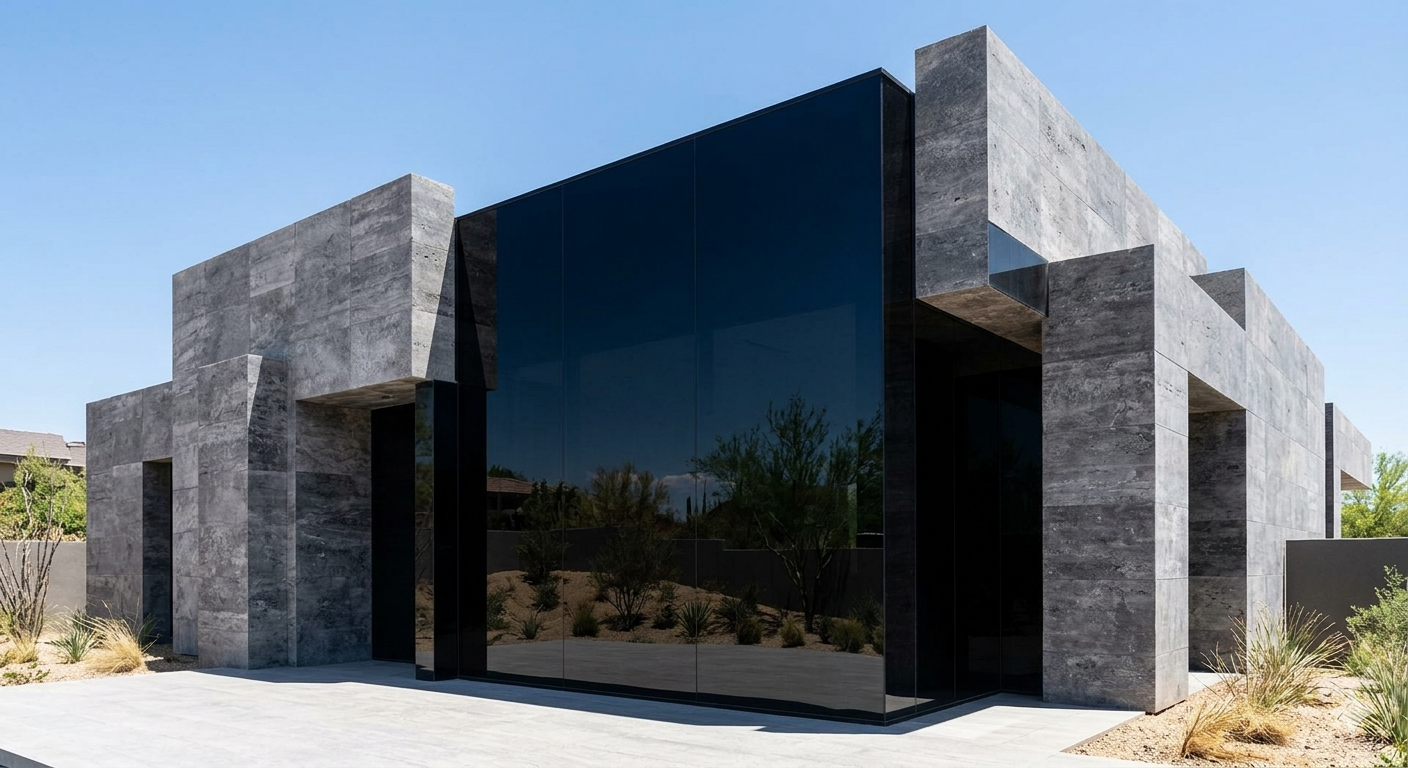
Obsidian Light
Most homes treat glass like a void. We treat it like a material. Discover the power of 'Obsidian Light' and why the right glass should feel like a protective lens, not a fishbowl.
In modern architecture, glass is often treated as a necessary gap in the wall. But when you are engineering a sanctuary, total transparency can feel vulnerable. To get that grounded, protective feeling, we look to Obsidian Light. This is the use of dark, high mass glass that acts as a filter, turning a window into a lens that makes the world outside look more vivid while keeping the inside private.
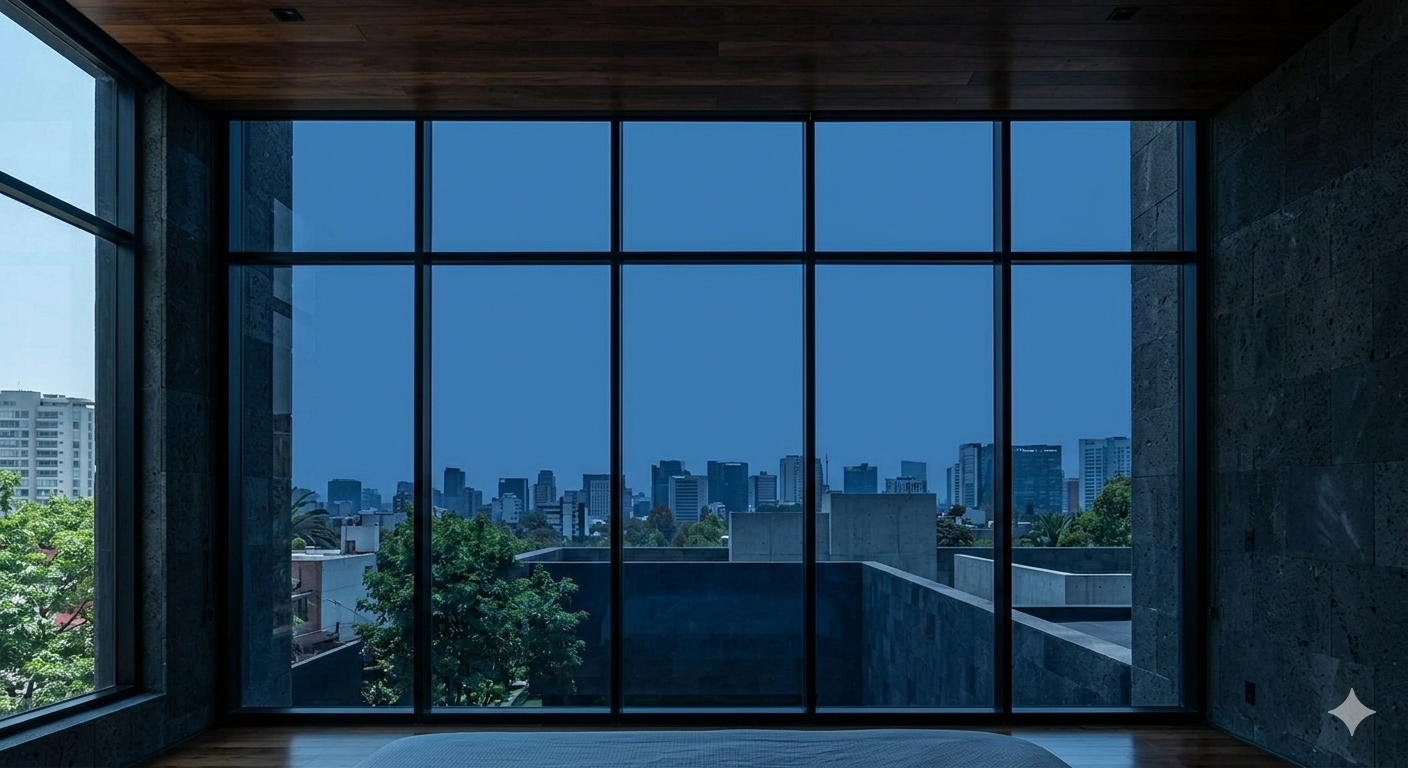
Obsidian Glass lens over the Polanco skyline.
The Gravity of the Dark Lens
Standard clear glass can flatten a view and wash out the textures inside your home. In regions where the sun is a constant, aggressive force, clear glass also acts as a liability, bleaching interior timbers and overheating stone floors.
Obsidian glass does the opposite. It works like a pair of high end polarized sunglasses for the architecture. It "turns down the volume" of the exterior glare, which actually makes the colors of the landscape pop and the grain of your wood or stone floors look deeper. More importantly, it acts as a thermal shield. It turns the sun into a silent visual, allowing you to stand against the glass at high noon and feel nothing but the cool, steady stillness of the interior.
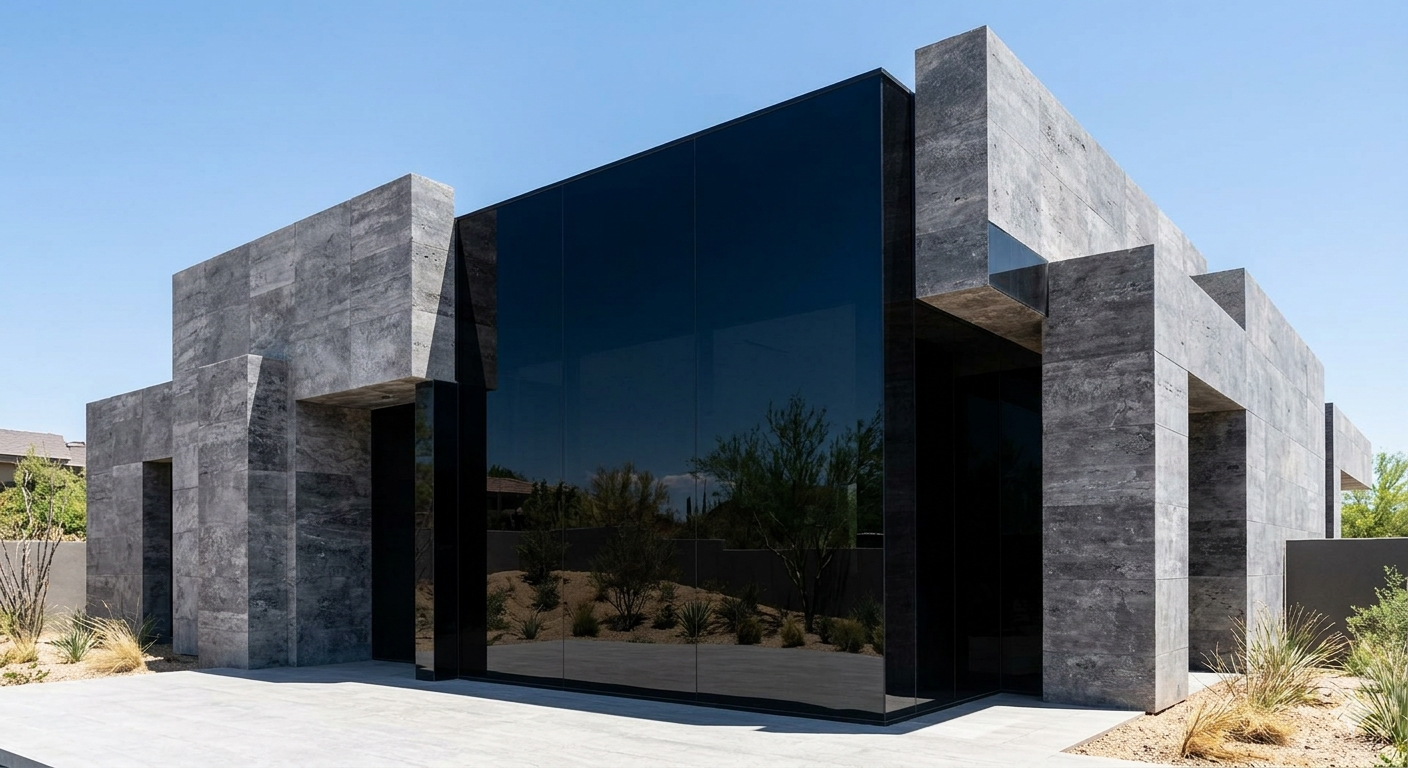
Massive, dark "slab" of obsidian glass reflecting the street side landscape.
Three Ways to Get it Right
If you want to move away from the "fishbowl" look and toward a house that feels like a vault, these are the three things that actually matter:
1. The Solid Look
From the street, the glass shouldn't look like a hole in the house. It should look like a solid, dark slab, matching the visual weight of the stone walls. This provides absolute privacy during the day. It makes the house look like it was carved out of a single piece of volcanic rock.
2. Keeping Colors Honest
The biggest mistake with dark glass is picking a cheap tint that makes everything inside look blue or bronze. The standard is Neutral Charcoal. It’s a specific filter that keeps white walls looking bone white and oak floors looking warm, even through the dark glass. It’s the difference between a "tint" and a "lens."
3. Hiding the Hardware
When dealing with a massive piece of obsidian glass, a chunky frame is a distraction. Using ultra slim steel or aluminum profiles in a matte black finish allows the hardware to be tucked into the shadows of the wall. This seamless integration mirrors the architectural language of Blackened Iron and Oxblood Leather, where structural metal is treated as a shadow rather than a distraction. The goal is to make the glass look like it’s floating. When you look at the window, you should see the view, not the frame holding it up.
Final Thought
Glass doesn't have to be invisible to be beautiful. When you choose glass with weight and color, you’re making a statement about the privacy and permanence of your home. You aren't just opening the house to the world, you are choosing exactly how much of the world you want to let in. You don’t just see the light, you master it.