
The Mineral Palette
In a sanctuary, color isn't something you apply, it’s something you reveal. Discover why we move away from synthetic paint and toward a permanent foundation of Bone, Sand, and Silt.
When you step into a space that feels truly permanent, you aren't looking at "color", you are looking at the earth itself. We don't bother with thousands of paper swatches, we look to the geological layers of the landscape to find the palette. To build a sanctuary with real gravity, we use materials that have already stood the test of time, Bone, Sand, and Silt.
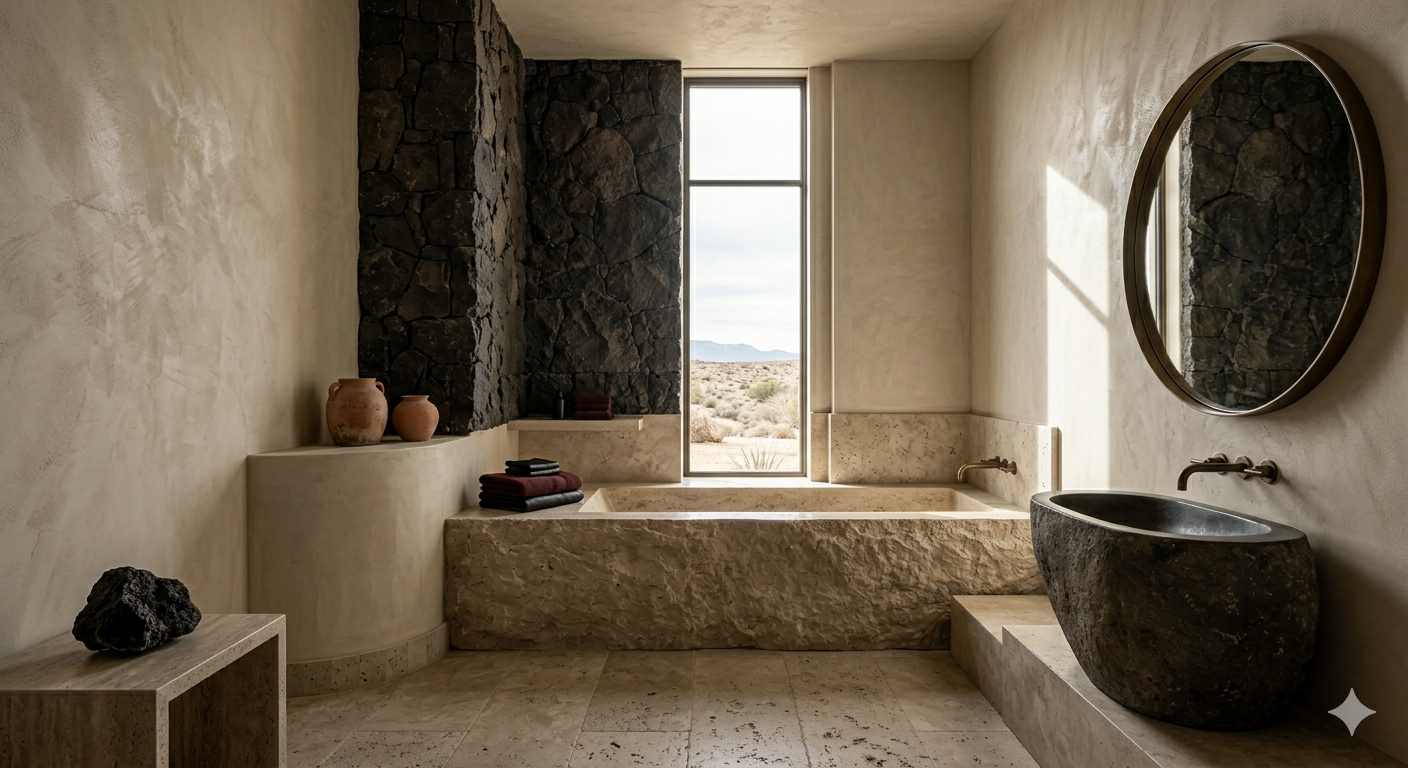
Stone bathroom, volcanic rock, carved bath, with limestone walls.
The Depth of the Stone
Standard paint is a flat, it sits on the surface of the wall. Mineral tones, the actual bones of the landscape, have a living quality. Whether it’s a lime washed wall or a hand troweled plaster, these surfaces have a natural movement. They shift from a warm ivory in the morning to a deep, textured shadow at dusk. It’s a palette that belongs to the landscape.
The Pillars of the Palette
While we pull from the entire geological spectrum, we always return to these core anchors.
1. The Light: Bone and Chalk
Pure white can be aggressive and clinical. Instead, we look to Bone, the tone of sun bleached limestone or raw plaster. It has a soft, matte texture that absorbs light rather than bouncing it around. It gives a room a sense of age and permanence the moment the sun hits the walls.
2. The Anchor: Sand and Silt
The neutrals of a home are found in the weight of the floor and the heavy masonry. These are the soft, dusty tans found in raw travertine or the deep, rich silts of a riverbed. These tones provide the necessary gravity, ensuring the space feels like it’s sitting on solid ground rather than floating in a void.
3. The Shadow: Obsidian and Clay
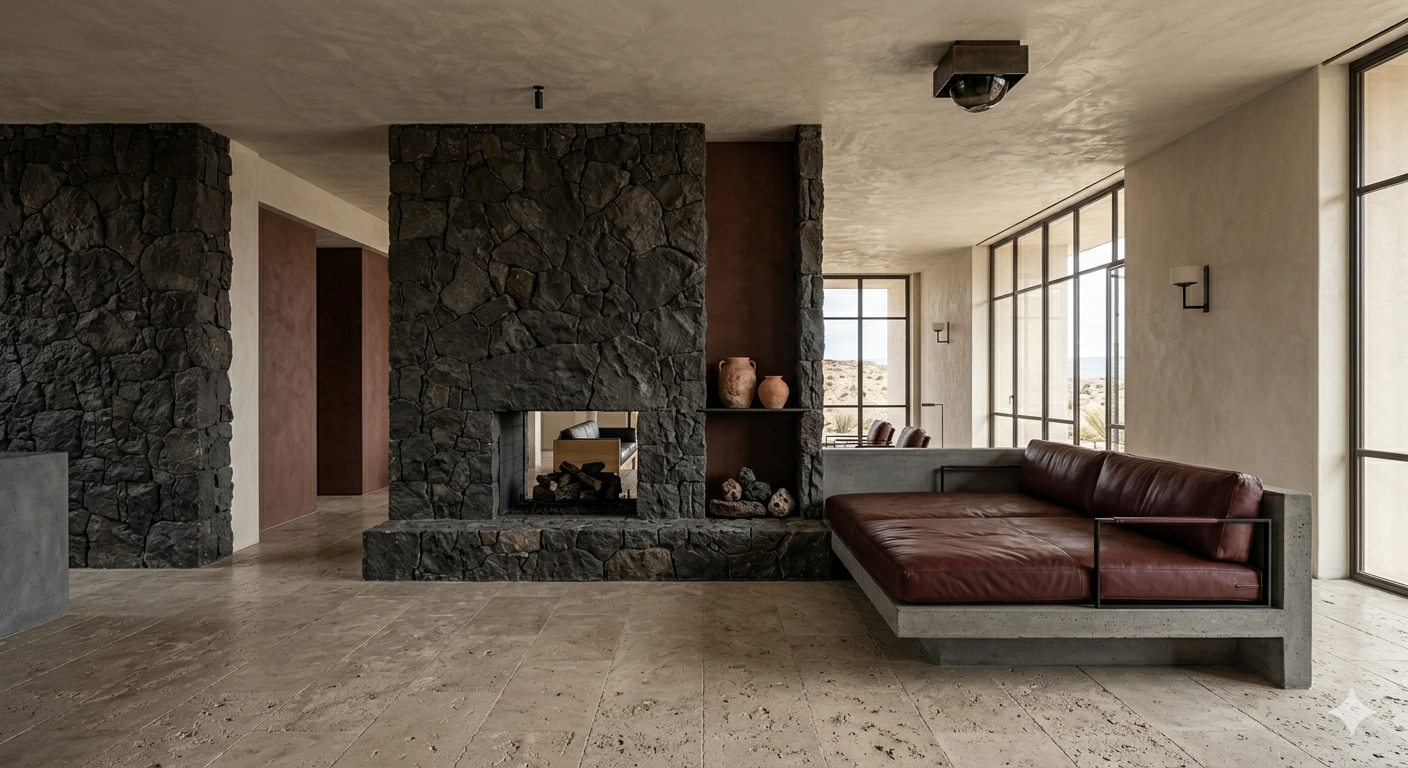
We don't fear the dark. We use the deep charcoals of volcanic rock and the oxidized reds of raw clay to create points of tension. These aren't "accent colors", they are structural shifts. They provide the cinematic depth that makes a large, open space feel intimate and protected. This mastery of darkness is best realized through Obsidian Light, where high mass glass acts as a structural lens to deepen the natural shadows of the interior.
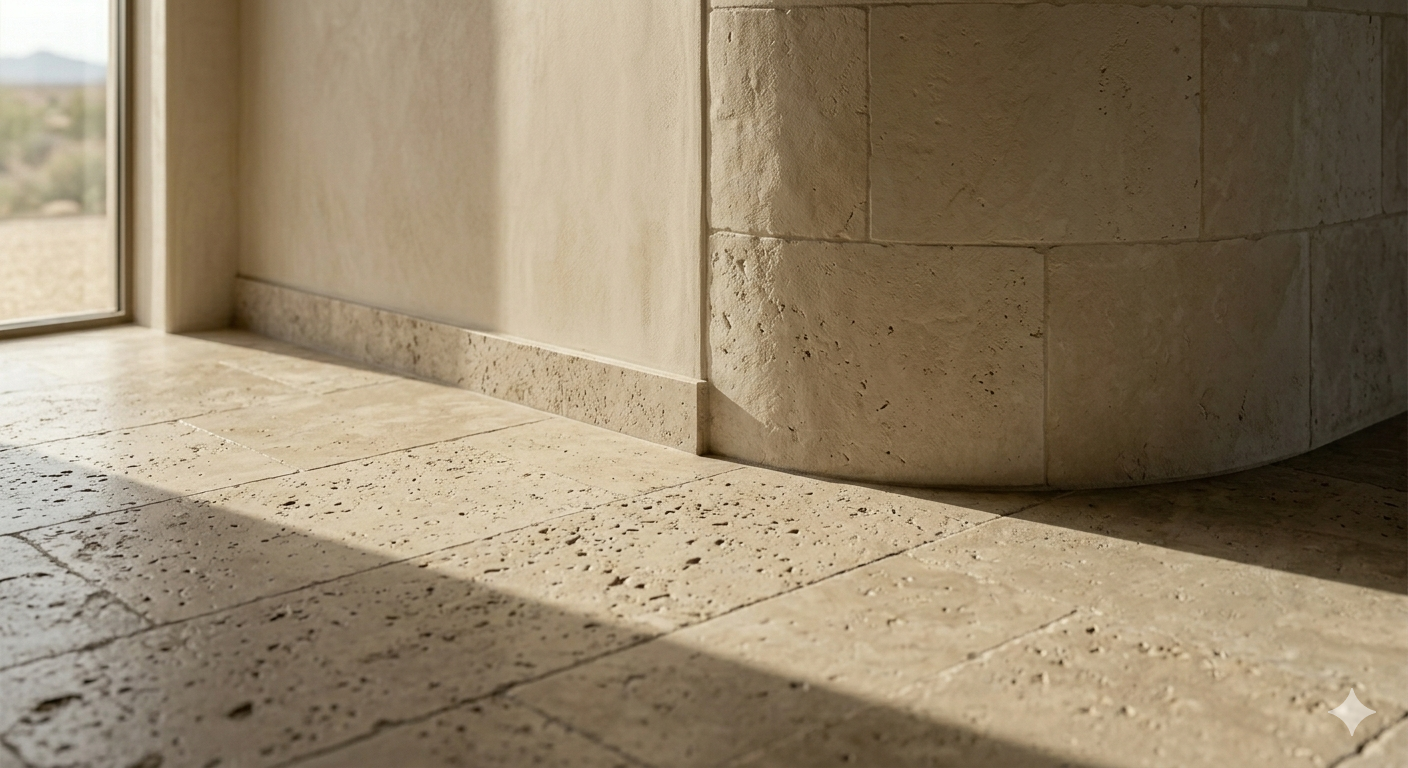
Stone flooring with limestone wall and stone accent.
Why it Works
The secret is Mineral Consistency. We move away from loud, high contrast transitions. By keeping the walls, floors, and ceilings in visual harmony with one another, you remove the "noise" of a room. The space feels larger and more composed. You aren't distracted by the decor because the architecture itself is the statement.
Expansive living area, stone floors, volcanic rock fireplace, limestone walls and celling.
Final Thought
A house shouldn't compete with the landscape; it should be an extension of it. When you strip away the trends and return to a palette of earth and stone, you create a canvas that never tires the eye. Color isn't something we add, it’s something we reveal.