How a Swedish House Gets Through the Dark
At the winter solstice, Stockholm gets a little over six hours of daylight. The sun comes up shortly before nine and is gone before three. Sweden answered that with what it had, and most of it came out of a forest and a mine.
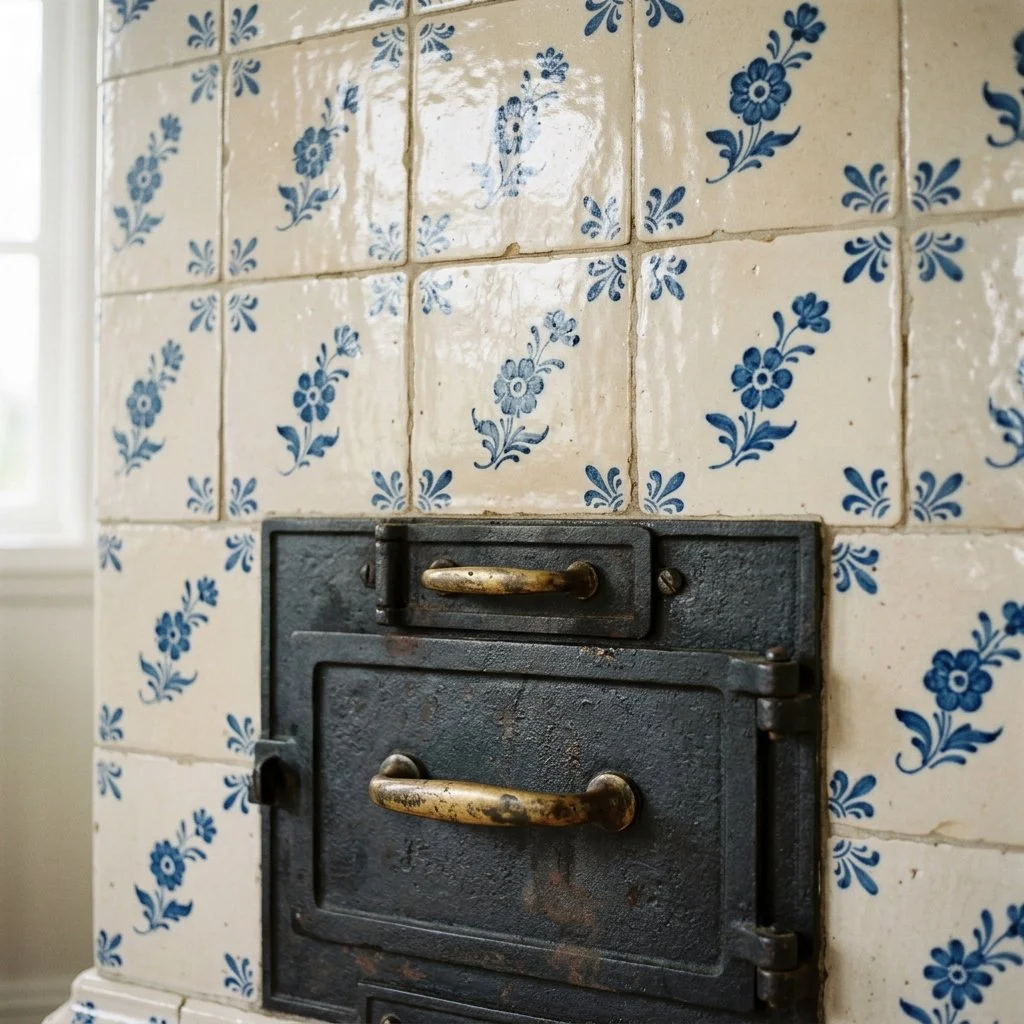
Cream glazed Swedish stove tiles with hand painted blue flowers, featuring two dark cast iron doors with worn brass handles.
A Stove Built for a Wood Shortage
By the eighteenth century Sweden's iron industry had used up so much wood that firewood ran short, and the country heated its rooms with tiled stoves that burned a lot of it. The tiled stove was not Swedish. It came up from southern Germany in the late Middle Ages, and the early ones lost much of their heat straight up the chimney.
A kakelugn is a tall brick stove covered in glazed ceramic tiles. In 1767 the architect Carl Johan Cronstedt, working with Fabian Wrede, presented a redesign. The smoke now ran through winding channels inside the brick, so the brick and the tiles took the heat that used to escape up the chimney and gave it back to the room slowly. One fire could keep a room warm for ten to twelve hours.
The tiles were also decoration. They were painted by hand with flowers and patterns to match the room, and Stockholm's Marieberg works on Kungsholmen, open from 1758 to 1788, made some of the most luxurious.
Central heating replaced them. Many stoves were torn out and thrown on the dump, and the removals went on into the 1980s. Stoves that have to go are taken out carefully now, and a few ceramists restore them and build new ones on the same principle.
One Mine Under the Brass and the Red Paint
In 1607 King Karl IX founded a brass works at Skultuna, outside Västerås, and the works say the copper mine at Falun supplied its raw material. Falun was then the largest copper mine in Europe. Sweden had run up debts to the Hanseatic League, and refining copper into brass meant fewer imports and more to sell. Among the first things the works made were chandeliers and candlesticks, and the oldest Skultuna chandelier that survives is dated 1619. The works are still there and hold a royal warrant.
The same mine gave Sweden its red. By the sixteenth century the waste heaps had weathered into a red sludge, and heated and mixed with linseed oil and rye flour it made an excellent paint for wood. The paint company says King Johan III had the roofs of his Stockholm palace painted with it in 1573, and by 1764 the mine was making it on an industrial scale.
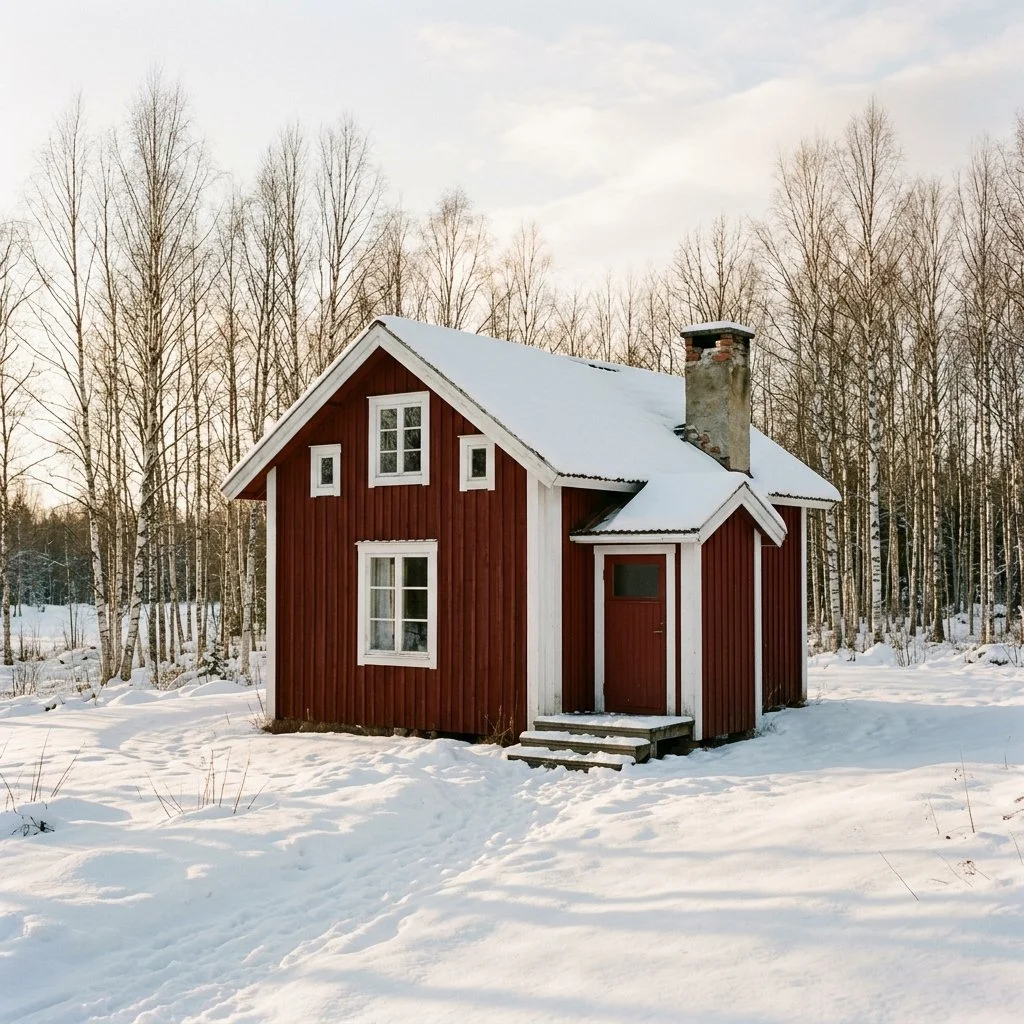
Timber house with white trim stands in a snow covered landscape framed by bare birch trees.
Glass Made Where the Wood Was
Kosta, the oldest glassworks still running in Sweden, was founded in 1742 by two officers who had served in Charles XII's army, on the site of an old ironworks. Some of the first workers came from Thuringia. Småland had the forest to feed the furnaces and sand in the ground, and at its peak the region had 45 glassworks. For its first 150 years Kosta made mostly plain utility glass, window panes among it. The region is called the Kingdom of Crystal now, and the regional tourist board counts thirteen glassworks and studio hot shops there. The big factory at Kosta is one. Some of the smallest have one or two glassmakers who also design their own work.
Made From What Sweden Had
The forest ran short and the mine lasted a thousand years, and each of these objects has a maker you can find. If I were sourcing any of it, I would start with the stove. A kakelugnsmakare is a maker of tiled stoves, and a few ceramists restore old stoves and build new ones on the eighteenth century principle. Glass comes from Småland, where the glassworks and studio hot shops of the Kingdom of Crystal let you stand next to the furnace. Skultuna is the address for brass. If a specification calls for Falu red, check the tin. Falu Rödfärg is a protected name for paint made with pigment from the Falun mine, and plain rödfärg can be any red iron oxide paint made with flour.