
The Shape of a Shadow
Light isn't just about visibility, it's about contrast. From ancestral backstrap loomed linens to the sharp geometry of an architectural sun slit, discover how we treat the sun as a raw material to paint a composed, intentional wall.
Painting with the Sun
In most homes, lighting is treated as a utility, you flip a switch to see. But we like to treat light as a raw material. Specifically, we look at the Shape of a Shadow. A room with uniform, flat lighting feels lifeless. To give a space real depth, you have to embrace the dark.
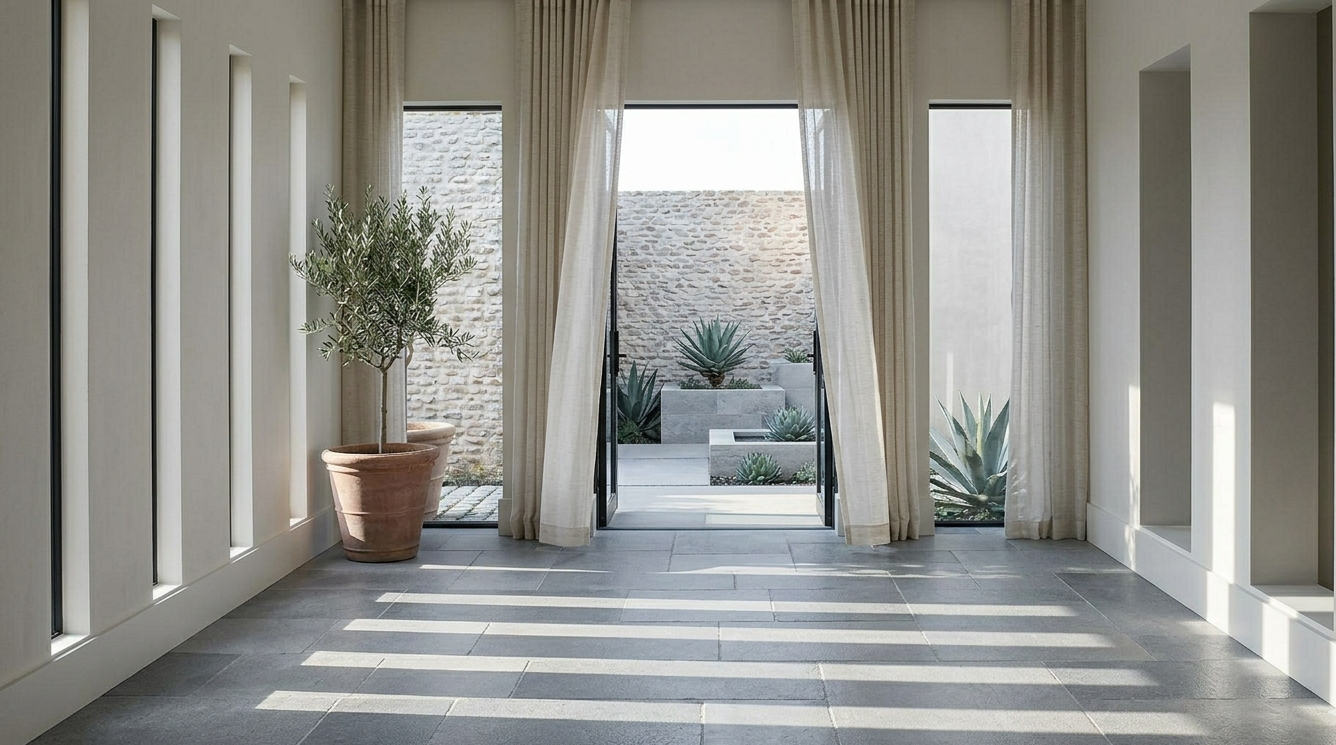
Windows cast shadows on a stone floor with natural fiber window treatments on an open door heading to a private courtyard.
The Composed Wall
When you have a clean, architectural wall, you don't need art to fill it. You need the sun. By positioning openings to catch the movement of the day, the wall becomes a canvas. As the sun moves, the shadows shift, elongating and sharpening. The room is never the same at 10:00 AM as it is at 4:00 PM. As these shadows stretch across the room, they highlight The Grit of the Floor, catching the micro textures of the stone to reveal the honest, geological depth of the foundation. This is how we create a house that feels alive.
Contrast as Comfort
There is a psychological comfort in contrast. A room that is perfectly bright in every corner feels exposed and clinical. Shadows provide a sense of scale and privacy. They define where a hallway ends and a sanctuary begins. By intentionally designing for "dark pockets," we allow the eye to rest and the mind to settle.
The Architecture of the Sundial
We don't just look for "big windows." We look for intentional light. Whether it’s a narrow vertical slit or a deep set niche, the goal is to control how the light enters. When you control the entry point, you control the shadow. You aren't just letting the sun in, you are using it to draw lines across the floor and texture across the surfaces.
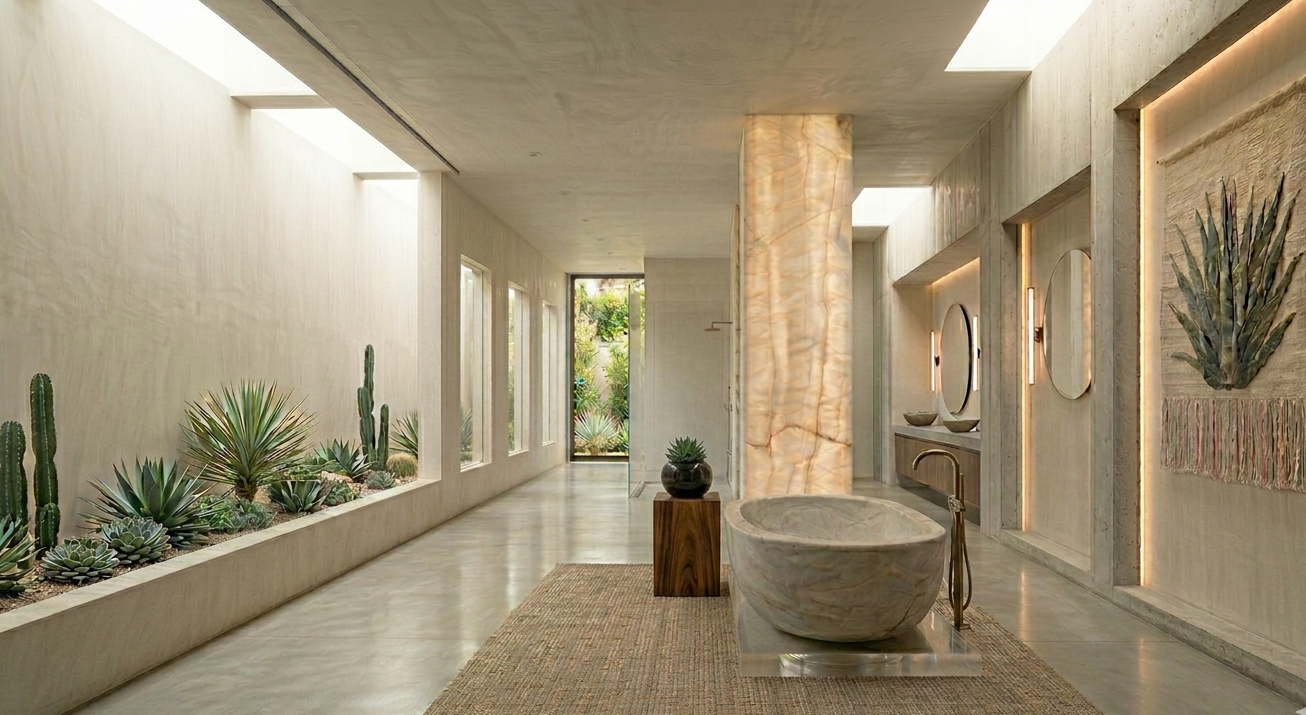
Bathroom featuring a stone tub and desert plants, natural shadows.
Manipulating the Light
Even without structural changes, you can still use this principle through Home Accents. The right window treatments aren't just for privacy, they are the filters we use to "tune" the room.
For a soft, organic atmosphere, we look toward ancestral hand loomed textiles. Fabrics created on a traditional backstrap loom or a heavy treadle loom carry a slight irregularity in the weave that catches the light differently. These natural fibers, like agave based linens and hand spun cotton, soften a harsh afternoon glare, turning a sharp shadow into a diffused, warm glow.
For a more technical approach, integrated motorized blinds allow you to automate the atmosphere, shifting the "shape" of the room with the touch of a button. Whether it’s a sheer artisan weave that catches the wind or a blackout blind that creates a total retreat, these are the tools we use to master the sun.
Final Thought
Light is free, but its impact is priceless. By focusing on the shape of the shadow rather than just the brightness of the bulb, we create a house that feels grounded and intentional. In this house, we don't just build walls, we let the sun paint them.