
Tzalam and the Living Grain
In a home, furniture isn't an accessory, it’s a legacy. Discover the dense, oily grain of Tzalam and why it is the anchor for a room designed to last a century."
In a world of mass produced, veneered furniture, there is no substitute for the density of a true tropical hardwood. When a room requires a table or a structural partition with real presence, we don't look for a "finish" that sits on top of the wood. We look for the life inside the grain. This is the role of Tzalam.
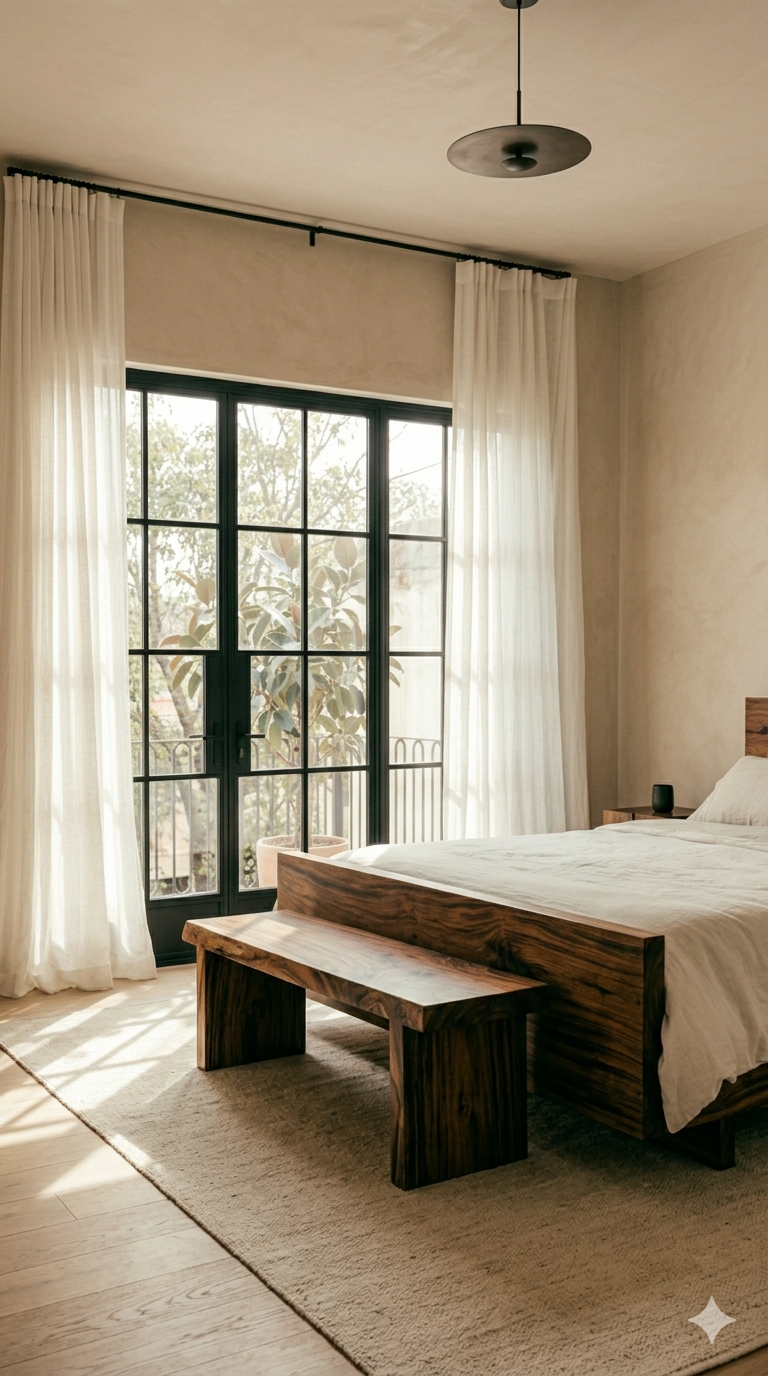
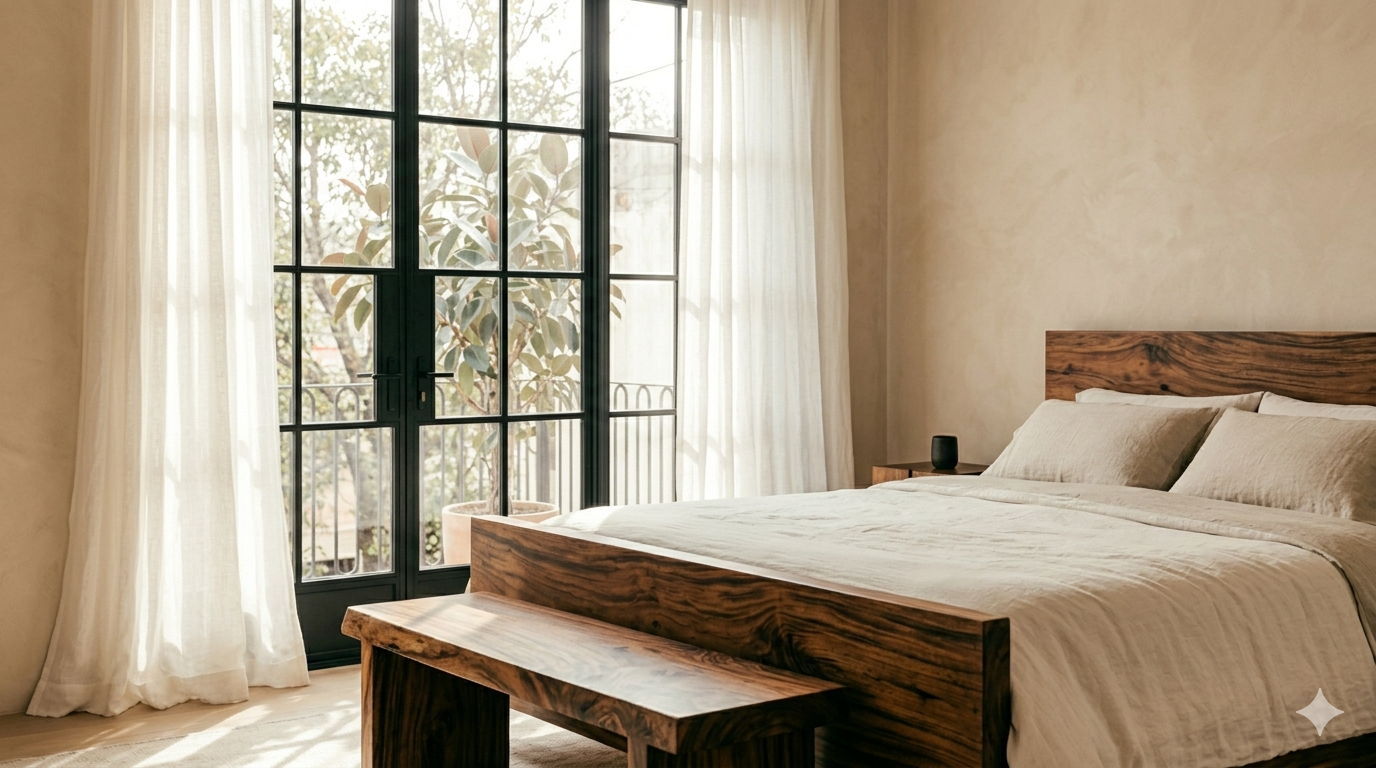
Tzalam wood bedframe and matching bed bench, in a bedroom of natural sunlight.
The Mexican Walnut
Often called Mexican Walnut, Tzalam is a wood of incredible weight and resilience. It is a dense, oily hardwood that carries a rich spectrum of reddish browns and deep chocolates. Unlike temperate woods that can feel dry or brittle over time, Tzalam has a high natural oil content. This means the wood doesn't just look deep, it feels substantial to the touch.
Beyond the Varnish
Most furniture is sanded down and sealed under a thick layer of plastic based varnish. We prefer to let the material breathe. Because Tzalam is naturally oily, it requires very little intervention. We use natural waxes that bond with the fibers rather than coating them. The result is a surface that feels like wood, not a chemical film. It is a material that responds to the light of the room, aging with a grace that lighter woods cannot match.
Built for the Century
A home shouldn't be designed for the next five years. It should be designed for the next hundred. Tzalam’s density makes it resistant to the dings and scratches that ruin softer woods. Instead of a chip in a veneer, a mark on a Tzalam table becomes part of its history, a small detail in a piece that will eventually be passed down. It provides a sense of permanence that you can feel the moment you sit down.
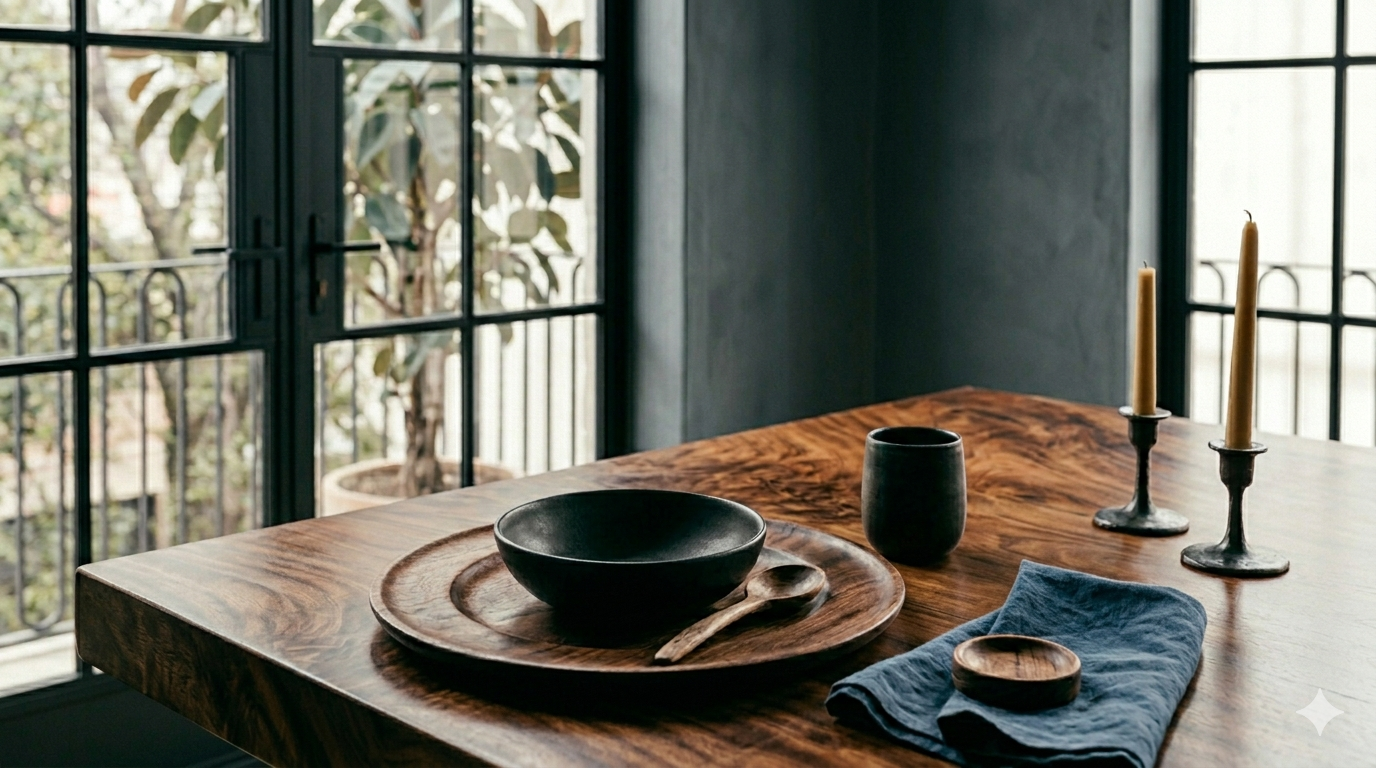
Tzalam kitchen table and Tzalam place setting.
The Architectural Weight
There is a specific resonance to a room that features Tzalam. Because of its dark, variegated grain, it works as a bridge between the light mineral walls of the foundation and the darker metals of the hardware. It provides the "visual heat" necessary to make a large, open space feel inhabited and warm. When utilized in The Social Partition, Tzalam transforms a structural necessity into a warm, organic boundary that directs the flow of the home without closing it off.
Final Thought
The value of a material isn't found in a trend, it's found in its lifespan. By choosing a wood as resilient and rich as Tzalam, we aren't just placing furniture, we are installing a legacy. In this house, we don't buy for the season, we build for the century.