Tzalam and the Living Grain
I found Tzalam on a trip through Mexico, propped in the back of a small furniture shop outside Guadalajara. I mistook it for walnut right away. The color was close enough that I didn't think twice. The shop owner set me straight before I'd even finished asking the price, and the real story turned out to be better than the one I'd assumed. Tzalam isn't walnut. It never has been. The name rode in with the furniture trade, not the tree, and it's stuck around because it's a good shorthand for a color everyone already recognizes.
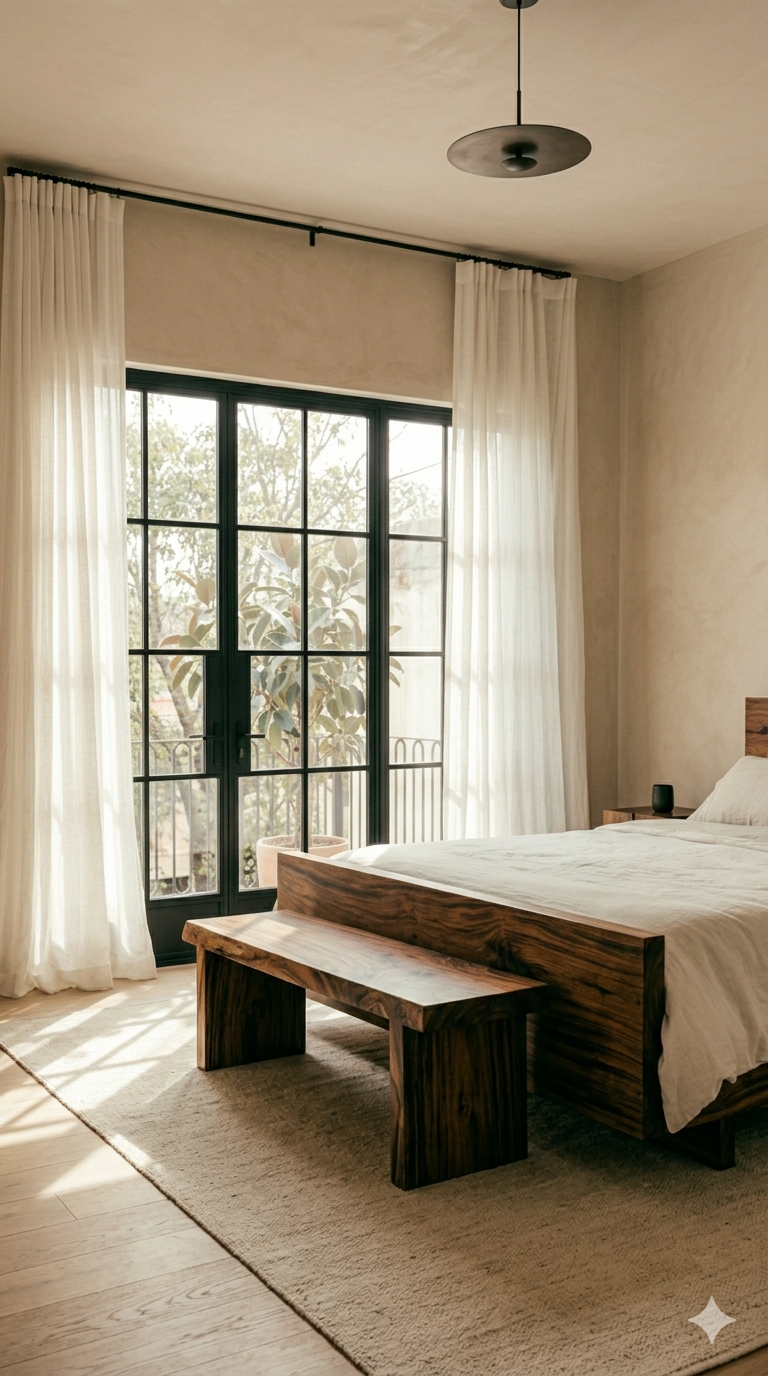
Tzalam wood bedframe and matching bed bench, in a bedroom of natural sunlight.
A Legume, Not a Walnut
Tzalam comes from Lysiloma, a genus in the legume family. Its nearest relatives in the wood world are trees like mesquite, not anything in the true walnut family. Legume woods tend to grow dense and tight grained, and Tzalam holds to that pattern. A board foot runs about 4 pounds, close to 14 percent heavier than red oak, with a specific gravity around 0.63. Pick up a Tzalam side table and a walnut one of the same size, and the difference registers in your arms before you notice anything about the grain.
The Color Does the Convincing
The confusion makes sense once you see the wood. Heartwood ranges from light to medium brown, often carrying a reddish or purplish cast, with darker brown streaks running through it. Set next to true walnut's cooler chocolate tone, it's close enough to fool a showroom floor. What walnut doesn't have is Tzalam's sapwood: a pale, almost gray white band that stops dead against the heartwood with no gradual transition at all. On a slab that keeps its natural edge, that line reads like it was drawn with a ruler.
Built to Outlast a Trend
Tzalam grows in the humid forest belt running through the Yucatan and into Guatemala, usually as a short, spreading tree, its trunk rarely more than two or three feet across, clear of branches for about 25 feet before the canopy opens. What it lacks in size it makes up in resistance. Tzalam carries very high natural rot resistance, which is why it shows up as often in exterior furniture as it does indoors. A table isn't going to face weather the way an outdoor piece does, but the same density that resists rot also resists the dents that mark up softer woods first. A mark on Tzalam tends to sit on the surface rather than crush into it.
Letting the Wood Finish Itself
I don't reach for a heavy varnish on Tzalam, and it isn't because the wood is unusually oily, the way teak is. It's that Tzalam's grain is tight enough, and its natural sheen strong enough after a fine final sanding, that a thick topcoat just buries something that was already working. A wax finish, applied thin and buffed by hand, lets the actual surface of the wood show instead of a film sitting on top of it. The wood does blunt tools a little faster than a softer species would. That's the tradeoff for density, and it's a fair one.
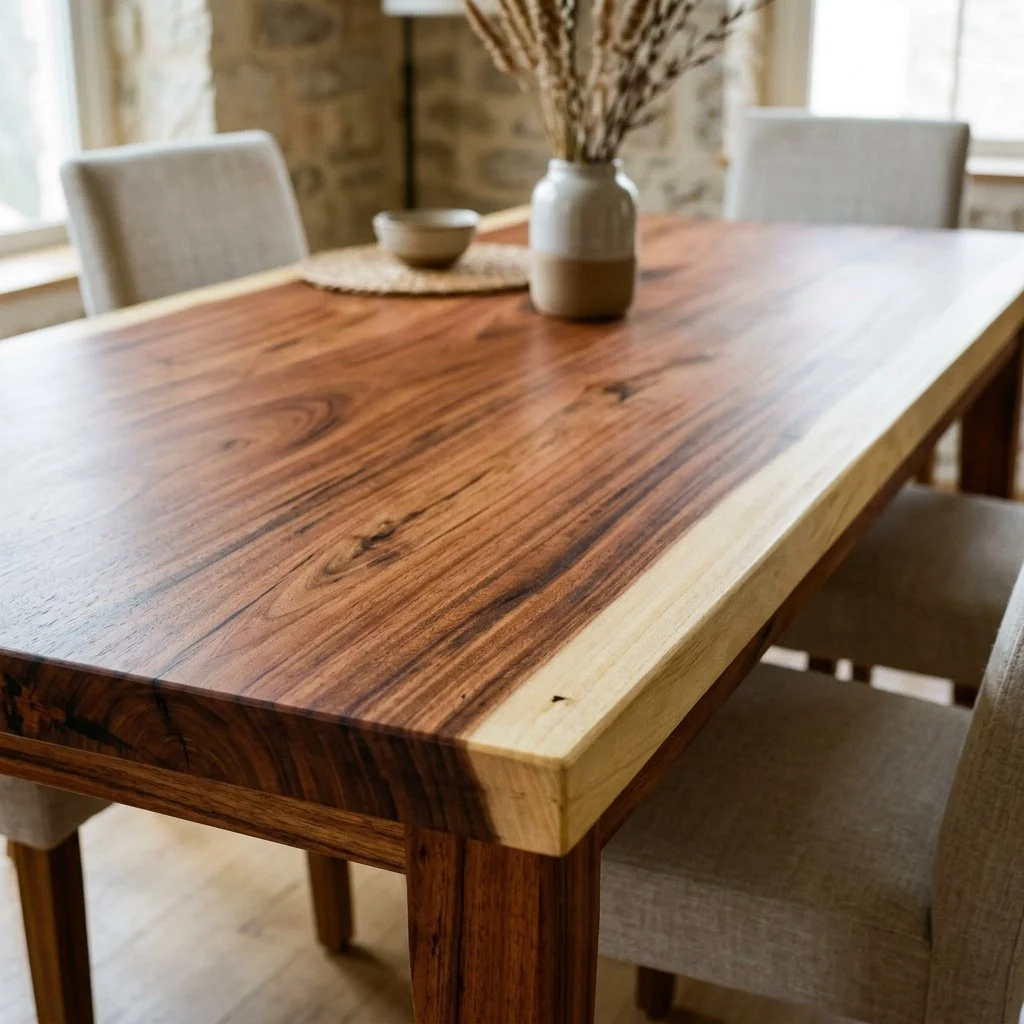
A solid Tzalam wood dining table displaying rich, reddish brown streaked heartwood accented by a distinct, pale live edge sapwood border.
The Room It's Built For
I've used Tzalam on a heavy pivot door in this house before, where the priority was structural weight and rot resistance holding against the elements. In a table or a bench, the same wood does different work. Its warm, reddish brown reads as the anchor in a room built mostly from lighter stone and pale walls, and that stark sapwood line gives a piece with its natural edge left on a kind of honesty a uniform veneer can't fake. It isn't decoration standing in for the tree. It's the tree, cut and finished. It still shows exactly where the bark used to be.
What the Name Doesn't Tell You
Next time a showroom points you toward "the walnut" and it's actually Tzalam, let it go the way I did. The name isn't going anywhere. What matters is knowing what's actually in front of you, starting with where it grew and how dense it is. The sapwood line makes the rest obvious. For a finished piece, look to a trade showroom that carries case goods sourced from Mexico and Central America. It's usually labeled correctly there. For something built to order, that conversation belongs with an importer who specializes in Central American hardwoods, not a domestic mill. That's the difference between furniture you bought and furniture you understand.
