Why a Fabric's Weave Matters More Than Its Color
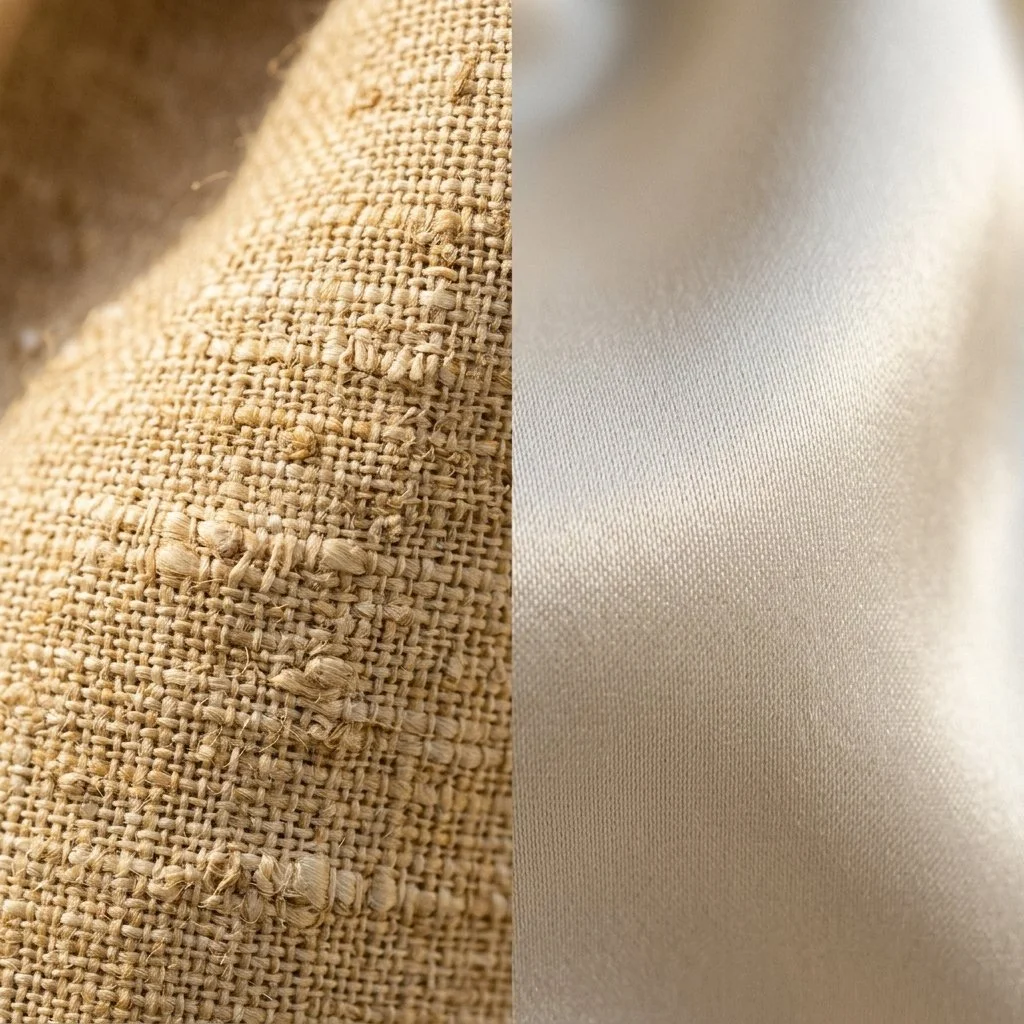
A split macro view showing the textured, slubby weave of matte honey gold tussar silk on the left alongside the smooth, lustrous weave of ivory white mulberry silk on the right.
Hold a piece of tussar silk next to a length of cultivated mulberry silk and the difference is immediate. Tussar comes from wild silkworms that feed on forest trees like sal and arjun across Jharkhand, Bihar, and West Bengal, spun by tribal communities who have worked this material for generations. Its fibers are short and irregular, which gives it a coarse, matte texture and a dull gold sheen. Mulberry silk comes from silkworms raised in controlled conditions on mulberry leaves. Its long, even fibers produce the smooth, reflective surface most people picture when they hear the word silk.
Neither is a lesser version of the other. They're simply built from different textures. Bhagalpur, in Bihar, earned the nickname Silk City almost entirely through tussar weaving, and that region's silk still carries the same rough, honest hand it always has, matte because the fiber holds onto light instead of throwing it back.
That's the real test for any fabric, not just silk. A raw linen works the same way. Run a finger along a woven line and the weave catches slightly rather than sliding smooth, which is exactly why it never throws back a shine no matter how it's pressed. A polished sateen does the opposite. The thread lies so flat and even that light glides straight off it instead of catching on anything at all. Most rooms only reach for one of these behaviors, which is what actually flattens a space, more than color ever does.
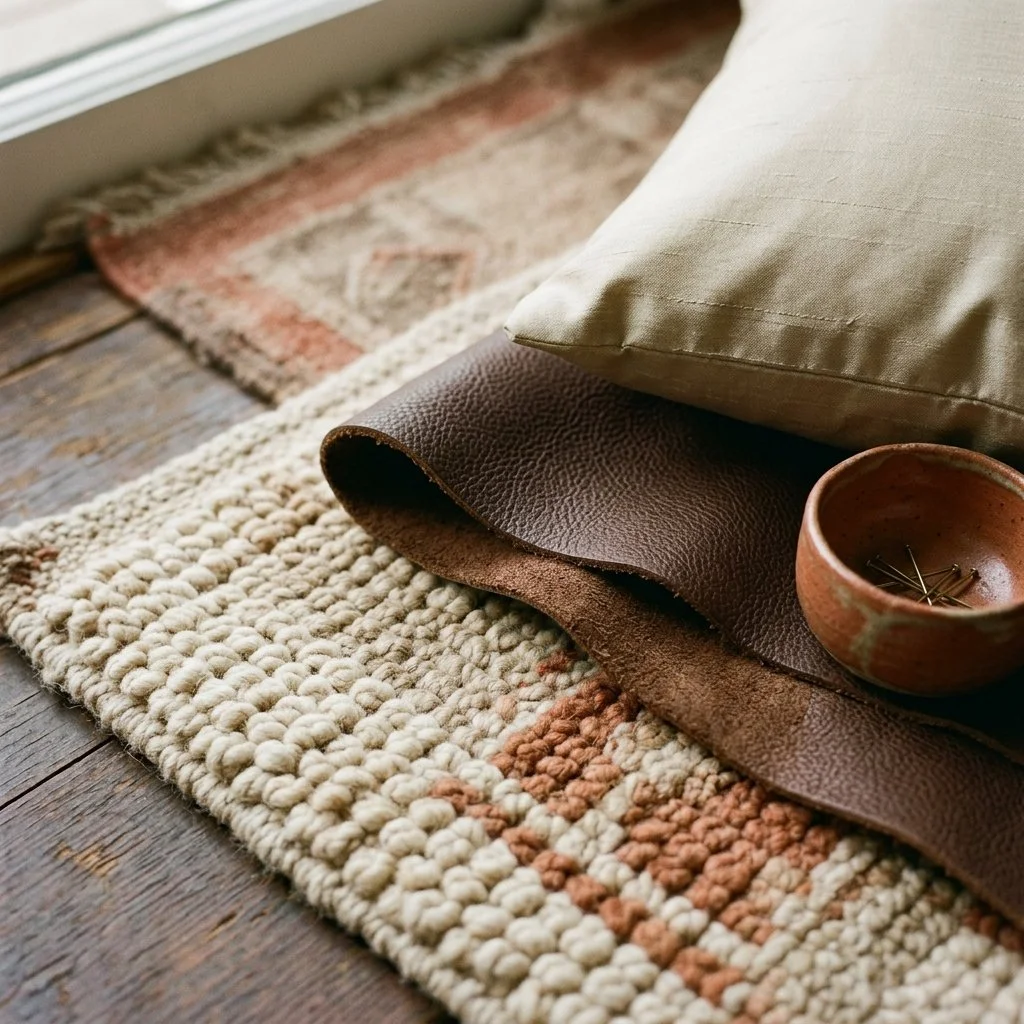
A coarse, hand knotted wool rug corner layered under folded espresso brown leather, topped with a parchment silk blend cushion.
Building a real hierarchy
Start large. A rug knotted by hand sets the base layer everything else in the room eventually sits on top of, and its quality has an actual number behind it. Flip it over and count the knots in a single square inch. Below 80 reads as coarse, tribal work built for durability over detail. Past 160, the density supports the kind of curved, intricate pattern a geometric weave never could. Move to the middle layer next, a good leather chair, a woven storage basket, pieces with real feel in the hand but without the largest physical presence in the space. Finish with the smallest scale, ceramics, a pillow with real silk in the blend, a single piece of hardware someone touches without ever really looking at it twice.
Choosing on purpose
Three fibers, chosen with real intention, do more for a room than six competing for the same attention. Once you can actually feel the difference between what you're touching, rather than just registering that texture exists somewhere in the room, that becomes obvious on its own.
No rulebook needed
The real test doesn't need a lab. Run a hand across a silk sample and watch what happens to the light. That takes about as long as reading a tag, and tells you more.