
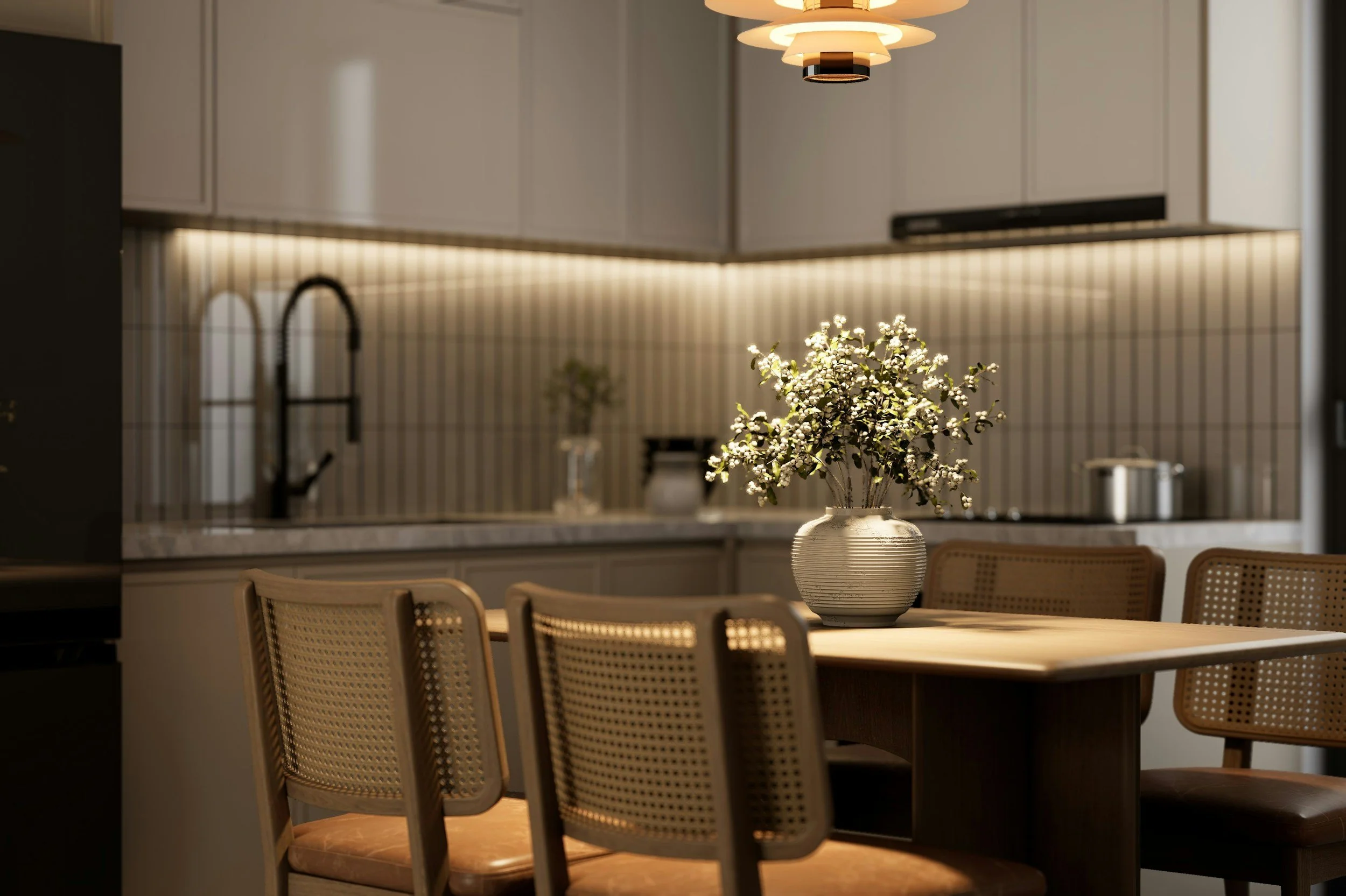
The Geometry of Light
Discover the Madison Prime principles of strategic lighting placement. Learn how to balance function and beauty through architectural lighting geometry.
Luxury lighting is defined not by the scale of the fixture, but by the precision of its placement. It is a discipline of ensuring that light enhances the architectural integrity of a space without competing with it. Strategic placement balances utility with aesthetic intent, transforming a room into a curated environment where every shadow and glow is deliberate.
The Focal Point Alignment
Effective placement begins with identifying the room’s natural focal points, fine art, sculptural textures, or a primary seating arrangement. Light should be positioned to anchor these elements, providing a visual weight that guides the eye. The goal is to highlight these features with subtle intensity, ensuring they remain the primary focus without being overpowered.
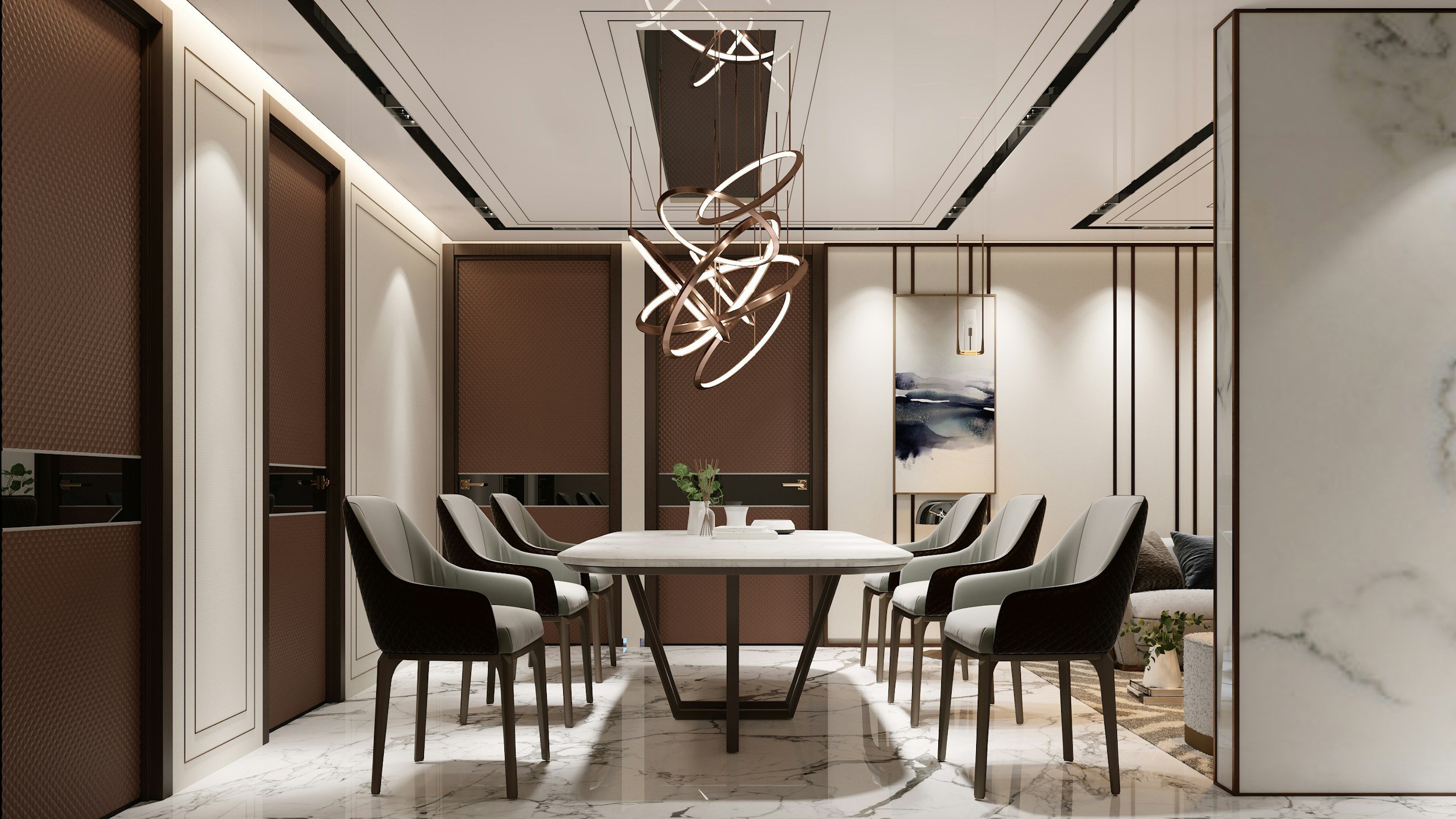
Modern dining space featuring a large scale circular statement pendant light.
The Versatility of Atmosphere
A single space often serves multiple functions throughout the day. Strategic placement, supported by dimmable systems, allows a room to transition seamlessly between states.
Ambient States: Soft, indirect light for repose or social atmosphere.
Functional States: Direct, focused light for tasks, culinary work, or reading. By placing light sources at varying heights and intensities, you allow a singular room to offer a range of sensory experiences.
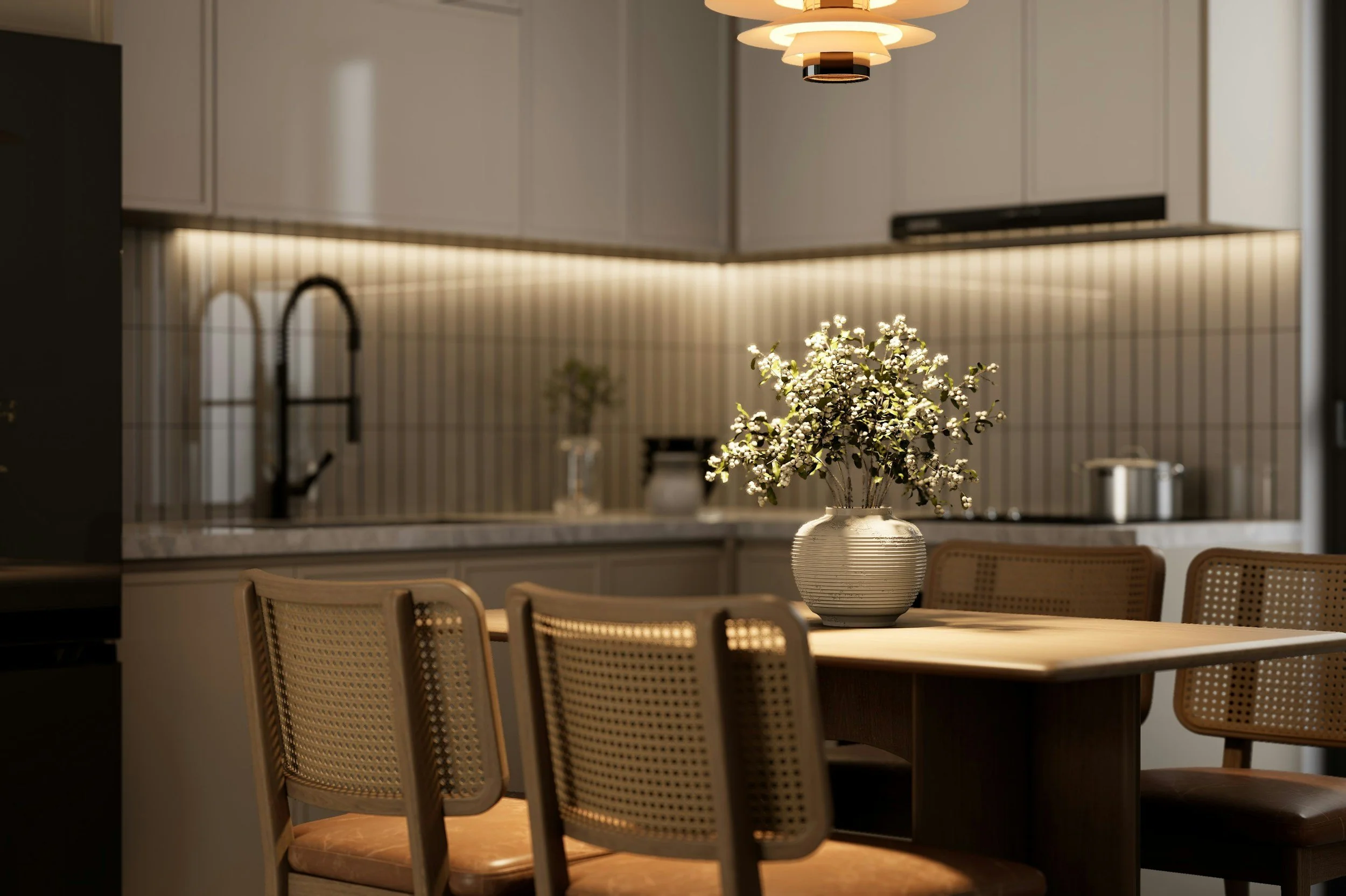
Integrated kitchen lighting featuring a statement table pendant and recessed under cabinet task lighting.
Accentuating Architectural Texture
Lighting should be used as a tool to reveal the home’s materiality. By positioning subtle sources along moldings, within shelving, or against textured wall surfaces, you introduce a sense of architectural depth. This "grazing" of light emphasizes the quality of materials, walnut grains, stone veins, or woven textiles, without introducing visual clutter.
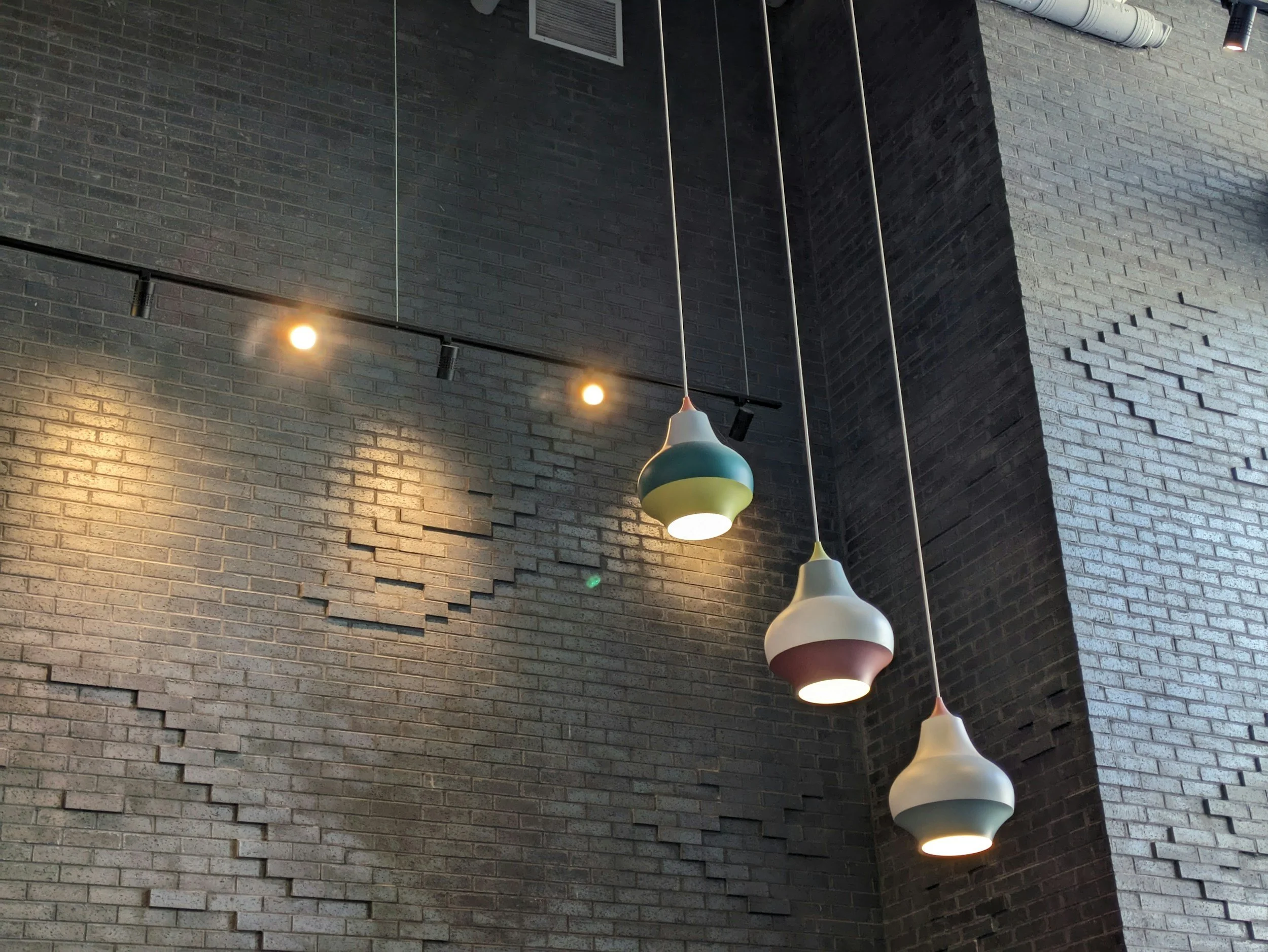
Vertical accent lighting from a large three pendant chandelier.
The Sanctuary Standard
In private zones such as bedrooms, the placement of light is central to the creation of a sanctuary. Positioning bedside lamps and reading lights with a focus on height and reach ensures that the lighting feels intuitive rather than staged. This thoughtful alignment enhances the textures of bedding and headboards, creating a space defined by calm and serenity, a hallmark of The Art of the Sleep Sanctuary.
The Planning Process
A refined placement strategy involves:
Zone Mapping: Defining functional areas such as dining, work, and repose before selecting fixtures.
Layered Application: Ensuring the three tones of light, ambient, task, and accent, overlap with intention, as detailed in our guide on The Composition of Light.
Spatial Balance: Utilizing negative space to ensure that the room remains uncluttered and the lighting feels integrated into the architecture.
Conclusion
The geometry of light ensures that a home feels effortlessly sophisticated. When every fixture is positioned with a clear purpose, even the simplest space achieves a level of quiet, intentional luxury.
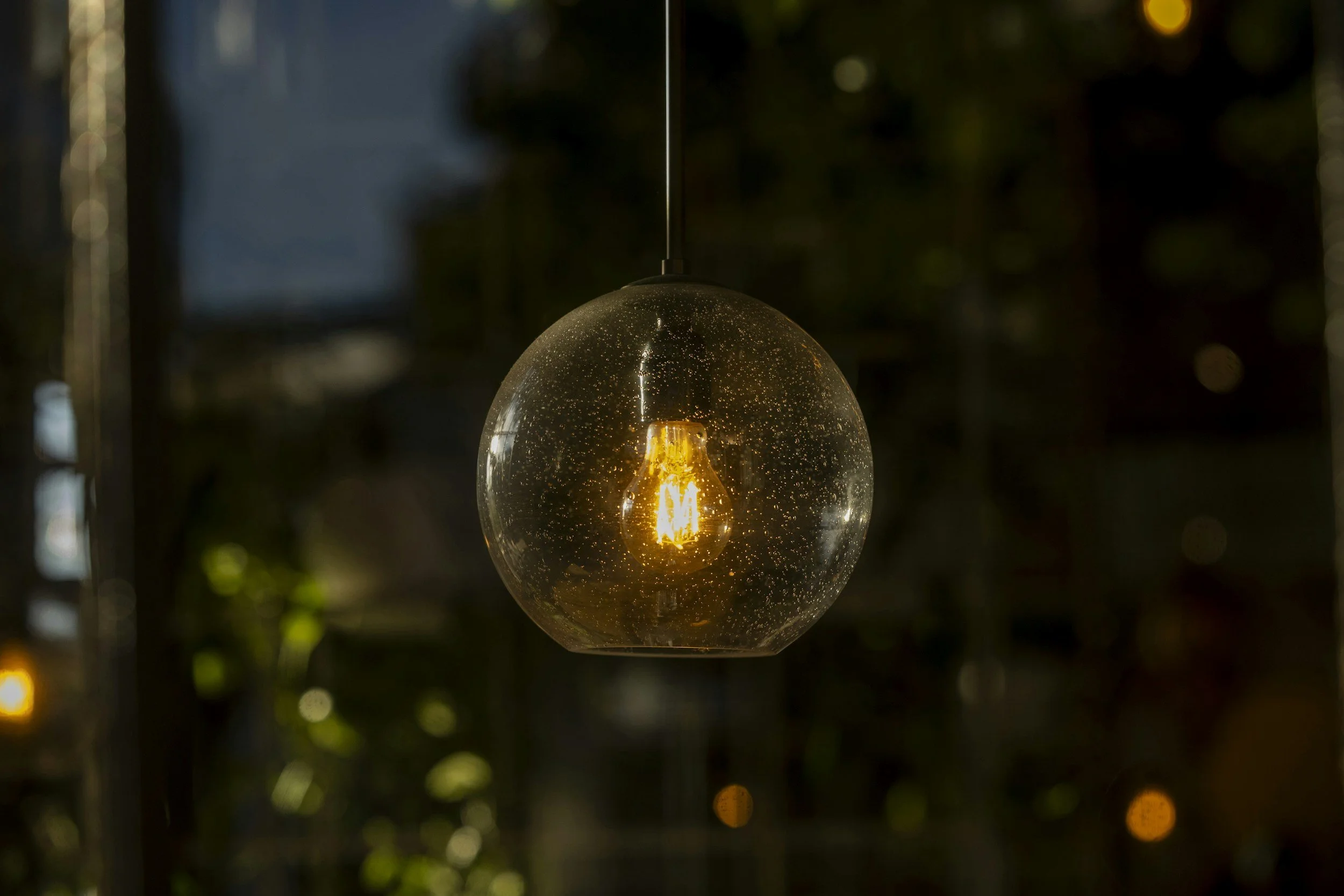
The Composition of Light
Lighting is more than illumination; it is the creation of depth. Explore the composition of light, from the foundation of ambient glow to the subtle drama of accents.
Lighting is the most transformative element in a refined interior. In luxury design, the objective is not simply illumination, but the creation of depth through a thoughtful, layered hierarchy, a concept we explore deeply in The Architecture of Light: Sculpting Atmosphere and Intention. When executed correctly, lighting emphasizes texture, defines geometry, and introduces a sense of effortless sophistication that a single fixture cannot achieve.
The Foundation: Ambient Light Ambient lighting establishes the baseline atmosphere. It should be natural and unobtrusive, acting as the canvas upon which the rest of the room is composed. We prioritize recessed architectural lighting, soft overhead fixtures, or indirect cove lighting to provide an even, flattering glow.
Purpose: To provide soft illumination that enhances the home’s materiality.
Control: Dimmable systems are essential to maintain flexibility in mood and tone.
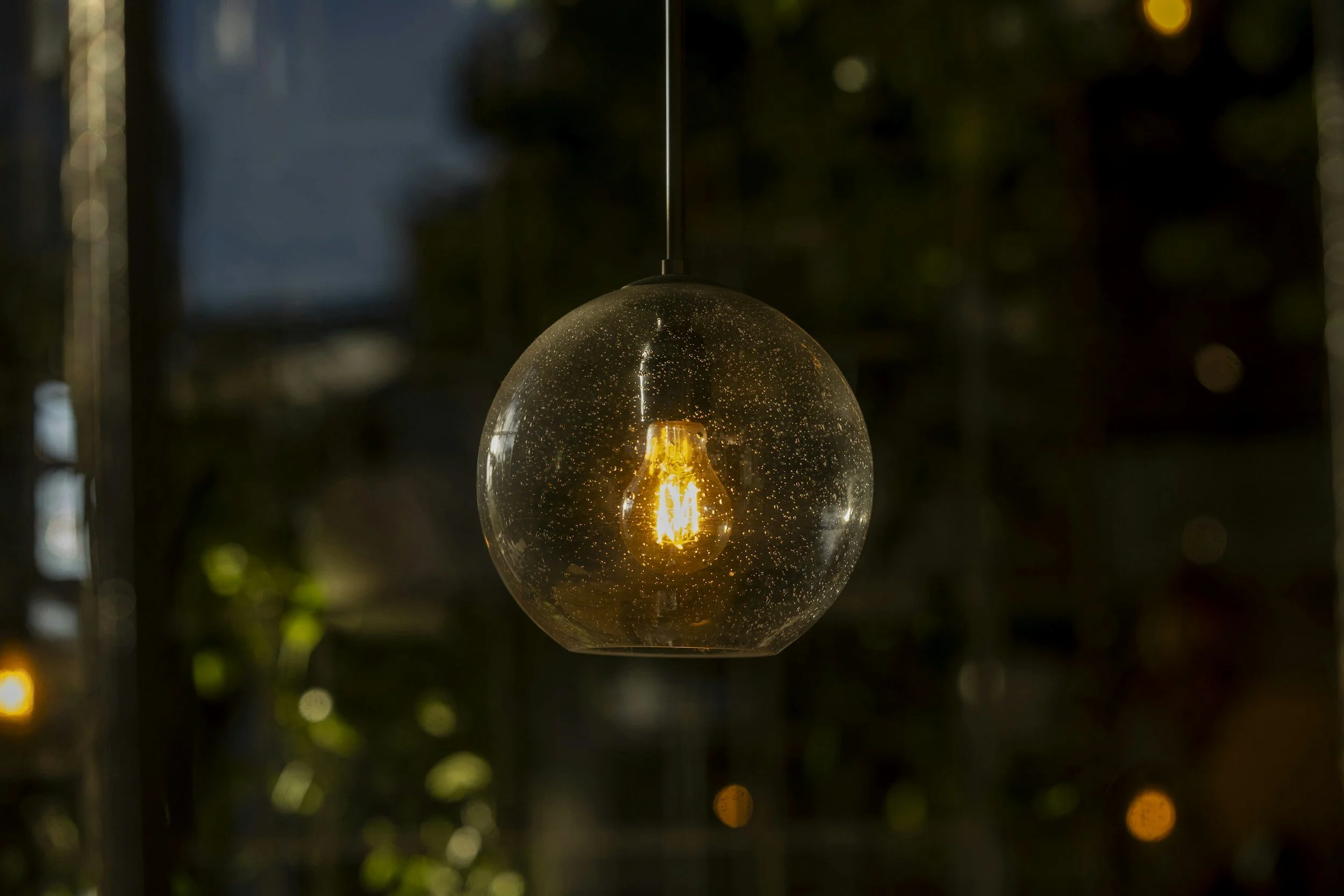
Round pendant light casting a soft ambient glow.
Functional Elegance: Task Lighting
Task lighting provides the necessary focus for the rituals of the home, reading, culinary work, or or the precise lighting required in The Architecture of the Bath. In a curated space, these sources are integrated seamlessly, ensuring that function never disrupts the visual plane.
Execution: Table lamps on bedside or console surfaces, precisely scaled pendants over islands, and directional reading lamps.
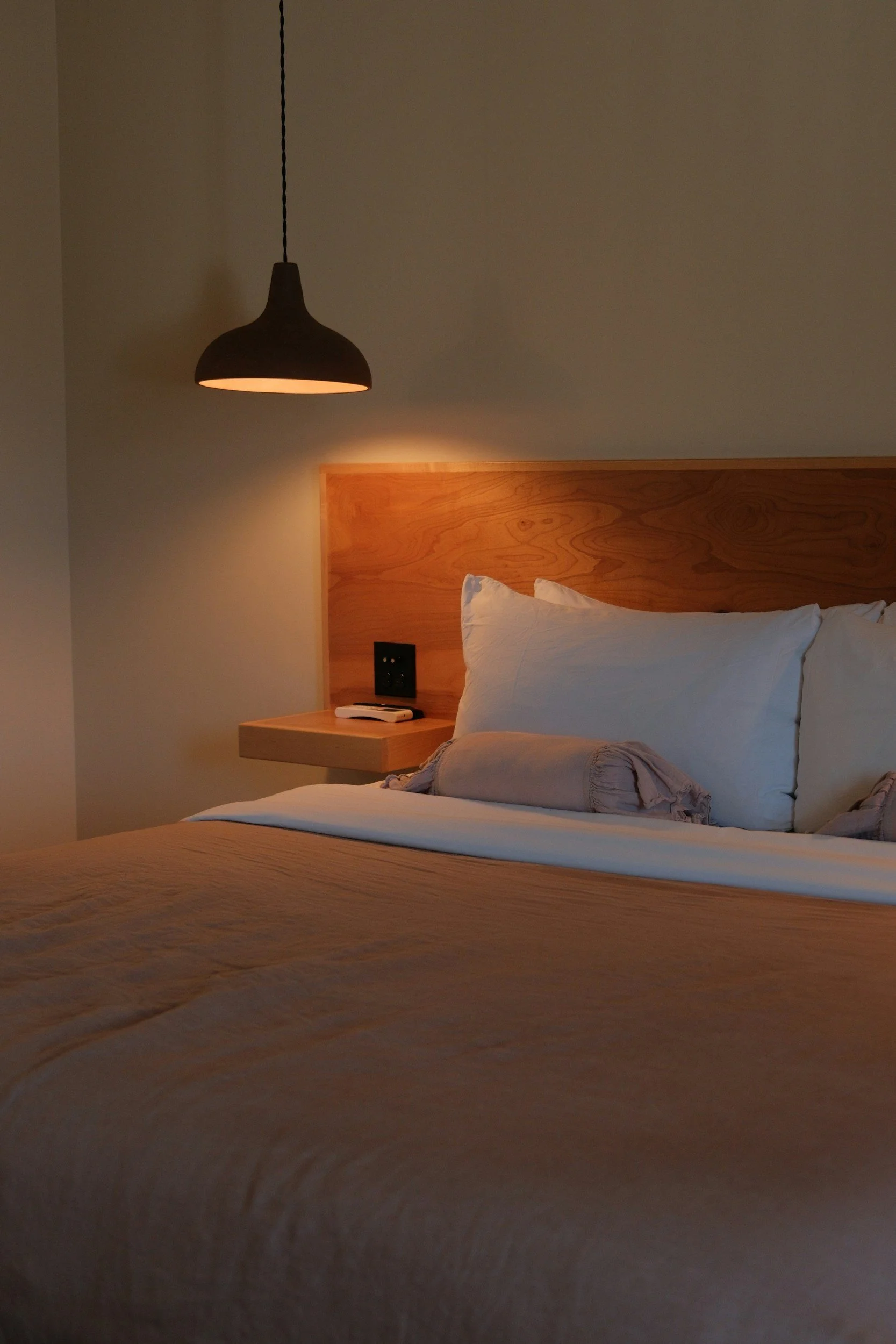
Modern pendant light, focused task illumination over a nightstand.
Subtle Drama: Accent Lighting
The final layer is accent lighting, used to highlight architectural details, sculptural textures, or fine art. Its role is one of enhancement rather than competition; it guides the eye toward the room’s intentional focal points.
Applications: Picture lights for curation, hidden uplights for texture, and structural wall sconces for subtle focus.
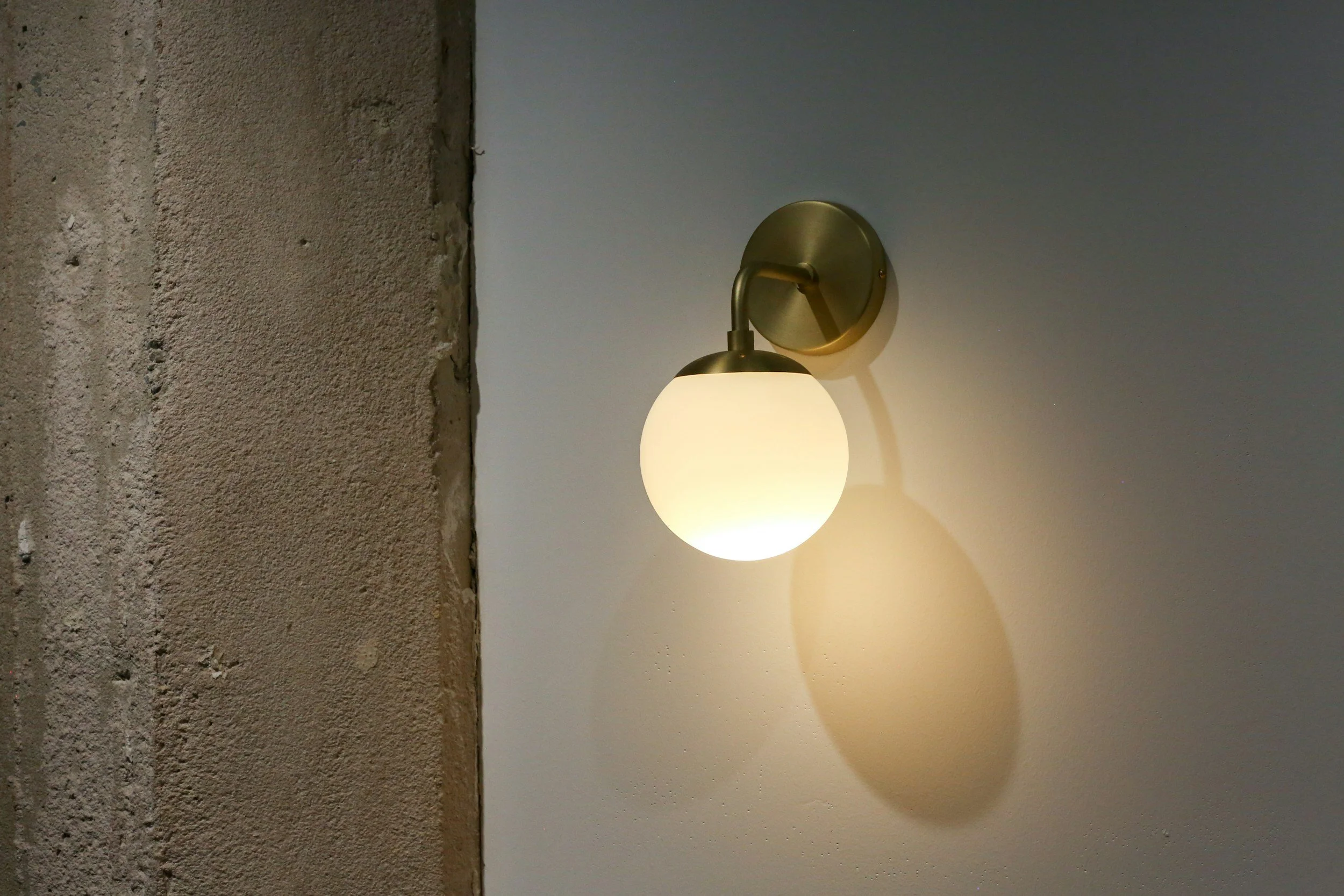
Illuminated round ball sconce providing architectural accent lighting.
The Discipline of Balance
A layered lighting scheme is successful only when it achieves harmony. A refined interior must remain comfortable yet visually dynamic. To maintain the Madison Prime standard, light temperatures must remain consistent across all layers. This consistency signals an attention to detail that separates a professionally designed space from a merely furnished one.
Conclusion
The composition of light is not a trend; it is a core principle of luxury design. By treating light as a structural element, you ensure that every zone of the home feels elevated, intentional, and timeless.

Layered Textures, Strategies for Depth and Contrast
Luxury is felt through the intentional interplay of materials. Discover the Madison Prime rules for layering textures, from the contrast of stone and fiber to the balance of matte and luster, to create a home with depth, warmth, and permanence.
In a well curated home, luxury is felt. A sophisticated room relies on the intentional layering of textures to create a sense of permanence and warmth. By focusing on how different surfaces interact, you move beyond "decorating" and into the professional world of curation.

Textured area rug paired with a round, hand knit ottoman that serves as a floor pillow.
The Discipline of Texture Contrast
High end design is found in the balance of opposing forces. We follow a strict hierarchy of materials to ensure every space feels grounded and intentional:
The Rigid and the Organic: Softening the cold, honed surface of a marble plinth with the weight of a heavy linen throw. This interaction is deepened by The Weight of Wood, where the natural grain of walnut or white oak provides the essential organic counterpoint to stone and metal.
The Matte and the Luster: Pairing light absorbing textures like raw wood and velvet with reflective accents like hand blown glass or unlacquered brass.
The Scale of the Grain
A sophisticated layer is achieved by varying the "grain" of your materials. We suggest a composition of three distinct scales to prevent a space from feeling flat:
Large: A hand knotted wool rug or oversized linen drapery. We consider The Foundational Rug to be the primary anchor of this scale, establishing the textural boundary upon which all medium and fine grains are layered.
Medium: Top grain leather upholstery or woven storage elements.
Fine: Fine grain ceramics, silk blend accents, or smooth metal hardware.
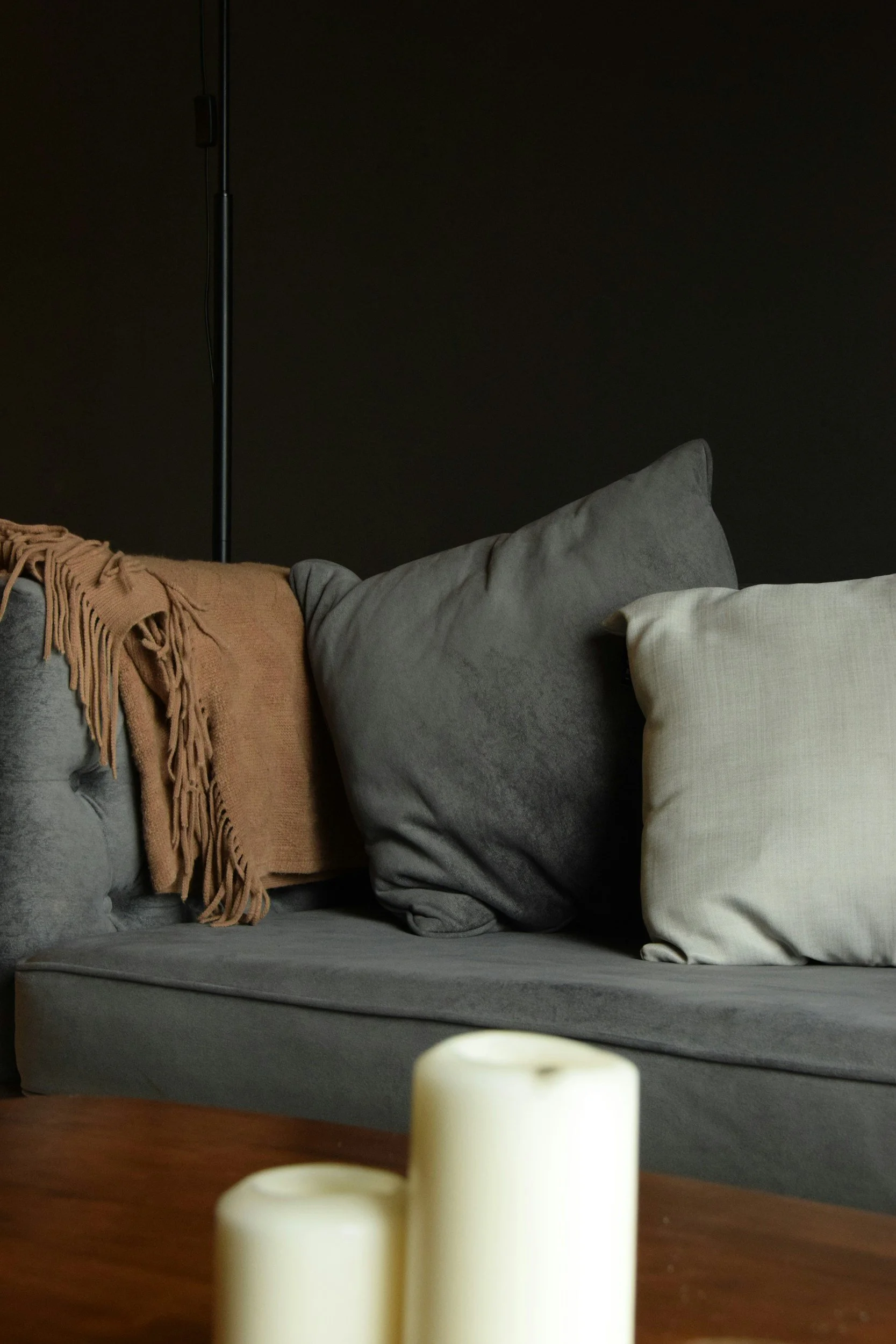
Close up of a suede couch with a cashmere throw, suede pillow, and linen pillow covers.
Restraint Over Excess
While layering is essential, restraint is the key to an elevated aesthetic. We suggest limiting a single volume to five distinct textures within a disciplined, neutral color palette. This ensures the space remains an inviting environment rather than a collection of competing ideas.