The Oaxacan Hearth
The comal in an Oaxacan kitchen has never needed a redesign. It's the same flat disc of clay or stone, set directly over open flame, that cooks here were using long before the Spanish arrived, and its job hasn't changed: char a chile or warm a tortilla, nothing else required. Its name comes straight from the Nahuatl word for it, comalli. The volcanic molcajete beside it is just as old, and gets its own full treatment elsewhere on this site.
That kind of continuity runs through the rest of the kitchen, in ways easy to miss if you're only looking for what changed.
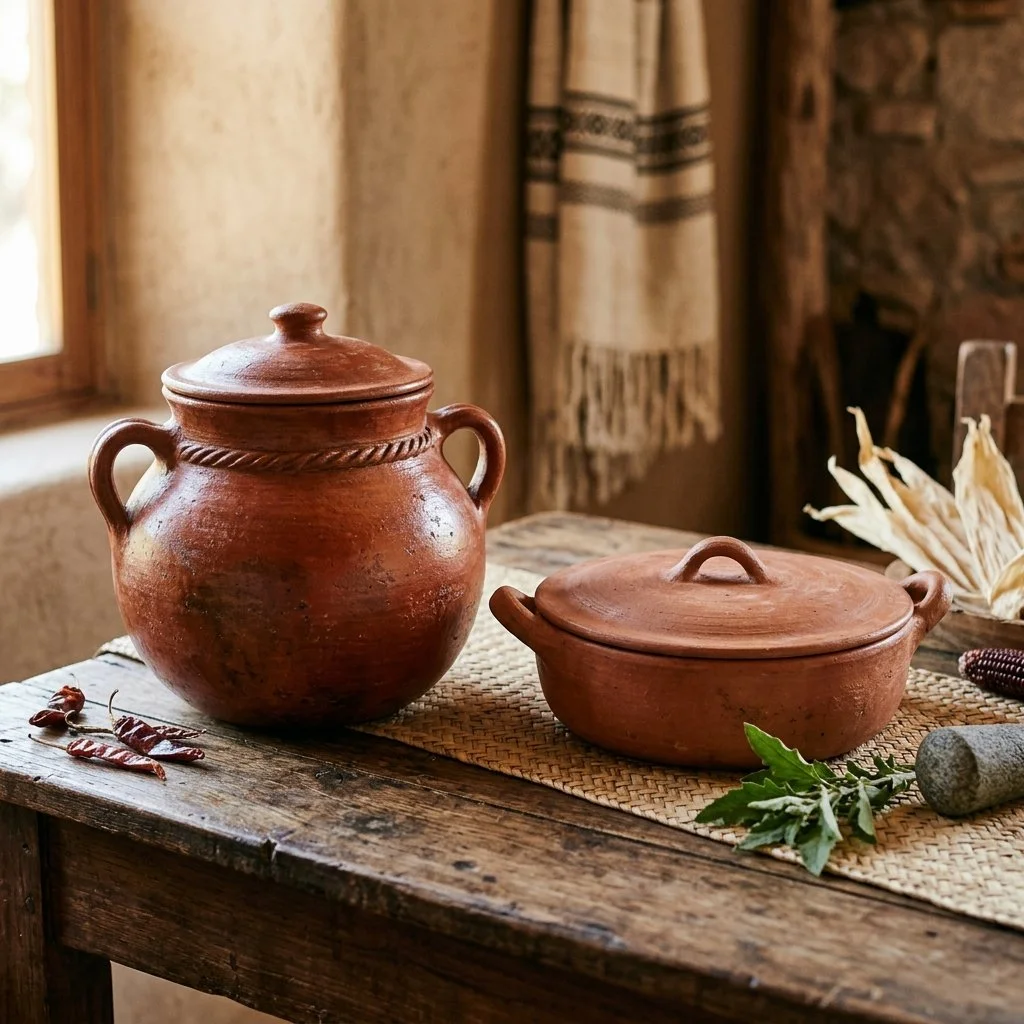
Handmade red clay olla and cazuela cookware from San Marcos Tlapazola.
The Village That Colors Everything Red
Not far from Tlacolula sits San Marcos Tlapazola, a Zapotec village where a few hundred women still work red clay entirely by hand, a craft passed mother to daughter for twenty generations. There's no wheel involved. Pieces are shaped using little more than a corn husk and a smooth stone. The clay comes from the hillsides above the village, rich in the iron oxide that gives it that unmistakable red once fired.
The clay is dug from the hillside and mixed with sand, then left in the sun for about a week. After that, it goes into an open pit and is fired over wood and kindling. Pieces meant for daily cooking are scraped and burnished nearly smooth first, so they hold up to years of stovetop use. Decorative pieces are left exactly as the fire leaves them, marked by smoke. This is the source I'd point a designer toward for a real olla or cazuela, not the glossy version made by machine and sold everywhere else.
The Other Red
There's a second red in Oaxaca that has nothing to do with clay, and it predates the Spanish by centuries. Cochineal, a tiny insect that lives on the nopal cactus, produces one of the most vivid reds ever found in nature once it's dried and crushed. Zapotec and Mixtec dyers in the Oaxaca Valley farmed it at least three hundred years before colonization and used it to color textiles and ceremonial objects. When the Spanish encountered it, they'd never seen anything like it in Europe, and it briefly became one of New Spain's most valuable exports after silver. It's the fact about this place I didn't expect: the deepest, most expensive red in the room might be the one made by a bug.
That same dye still colors woven table runners and linens found across Oaxacan households today, made the way it's always been made, and it never needed an invented backstory to be interesting.
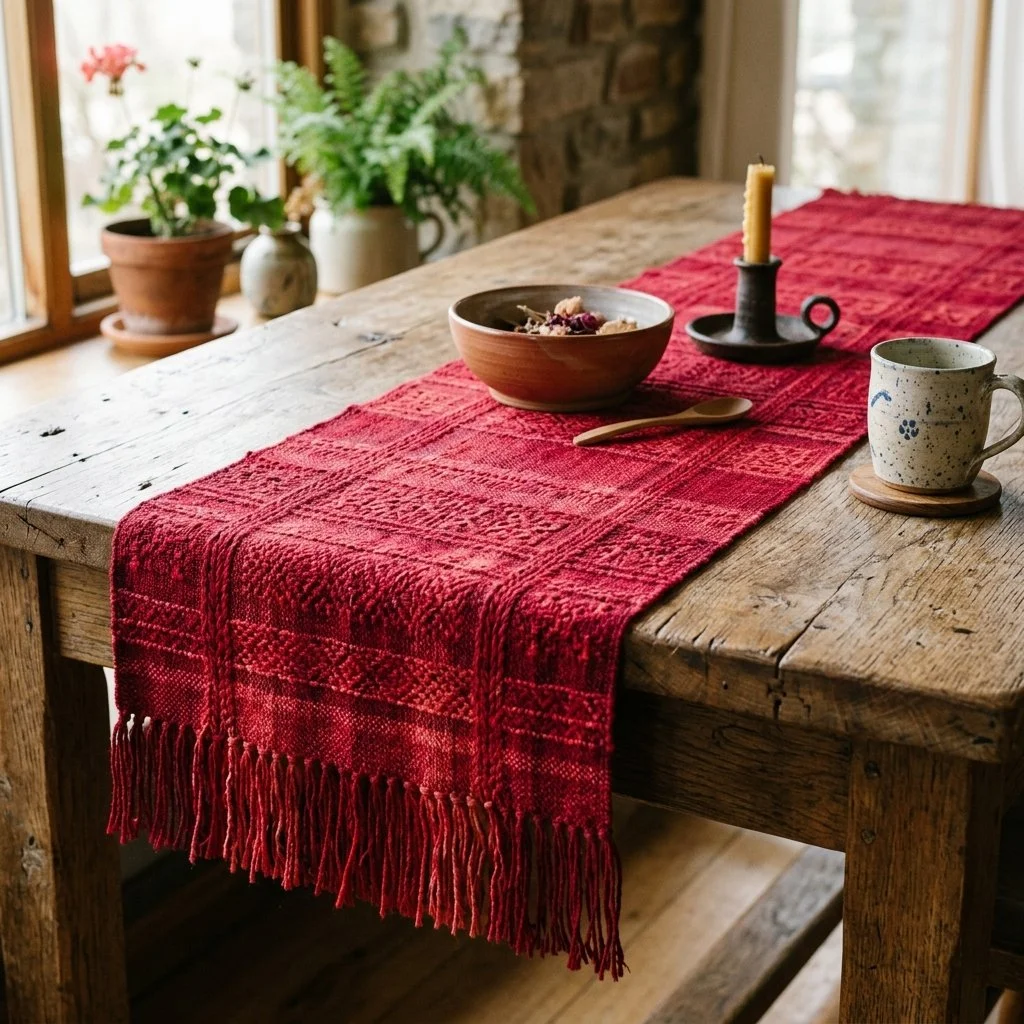
A handwoven table runner dyed in rich cochineal red rests on a rustic wood table.
What Four Centuries Added
Not everything on this table is this old. Quesillo, the stretched string cheese wound by hand into a ball, exists because Spanish ranchers found the Valley of Etla suited to raising cattle in the late 1500s, something the region never had before then. The molinillo works the same way: everyone assumes the carved whisk is purely indigenous, but it's a Spanish invention. The Mesoamerican method for foaming chocolate was to pour it back and forth between two vessels, not whisk it at all. Both arrived centuries after everything else in this kitchen, yet both were absorbed completely enough to read as native now.
What Never Left
Take away the cheese and the whisk, and everything else in this kitchen is standing exactly where it started. The comal is unchanged, and the red clay still comes from the same hillside it always has. The cochineal thread is dyed the way it's been dyed for centuries. A place doesn't prove its provenance by staying frozen. It proves it by absorbing four centuries of additions without losing the thing that was there first.
For a designer sourcing either: San Marcos Tlapazola's cooperative of red clay potters is the real channel for an olla or cazuela, and Teotitlán del Valle's natural dye weaving cooperatives, the ones still working only with cochineal and other plant dyes instead of synthetic ones, are the channel for cochineal dyed textiles.