Foundations
Not every story here starts with an interview. Some start with a question I wanted answered myself, how to actually tell hand forged from mass produced, why one stone became prized over another. This is where the research based answers live.
A staircase can bring a stonemason, a stair builder, a blacksmith and a tile painter onto one job. Where each material belongs on a stair, and when a guard’s top rail can count as the handrail.
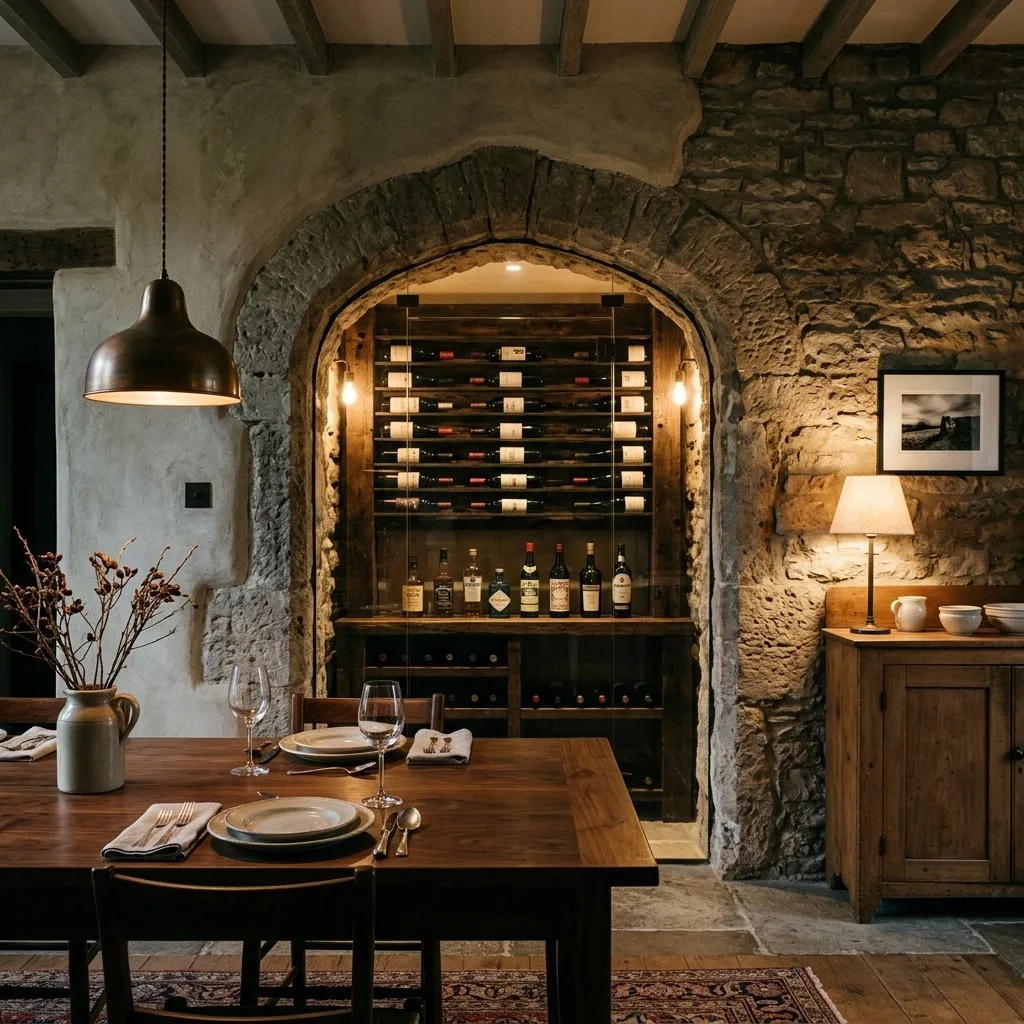
A glass wine room has to hold cellar conditions behind its weakest wall. Here is where the vapor barrier goes, and why the serving bottles belong in a separate cabinet.
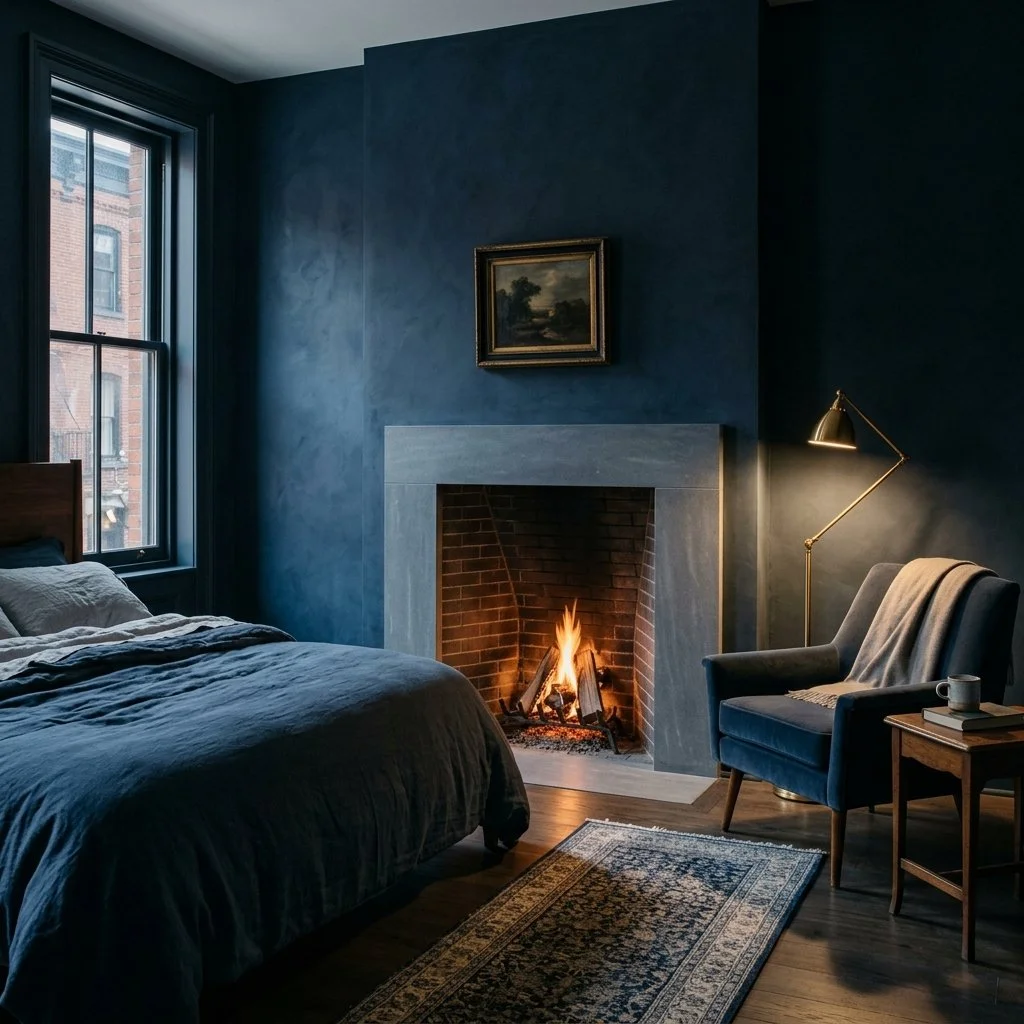
A Rumford is a tall, shallow masonry fireplace that throws heat into the room instead of up the chimney. The code numbers to check, and the two details builders skip most.
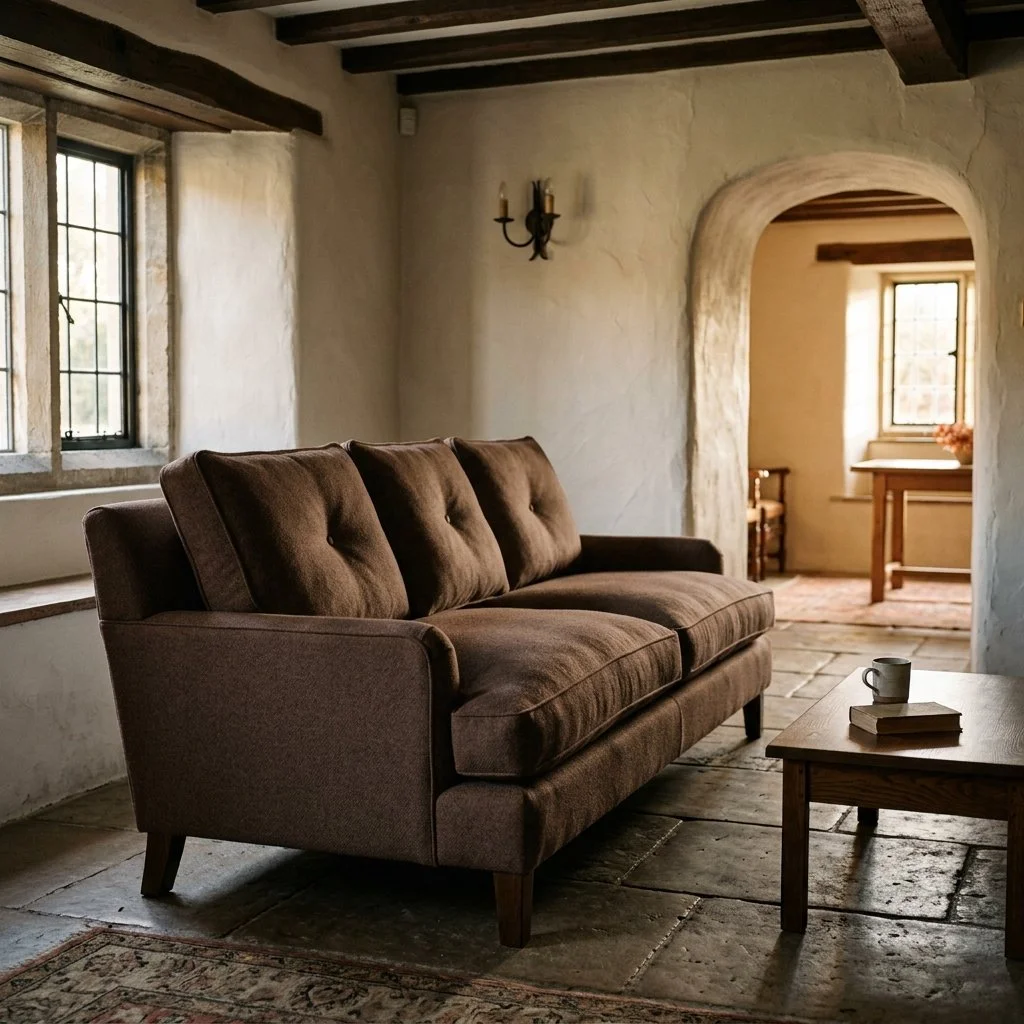
Eight way hand tied comes from a fix for loose coil springs in the 1820s. How a sofa's frame, suspension, foam and fabric each set its lifespan, and what to put in the specification before you order.
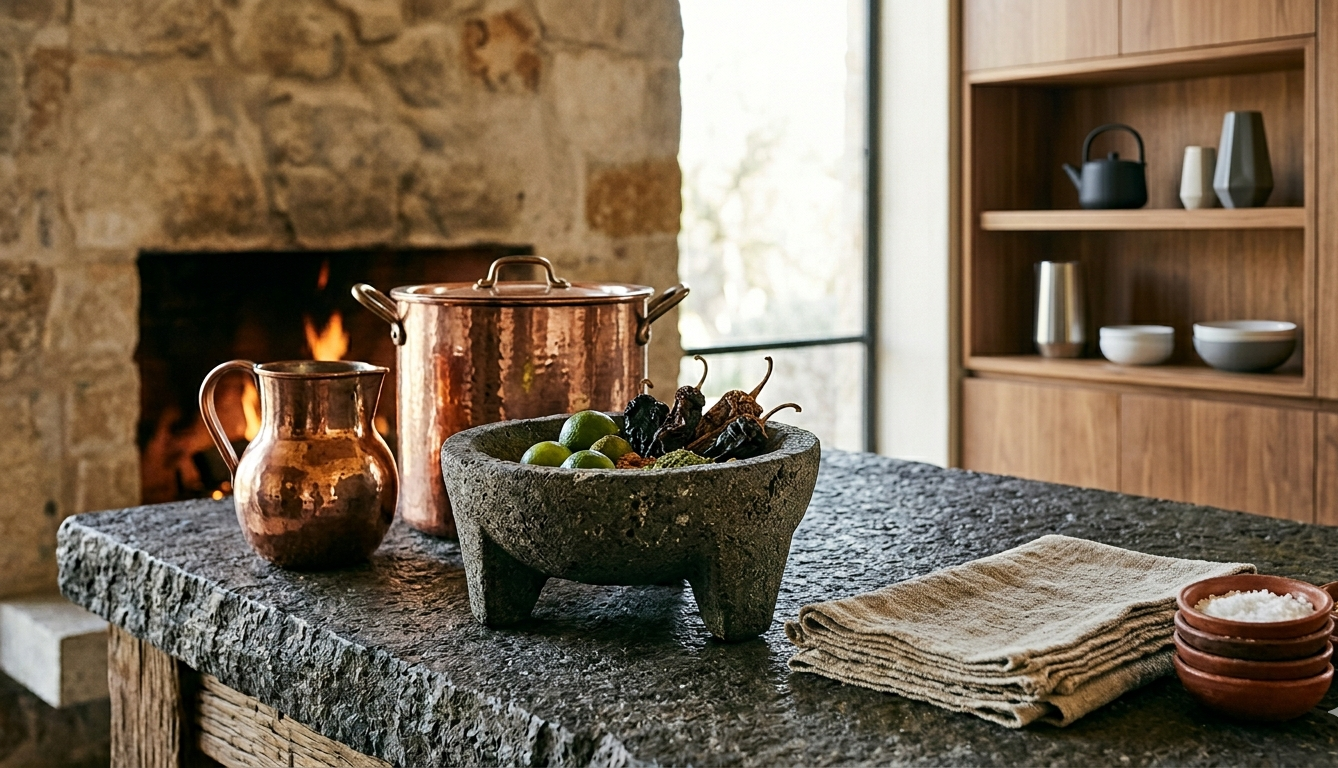
A molcajete is cured with rice and salt before its first use, and a copper pot needs its tin lining renewed about once a decade. The kitchen tools that improve with use, and the Mexican workshops that still make them.
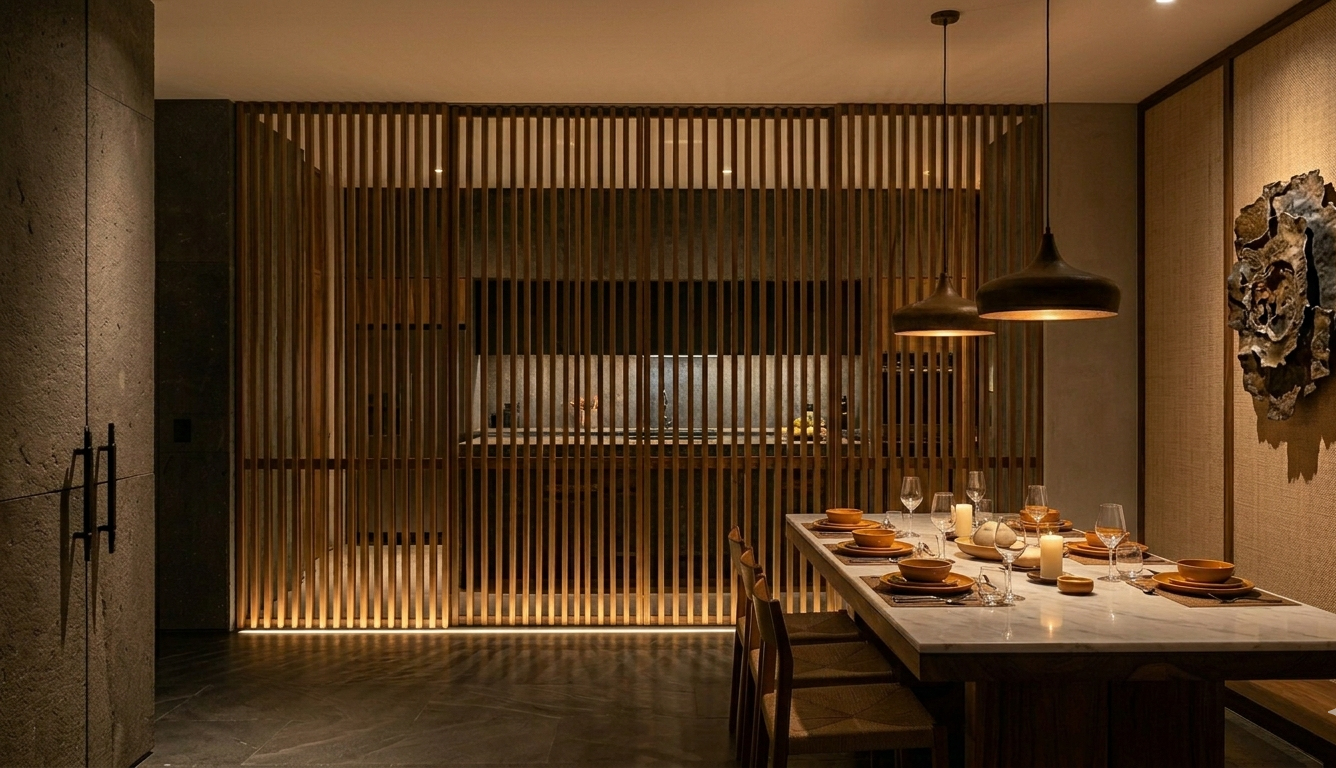
Open plan kitchens tend to fail the night guests arrive. How a partition of Tzalam slats and Chukum plaster separates cooking from dinner, and why the right builder is often the one who already knows the house.
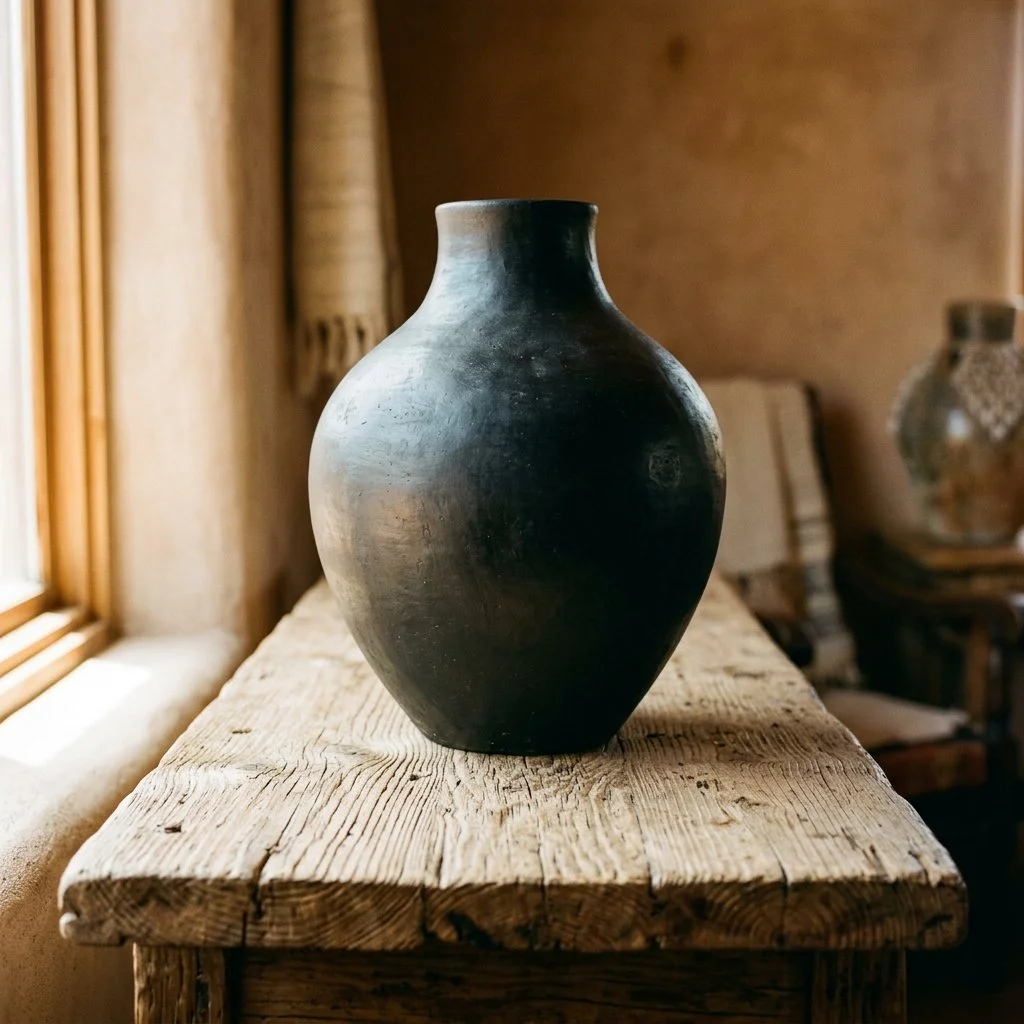
Visual weight comes from size, darkness, contrast and texture, which is why one object can hold a whole room. Barro Negro from San Bartolo Coyotepec and Cantera stone carved near Guadalajara, and why the older matte black clay is the one to choose.
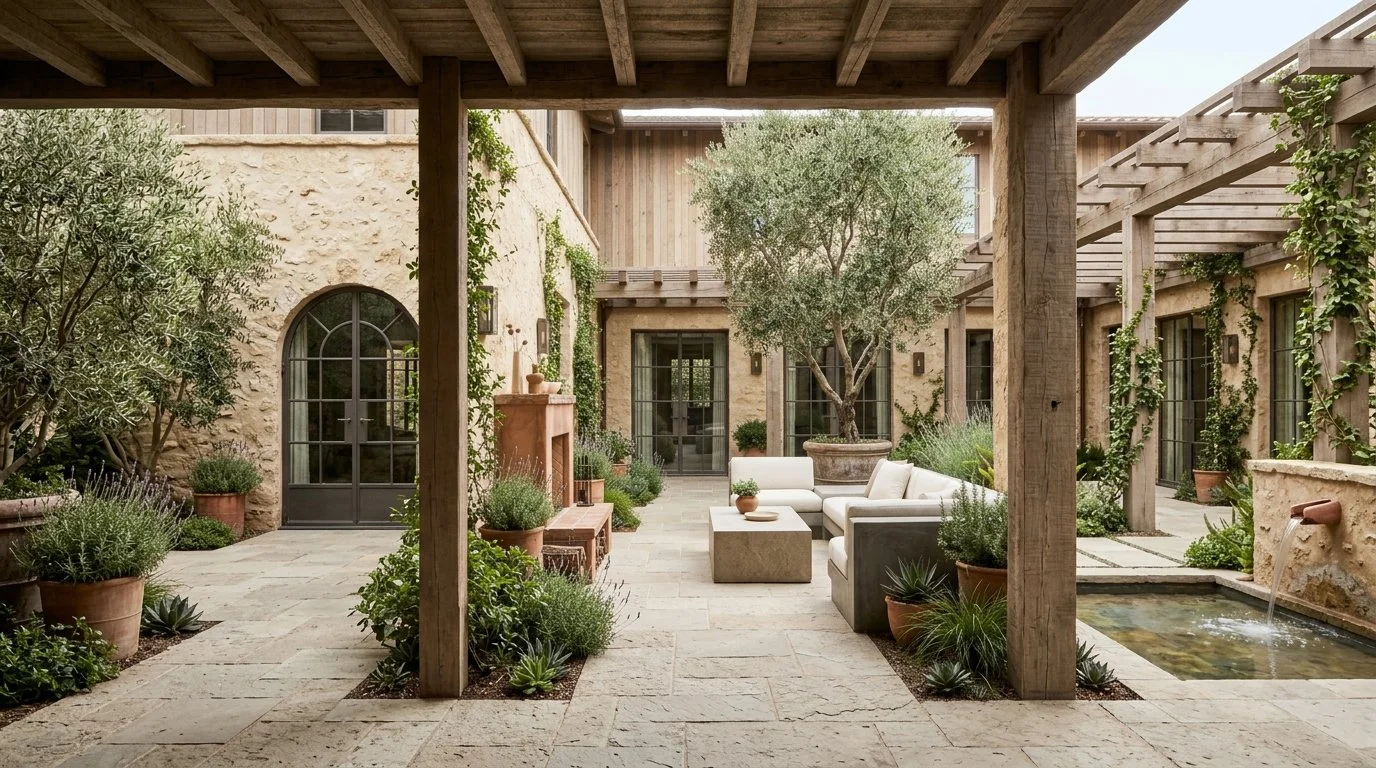
The courtyard house is about 8,000 years old, and the Roman impluvium leads straight to the Andalusian patio and colonial Mexico. What makes terracotta and bronze worth putting in one, and the simple test of whether anyone sits there.
A mitered edge makes a three quarter inch slab read as a solid block. How a kitchen island is built around a stone like Calacatta Viola from the Apuan Alps, and where the seams should fall.