
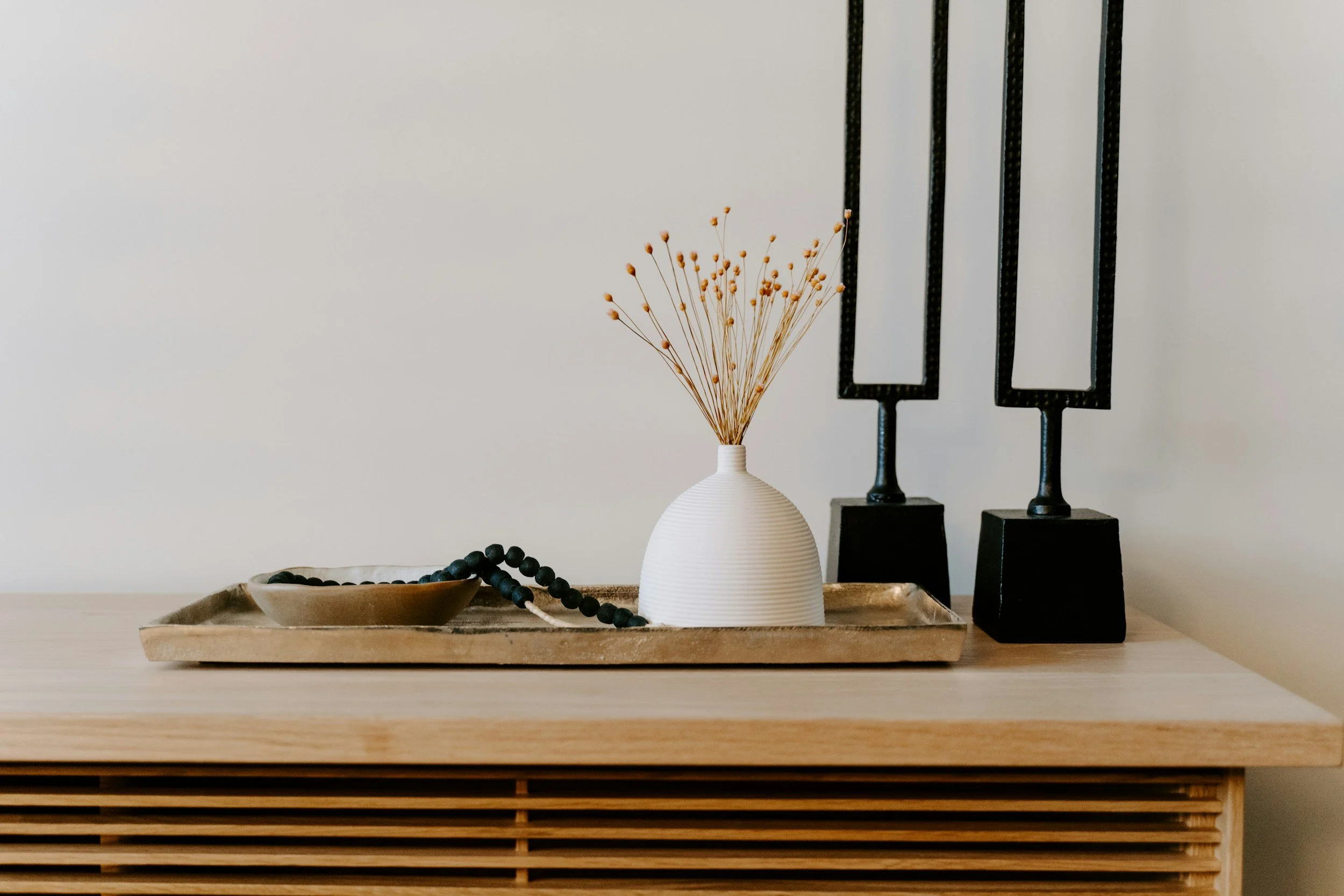
The Architecture of the Accent
The final layer of a home is its most telling. Explore the architecture of the accent, from the hierarchy of texture to the intentional composition of everyday surfaces.
Refinement is not a result of quantity, but a discipline of restraint, balance, and intentional placement. Every environment offers opportunities to signal taste through the "small things", those essential details that speak to a cohesive design philosophy. By focusing on the structural importance of a room’s smaller elements, a space moves from merely furnished to professionally composed.
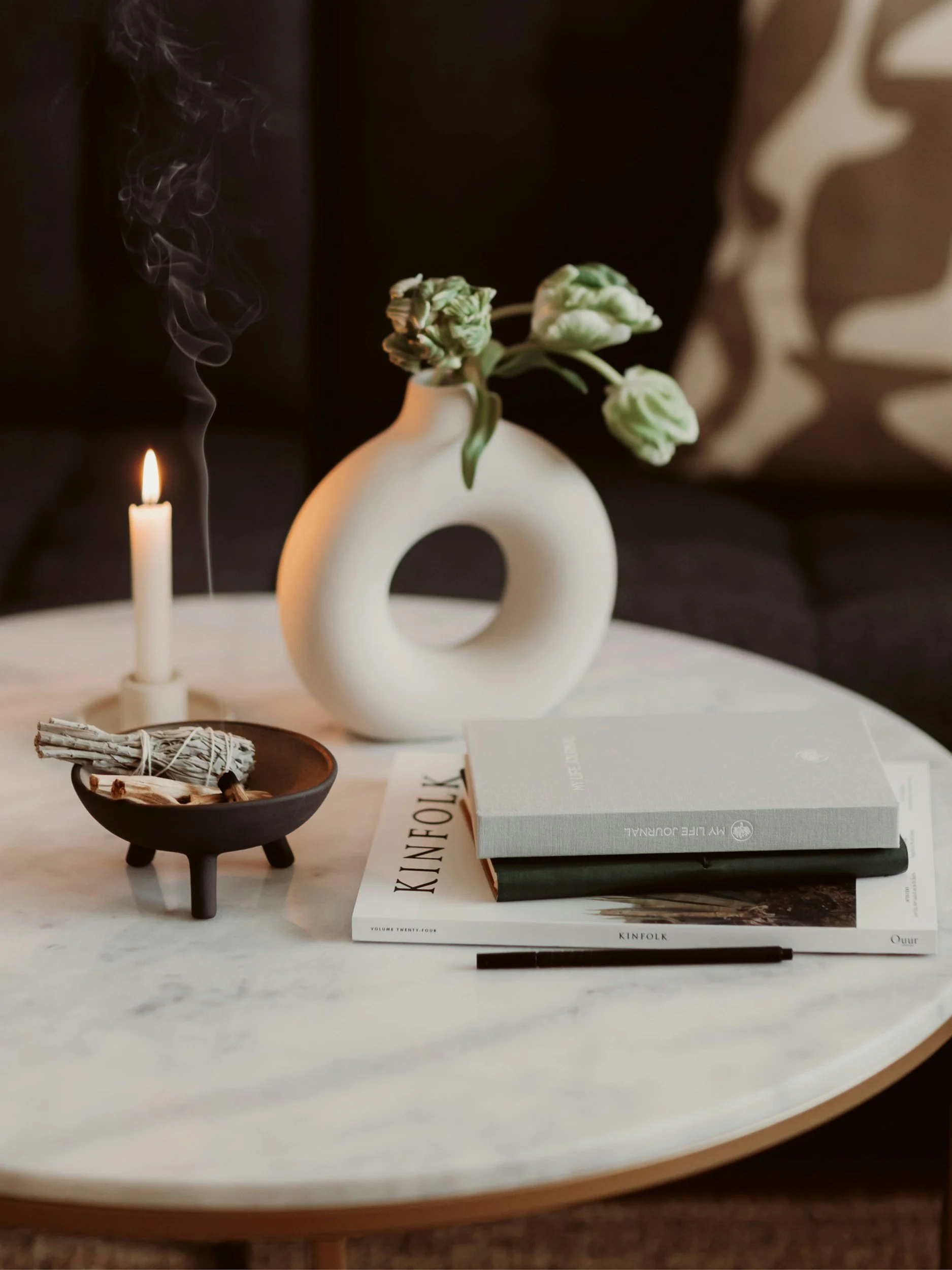
Close up of a coffee table, a curated stack of design books, a minimalist candle, and vase.
The Texture Hierarchy
Depth is achieved through the deliberate layering of contrasting materials. A single material lacks dimension; however, pairing soft textiles against cold metallics, glass, or stone creates a sensory complexity. This layering is central to Layered Textures, Strategies for Depth and Contrast, where the weight and feel of every surface defines the room’s character.
The Foundation: Utilize neutral, high quality bases in wool or linen.
The Contrast: Introduce polished metal trays, sculptural ceramics, or glass vessels to break the visual plane.
Intentional Transitions
Often overlooked areas, entryways, side tables, and niches, should be treated as deliberate vignettes. We suggest anchoring these spaces with a singular statement object: a structural lamp, a tall botanical, or a weighted sculpture. This creates a focal point of "social gravity" that prevents the space from feeling accidental.
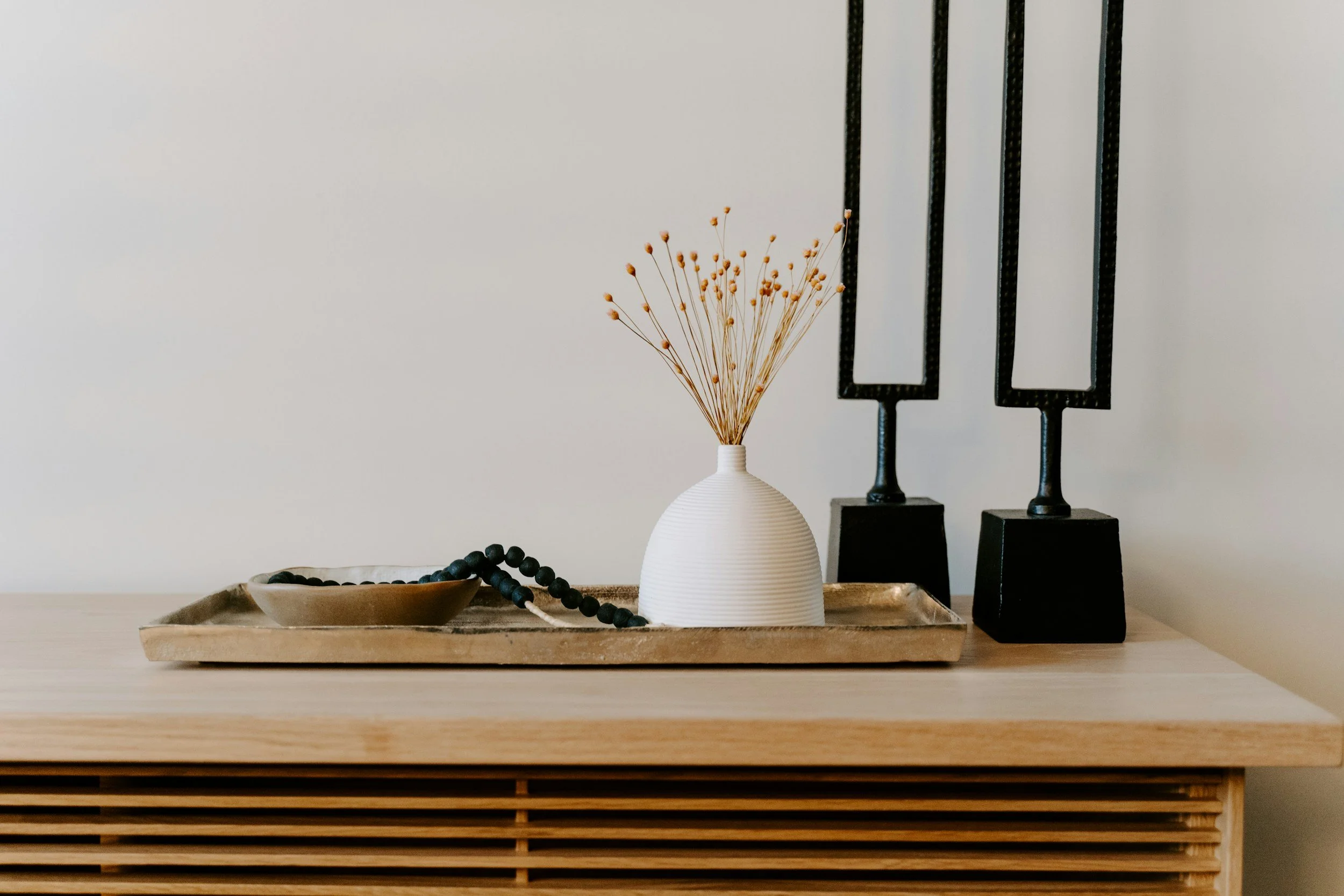
Close up of a wooden credenza top, a styled tray and tall, architectural metal accents.
Surface Composition
Surfaces such as mantels and consoles are the finishing layers of an interior. To maintain an editorial feel, objects should be grouped with attention to scale and negative space. Allowing an object "room to breathe" is as important as the object itself.
The Rule of Odds: Group items in sets of three or five to create a natural, asymmetrical balance. That’s why we always lead with The Hero Piece, once you have that one substantial, high caliber item to build around, the rest of your smaller objects finally have a reason to be there.
Material Variety: Ensure a mix of wood, metal, and organic textures to keep the eye moving.
The Discipline of Flow
A well composed home must maintain a sense of movement. Accents should enhance the architectural flow of a room rather than obstruct it. By considering the height, color, and weight of every piece, you guide the eye naturally through the home, creating a seamless transition from one zone to the next.
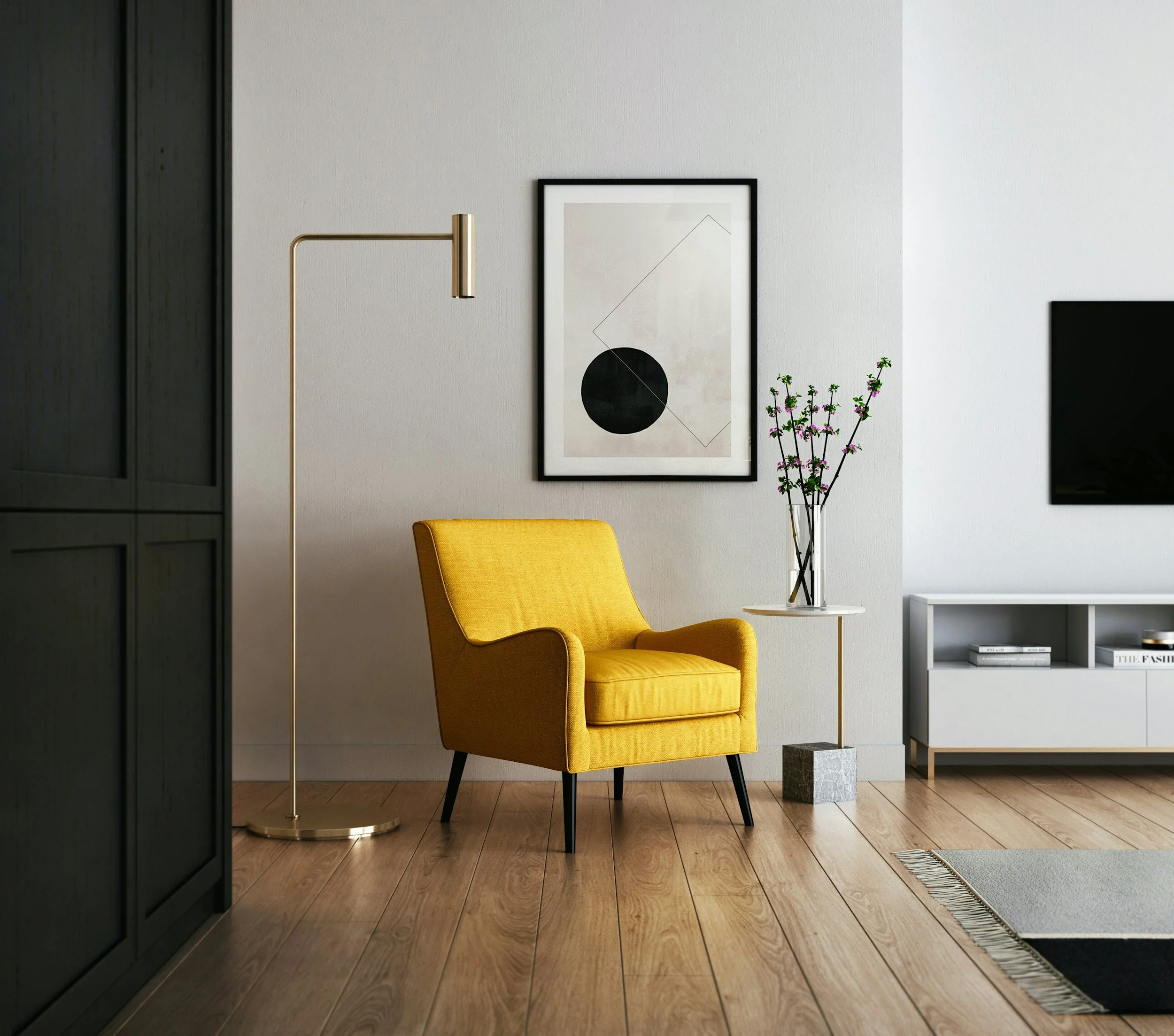
Modern reading area, a simple yellow linen chair, a sleek floor lamp, and framed wall art.
Conclusion
The final layer of a home is its most telling. By treating every surface and corner as a deliberate composition, you transform a living space into an environment dedicated to quality, restraint, and the beauty of the essential.
The Centered Table
The dining table is more than furniture; it is a focal point of social gravity. Explore the Madison Prime approach to form, material geometry, and the hierarchy of illumination.
The dining table is the structural heart of a home. It is a visual focal point that demands a balance of permanence and versatility. To move beyond the utilitarian, a table must be curated with the same intentionality as a gallery installation, ensuring that every interaction, from a casual morning to a formal evening, is framed by a sense of occasion. This transition from function to atmospheric experience is governed by The Architecture of Light, which serves to anchor the table within the larger volume of the room.
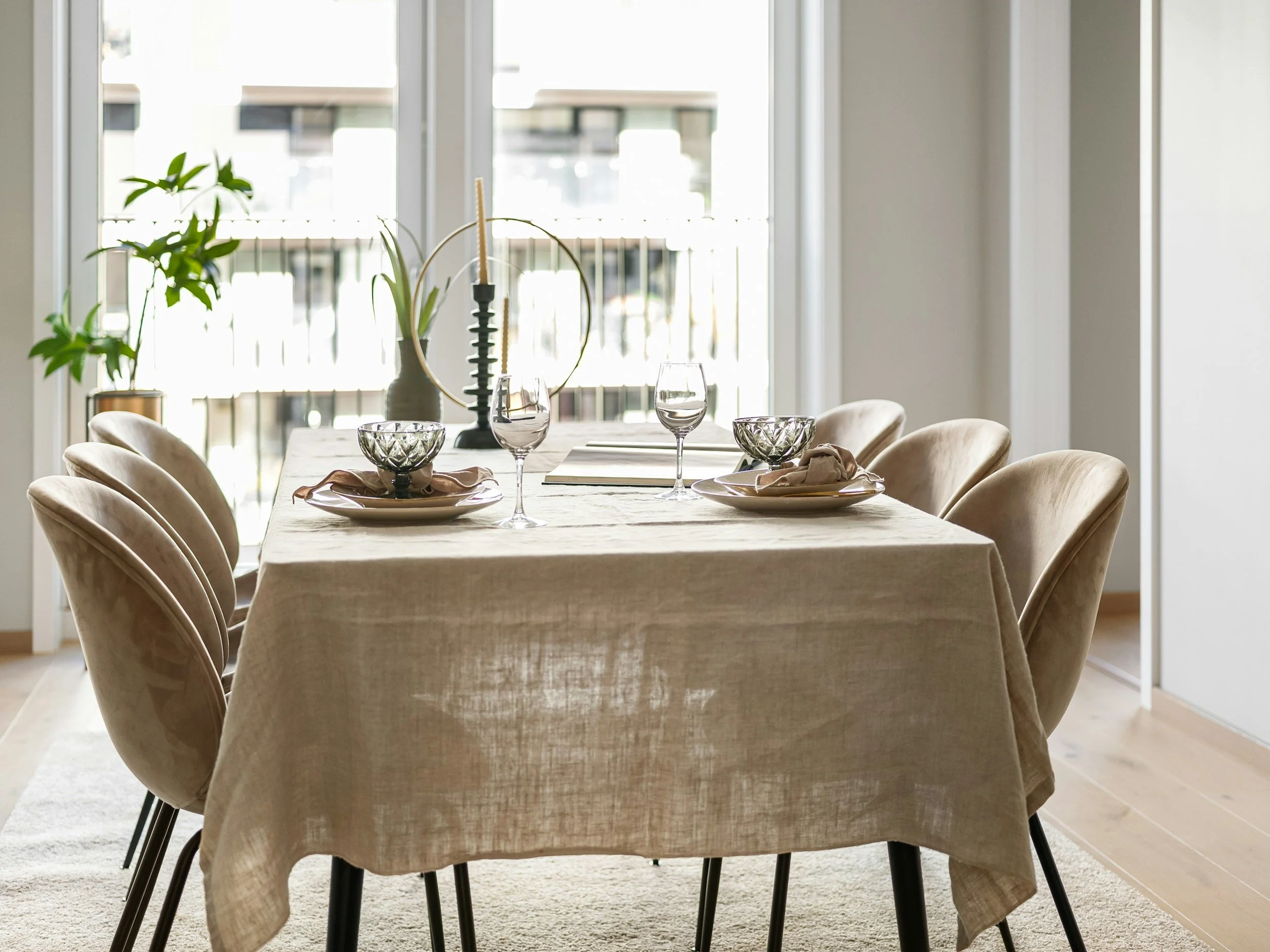
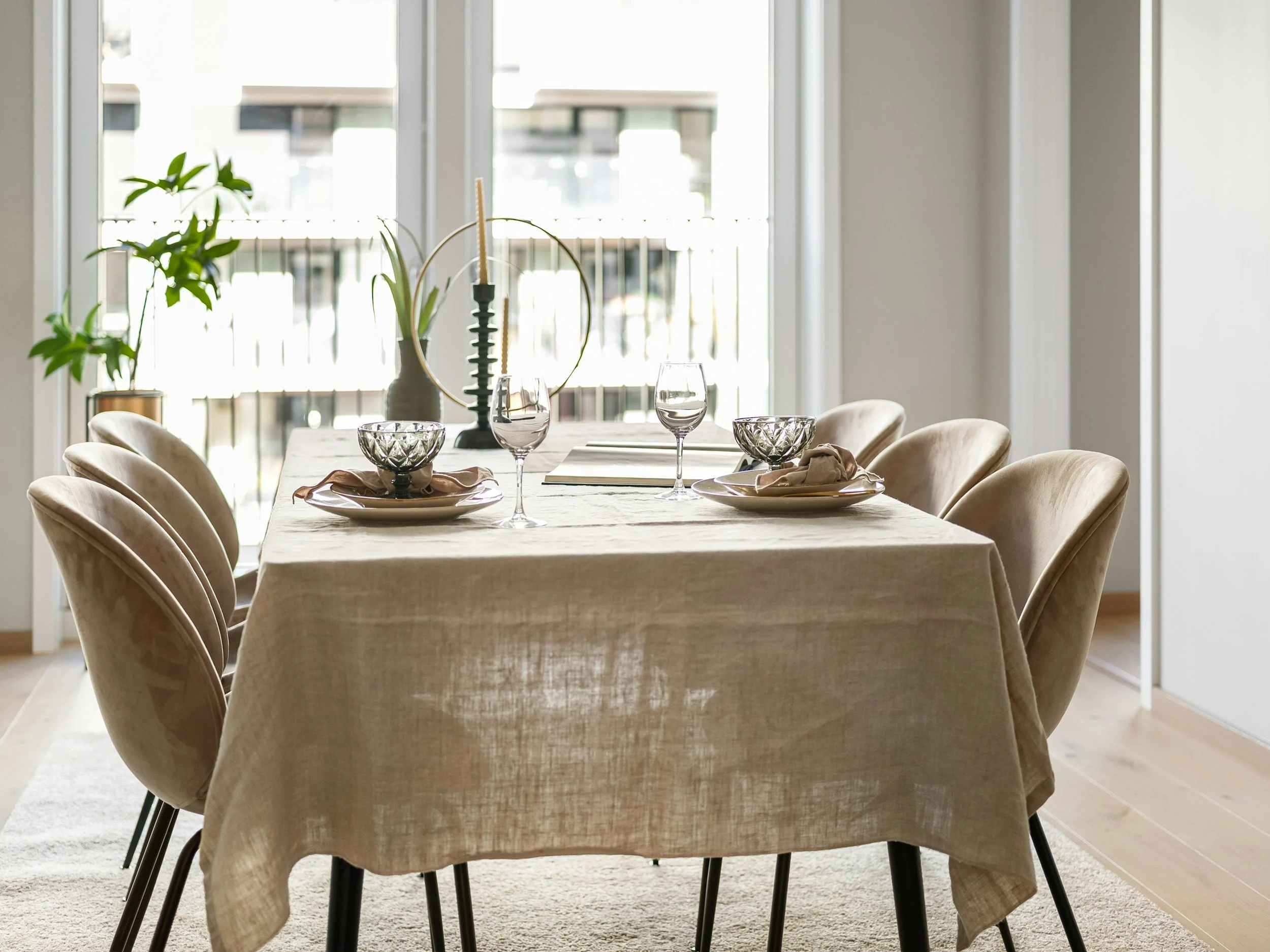
Sand colored linen tablecloth on a table for six set for two.
Geometry and Materiality
The character of a dining space begins with the material choice. We prioritize natural elements that age with dignity: walnut, veined marble, and brushed metals. These selections must remain consistent with the standards established in What Defines Luxury Home Decor? The Essential Manifesto, ensuring the tactile quality of the piece matches its visual presence. The geometry of the table dictates the energy of the room:
Rectangular: Establishes a formal, linear discipline.
Round: Encourages a fluid, conversational atmosphere.
Oval: Provides a sophisticated middle ground for versatile gatherings.
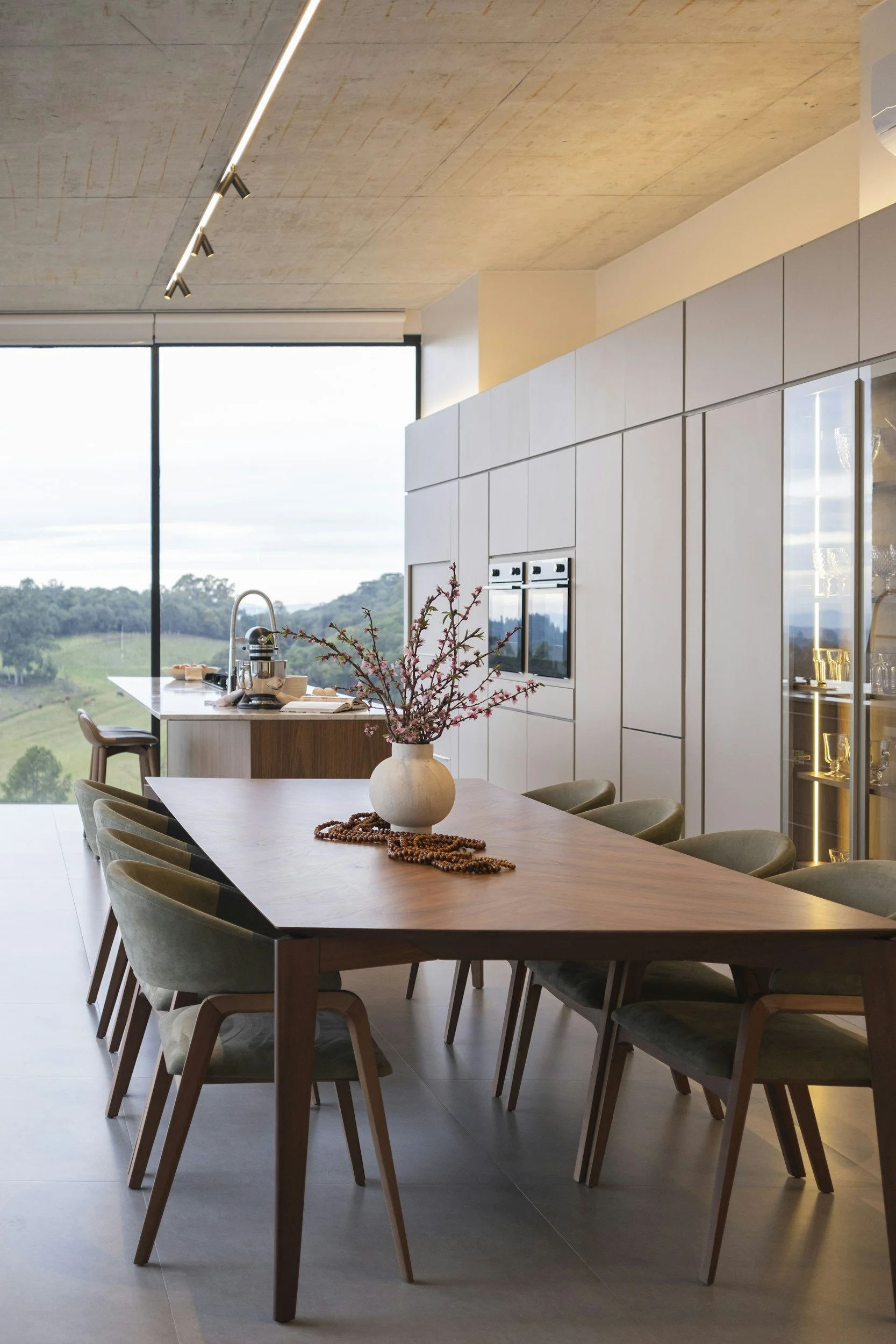
Solid wood dining table paired with architectural velvet chairs and a handcrafted vase centerpiece.
The Hierarchy of Illumination
Lighting defines the dining zone. A singular pendant or chandelier should serve as the anchor, scaled precisely to the table’s dimensions. To avoid a flat environment, we suggest a layered approach:
The Primary Source: A statement fixture that grounds the space.
The Ambient Layer: Dimmable sconces or low level candlelight to introduce warmth and intimacy.
Curated Layers
We move away from cluttered centerpieces and toward minimalist, high impact decor. A dining surface should remain edited. Consider a single, sculptural vase or a textured textile runner that introduces a new material without disrupting the visual plane. These choices should feel like a deliberate extension of the home’s overall design philosophy.
The Standard of the Everyday
High end living is not reserved for the guest; it is a standard for the resident. By maintaining a baseline of quality in your everyday dishware and textiles, the transition to formal hosting becomes seamless. It is the consistency of these small, thoughtful choices that defines a refined lifestyle.
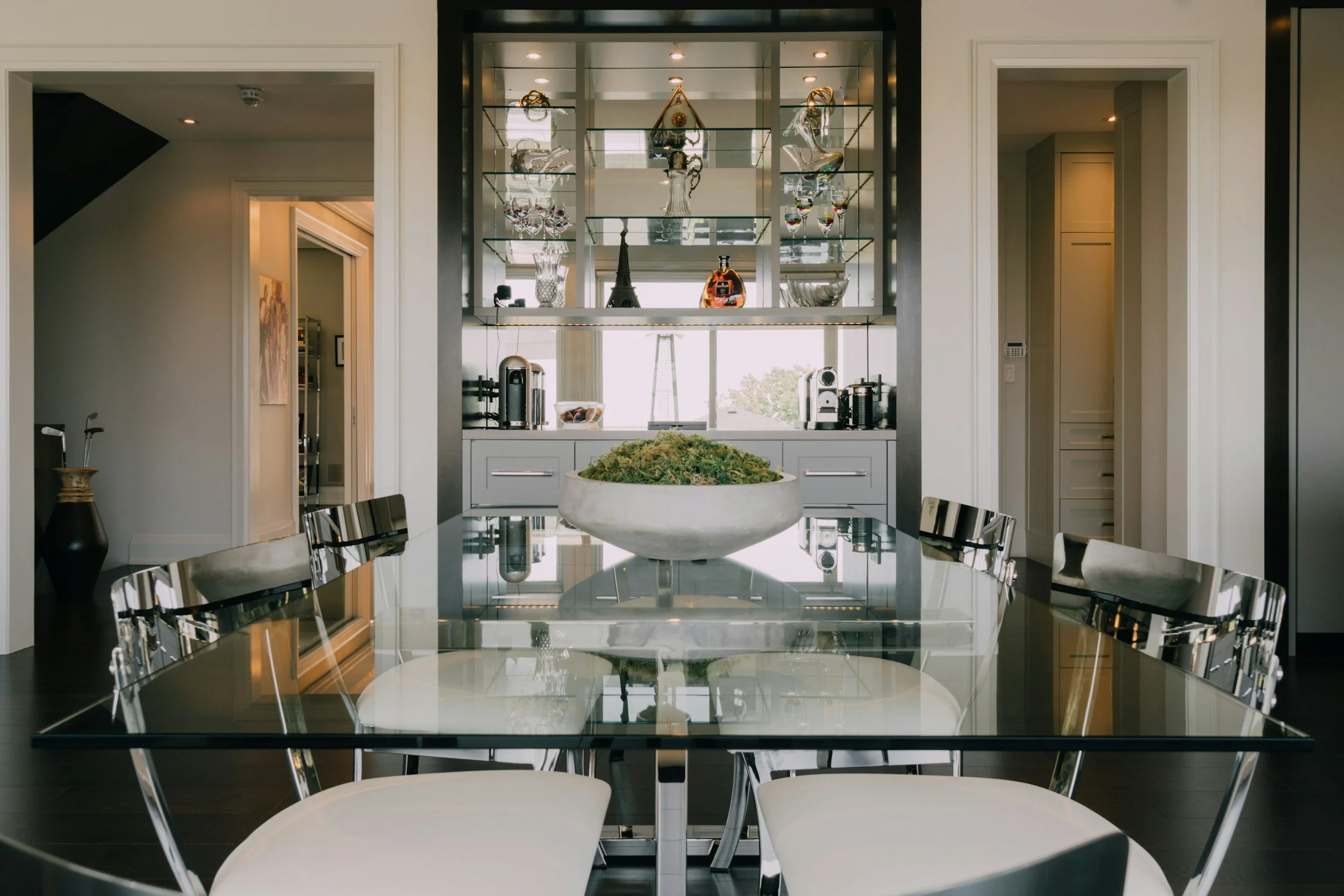
Glass top dining table surrounded by chairs featuring polished chrome frames and suede upholstery.
Conclusion
A well composed dining table is a testament to intentional living. By focusing on form, light, and material, you transform a functional object into a lasting center of interaction.