The Vessel That Holds the Room
I didn't expect to find design theory backing up something I already do by instinct, but there's an actual term for it: visual weight. A dark, textured object reads as physically heavier than a pale, smooth one the same size, even though nothing about its real mass has changed. Photographers, painters, and graphic designers use this on purpose, to control where the eye lands first and how long it stays there. A living room works the same way. Give one object enough visual weight, and it becomes the thing everything else in the room organizes around, without you doing anything else to earn it.
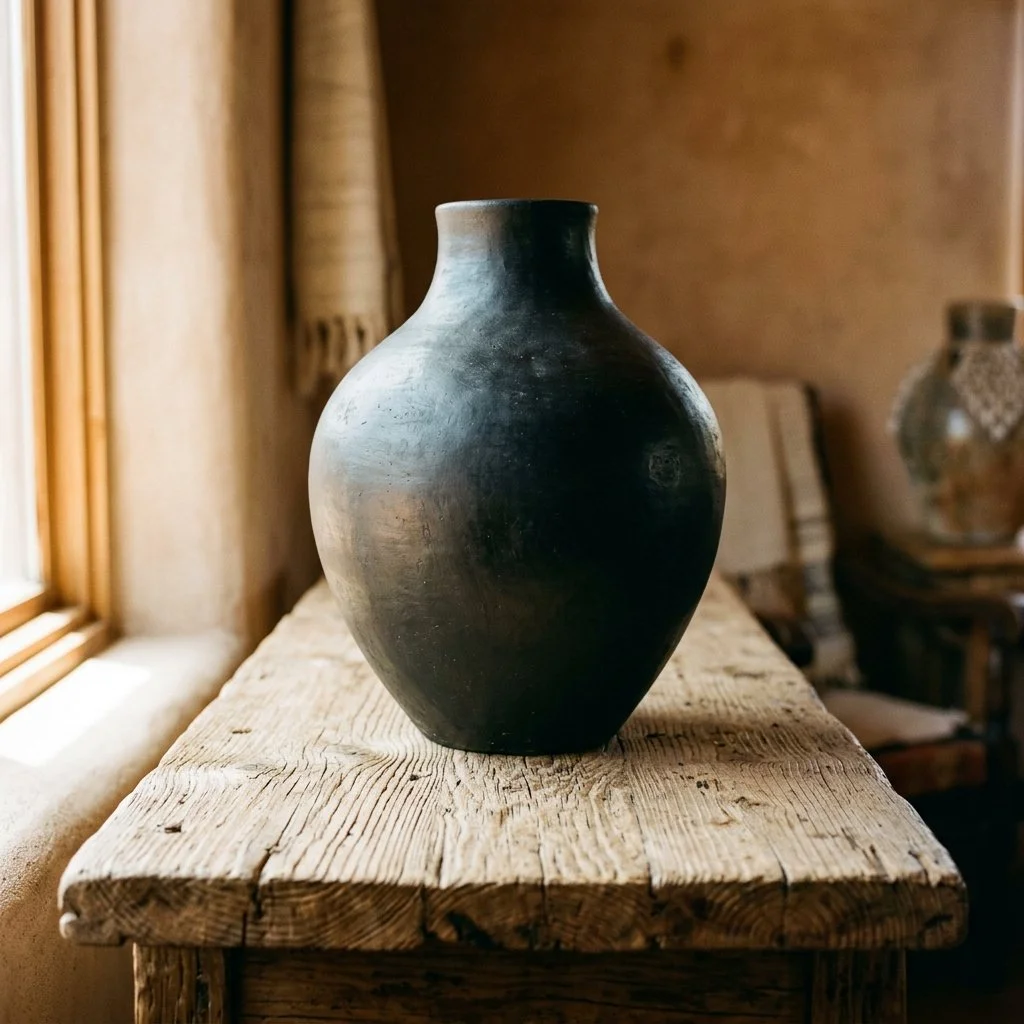
A large, matte black Barro Negro pottery vessel sits centered on a weathered, rough hewn wooden console table.
The Eye Reads Weight Before It Reads Detail
Size is still the biggest factor, but color and finish do real work too. A dark, matte surface absorbs light instead of bouncing it back, so the object holds its own edges instead of blending into whatever sits behind it. That's why a single black clay bowl the size of a dinner plate can outweigh, visually, a whole shelf of smaller pale ceramics. I keep coming back to two materials that do this without trying: matte black clay from Oaxaca, and volcanic stone quarried across central Mexico.
A Craft Two Thousand Years Older Than the Trend
Barro negro, black clay, comes from San Bartolo Coyotepec in Oaxaca, where Zapotec and Mixtec potters have worked the same local clay for roughly 2,500 years. For most of that history it fired matte, in tones of black and gray, sturdy enough to survive being knocked around as an actual working jar. In the 1950s, a potter named Doña Rosa discovered that burnishing the nearly dry clay with a smooth stone before firing produced a glossy, mirror black finish instead. It's the version most people picture now, and it's also more fragile and more porous than the traditional matte form. For an object meant to live in a room and get handled, the older, unburnished version is the one worth owning. It takes daily use without wearing down, and its surface does exactly what a heavy anchor piece needs: it absorbs the light in the room instead of throwing it back. Some of the same families in San Bartolo Coyotepec still fire it in pit kilns dug into the ground, the way their grandparents did.
The Stone Colonial Mexico Was Built From
Cantera is a volcanic tuff. The word itself just means "quarry" in Spanish, which tells you how central it's been to Mexican building for centuries. It's the stone behind the cathedrals and haciendas of Guadalajara and Querétaro, carved into columns, fountains, and church façades that are still standing. It's also genuinely porous and light for a stone, which is what lets it be carved into a real vessel without the crushing weight of granite or basalt. The color shifts by quarry, running gray in one region and gold in another. Oaxaca's version is different: a distinct green, the result of volcanic ash settling into a silt bed before it hardened. A single Cantera vessel carries that same architectural lineage indoors.
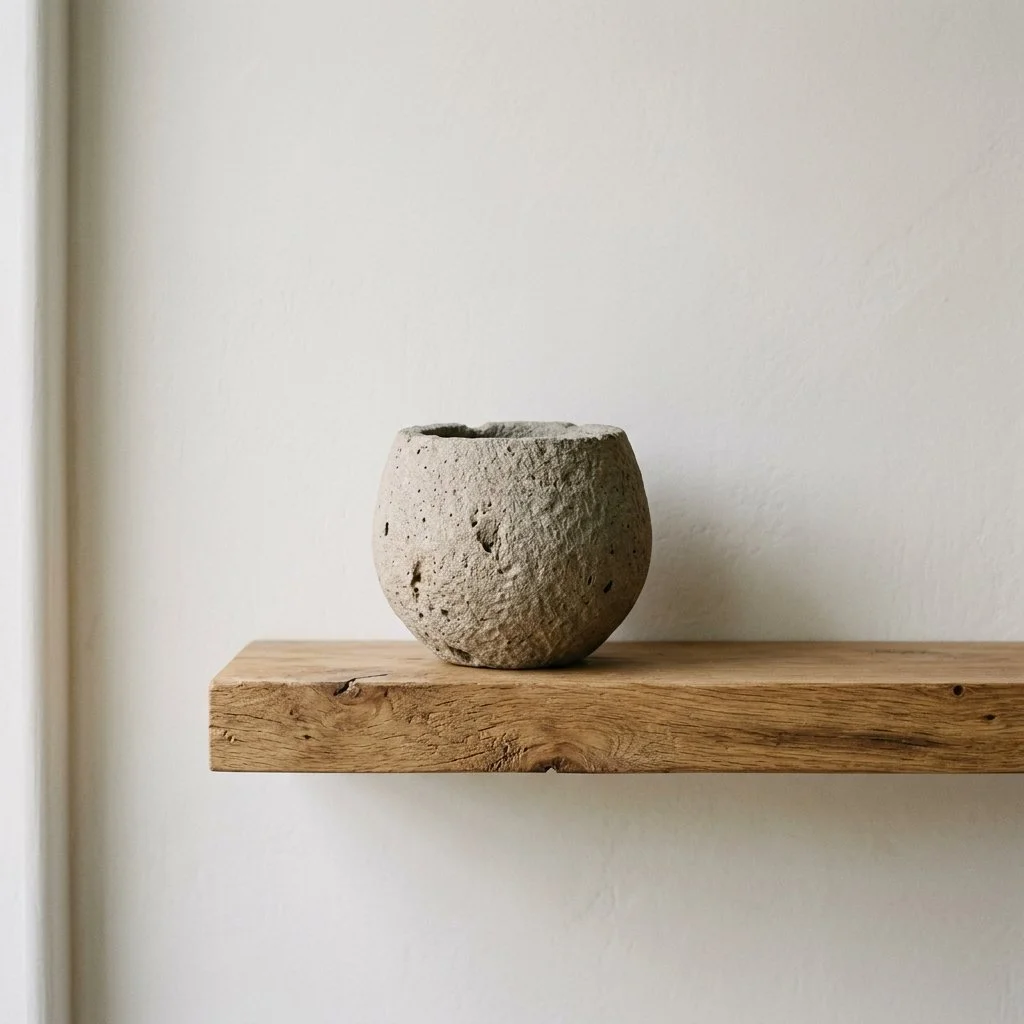
Hand carved porous Cantera stone vessel resting on a rustic, floating solid wood shelf.
Where One Object Does the Most Work
In the kitchen: a matte black clay bowl against a stone island reads as texture against texture, not competition.
In the bedroom: a small Cantera vessel on a timber ledge gives a lighter textile palette one grounded point.
In the entryway: a tall black clay jar sets the material tone of the whole house from the moment someone walks in.
