The Sculpting of Light
Most of what makes a room feel expensive has nothing to do with what's in it. It's what's lighting it, and how.
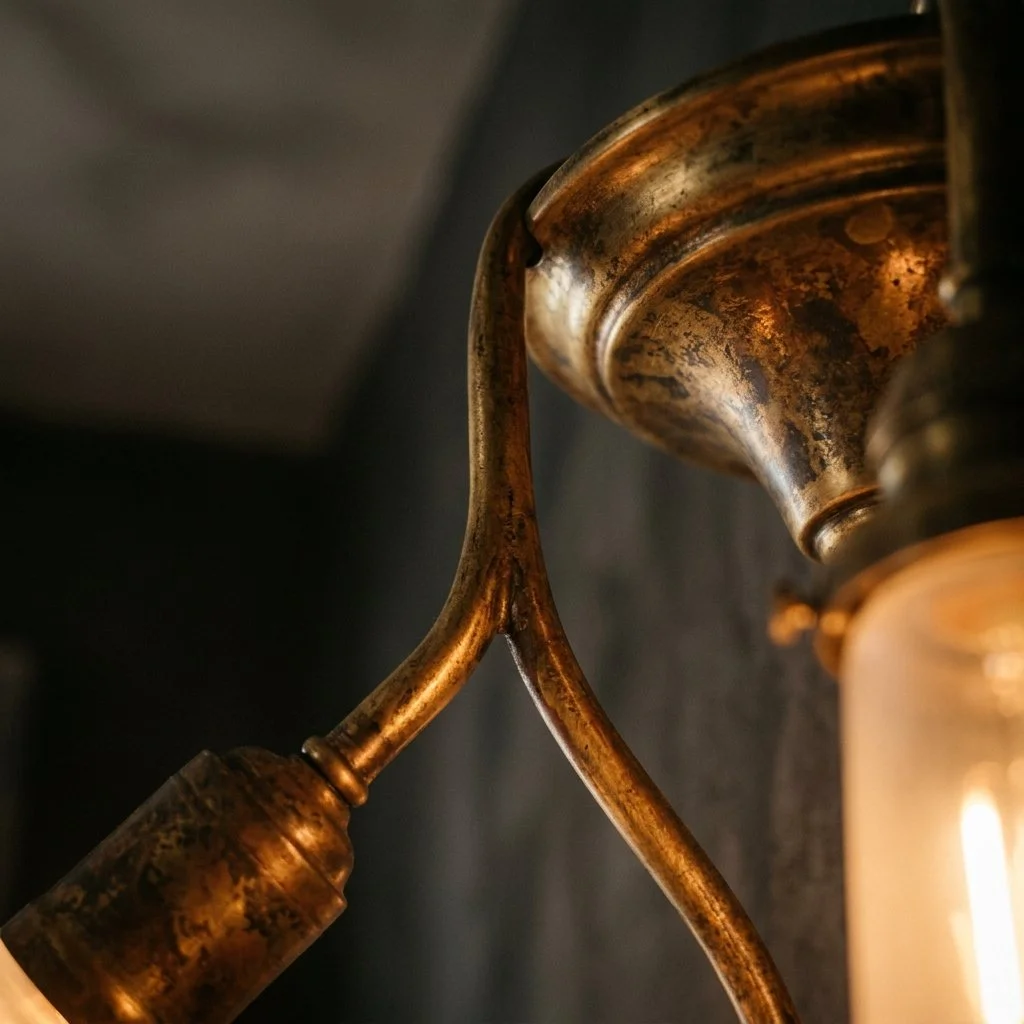
Unlacquered brass light fixture featuring natural oxidation, rich tarnish variations, and a warm 2700K ambient glow.
Provenance, Even in the Fixture
I keep to a warm white, close to 2700 Kelvin, the standard for a residential space you actually want to relax in, and I dim it rather than run it at full output all day. But temperature alone doesn't make a fixture worth having. What separates a real piece from a mass produced one is what it's made of. Alabaster and unlacquered brass carry weight that a resin knockoff can't fake. Brass left unlacquered will darken and patina from ordinary exposure to air; it won't rust, and that's not a flaw. It's the finish doing exactly what it's supposed to do. Alabaster, when a light source sits behind it, doesn't just glow. It shows its own veining, the same way a slab of stone does under the right angle. These are the same standards I hold to everywhere in the home, hardware included. The fixture has to earn the same trust as the light it's throwing.
Not Every Corner Gets the Same Light
A room reads better when light isn't distributed evenly across it. Ambient, task, and accent light each do a different job, and a room that layers them well stops leaning on furniture to define its own shape.
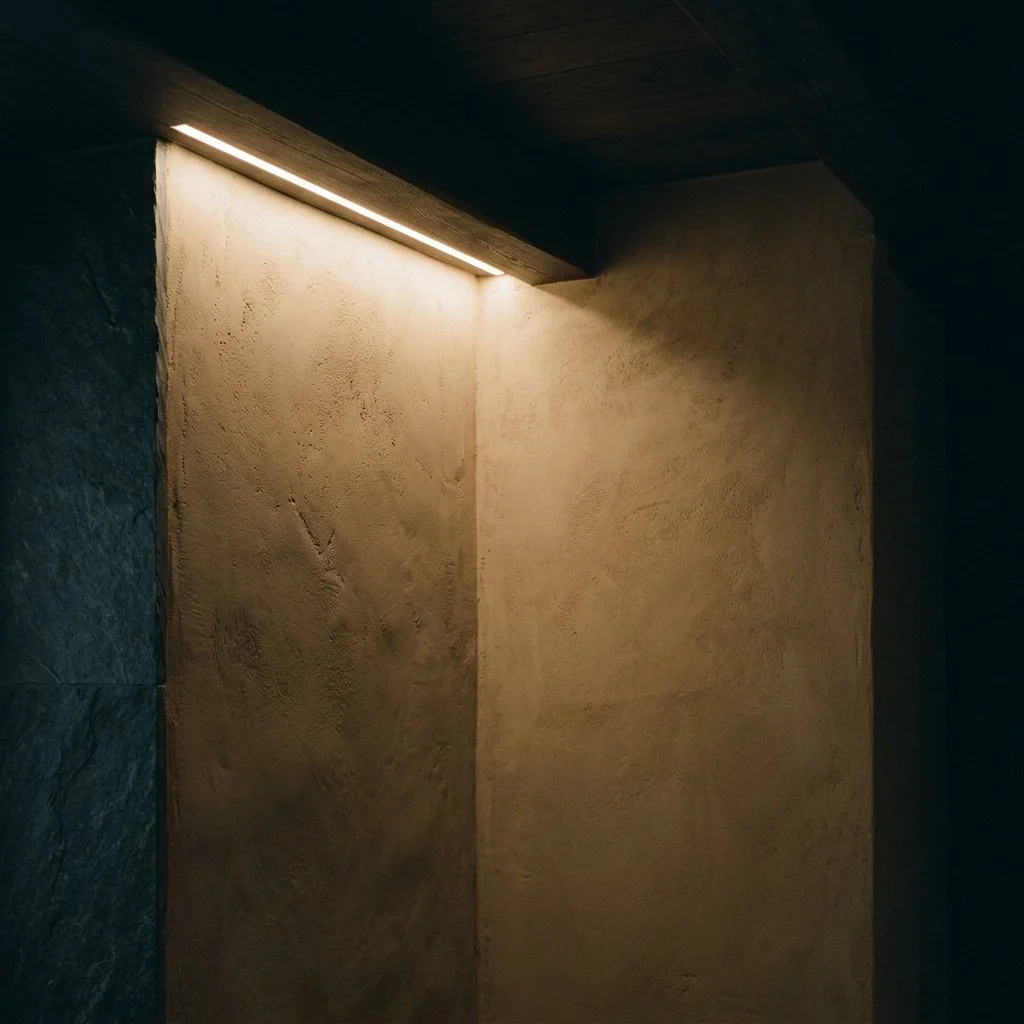
Aceiling cove with soft, warm 2700K light washing down a textured plaster wall set against deep evening shadows.
Fixtures That Disappear Into the Architecture
The real work is in what disappears entirely. A ceiling reveal can hide an LED channel completely. A sconce sits flush against the wall instead of mounted on top of it. Getting the dimming right usually means wiring it into the architecture from the start, not bolting it on after the fact. None of it announces itself, and that's the point. It's not about spectacle. It's about being able to shift a room from working light to evening light without anyone seeing the mechanism behind it.
What I Choose Not to Light
Restraint is the real skill here, more than fixture selection ever will be. Placing light with intention, and then leaving the rest of a room in shadow on purpose, is what separates a considered space from one that's simply bright. What stays dark matters as much as what you choose to illuminate.
