
The Statement Lighting Standard
Statement lighting is the final note in a room’s composition. Explore the Madison Prime standard for selecting fixtures with architectural scale and material depth.
In a refined interior, a statement fixture is not an exercise in excess; it is a declaration of the room’s design narrative. A well chosen chandelier, pendant, or floor lamp should feel effortless, providing a focal point that elevates the space while maintaining a rigorous balance with the existing architecture.
Scale and Proportionate Weight
Adhering to the statement lighting standard requires a strict focus on the room’s dimensions. The fixture must possess the correct "visual gravity" for its environment. Large scale ceiling fixtures are reserved for volumes with significant verticality or as anchors for expansive dining surfaces, such as those discussed in The Centered Table. Conversely, sleek, minimal pendants are utilized in narrower zones to maintain a sense of fluid movement. Every fixture must be scaled to the furniture it accompanies, ensuring the proportion feels intentional rather than accidental.
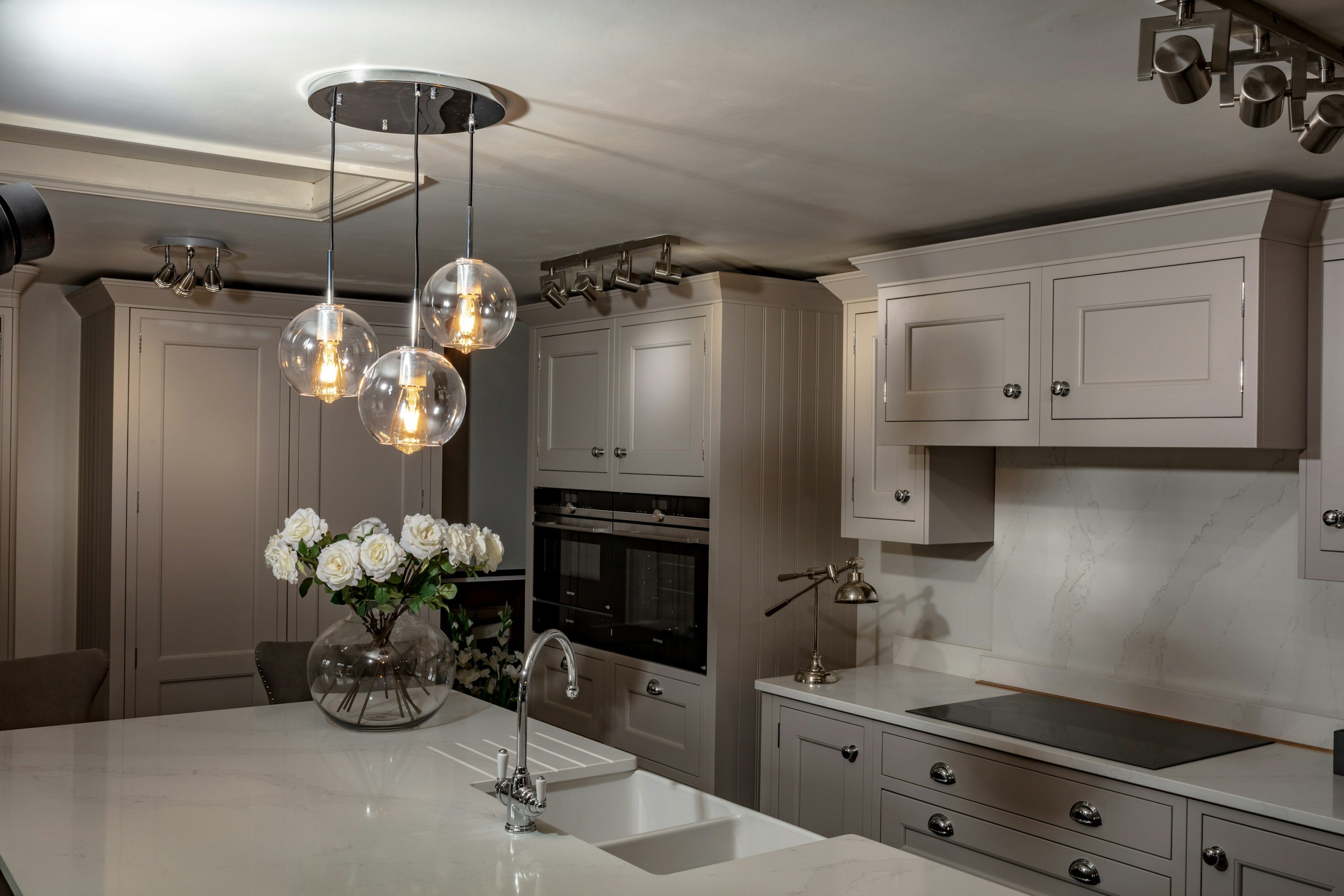
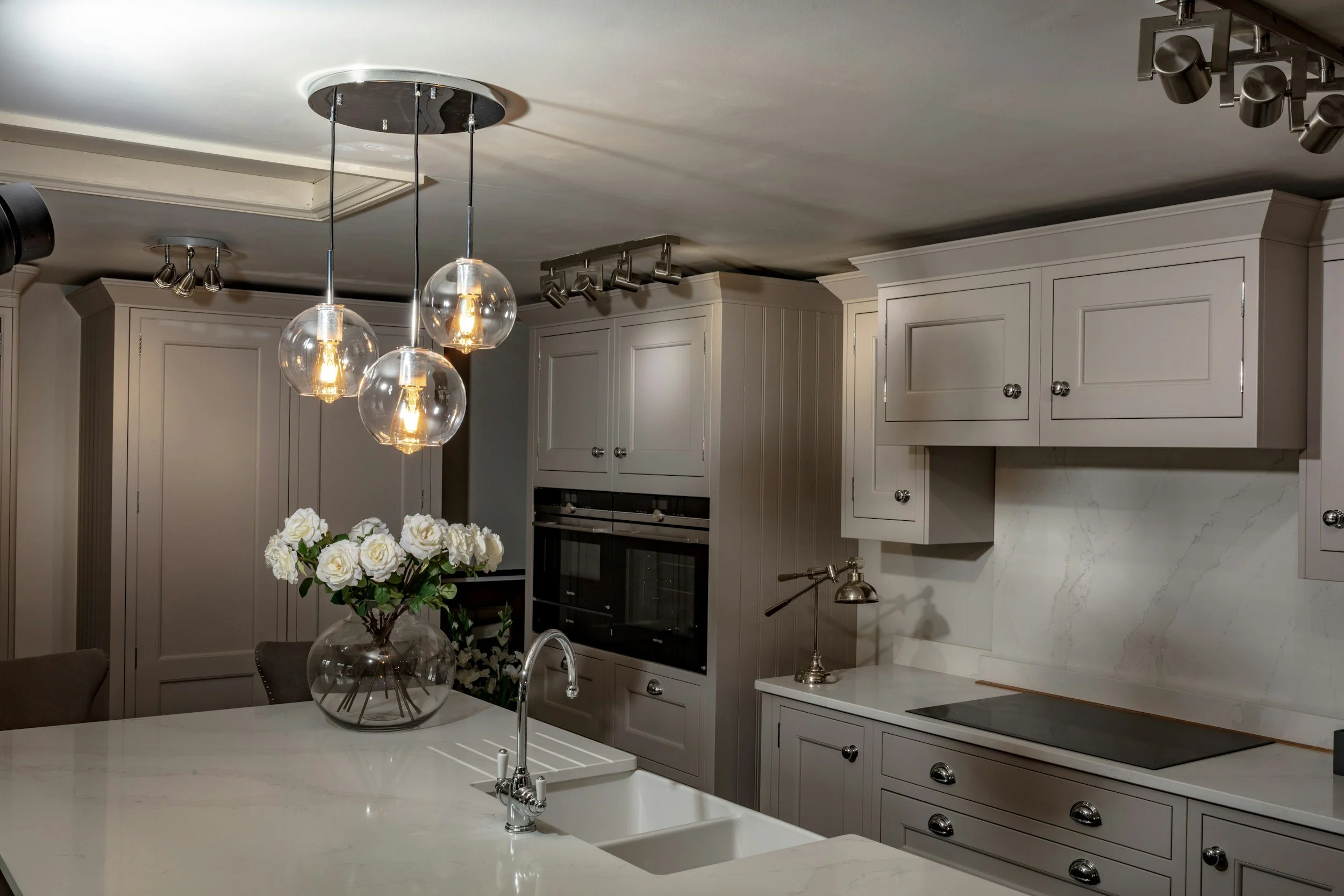
Kitchen with circular pendant light over the island, balanced by functional track lighting and an counter lamp.
Consistency of Design Language
To maintain a curated feel, the primary fixture must speak the same material language as the room. We prioritize pieces that reflect the home’s foundational elements whether that manifests as clean lined contemporary forms or the weighted presence of brass and bronze in more traditional volumes. The goal is a cohesive dialogue between the light source and the surfaces it illuminates.
Materiality and Finish
Luxury is found in the tactile quality of the hardware. We favor finishes that offer warmth and depth hand rubbed bronze, matte brass, or natural wood, over fleeting, high shine trends. These materials allow the fixture to age with the home, providing a tactile richness that invites closer inspection without being overbearing.
The Integration of Layered Light
Even a statement piece must fulfill its primary purpose, The Composition of Light. A dining anchor must provide a soft, ambient glow that flatters the surface below, while an entryway fixture should offer a welcoming but functional transition. A focal point is most effective when it is integrated into a broader layered strategy, working in harmony with ambient and accent sources to eliminate harsh contrasts.
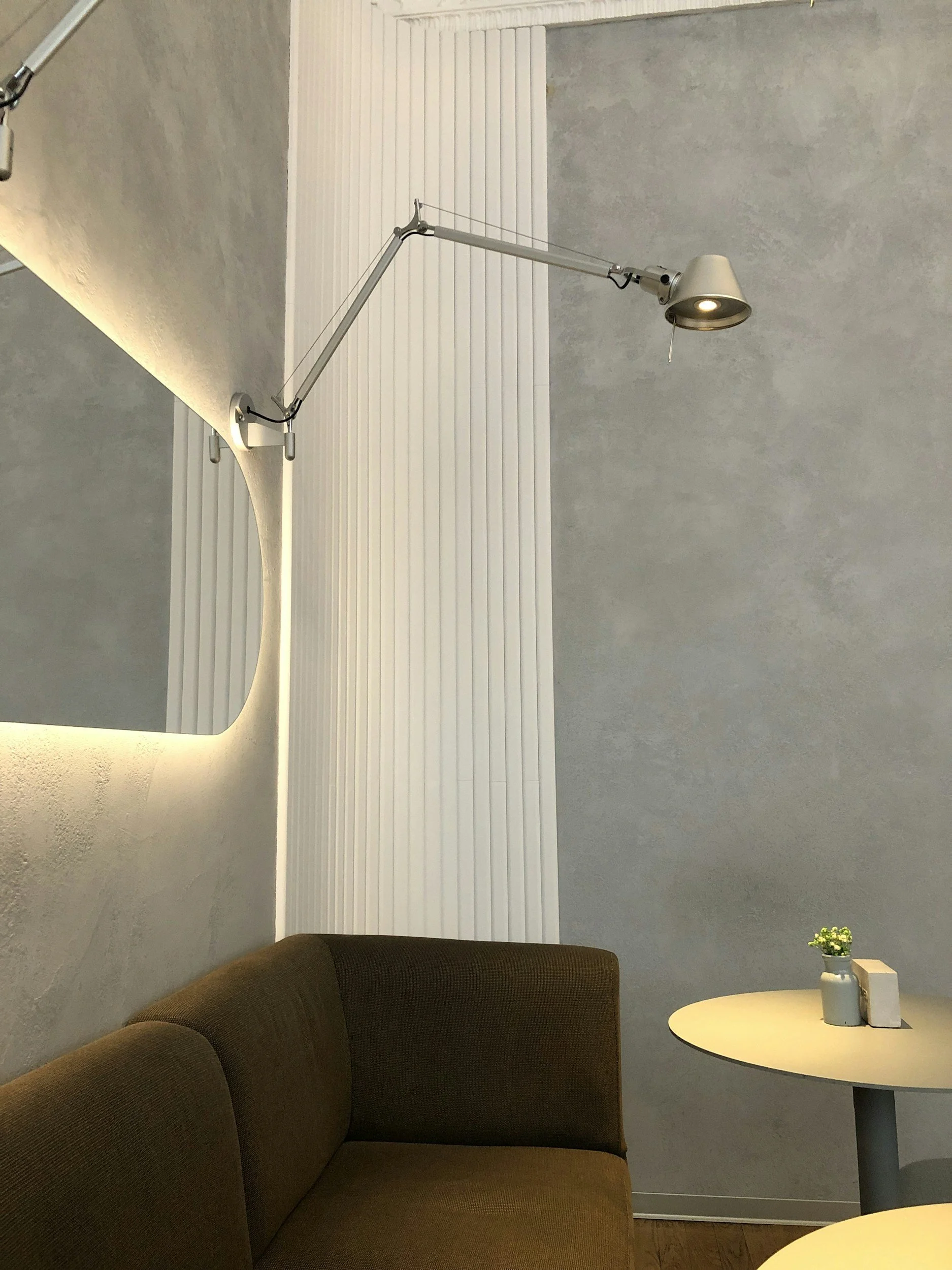
Task area featuring an integrated backlit mirror and a long reach articulating wall sconce for directed architectural lighting.
Conclusion
Statement lighting is the final note in a room’s composition. When selected with restraint and an eye for architectural scale, it becomes more than a light source, it becomes a permanent anchor of the home’s identity.