Not Every Room Deserves a Chandelier
Most statement fixtures in expensive houses are the wrong size. Not cheap, not ugly, just off by a few inches in a way nobody in the room can name. The homeowner blames the room. The room was never the problem.
Getting it right isn't a matter of taste. It's a small set of numbers, checked against the actual space, before style gets an opinion.
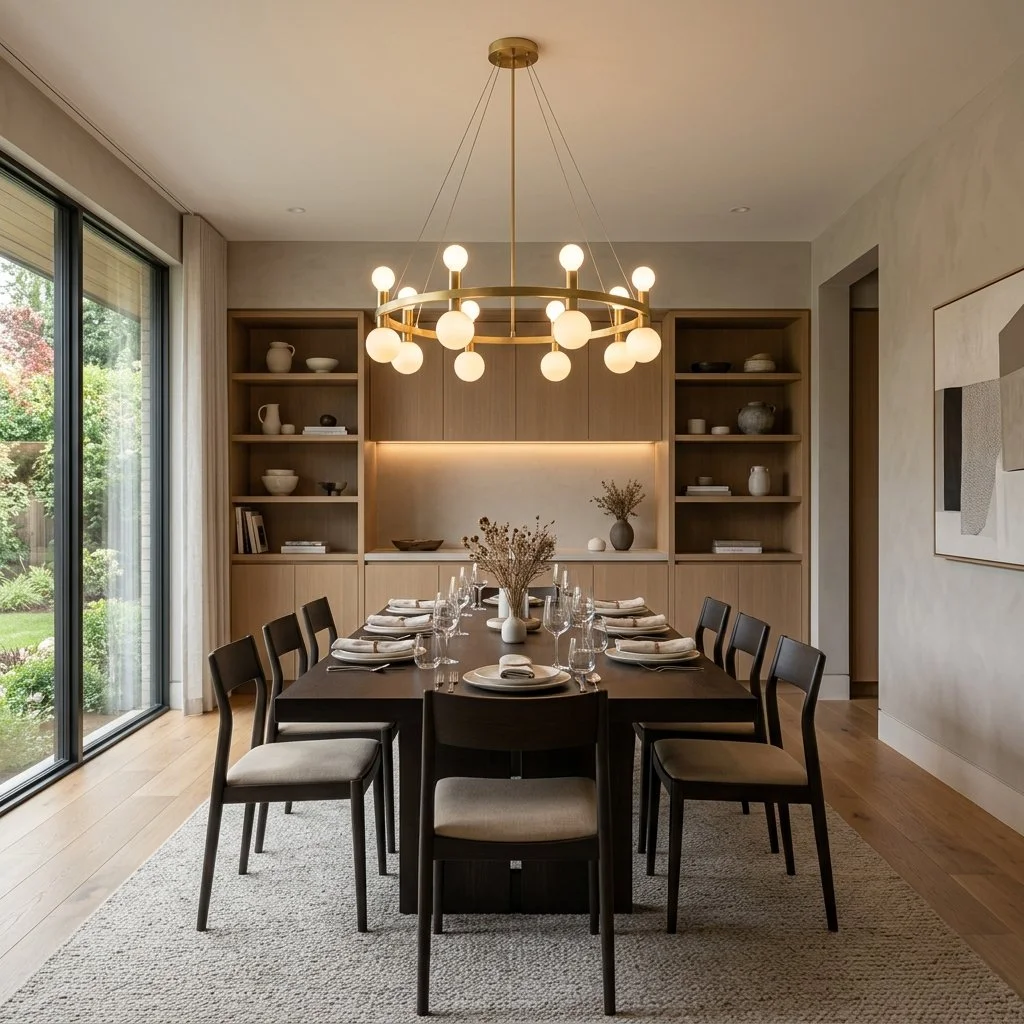
Dining room featuring a round brass chandelier centered directly above a dark rectangular dining table.
Sizing to the Room, Then to the Table
The starting formula is almost insultingly simple. Add the room's length and width in feet, and that sum in inches is roughly the fixture diameter to aim for. A room that measures twelve by fourteen feet points to a chandelier around twenty six inches across. It's a floor, not a verdict, and ceiling height and fixture density push it up or down from there, along with how ornate or spare the design itself reads up close.
Over a table, the room formula stops mattering and the table takes over. The fixture should run somewhere between half and two thirds of the table's width, narrower for round tables, and once it climbs past three quarters it starts crowding the chairs at either end. A four foot table wants a fixture in the twenty four to thirty two inch range, not a number borrowed from the room it sits in, the way I'd size a piece for a table discussed in The Centered Table.
Hanging It at the Right Height
Getting the diameter right and then hanging it wrong undoes all of it. Over a table, thirty to thirty six inches between the bottom of the fixture and the tabletop is the standard for an eight foot ceiling, with roughly three more inches of clearance added for every foot the ceiling gains beyond that. In a foyer or hallway, where people walk directly beneath the piece rather than sitting under it, the bottom of the fixture needs at least seven feet of clearance from the floor, full stop, regardless of how good it looks lower.
Speaking the Room's Material Language
Scale solved, the fixture still has to agree with the room it's in. A brass pendant, slim and unadorned, in a room built on straight lines and minimal trim reads as considered. Drop the same pendant into a room already carrying carved millwork and a heavier hand throughout, and it looks like it wandered in from a different house. The fixture doesn't need to match every other metal finish in the room. It needs to agree with the room's actual weight, ornate or restrained, and say so honestly rather than splitting the difference.
The Case for a Living Finish
Bronze and brass earn their place here because they're chemically alive, not because they look expensive. A hand applied patina isn't paint. It's an oxidizing agent set loose on the metal and allowed to react, which means no two fixtures finish identically even off the same production run, and the surface keeps shifting slightly for as long as the piece is in the house. Left alone it can dull. A little wax every so often is what keeps the color from going flat, and that small bit of upkeep is part of what a real finish costs, not a flaw in it.
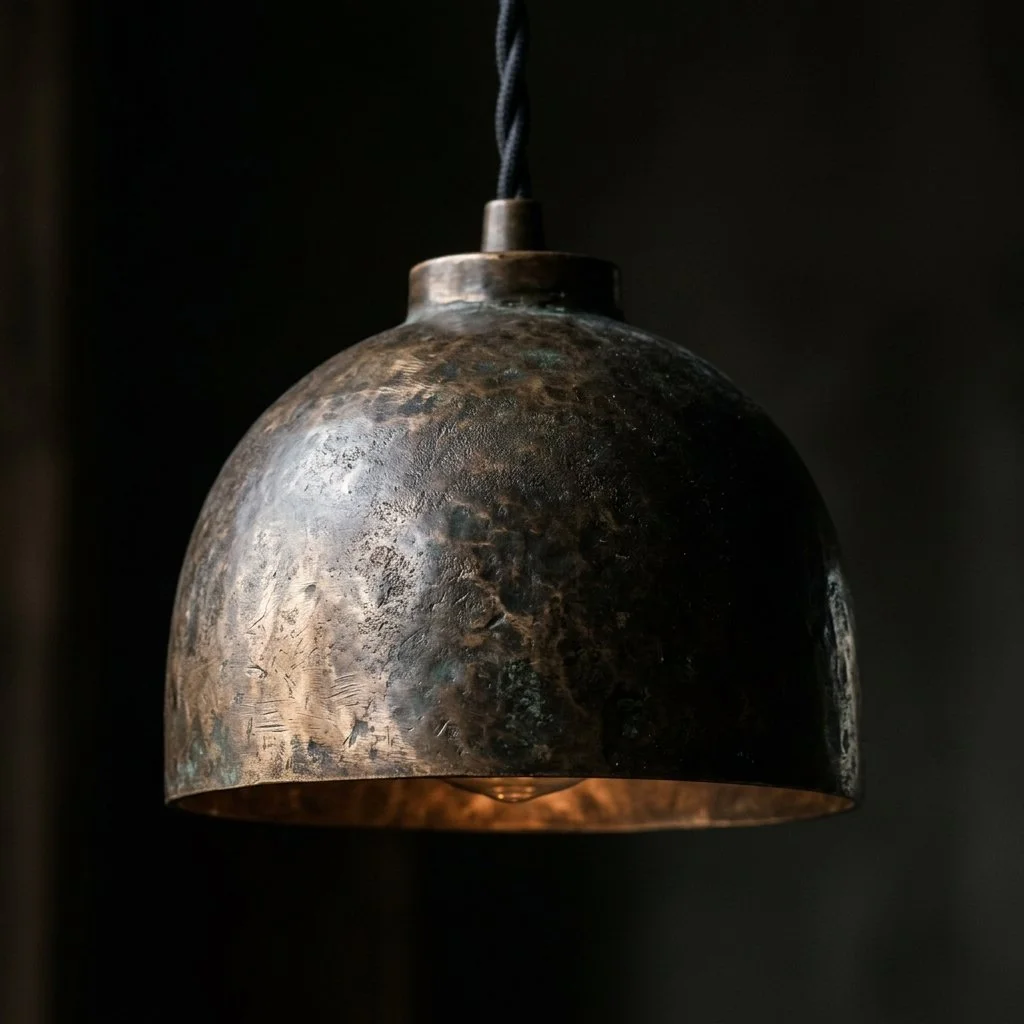
Single bronze pendant light fixture with a naturally patinated surface.
One Point Inside a Larger Plan
A statement fixture that ignores everything else in the room stops working the moment it's switched on alone. A dining fixture still has to throw a soft, even glow across the table it hangs over. An entry fixture still has to get someone from the front door into the house without a hard edge of brightness in between. None of that changes because the fixture is also the room's focal point. The showpiece has to fit inside it.
Let the Room Ask First
Every rule here runs the same direction: the room decides, then the fixture answers. Start with the room's own math, not with what looks good in a showroom. The table narrows the diameter if there's a table involved. The ceiling sets the height, no matter how good the fixture looks lower. Material comes last, once both of those are settled. A beautiful chandelier hung by guesswork in a room that never asked for it just sits there being expensive. The right one looks like the room couldn't have worked without it.
