How to Tell When Furniture Is Really Well Made
Dovetails are reported in furniture from Egyptian tombs of the First Dynasty, close to 5,000 years ago. The tails are cut as trapezoids that lock against the direction a drawer front gets pulled, and glue makes the joint close to impossible to separate. The English name comes from the shape of a dove's tail. It is still the first joint I would check on any case piece.
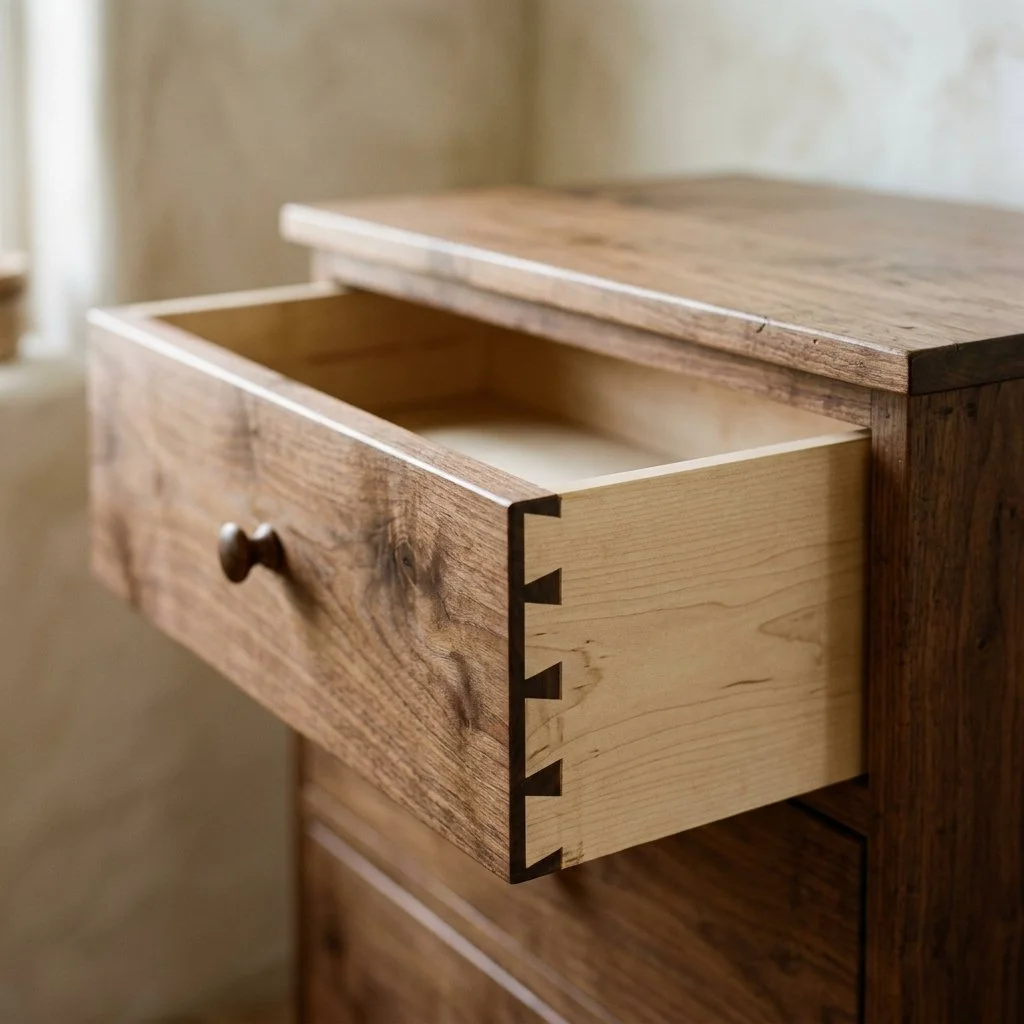
Walnut drawer pulled out, showing tightly fitted dovetail joints at the corner where the front meets the pale maple side.
The Drawer Corner
Pull a drawer all the way out and look at where the front meets the side. Interlocking pins and tails hold that corner together in the wood itself, which lets a drawer front take a hand on its pull every day for years. Each pin sits tight in its tail with no gap showing.
What Holds a Leg to a Rail
A chair leg takes sideways force every time someone leans back, and the joint built for that is the mortise and tenon. Bed frames from First Dynasty tombs at Tarkhan already had them. A tongue on the rail fits a slot in the leg, so glue meets wood along the grain on every face of the tenon. Glue grips long grain far better than end grain, which is why a pair of dowels in the same space holds less. Woodworkers who repair chairs describe the same failure on doweled joints. The glue survives and the wood around the dowel tears out.
Solid Wood Moves
Wood takes on and gives up moisture with the seasons. It changes far more across its width than along its length, and kiln dried boards keep moving after they reach a house. A well made piece is built to allow that. In frame and panel construction the center panel floats in its groove, unglued, so it can widen in humid months without splitting the frame. A solid tabletop with breadboard ends is pinned at the center, while the outer pins pass through oval holes so the top can expand and shrink. In one season the ends sit slightly proud of the tabletop, and in another slightly short. That is what a correctly built solid top does. A slab fastened rigidly to its base can split, and no glue is strong enough to hold wood that wants to move.
Hardware That Can Be Adjusted
Concealed hinges adjust in all three directions after installation, so a door that shifts a millimeter can be brought back without being taken off. That matters on a piece that will spend decades in changing humidity. Undermount slides with soft close come with a published load rating that varies by model, and it is worth asking for.
Makers argue about whether slides belong in fine furniture at all. Waxed wooden runners are the traditional answer, but they can bind when humidity swells them and they wear with use. Metal slides give full extension and can be adjusted. Some makers refuse to put metal in anything traditional, and others use it everywhere. The drawer should run straight and sit with an even gap all the way around.
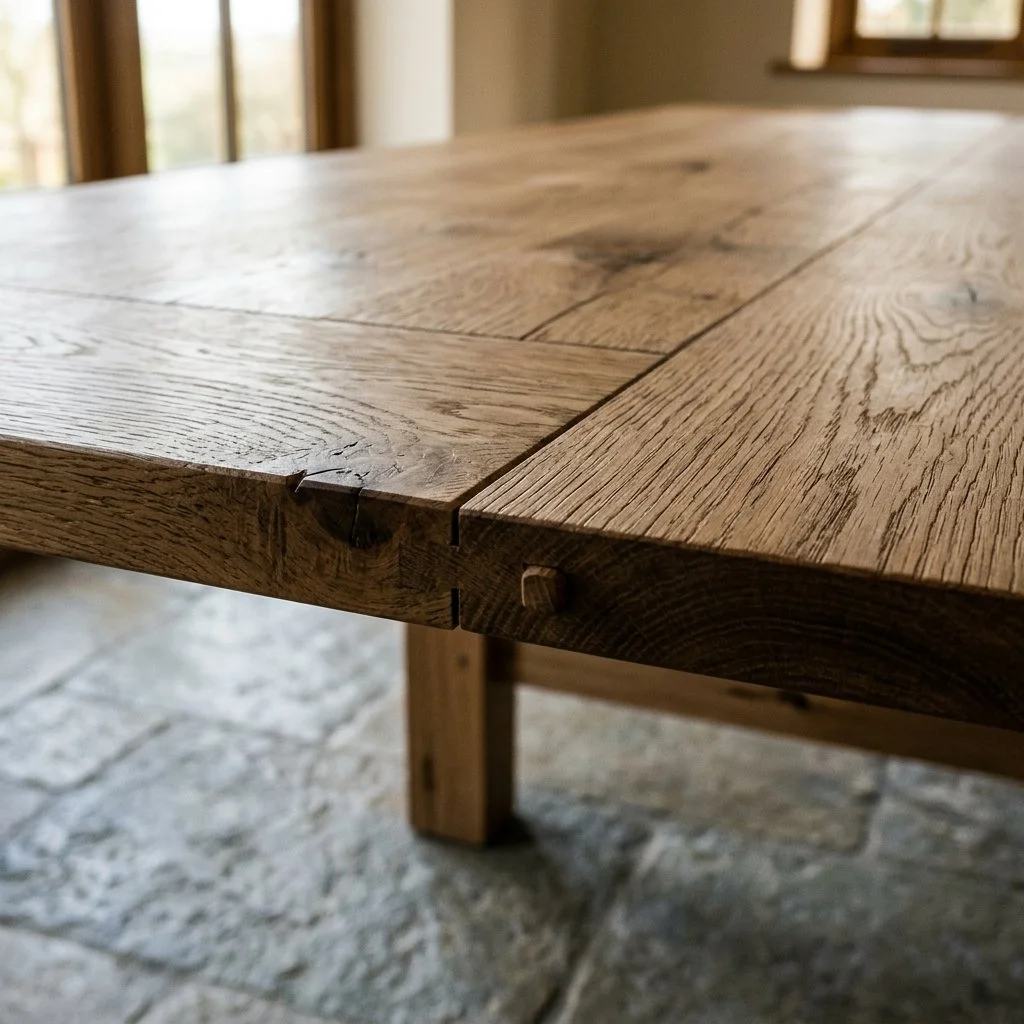
Solid oak tabletop with a breadboard end, side grain shows through the thin finish, with a wooden peg visible at the joint.
A Finish You Can See Into
A good finish lets the grain show through it. French polish is the far end of that idea. It is shellac, which comes from a scale insect native to Asia, worked on with a cloth pad in many thin coats, a method in use since the 1600s. It is softer than modern varnish and marks white when water or alcohol sits on it, so it suits a bedroom chest better than a bar. Open grain woods like walnut and mahogany need their pores filled first, one more step that takes time. Shellac can also be repaired easily.
Turn the piece so light rakes across the surface. The grain should appear to move under the finish.
The Hours Nobody Sees
Someone cut and fitted each joint and left the panels room to move. Someone built the finish coat by coat and waited for each one to dry. A piece that skipped all of it can look identical from across a room, and identical in a listing photo. A specification that names the joinery and the finish gives a workshop something to be held to.