Textile & Hide
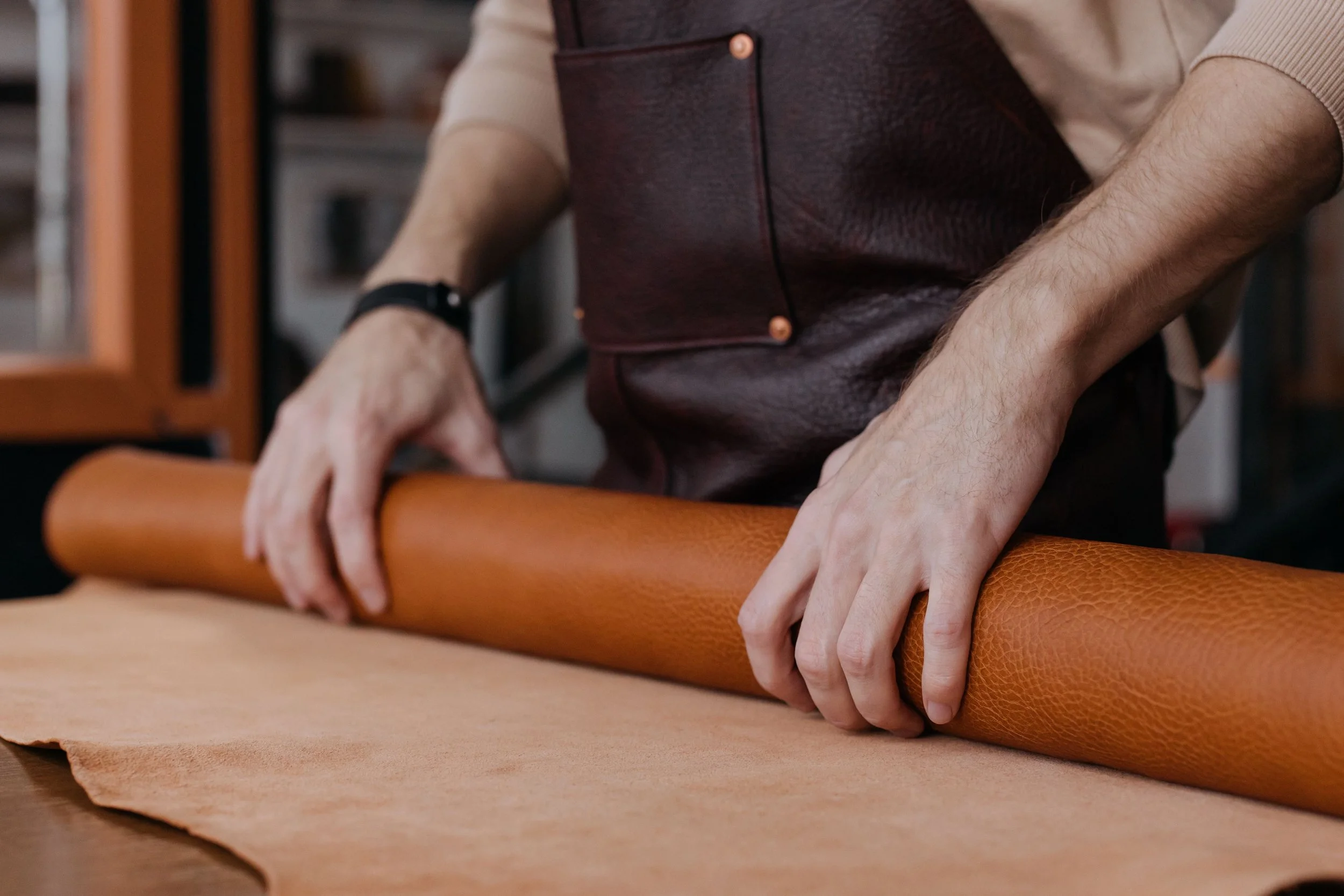
Fabric tells you more than color and pattern if you know what to look for: the weave, the fiber, the hands that made it. The same is true of hide, tanned instead of woven, but read the same way: by the grain, the pores, the years it's been allowed to take on.
Leather walls are older than printed wallpaper, and the hide behind them comes from cattle raised for food. How leather wall panels and wrapped furniture are made, rated for fire and sun, and sourced.
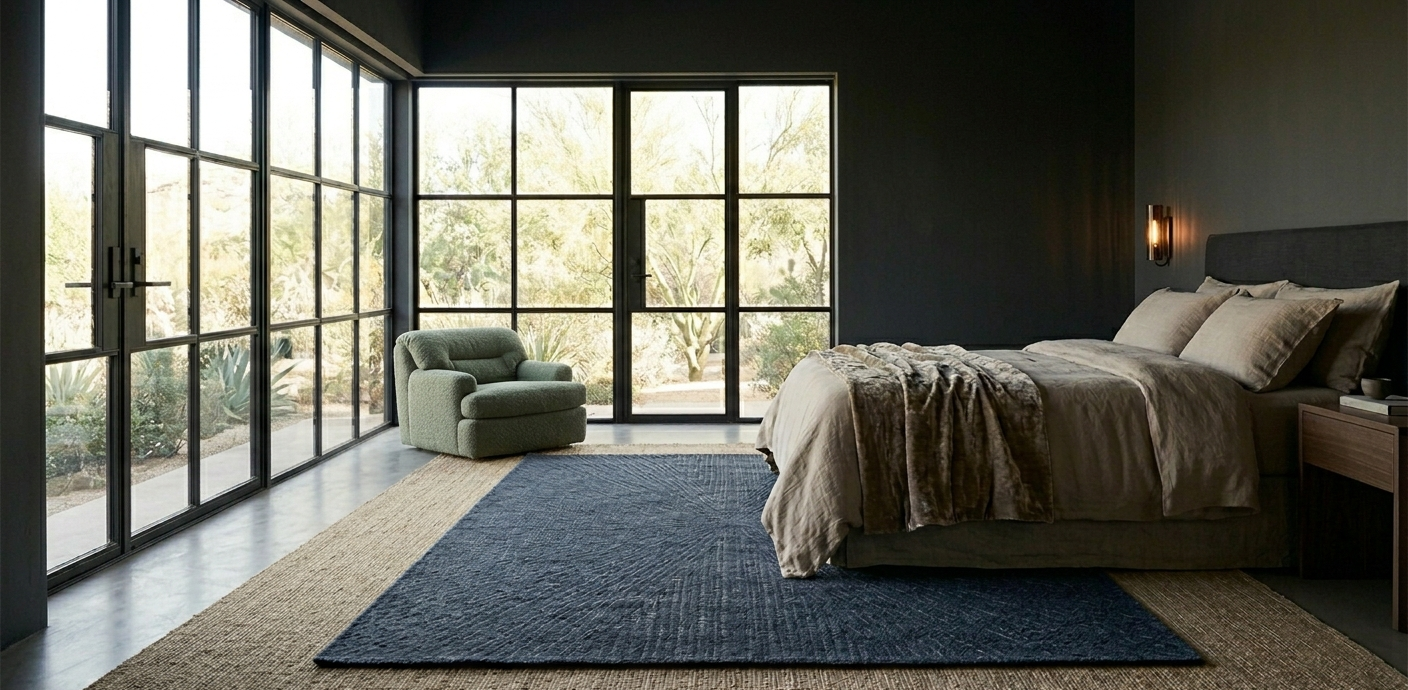
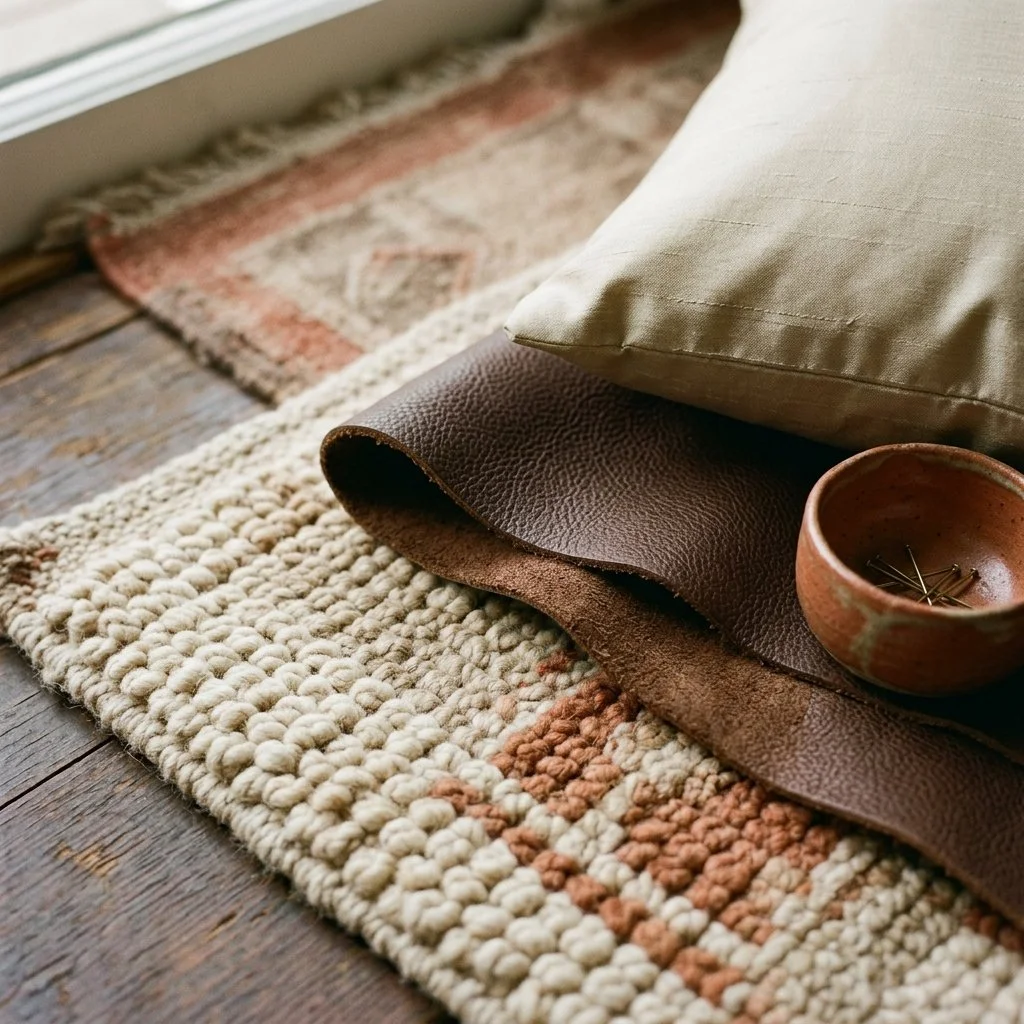
A rug knotted by hand is tied directly onto its warp, so the back mirrors the front with no glue or canvas behind it. Why it sits so well over a woven agave fiber rug from northern Mexico, and how to check the back before you buy.
Most furniture leather is sanded and pigment coated, so it can never age the way buyers hope it will. The difference between aniline and corrected grain leather, and which tanning method lets a hide darken with use.
Above roughly 400, thread count gets inflated by counting plied strands separately. Why weave and fill decide how a bed feels, and what fill power and baffle box construction mean in a duvet.
Tussar silk and mulberry silk can share a color and still look nothing alike once woven. Why weave and fiber tell a designer more than color does, and how knot density grades a rug.