Coffee Tables for You
The coffee table is the functional centerpiece of the living room. Beyond its aesthetic, its value is determined by its material performance and how its dimensions interact with the rest of your furniture. To choose the right piece, you must solve for the math of the room first.
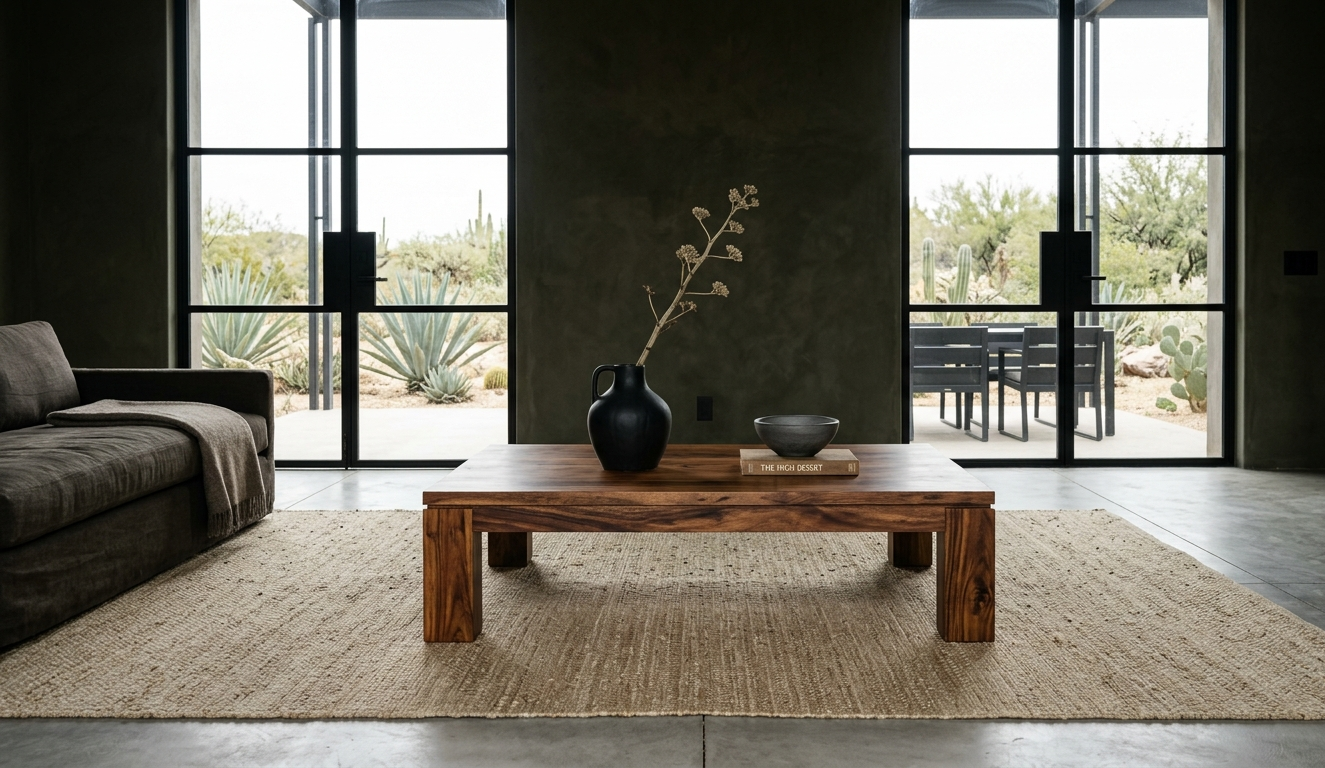
A low profile Tzalam wood coffee table on a natural agave rug atop matte cement floors.
The Geometry of the Layout
A coffee table only works if it is positioned correctly within the flow of the room. To maintain a professional standard of movement, follow these technical benchmarks:
The 18-Inch Rule: For optimal movement and accessibility, maintain approximately 18 inches between the edge of the sofa and the table. This provides enough legroom for traffic while keeping the surface within reach for utility.
Height Calibration: Your table should be 1–2 inches lower than the seat cushions of your primary seating. A table that sits too high disrupts the visual sightlines and feels ergonomically off.
Material Performance
In a living room, the coffee table is a high touch surface. Your choice of material should reflect how you intend to use the space and your personal preference for texture and weight.
Stone (Marble & Travertine): These provide a high end, weighted presence. They are heat resistant and serve as a permanent architectural element in the room.
Solid Wood (Oak, Walnut & Tzalam): Wood offers warmth and acoustic softening. Utilizing a dense hardwood like Tzalam ensures the table resists the dings and scratches of daily use, maintaining its structural integrity and surface depth over decades.
Glass and Metal: These are the best tools for smaller floor plans. Transparent surfaces keep the visual footprint light, preventing the room from feeling cluttered.
Scaling for the Sofa
The size of your coffee table should be proportional to your seating. A common standard is to choose a table that is approximately two-thirds the length of your sofa. This ensures that everyone seated has access to the surface without the table overwhelming the Primary Path of the room.
The Acquisition Logic: Two Paths to Quality
Whether you are sourcing a ready made icon or commissioning a bespoke build, the goal is to acquire a piece that meets a high material standard.
High End Ready Made: This path allows you to acquire celebrated designs from top tier brands. These pieces offer proven engineering and brand provenance, making them an immediate asset to your interior.
Bespoke Custom: For those seeking total sovereignty over their environment, custom tables allow for the exact specification of material grain, edge profiles, and dimensions. This is the ultimate choice for creating a unique, one of a kind focal point that fits your floor plan to the inch.
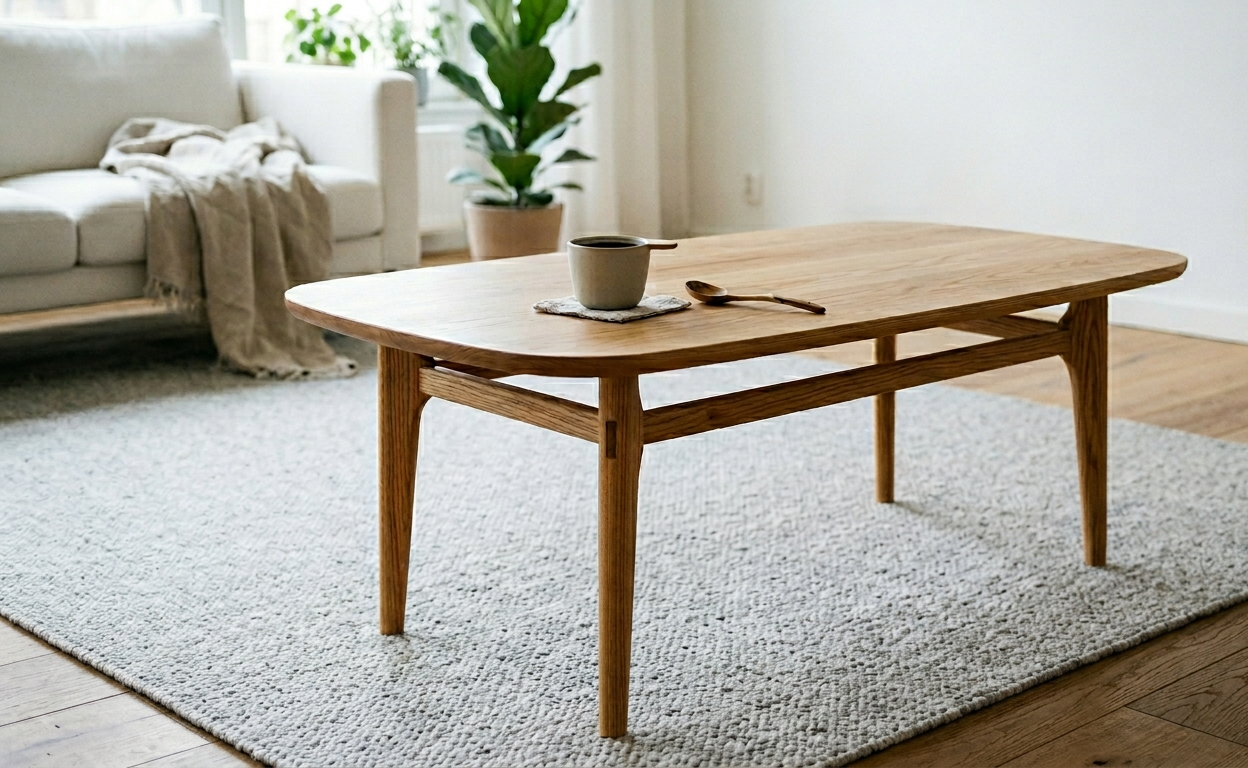
A handcrafted Scandinavian style coffee table made of light oak wood featuring clean lines.
Building the Living Room Studio
Selecting the right coffee table is about balancing the scale of your furniture with the practical needs of your daily life. By treating the table as a functional anchor rather than just a decorative accessory, you ensure your space remains both elegant and usable. In this series, we continue to break down the essential components ensuring your living room studio is built on a foundation of merit.