
The Elemental Kitchen
The most enduring kitchens are defined by objects that possess a weight of their own. Discover the "Heavy Tools" of the hearth, from the volcanic anchor of the molcajete to the thermal conduct of hand hammered copper.
The Heavy Tools of the Hearth
The most enduring kitchens are defined by objects that possess a weight of their own. We aren't looking for temporary fixes; we are looking for the pieces with the substance to outlive the architecture itself.
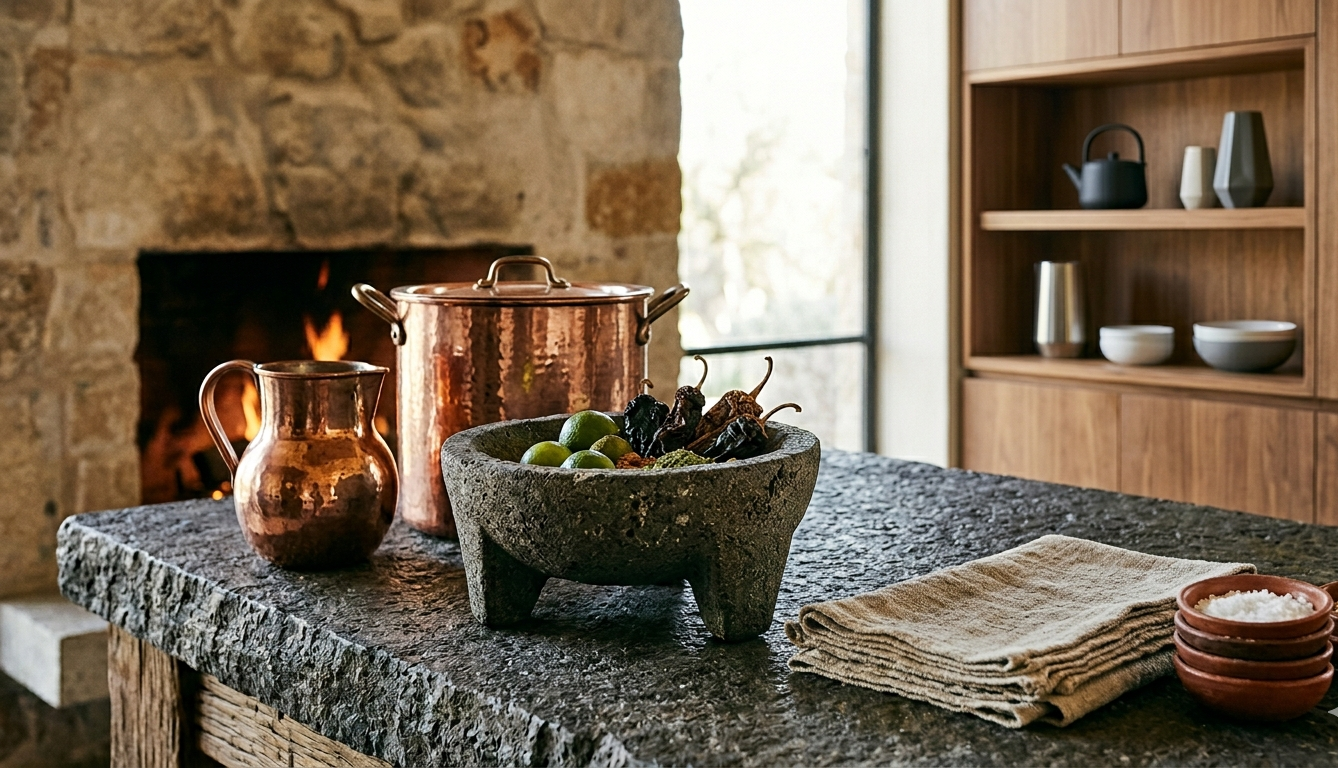
Basalt molcajete and copper cookware on a dark stone counter in a modern kitchen with a warm hearth.
The Volcanic Anchor, The Molcajete
A 10lb block of basalt is the definitive kitchen sculpture. Its porous volcanic surface is the only way to truly respect a spice or a complex emulsion, using friction rather than blades to release oils without heat. It is the "Stone Grounding" of the culinary process. Even when at rest, it serves as a textured vessel for the essentials, a handful of limes or dried peppers, anchoring the countertop with raw, volcanic weight. In an essential kitchen, a heavy basalt molcajete acts as The Hero Piece, providing a singular, high mass focal point that grounds the surrounding culinary tools and establishes a sense of permanent history on the stone island.
The Thermal Conduct of Copper
Luxury is found in the physics of heat. Hand hammered copper is the ultimate regulator, whether it is a Jug for mineral water or the massive, deep bellied pots designed for the reality of a large family meal. These vessels are built for the long simmered stews and meats of a grand gathering. The copper patinas with every fire and every touch, recording the lineage of the home in its glow. It’s the reason we focus so much on The Kitchen Anchor, because the room only starts to feel right once it’s centered by a piece that has more soul than the cabinets.
The Geometry of the Press
The perfect compression of grain is a feat of engineering. A heavy, industrial grade Masa Press, whether in cold rolled iron or a weighted wood, is a masterclass in leverage. While essential for the daily ritual of heirloom corn, its utility extends to any preparation requiring uniform, high pressure flattening, from artisanal seed crackers to heritage flatbreads. It is a reminder that the most sophisticated results come from the simplest mechanical forms.
The Hearth Tool
We source Tzalam (Mayan Walnut) for the tools that touch the hand most often. Because of its high natural oil content and extreme density, a solid Tzalam rolling pin or an oversized cooking spoon feels weighted and balanced. It is a wood that never splinters and only grows deeper in color with use, bridging the gap between the built in cabinetry and the act of preparation. When you pick up a tool with this kind of density, you finally get The Weight of Wood as a daily requirement, a physical reminder that the things you touch every day are actually built to last.
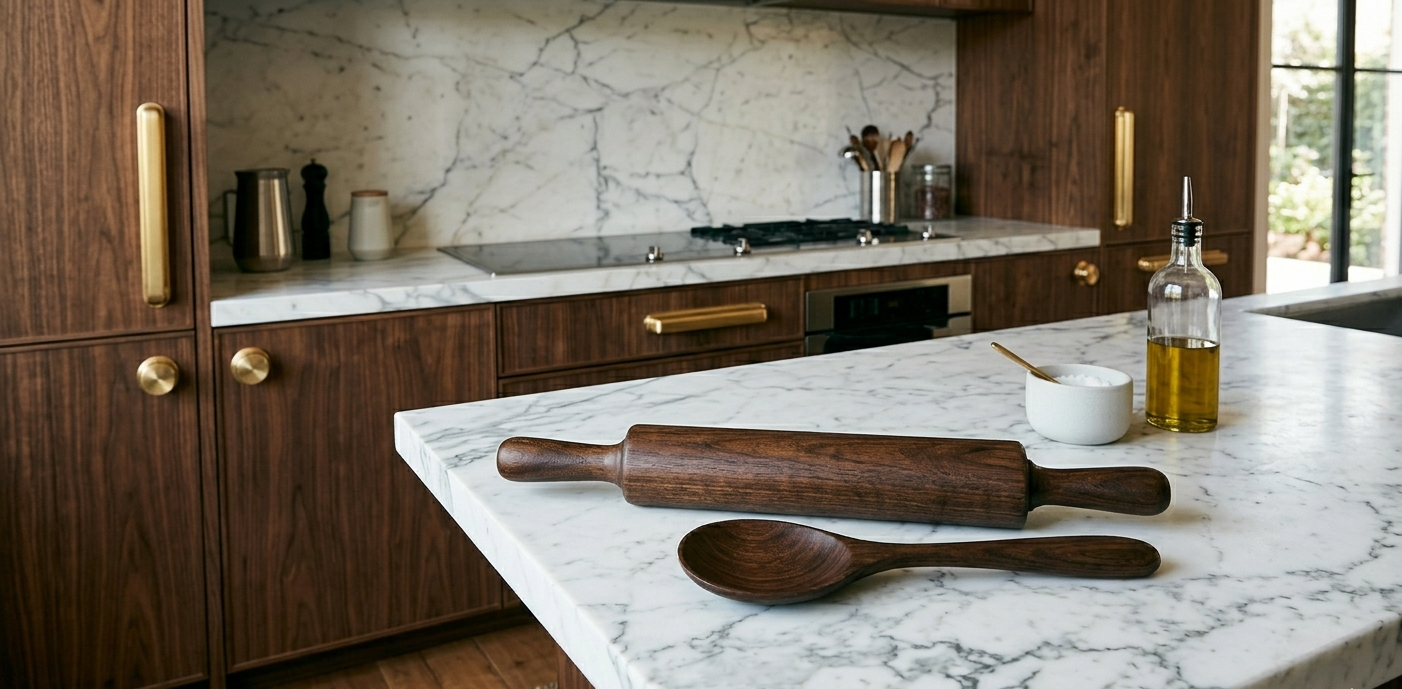
Tzalam wood rolling pin and oversized spoon on a white marble kitchen island with modern walnut cabinetry and brass hardware.
The Porous Vessel, Terracotta
There is a specific luxury in the "imperfect" line. Hand thrown ceramic dinnerware and terracotta storage vessels for grain or salt provide the sensory friction that a refined, quiet home requires. These are the Insider Signals, pieces that carry the faint fingerprint of the maker, ensuring the wares never feels sterile, but always feels curated.
Final Thought
The "Elemental Kitchen" isn't about filling space, it is about the Curation of Utility. In a world of disposable convenience, these objects represent a return to the permanent. They are the heavy, quiet tools that turn a house into an home, and a meal into a lineage.
The Kitchen Anchor
The modern kitchen has evolved past the era of purely functional zones. Today, the pinnacle of luxury design is defined by the Anchor, a rejection of the temporary.
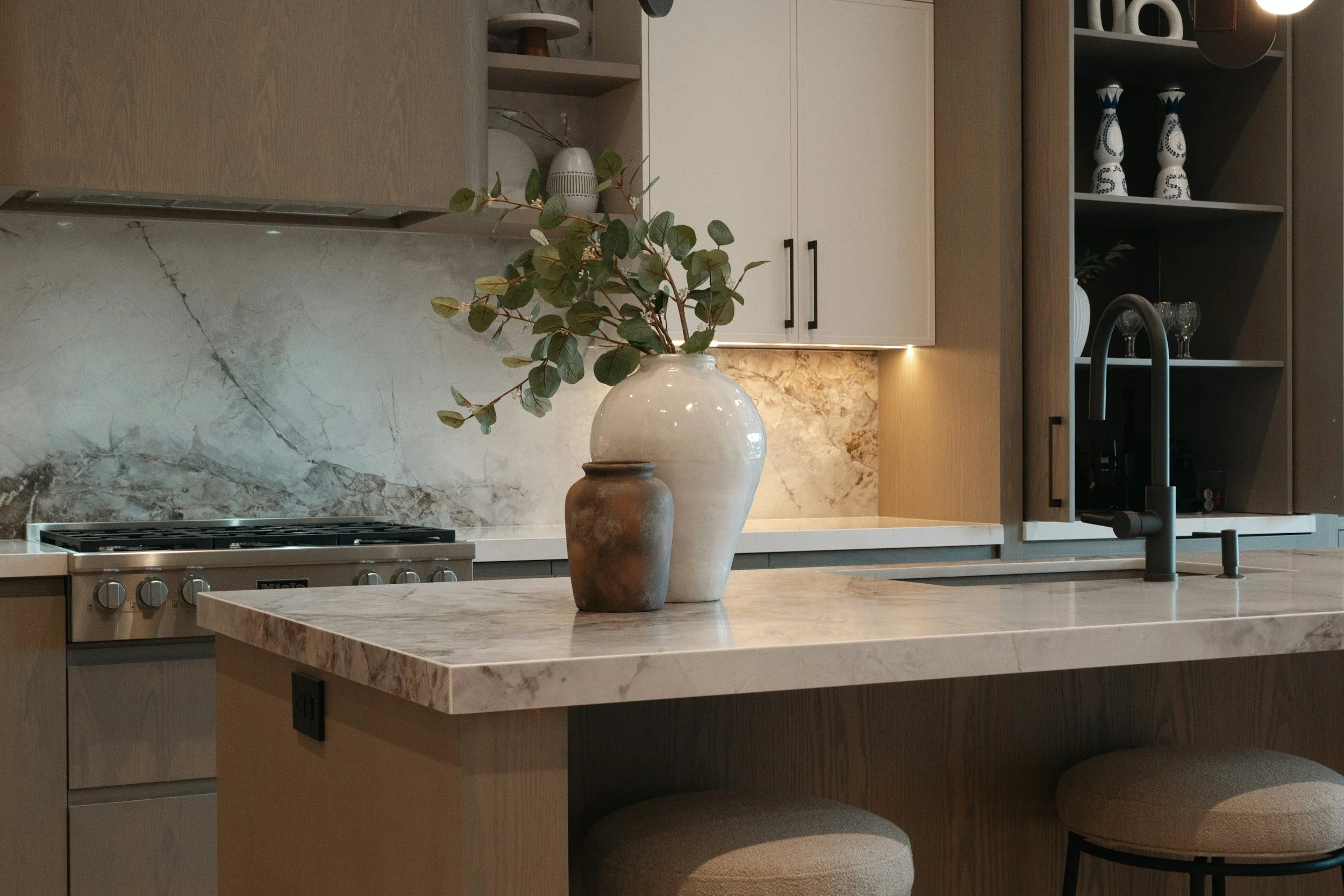
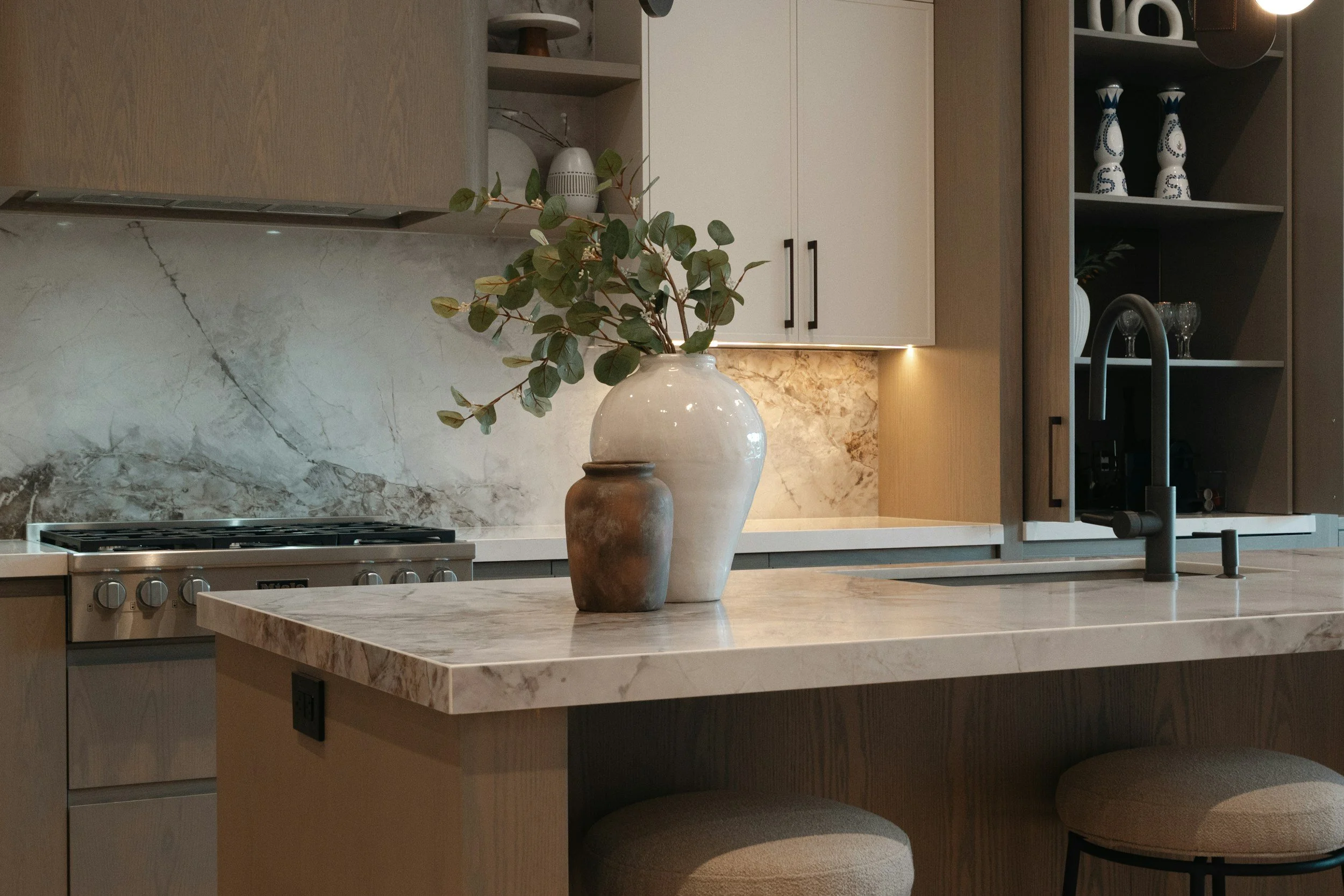
Kitchen design featuring a large honed marble island integrated with a matching marble backsplash.
The modern kitchen has evolved past the era of purely functional zones and cluttered cabinetry. Today, the pinnacle of luxury design is defined by the Anchor.
The Kitchen Anchor is a rejection of the temporary. It marks the transition from a workspace filled with appliances to a singular, unmoving center of the home. It is grounded, architectural, and permanent.
The Weight of Permanence
A true anchor does not simply sit on the floor, it emerges from it. This is achieved through the use of continuous materials, stone, heavy timber, or hand applied lime wash, that wrap the island or cabinetry runs without visible breaks.
The psychological impact of an anchor in the kitchen is stability. A 12 foot island carved from a single block of Calacatta Viola or Silver Travertine acts as a visual weight. It signals that this space is built for generations, not just a passing trend.
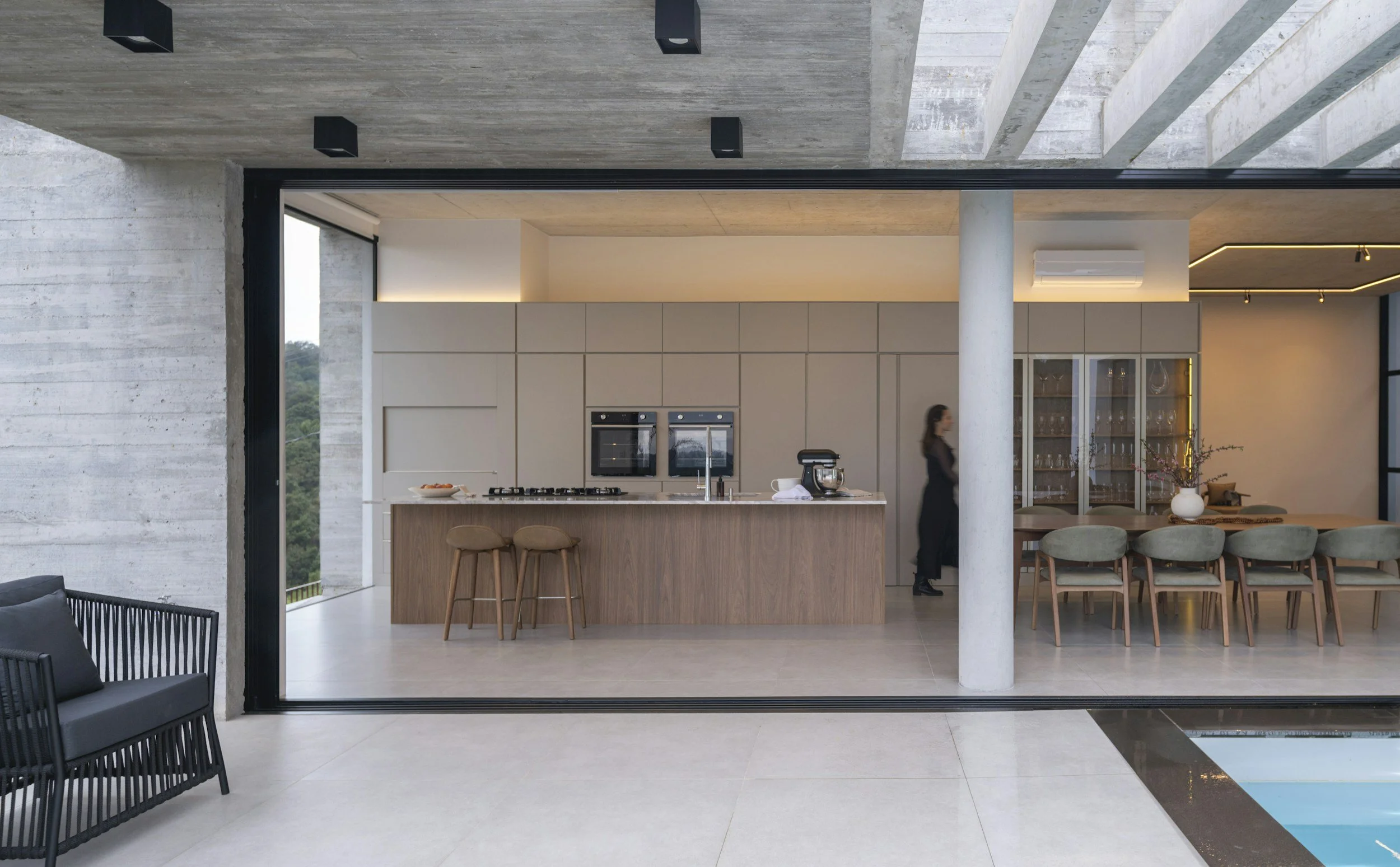
Long form kitchen design showcasing a large central island and extensive cabinetry without hardware.
The Art of the Hidden The Anchor requires a "subtractive" approach to design. To maintain the purity of the form, the mechanical parts of the kitchen must be rendered invisible.
Integrated Camouflage: Refrigeration and dishwashing units are panel-ready, disappearing into the woodwork.
The Appliance Garage: Small appliances are housed behind pocket doors or hidden stone compartments.
Materiality as Authority
An Anchor is only as credible as its material. We prioritize substances that have a deep, physical presence:
Natural Stone: Honed, never polished. While a honed finish allows the eye to appreciate the deep materiality of the stone, it also invites The Ritual of Care, a commitment to the intentional maintenance that preserves such a foundational anchor.
Cast Concrete: For a contemporary authority, site cast concrete offers a seamlessness that joins the floor to the island in a single tonal shift.
Charred or Fumed Oak: When using wood, the grain must be continuous. Using book matched veneers across the entire face of the kitchen, drawing on the principles of The Weight of Wood, ensures the Anchor maintains its visual integrity.
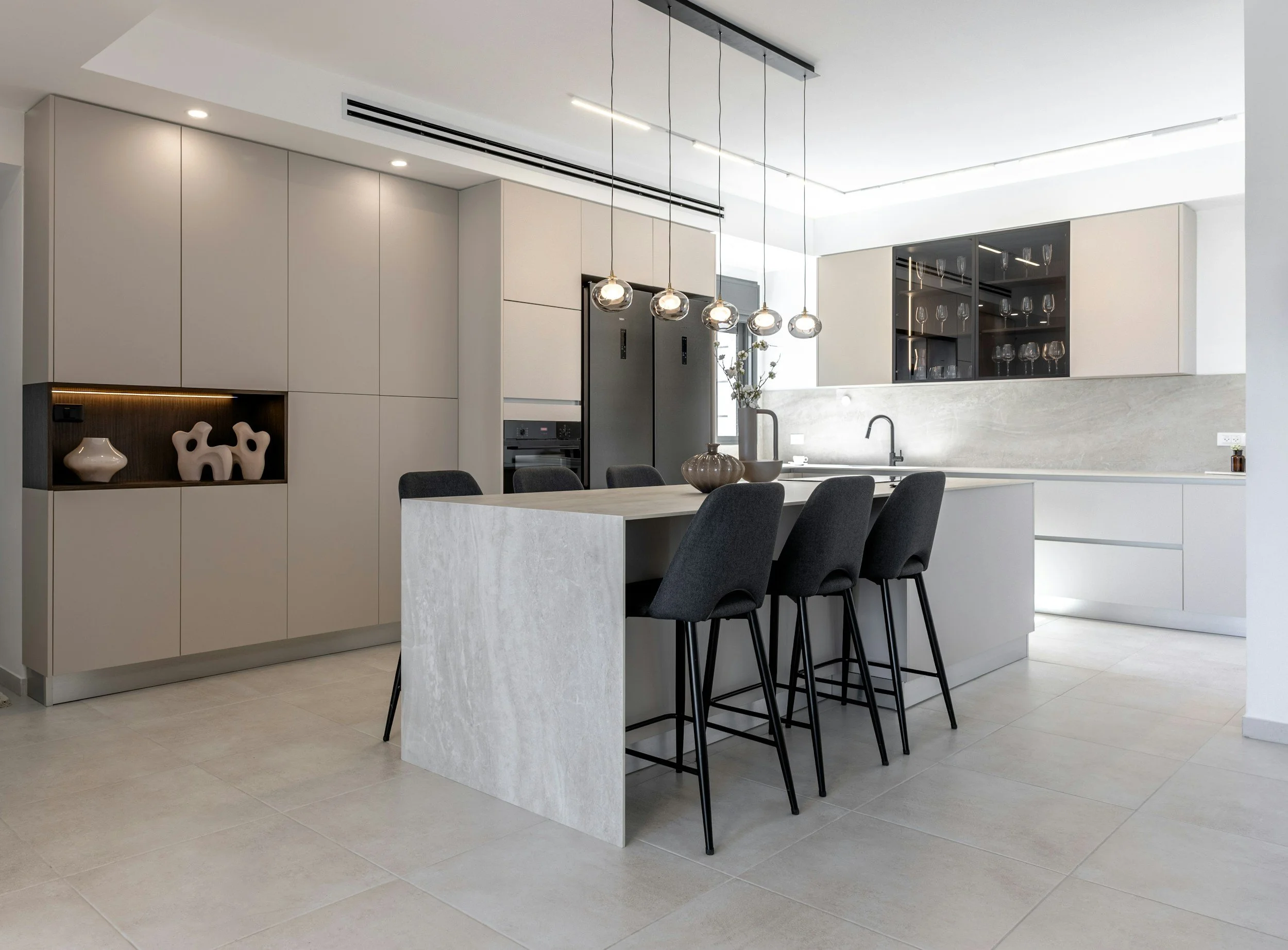
Kitchen featuring a stone waterfall island and matching backsplash, and handleless cabinetry.
The Sourcing Protocol
For the Madison Prime curator, the goal is to move away from standard logic. We look toward heritage brands and custom stone fabricators who understand mitered joinery. An apron that creates the illusion of a solid block is an Anchor.
When sourcing, the question is not "Does this fit?" but "Does this have the gravity to center the home?"