Maintenance Is the Real Luxury Signal
Most of what makes a room feel handled has nothing to do with the furniture in it. It's whether the pillows still hold their shape, whether the rug edges lie flat, whether the brass lamp has gone dull from six weeks of fingerprints. I spent decades around people trained to notice small deviations before they became real problems. A crooked stack of books isn't a crisis. It's just the first sign that nobody's been paying attention.
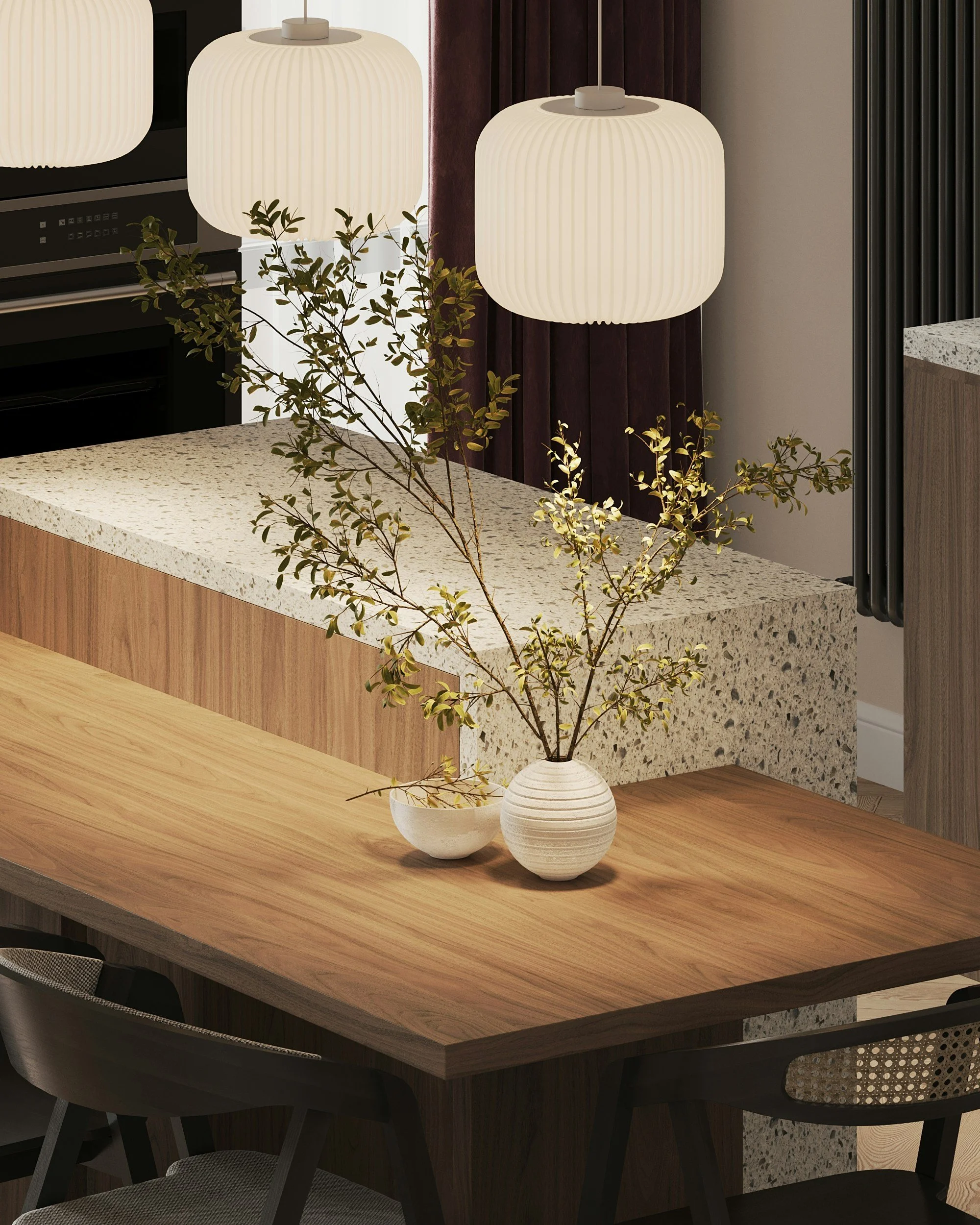
Granite kitchen island integrated with a solid wood dining table extension, mixed material transitions.
The Five Minute Reset
None of this takes long. A pass through the rooms people actually walk through, straightening what's crooked and clearing what's piled up, resets a space faster than any redesign would. Skip it for a month and the room doesn't collapse. It just starts to look like nobody lives there on purpose.
Materials Don't Forgive Neglect
Honed marble holds up beautifully and holds a grudge just as hard. Marble is calcium carbonate, and calcium carbonate reacts with acid on contact, not overnight. A splash of lemon juice or wine left on a Carrara countertop for even a few seconds can etch a dull ring into the stone that no amount of polishing removes. Sealing helps against staining, but it's worth being honest that it doesn't stop etching. The acid still gets in. The only real defense is wiping spills fast and keeping citrus and vinegar off the surface entirely.
Belgian linen asks for the opposite kind of attention. It wrinkles by design, so ironing it flat fights the fabric instead of working with it. Steam it, let it settle, and it looks more like itself for having some life left in it. Walnut wants oil worked into the grain roughly once a year, more often in a dry climate or near heat vents, or it dulls and starts to look thirsty.
Skip the technique if you're already deep into it. What matters here is the principle underneath: the materials people pay the most for are usually the ones that punish inattention the fastest.
A Rough Schedule, Not a Rulebook
I don't keep a chore chart on the fridge, but I do think in three timeframes.
Daily is the surface pass. Straighten what's crooked. Clear what's accumulated. Leave the rooms looking like someone was in them on purpose.
Weekly is the sensory layer: fresh linens on the bed, water changed for cut flowers, whatever scent you use in the house refreshed before it fades into the background and you stop registering it.
Seasonally is the real work. Rotate rugs a quarter turn so the sun doesn't bleach one section faster than the rest. Reseal stone. Check upholstery seams and wood joints for the kind of wear you won't notice until it's a repair instead of a fix.
None of this needs a schedule taped to a wall. It needs to actually happen.
The Parts You Can't Photograph
A room can look flawless in a photo and still feel wrong to stand in. A lamp on a warm dimmer changes a room more than a new chair would. An open window for ten minutes clears out staleness that no candle covers up. Furniture pulled six inches off the wall so people can actually face each other changes how a living room functions, not just how it looks in a listing photo.
None of that shows up on camera. It shows up the moment someone sits down.
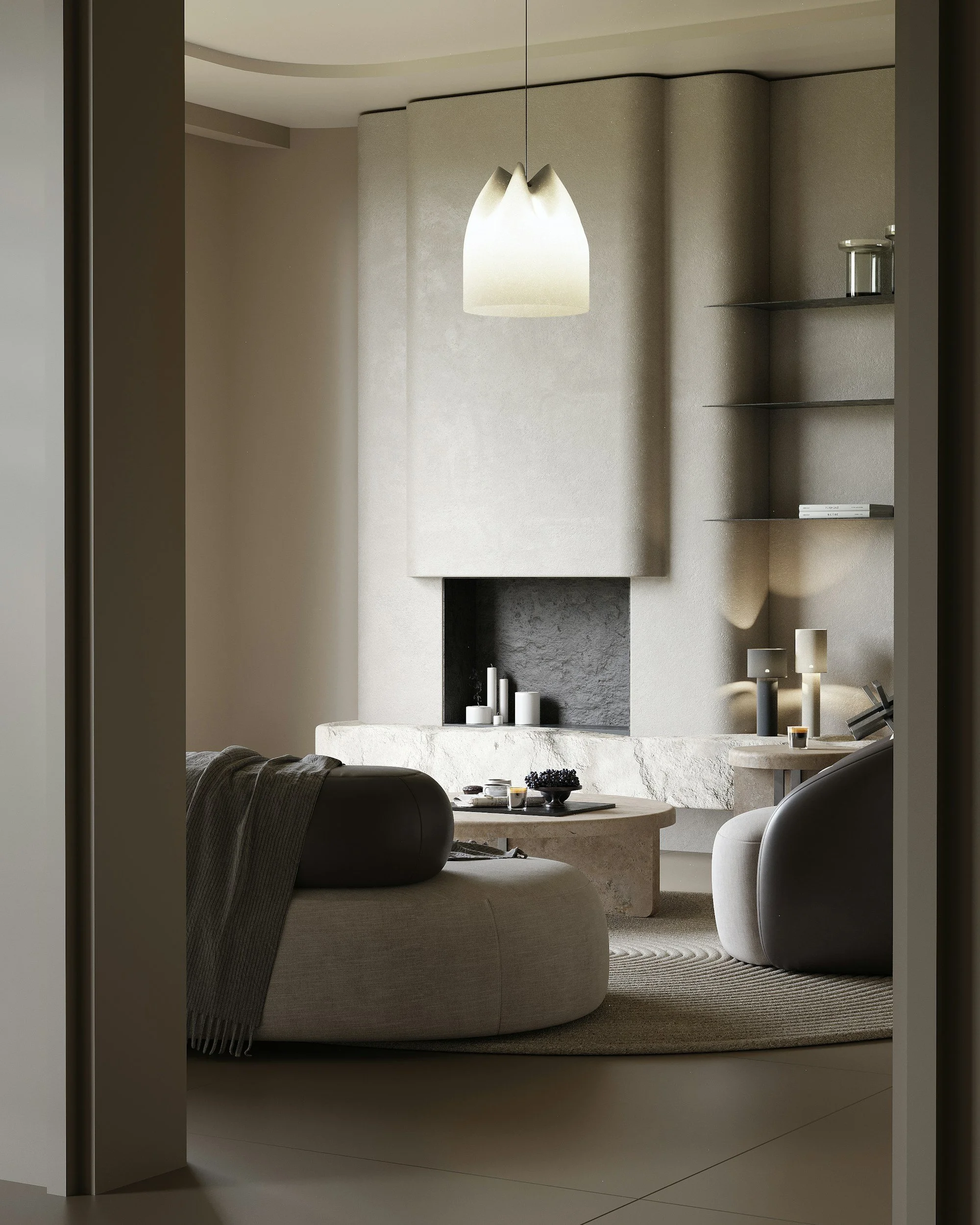
Living space featuring a marble faced fireplace, honed stone coffee and side tables, and a hand woven wool area rug.
Where to Start
Walk your own rooms and notice where your eye snags. Maybe it's a lamp base gone tarnished, or a rug that's been sitting crooked since you last vacuumed. Pick one thing. Fix it this week. The habit matters more than finishing the whole list on day one.
What This Actually Signals
A maintained home tells a specific story, someone here paid attention today, not just on move in day. That's harder to fake than good taste, and it's why a modest home that's cared for often reads as more expensive than a lavish one that isn't. The furniture was a decision made once. The care is a decision made daily.
