
The Elemental Kitchen
The most enduring kitchens are defined by objects that possess a weight of their own. Discover the "Heavy Tools" of the hearth, from the volcanic anchor of the molcajete to the thermal conduct of hand hammered copper.
The Heavy Tools of the Hearth
The most enduring kitchens are defined by objects that possess a weight of their own. We aren't looking for temporary fixes; we are looking for the pieces with the substance to outlive the architecture itself.
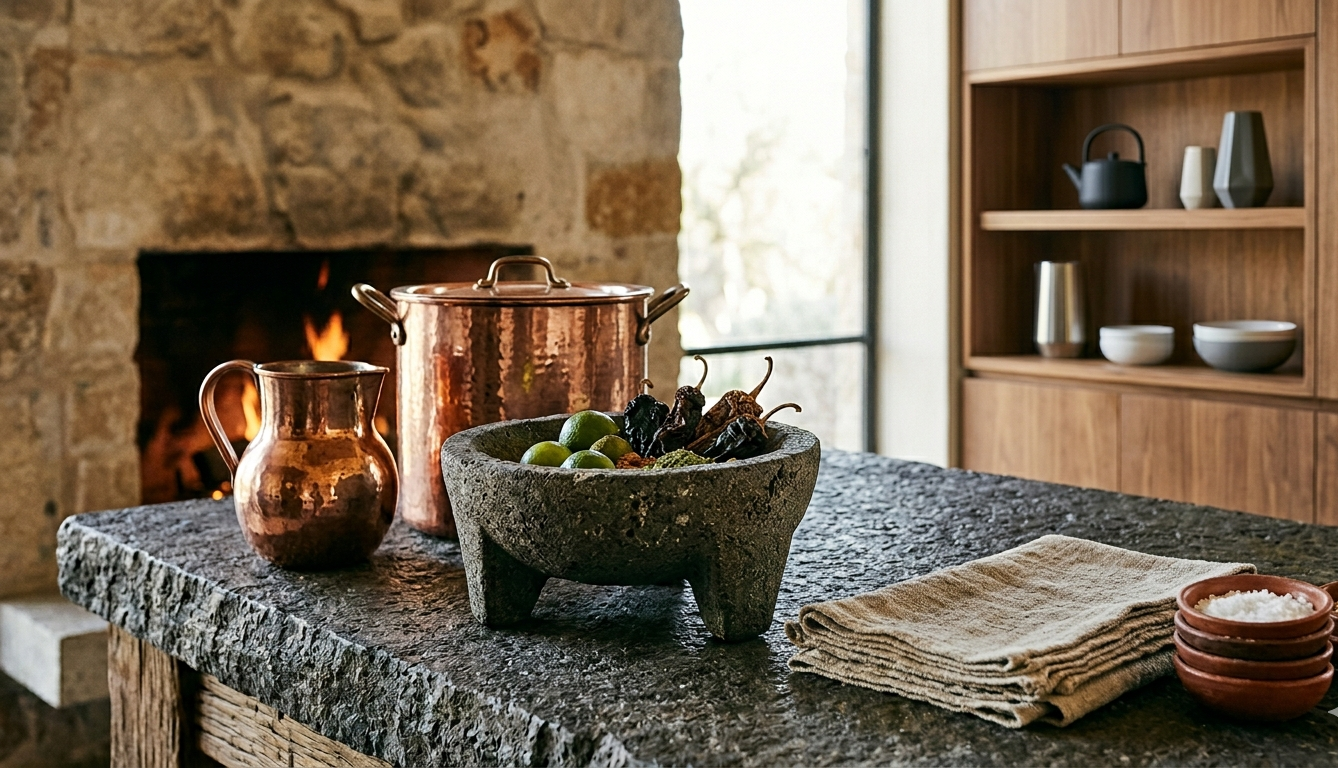
Basalt molcajete and copper cookware on a dark stone counter in a modern kitchen with a warm hearth.
The Volcanic Anchor, The Molcajete
A 10lb block of basalt is the definitive kitchen sculpture. Its porous volcanic surface is the only way to truly respect a spice or a complex emulsion, using friction rather than blades to release oils without heat. It is the "Stone Grounding" of the culinary process. Even when at rest, it serves as a textured vessel for the essentials, a handful of limes or dried peppers, anchoring the countertop with raw, volcanic weight. In an essential kitchen, a heavy basalt molcajete acts as The Hero Piece, providing a singular, high mass focal point that grounds the surrounding culinary tools and establishes a sense of permanent history on the stone island.
The Thermal Conduct of Copper
Luxury is found in the physics of heat. Hand hammered copper is the ultimate regulator, whether it is a Jug for mineral water or the massive, deep bellied pots designed for the reality of a large family meal. These vessels are built for the long simmered stews and meats of a grand gathering. The copper patinas with every fire and every touch, recording the lineage of the home in its glow. It’s the reason we focus so much on The Kitchen Anchor, because the room only starts to feel right once it’s centered by a piece that has more soul than the cabinets.
The Geometry of the Press
The perfect compression of grain is a feat of engineering. A heavy, industrial grade Masa Press, whether in cold rolled iron or a weighted wood, is a masterclass in leverage. While essential for the daily ritual of heirloom corn, its utility extends to any preparation requiring uniform, high pressure flattening, from artisanal seed crackers to heritage flatbreads. It is a reminder that the most sophisticated results come from the simplest mechanical forms.
The Hearth Tool
We source Tzalam (Mayan Walnut) for the tools that touch the hand most often. Because of its high natural oil content and extreme density, a solid Tzalam rolling pin or an oversized cooking spoon feels weighted and balanced. It is a wood that never splinters and only grows deeper in color with use, bridging the gap between the built in cabinetry and the act of preparation. When you pick up a tool with this kind of density, you finally get The Weight of Wood as a daily requirement, a physical reminder that the things you touch every day are actually built to last.
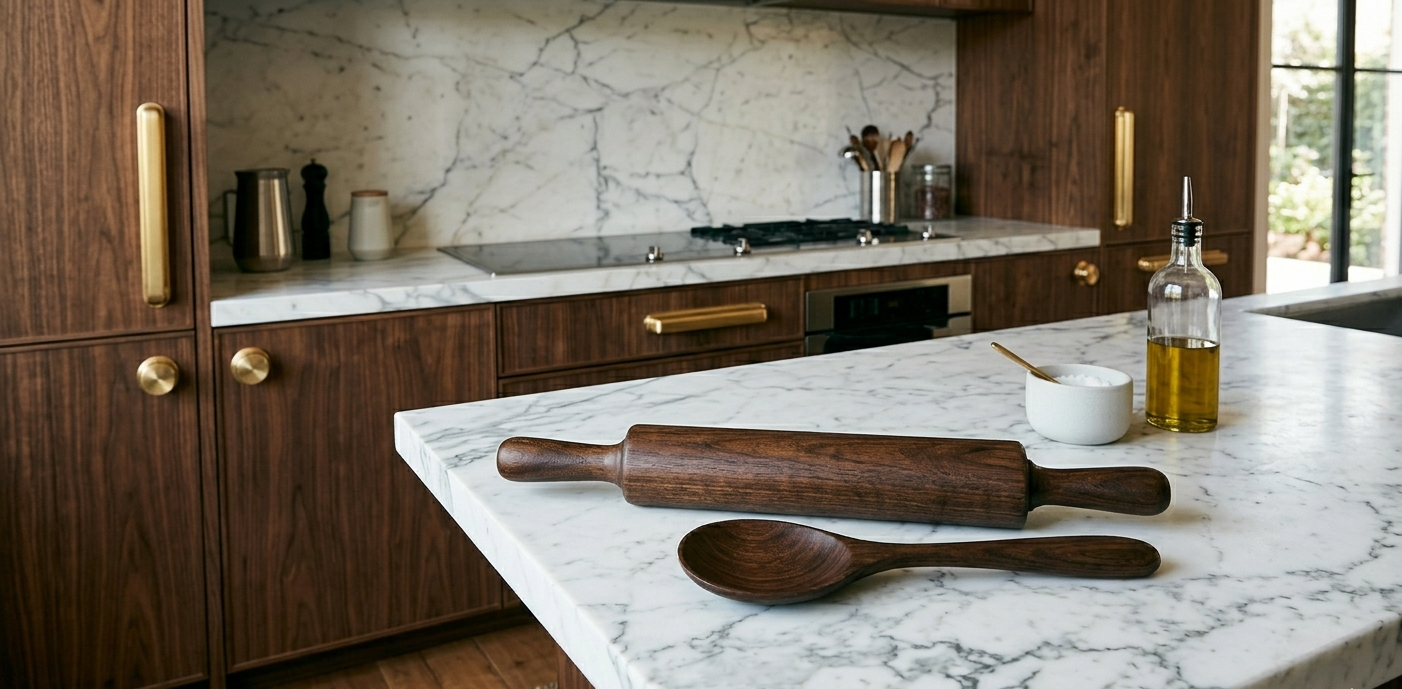
Tzalam wood rolling pin and oversized spoon on a white marble kitchen island with modern walnut cabinetry and brass hardware.
The Porous Vessel, Terracotta
There is a specific luxury in the "imperfect" line. Hand thrown ceramic dinnerware and terracotta storage vessels for grain or salt provide the sensory friction that a refined, quiet home requires. These are the Insider Signals, pieces that carry the faint fingerprint of the maker, ensuring the wares never feels sterile, but always feels curated.
Final Thought
The "Elemental Kitchen" isn't about filling space, it is about the Curation of Utility. In a world of disposable convenience, these objects represent a return to the permanent. They are the heavy, quiet tools that turn a house into an home, and a meal into a lineage.
Tzalam and the Living Grain
In a home, furniture isn't an accessory, it’s a legacy. Discover the dense, oily grain of Tzalam and why it is the anchor for a room designed to last a century."
In a world of mass produced, veneered furniture, there is no substitute for the density of a true tropical hardwood. When a room requires a table or a structural partition with real presence, we don't look for a "finish" that sits on top of the wood. We look for the life inside the grain. This is the role of Tzalam.
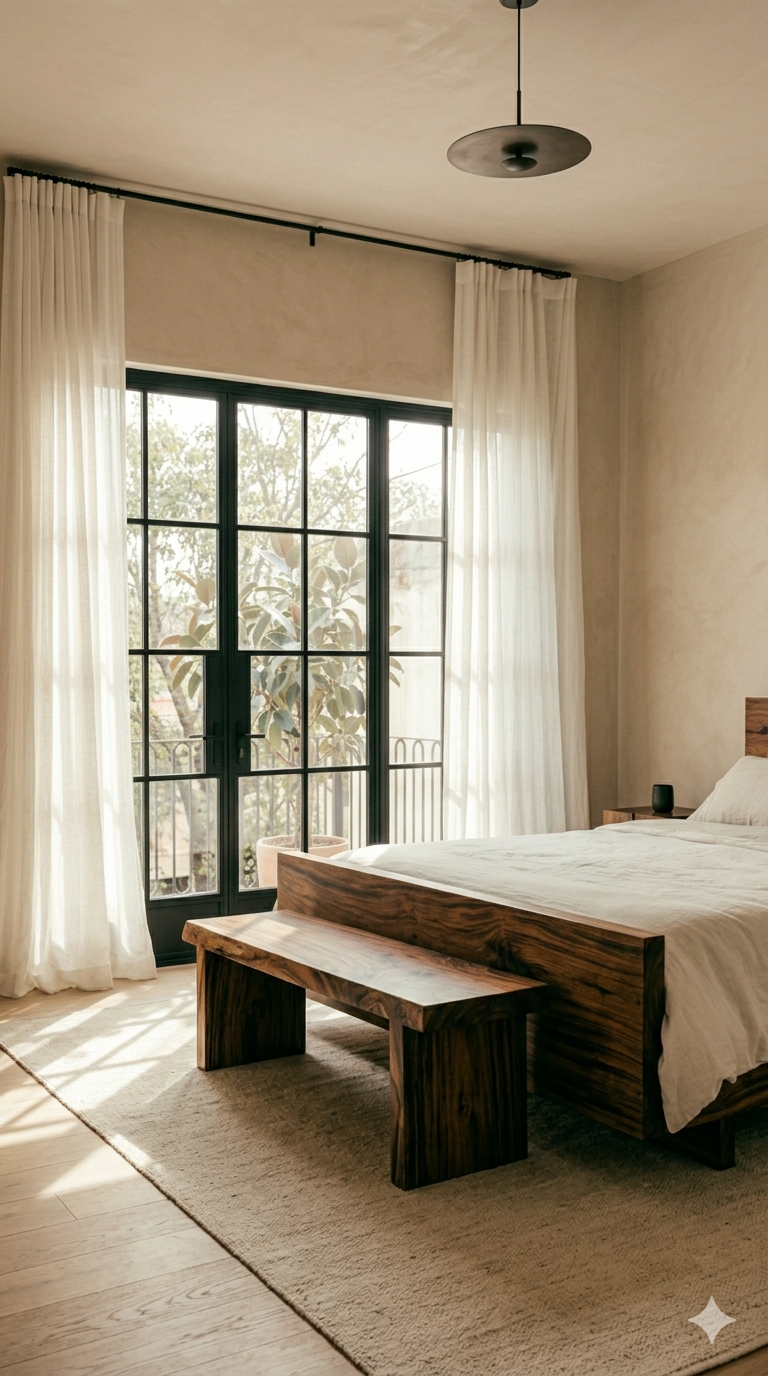
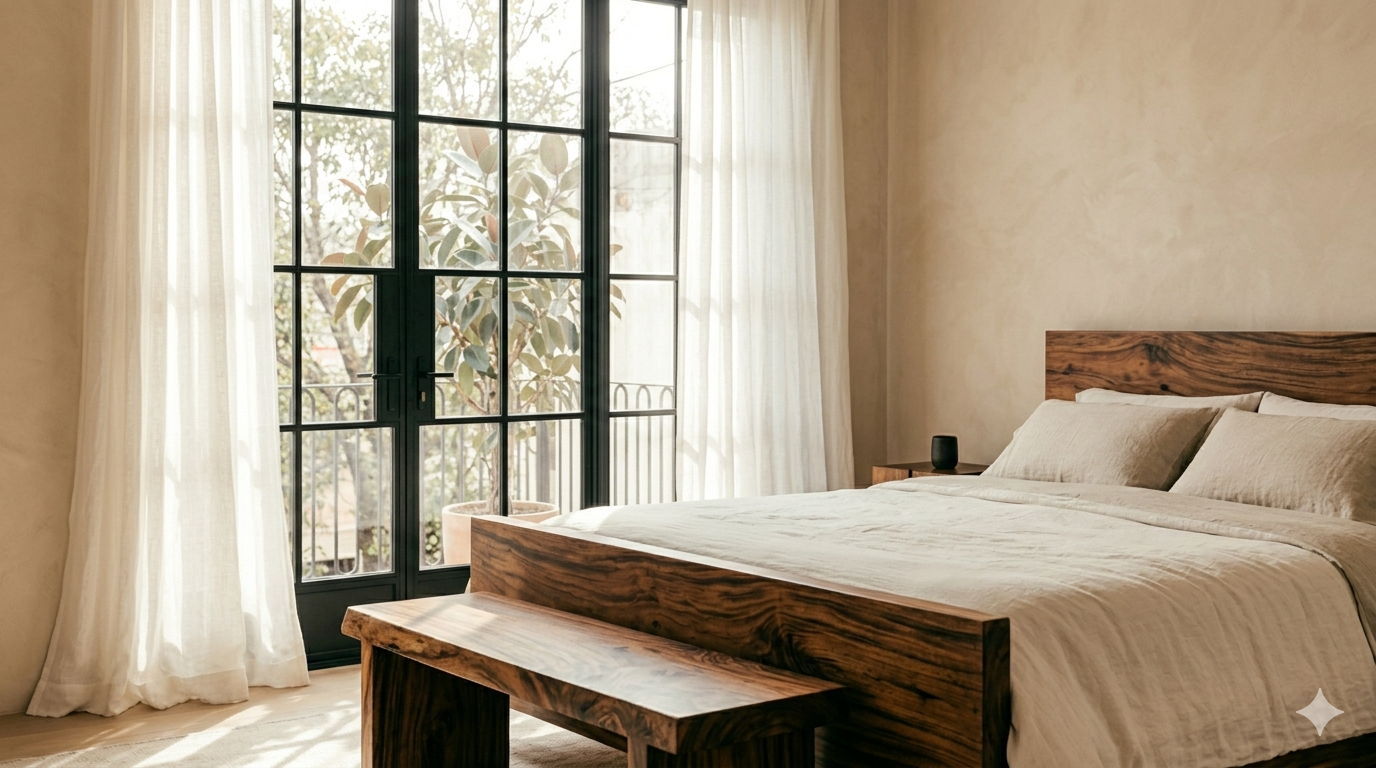
Tzalam wood bedframe and matching bed bench, in a bedroom of natural sunlight.
The Mexican Walnut
Often called Mexican Walnut, Tzalam is a wood of incredible weight and resilience. It is a dense, oily hardwood that carries a rich spectrum of reddish browns and deep chocolates. Unlike temperate woods that can feel dry or brittle over time, Tzalam has a high natural oil content. This means the wood doesn't just look deep, it feels substantial to the touch.
Beyond the Varnish
Most furniture is sanded down and sealed under a thick layer of plastic based varnish. We prefer to let the material breathe. Because Tzalam is naturally oily, it requires very little intervention. We use natural waxes that bond with the fibers rather than coating them. The result is a surface that feels like wood, not a chemical film. It is a material that responds to the light of the room, aging with a grace that lighter woods cannot match.
Built for the Century
A home shouldn't be designed for the next five years. It should be designed for the next hundred. Tzalam’s density makes it resistant to the dings and scratches that ruin softer woods. Instead of a chip in a veneer, a mark on a Tzalam table becomes part of its history, a small detail in a piece that will eventually be passed down. It provides a sense of permanence that you can feel the moment you sit down.
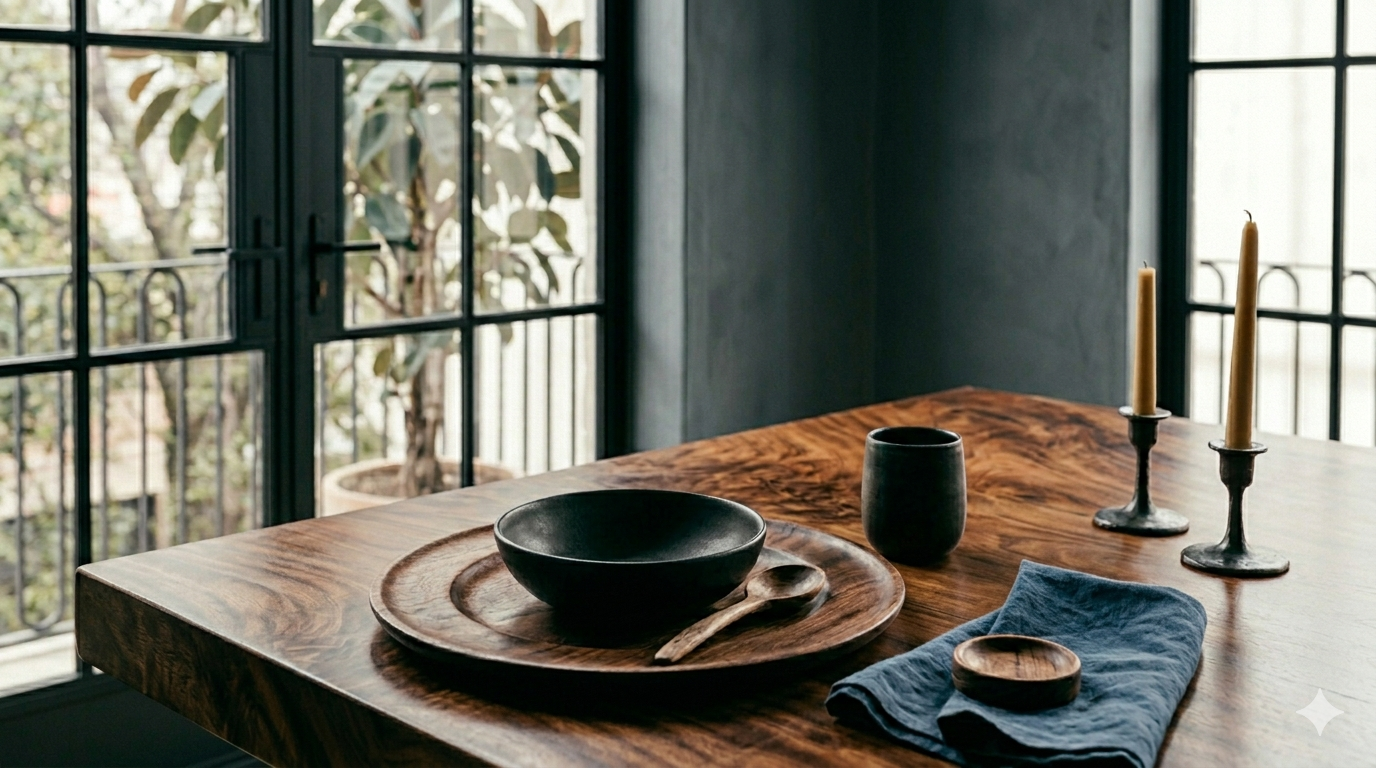
Tzalam kitchen table and Tzalam place setting.
The Architectural Weight
There is a specific resonance to a room that features Tzalam. Because of its dark, variegated grain, it works as a bridge between the light mineral walls of the foundation and the darker metals of the hardware. It provides the "visual heat" necessary to make a large, open space feel inhabited and warm. When utilized in The Social Partition, Tzalam transforms a structural necessity into a warm, organic boundary that directs the flow of the home without closing it off.
Final Thought
The value of a material isn't found in a trend, it's found in its lifespan. By choosing a wood as resilient and rich as Tzalam, we aren't just placing furniture, we are installing a legacy. In this house, we don't buy for the season, we build for the century.