
Blackened Iron and Oxblood Leather
Stop playing it safe with neutral tones. Discover how we use vegetable tanned oxblood leather and blackened iron to give a modern room the weight, depth, and permanence it’s missing.
The Foundation Tones
Most people are terrified of dark colors. They spend years painting everything white and buying "light and airy" furniture because they’re afraid a room will feel too small or too heavy. But here’s the truth, if a room doesn't have any weight, it doesn't have any soul. To get a space to feel grounded, it needs a pulse. That pulse is found in the pairing of Oxblood and Iron.
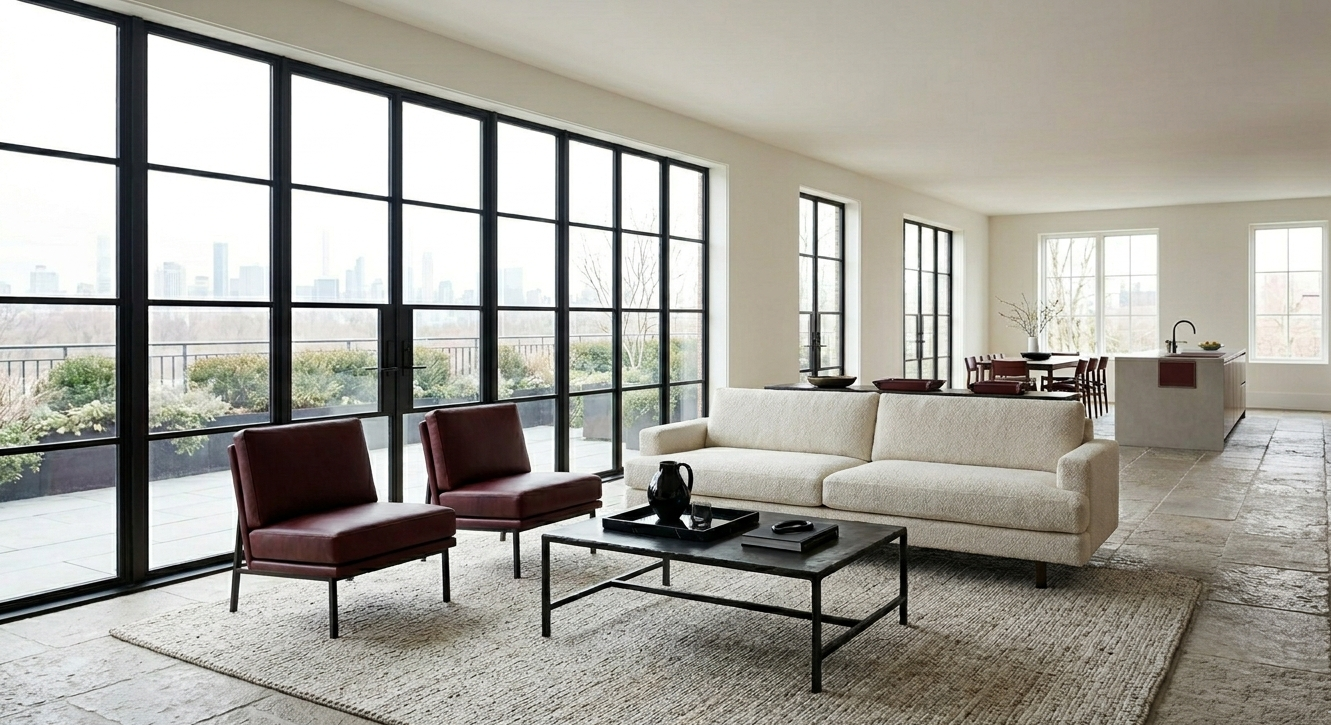
Black iron window frames and coffee table, in an expansive open floor plan with oxblood sitting chairs and oxblood accessories.
The Weight of Oxblood
When we talk about Oxblood, we aren't talking about a literal animal product, we are talking about a depth of pigment. Specifically, we use a full grain, vegetable tanned saddle leather that has been aniline dyed to a deep, earthy crimson. This process ensures the color is soaked all the way through the hide, rather than just painted on top like cheap, corrected leathers.
This isn't the distressed, "old world" leather of a 1940s hacienda. We use a refined, matte finish hide that feels architectural and clean. It’s a "living" material that changes with you. Because the leather is left natural and unsealed by plastic coatings, it breathes. In the spots where you rest your arms or work at your desk, the leather will absorb the oils of your touch and darken into a deep, bruised plum. It provides a kind of "visual heat" that makes a large, modern room feel inhabited and warm without needing to clutter the space.
The Honesty of Iron
If leather is the skin of the room, iron is the bone. We prefer hand forged, blackened iron for frames and supports because it’s honest. But we don't do ornate scrolls or rustic textures. We focus on precision.
Think of sharp, industrial angles and slim, high strength profiles. Unlike chrome or stainless steel, which can feel like they belong in a lab, iron has a raw, matte texture that feels substantial. It gives a sharp, dark line to a room, telling the eye exactly where the furniture begins and ends. It’s the "anchor" that holds a essential space down. This architectural precision is the perfect structural partner for Obsidian Light, where the slim iron profiles disappear into the deep shadows of the glass, letting the view take center stage.
Accents, Adding Depth Without the Commitment
We understand that not every space is ready for a full scale iron frame or a leather wrapped surface. But there is always a way to add weight. If a modern room feels too "thin" or clinical, we suggest introducing these tones through Home Accents.
A single hand forged iron tray on a coffee table or a heavy oxblood leather blotter on a desk can change the entire gravity of a room. These smaller touches act as a visual "tether," giving a light, glass filled space a sense of history and substance without losing its modern edge. It’s about using small, high impact pieces to ground the light.
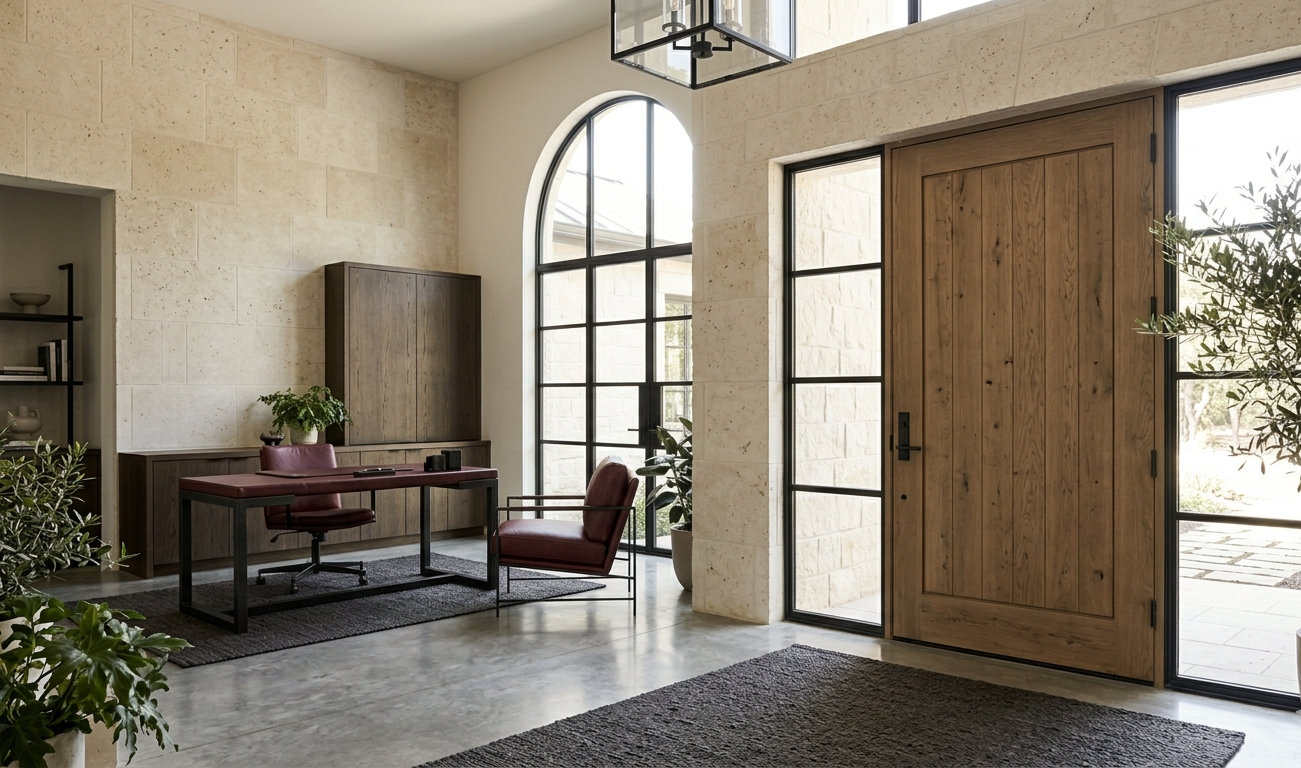
Black iron desk wrapped in oxblood leather and oxblood desk chair in an open home interior foyer.
Why They Belong Together
The magic is in the tension, the "soft," organic heat of the leather pressed against the "hard," industrial cold of the iron. By keeping the lines clean and the textures matte, we avoid the "antique" trap. Instead, it feels stable, permanent, and undeniably current.
Beyond the Trends
"Colors of the year" come and go, and usually, they look dated by the time the paint is dry. But earth and metal are immune to fashion. Whether it’s a modern glass loft or a clean architectural gallery, this combination always feels relevant because it’s based on materials, not trends.
Quick Question - Do you want a home that feels Light and Temporary, or are you looking for something Grounded and Substantial?
Final Thought
Real quality is found in the weight of the materials you live with. By anchoring a room with the deep tones of oxblood and the raw strength of iron, we aren't just decorating a space. We are building a stronghold.
Living Bronze
Most hardware is coated in plastic to keep it from changing. We prefer a metal that actually responds to you. Discover why living bronze is the only choice for a house that ages well.
The Hardware of the Fingerprint
Most hardware is designed to stay exactly the way it looked in the store. Manufacturers coat it in a thin layer of plastic lacquer so it never changes. The problem is that when that plastic eventually cracks or wears off, the handle looks cheap. We don't use fake finishes. We use Living Bronze.
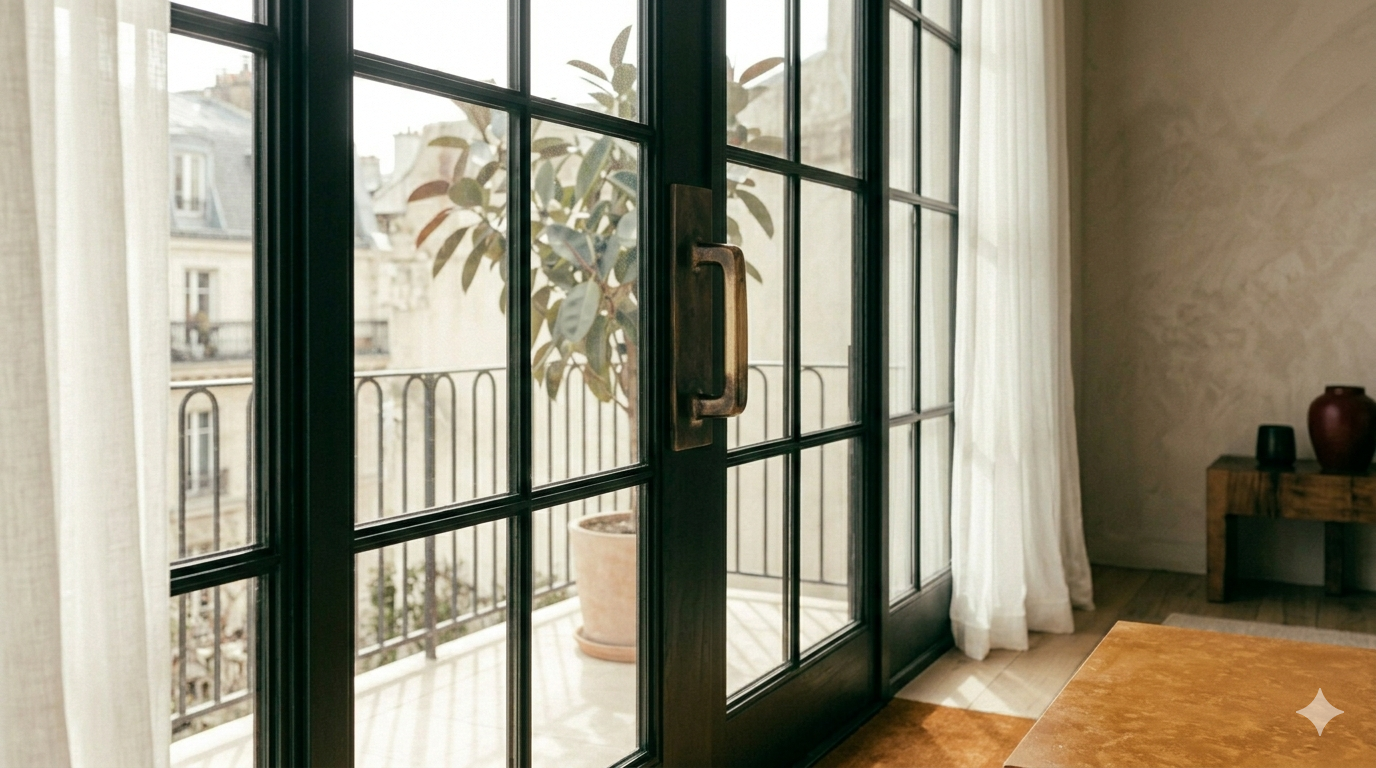
Solid brass door handle.
The Unlacquered Standard
Living bronze is just "naked" metal. It doesn't have a protective spray on it because it doesn't need one. It’s a material that is supposed to change. When it’s brand new, it has a raw, warm glow. But the second you start living with it, it begins to react to the air and, more importantly, to your hands.
How It Changes
Every time you open a door or pull a drawer, the oils from your skin hit the metal. In the spots you touch every day, the bronze stays bright and polished. In the corners you never touch, it turns a deep, dark brown.
The hardware eventually develops a map of how you actually live. You can see which doors get used the most and which drawers are the favorites. It’s not "wearing out", it’s maturing. This is really the whole point of The Ritual of Care, we choose materials like this because we want a house that actually looks better the more you use it, not one that starts falling apart the moment you move in.
Why This Matters
We don't want a house that looks like a sterile showroom. We want a house that feels lived in and solid. By using unlacquered bronze, we let the house breathe. You don't have to worry about scratching a "finish" because there is no finish to scratch. The metal is the same all the way through.
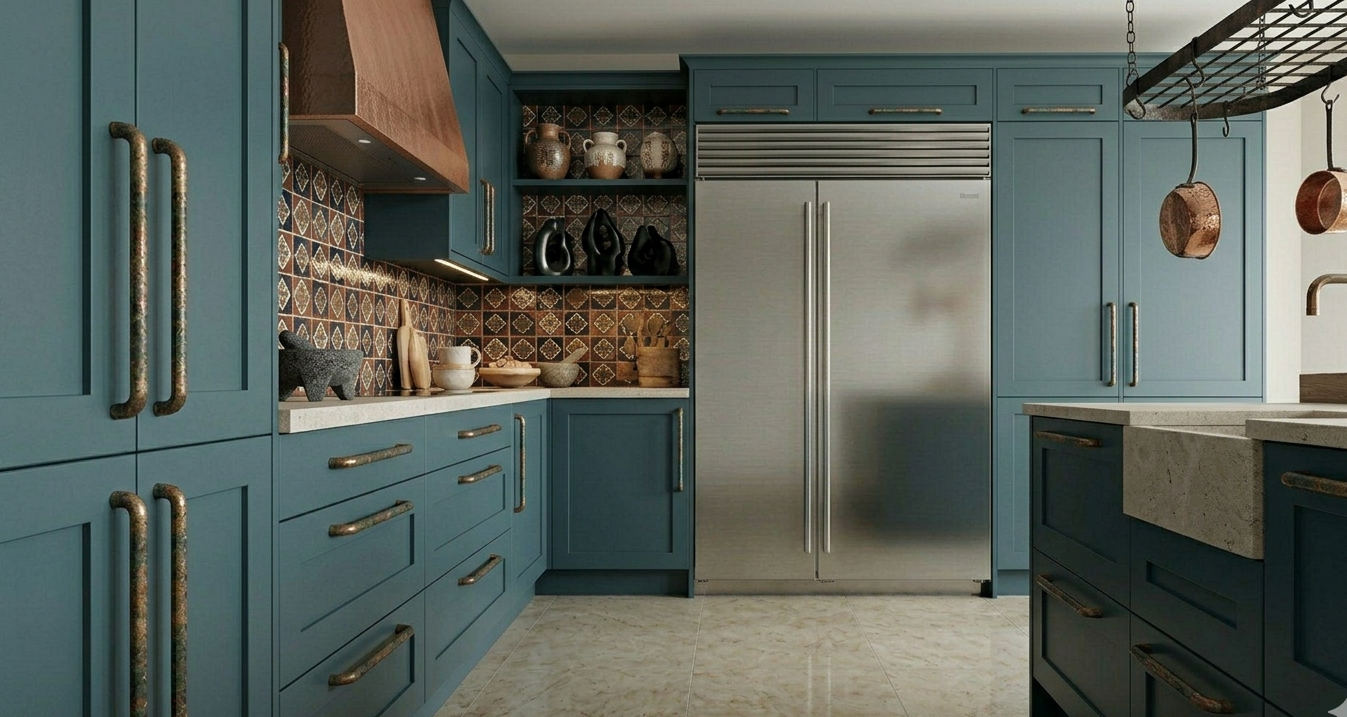
Solid brass kitchen cabinet handles.
The Feel of the House
There is a specific weight to a bronze handle that you just don't get with cheaper alloys. It feels heavy and cool in your hand. It’s the small detail that anchors a room. It makes a simple act, like opening a door, feel intentional and permanent. This tactile weight is a requirement for The Heavy Door, where the cold, solid touch of a bronze handle provides the first signal that you have entered a sanctuary.
Final Thought
Real quality isn't about keeping things "new." It’s about choosing materials that look better ten years from now than they did on day one. By choosing living bronze, you aren't just buying a doorknob, you're choosing a material that grows with you.
The Statement Lighting Standard
Statement lighting is the final note in a room’s composition. Explore the Madison Prime standard for selecting fixtures with architectural scale and material depth.
In a refined interior, a statement fixture is not an exercise in excess; it is a declaration of the room’s design narrative. A well chosen chandelier, pendant, or floor lamp should feel effortless, providing a focal point that elevates the space while maintaining a rigorous balance with the existing architecture.
Scale and Proportionate Weight
Adhering to the statement lighting standard requires a strict focus on the room’s dimensions. The fixture must possess the correct "visual gravity" for its environment. Large scale ceiling fixtures are reserved for volumes with significant verticality or as anchors for expansive dining surfaces, such as those discussed in The Centered Table. Conversely, sleek, minimal pendants are utilized in narrower zones to maintain a sense of fluid movement. Every fixture must be scaled to the furniture it accompanies, ensuring the proportion feels intentional rather than accidental.
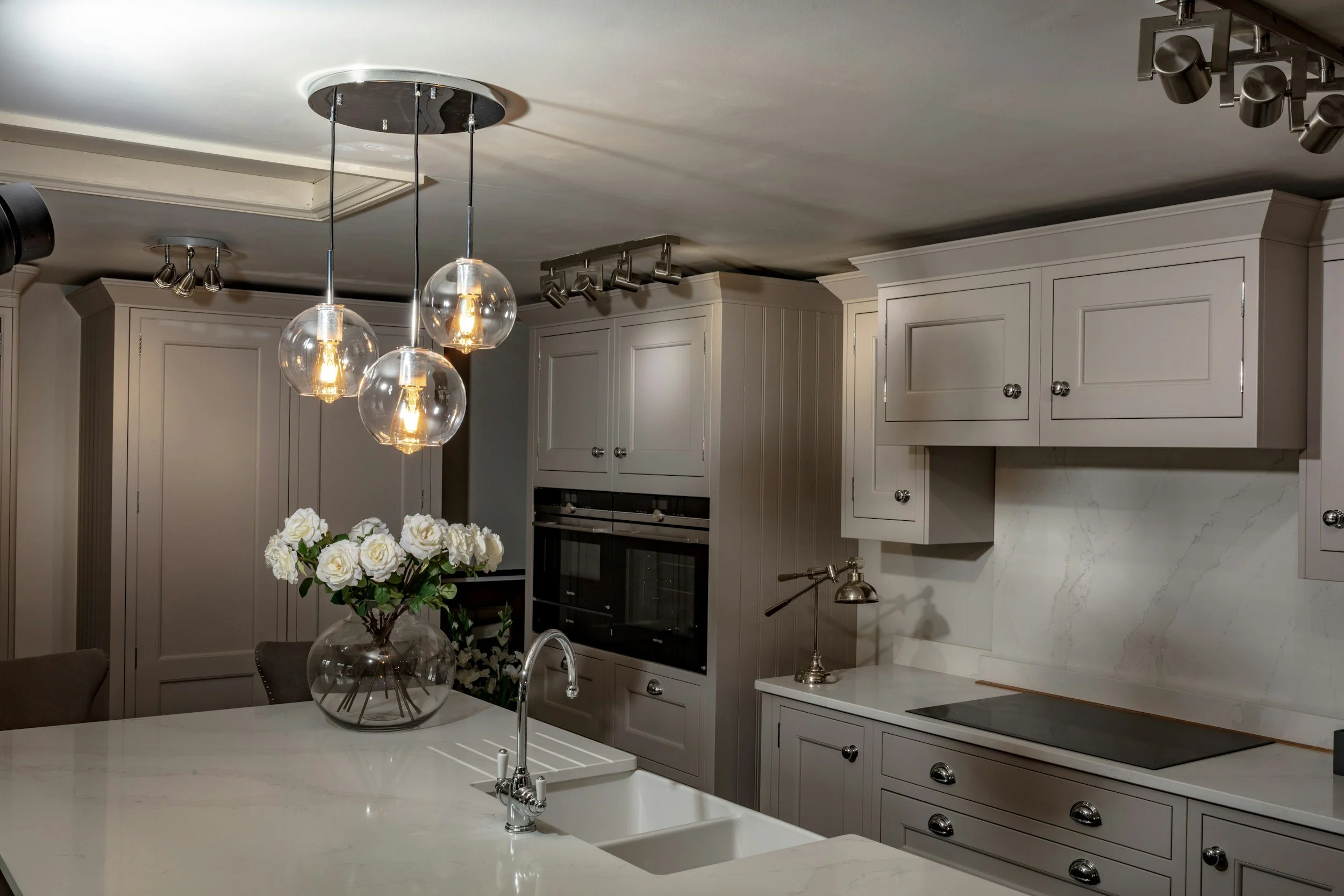
Kitchen with circular pendant light over the island, balanced by functional track lighting and an counter lamp.
Consistency of Design Language
To maintain a curated feel, the primary fixture must speak the same material language as the room. We prioritize pieces that reflect the home’s foundational elements whether that manifests as clean lined contemporary forms or the weighted presence of brass and bronze in more traditional volumes. The goal is a cohesive dialogue between the light source and the surfaces it illuminates.
Materiality and Finish
Luxury is found in the tactile quality of the hardware. We favor finishes that offer warmth and depth hand rubbed bronze, matte brass, or natural wood, over fleeting, high shine trends. These materials allow the fixture to age with the home, providing a tactile richness that invites closer inspection without being overbearing.
The Integration of Layered Light
Even a statement piece must fulfill its primary purpose, The Composition of Light. A dining anchor must provide a soft, ambient glow that flatters the surface below, while an entryway fixture should offer a welcoming but functional transition. A focal point is most effective when it is integrated into a broader layered strategy, working in harmony with ambient and accent sources to eliminate harsh contrasts.
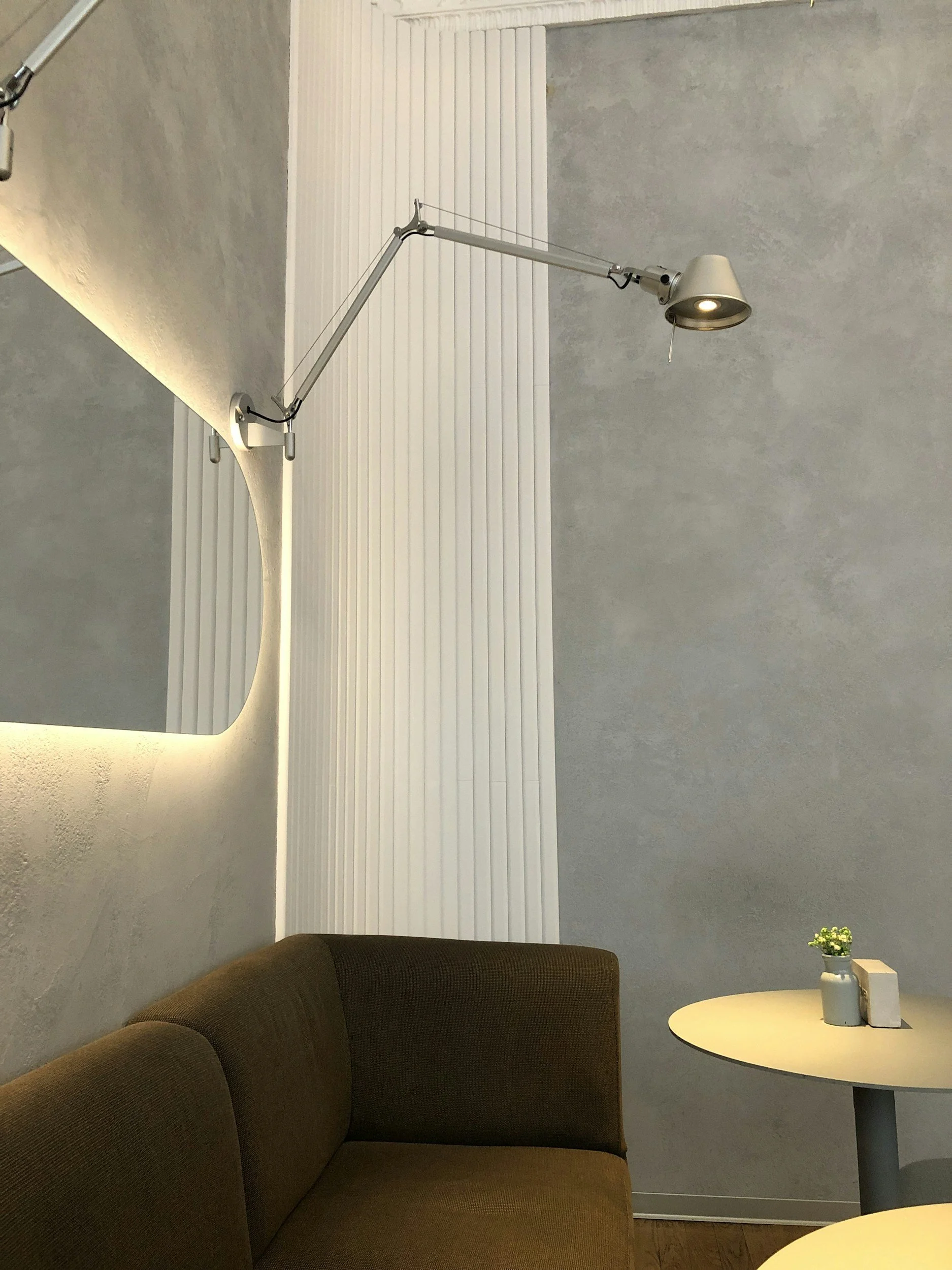
Task area featuring an integrated backlit mirror and a long reach articulating wall sconce for directed architectural lighting.
Conclusion
Statement lighting is the final note in a room’s composition. When selected with restraint and an eye for architectural scale, it becomes more than a light source, it becomes a permanent anchor of the home’s identity.