Living Bronze
Lacquer on hardware exists to freeze a look in place. It works, for a while. Then it cracks, or wears thin exactly where fingers hit it every day, and what's left looks cheaper than the raw metal underneath ever did. I don't coat my bronze. I don't need to. The metal is built to change.
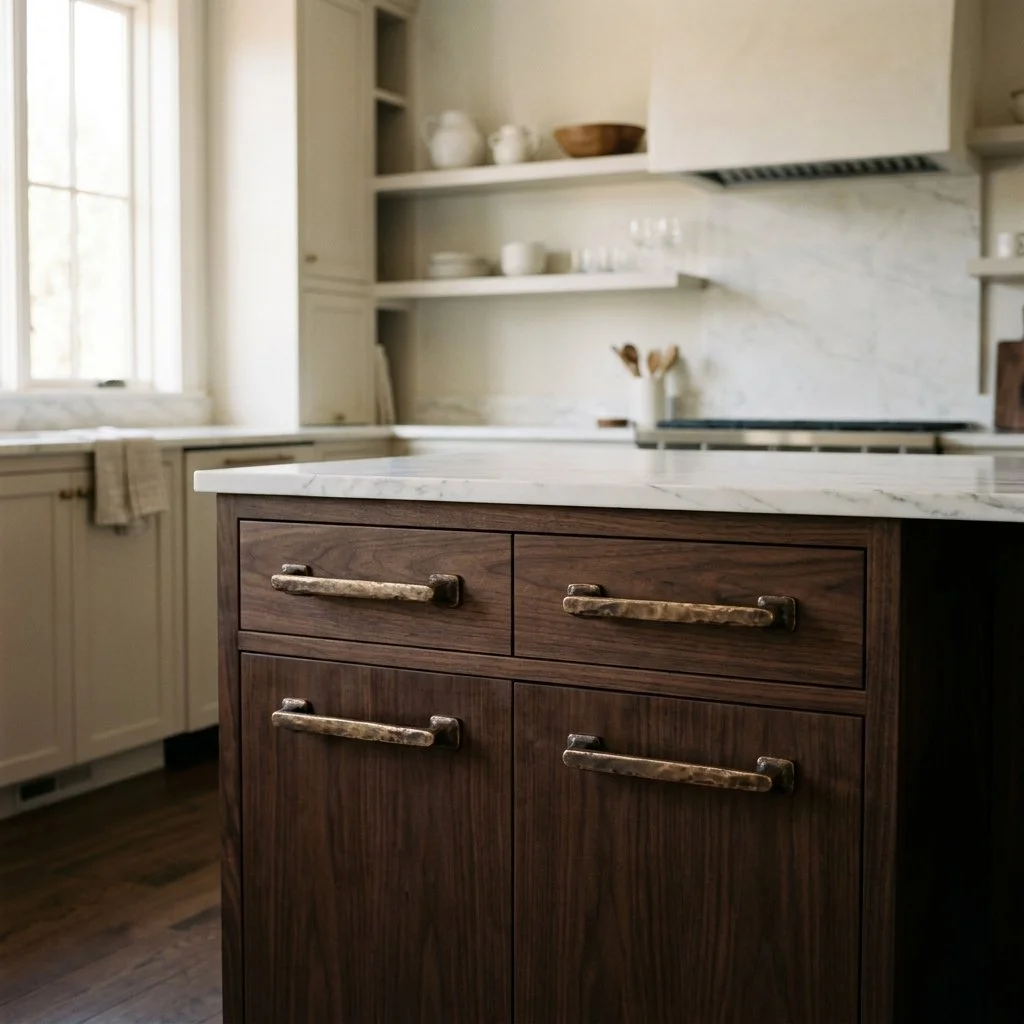
Solid cast bronze cabinet pulls with a warm, natural patina set against a modern kitchen background.
Naked Metal, On Purpose
What I use is sometimes called a living finish: bronze with nothing sprayed over it, sold and installed exactly as it comes off the cast. New, it has a warm, almost gold cast. Within weeks it starts reacting, first to the air, then to the specific hands that touch it every day. I choose that reaction on purpose. It's the whole reason to pick the material in the first place.
The Map Your Hands Draw
Every pull of a drawer or turn of a handle leaves a trace. Skin carries oils and a faint natural acidity, and where it makes contact often enough, the friction keeps burnishing the surface bright even as the copper in the alloy starts to oxidize. The spots nobody touches, the underside of a pull, the back edge of a handle, darken instead, sometimes to a deep, almost black brown. Give it a year and a bronze handle on a busy pantry door will look different from the one on a guest bathroom that barely gets opened. The house starts keeping its own record of how it's actually used.
Bronze or Brass, and Why It Matters Less Than You Think
A fair amount of hardware sold as bronze is technically brass, an alloy of copper and zinc rather than copper and tin. Retailers use the two names loosely, and I'm not going to pretend the industry is precise about it. What actually determines whether a handle ages this way is simpler: a real copper alloy, left bare, with no lacquer standing between your hand and the metal.
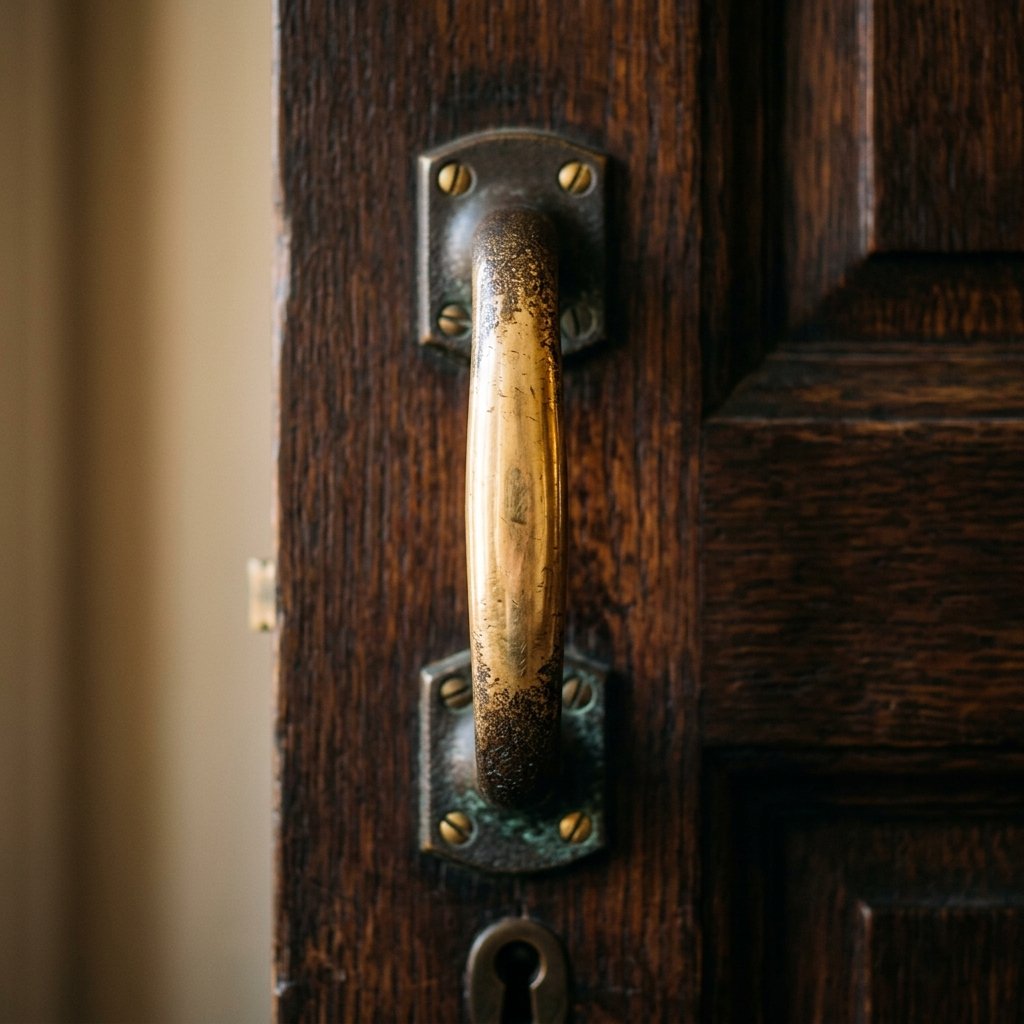
Solid bronze door handle mounted on a dark wood door, featuring a bright burnished grip and a deeply oxidized, dark brown patina on the untouched edges.
The Weight You Feel Before You See It
Cast bronze and brass are noticeably heavier than the zinc alloy most inexpensive hardware is made from, and you feel that difference the first time you close your hand around it. It's cool against the skin longer than a lighter alloy would be, and it doesn't rattle or flex the way stamped hardware sometimes does. That density comes from what a solid casting actually weighs, and it's part of why the piece feels permanent rather than applied.
Let the House Keep Score
Quality here means choosing a material that looks better in ten years than it did on day one, because the people living with it made it that way. A living bronze handle is a record of a house being used exactly as it was meant to be, and it only gets more honest with time.
