
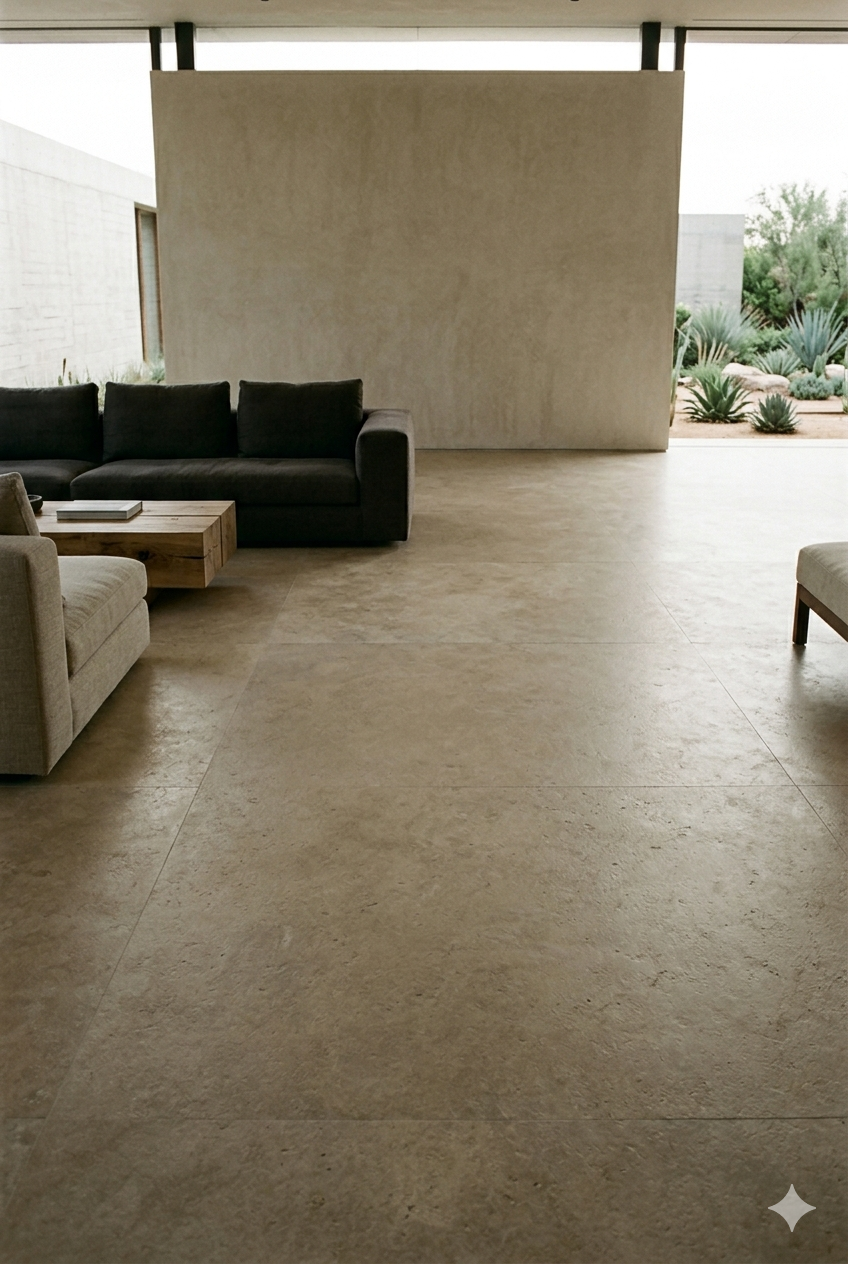
The Grit of the Floor
High gloss stone is a signal of excess, not elegance. A home should not feel like a hotel lobby. Discover why the Madison Prime Home standard prioritizes 'grit', the tactile connection between the foot and the foundation.
There is a common mistake in high end residential design, the pursuit of the mirror finish. When a stone floor is polished to a high gloss, it loses its soul. It becomes reflective, cold, and dangerously slick. More importantly, it feels commercial. It feels like a hotel lobby or a luxury mall, spaces designed for transit, not for living.
At Madison Prime Home, we believe the floor should be an anchor. It should have grit.
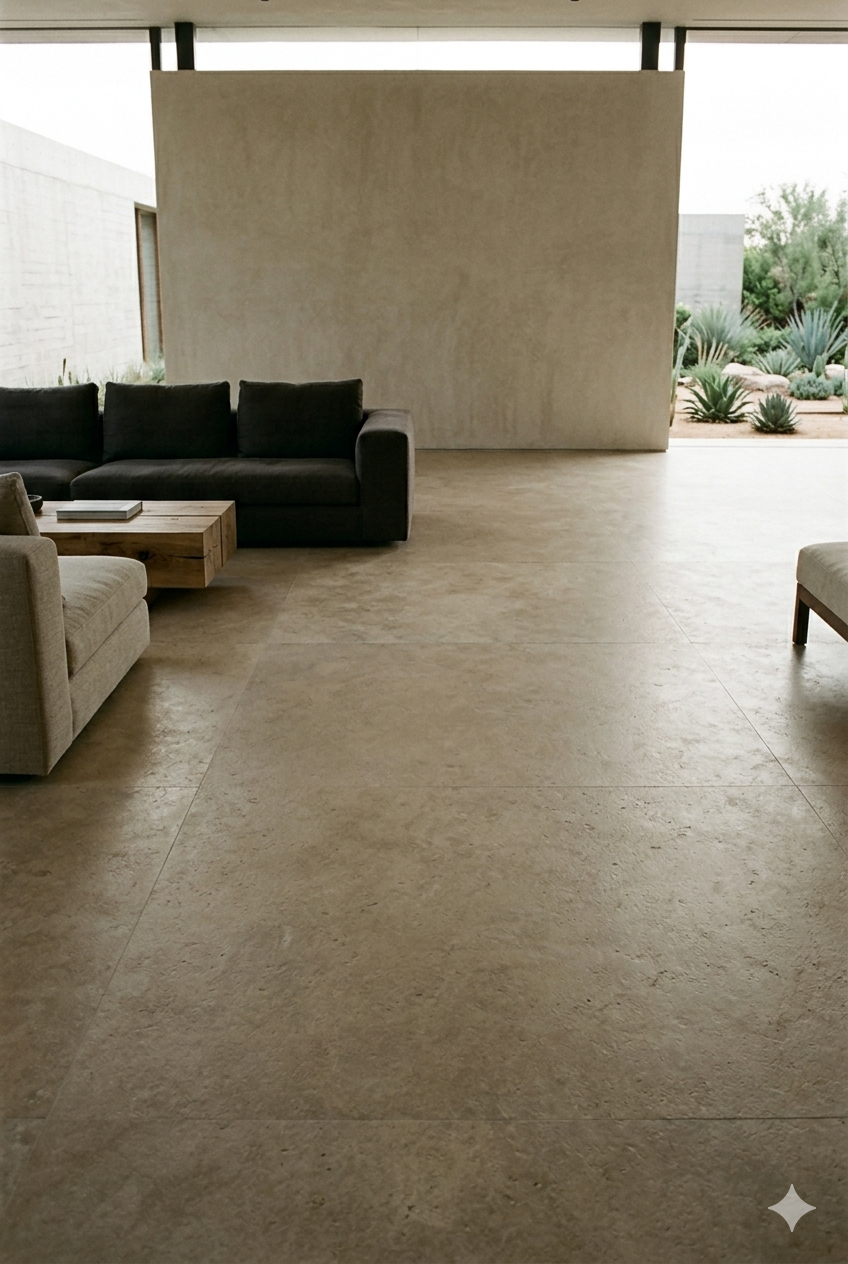
Vast, seamless honed limestone floor.
The Tactile Shift
In a private estate, luxury is found in the matte, the muted, and the textured. When you walk barefoot across a room, the stone should feel like the earth, not a sheet of glass. This isn't just an aesthetic choice, it’s a psychological one. A textured floor grounds the room, absorbing light instead of bouncing it, and creating a sense of permanence that a polished surface simply can’t match. This sensory grounding is the foundation for The Mineral Palette, where the raw, organic tones of the earth dictate the mood of the entire residence.
The Three Texture Standards
If you are specifying stone for a "Sovereign" space, these are the finishes that define the standard:
1. The Honed Finish
This is the baseline for a modern home. To "hone" a stone is to stop the polishing process early. It leaves the surface flat, matte, and velvety to the touch. It allows the natural veining of a marble or the fossils in a limestone to stand out without the distraction of a glare. It’s quiet, understated, and ages with a far better patina than a high gloss finish.
2. The Leathered Grain
If you want a sensory experience, you leather the stone. Using diamond tipped brushes, the softer parts of the stone are worn away, leaving a slightly rippled, pebbled texture that feels like, as the name suggests, worn leather. This is the ultimate "forgiving" floor. It hides fingerprints, water spots, and the minor scratches of daily life while offering a grip that feels incredibly secure underfoot.
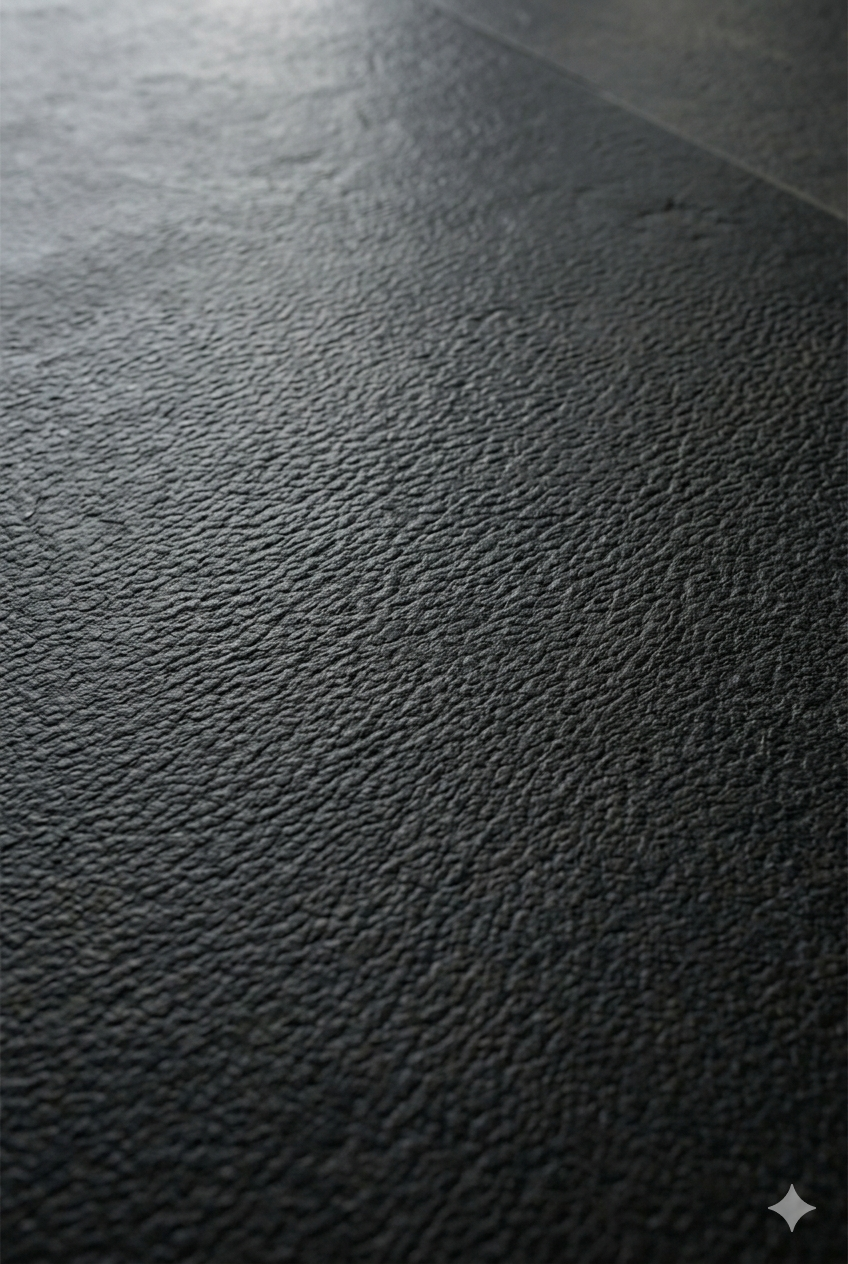
Close up image captures the "rippled, pebbled texture" of leathered stone.
3. The Tumbled or Brushed Edge
For transitions between indoor and outdoor spaces, we look for an aged feel. A tumbled finish softens the edges of the stone, making it look as though it has been walked on for a century. It removes the clinical precision of a cut tile and replaces it with the "Material Truth" of a hand laid floor.
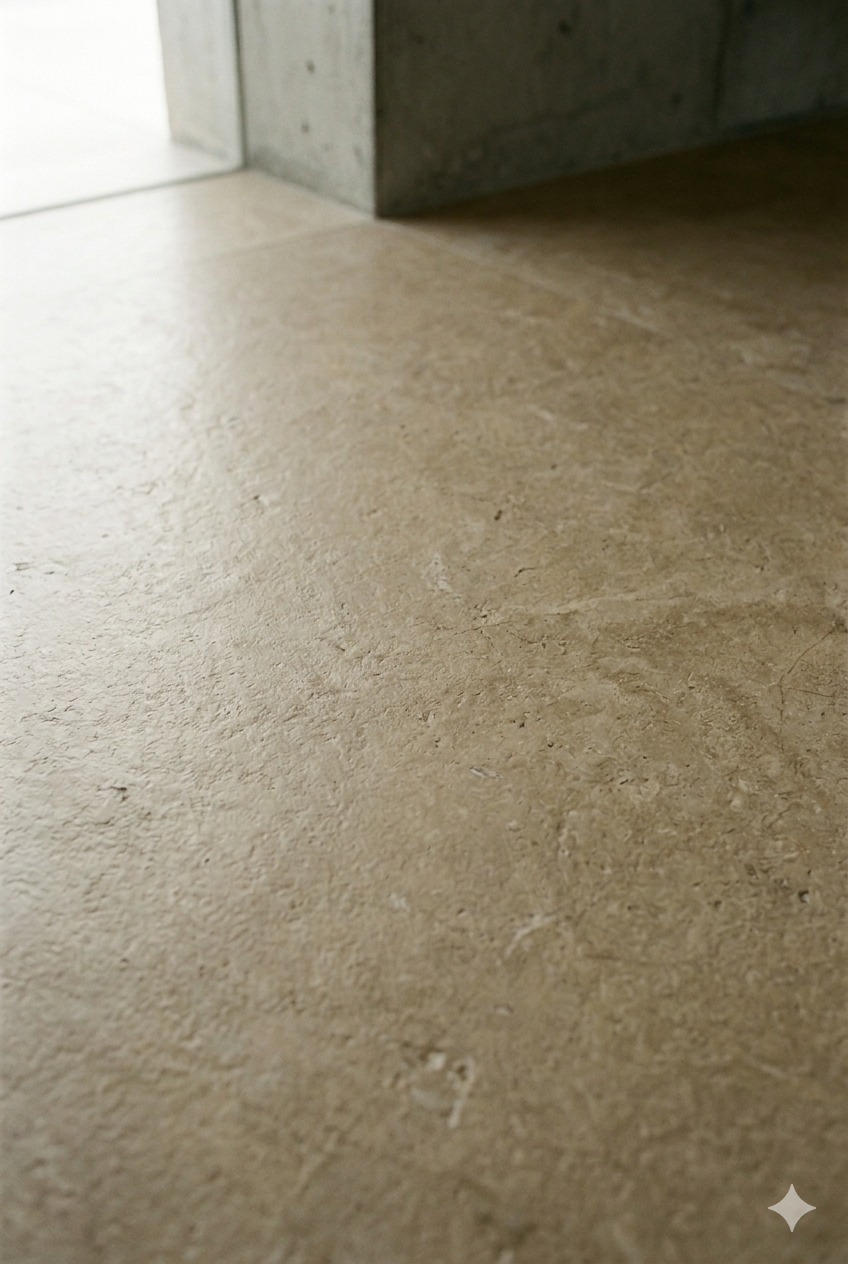
Honed limestone floor surface.
The Material Selection
To achieve a floor that carries the weight of a Madison standard home, we focus on density and warmth:
Honed Limestone The gold standard. It’s naturally warm, dense, and has a soft, sandy texture that feels exceptional in bare feet.
Leathered Basalt or Granite For high traffic areas or mudrooms. It is nearly bulletproof, resisting stains and wear while maintaining a deep, charcoal toned grit.
Travertine (Unfilled and Honed) We move away from the "filled" look. Leaving the natural pits and textures of travertine exposed (and then honed) gives the floor a rustic, “Mayan Modernism” gravity that feels authentic to the material.
Final Thought
A house is only as steady as the ground beneath it. When you choose a floor with texture, you are choosing a material that is honest about its origin. You are trading the fleeting shimmer of a trend for the enduring grit of a home. A polished floor is a display, a textured floor is a foundation.
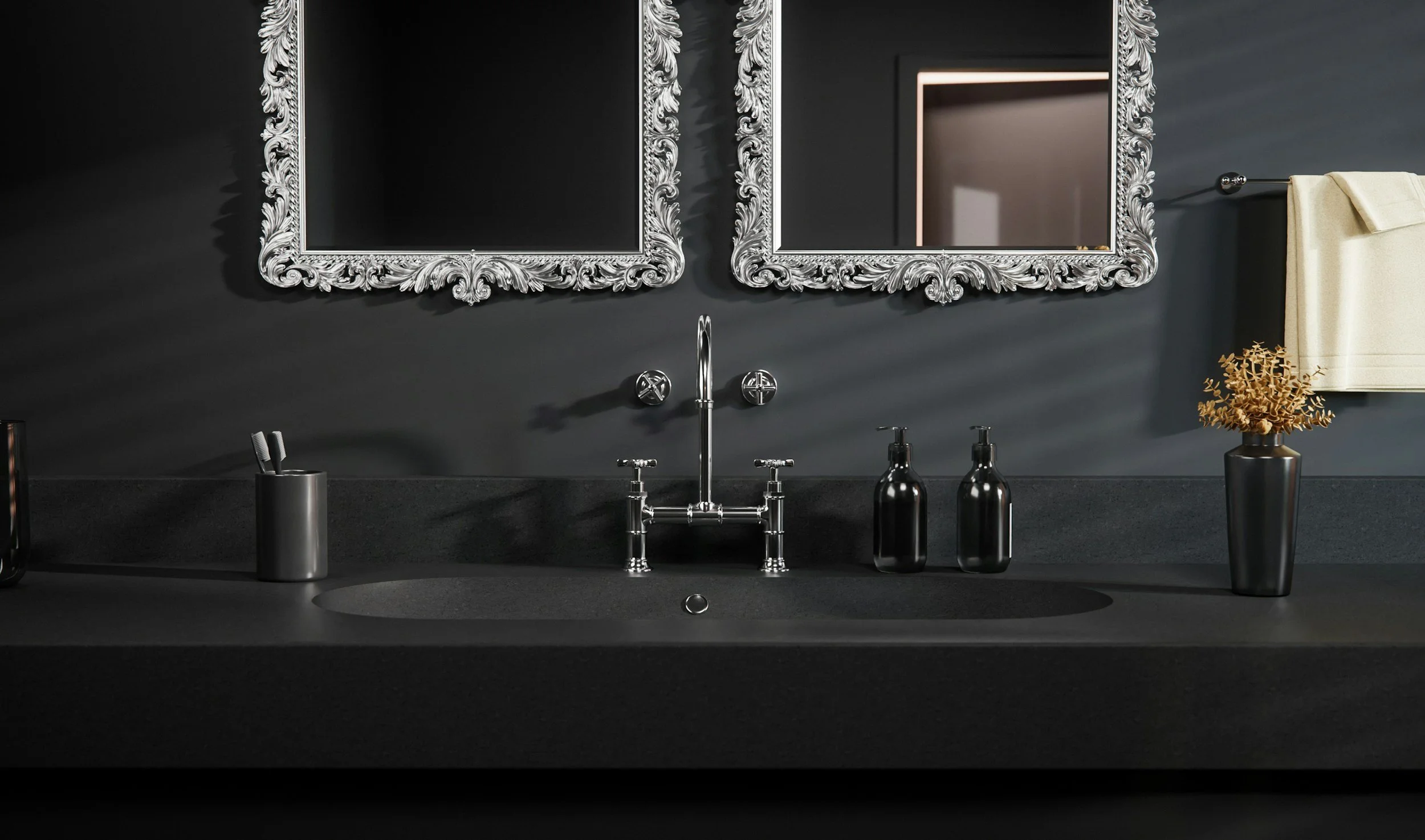
The Architecture of the Bath
Moving beyond utility. Explore the Madison Prime standard for the carved residential bath.
The Sanctuary Perspective
The bathroom should never be reduced to a tiled utility room. It is a carved sanctuary designed to facilitate a clean break from the external world. By prioritizing spatial reduction and high caliber materials, the bath becomes a disciplined environment where the focus is shifted toward the ritual of restoration and silence, an atmosphere further refined in The High End Spa at Home: A Study in Natural Textures.
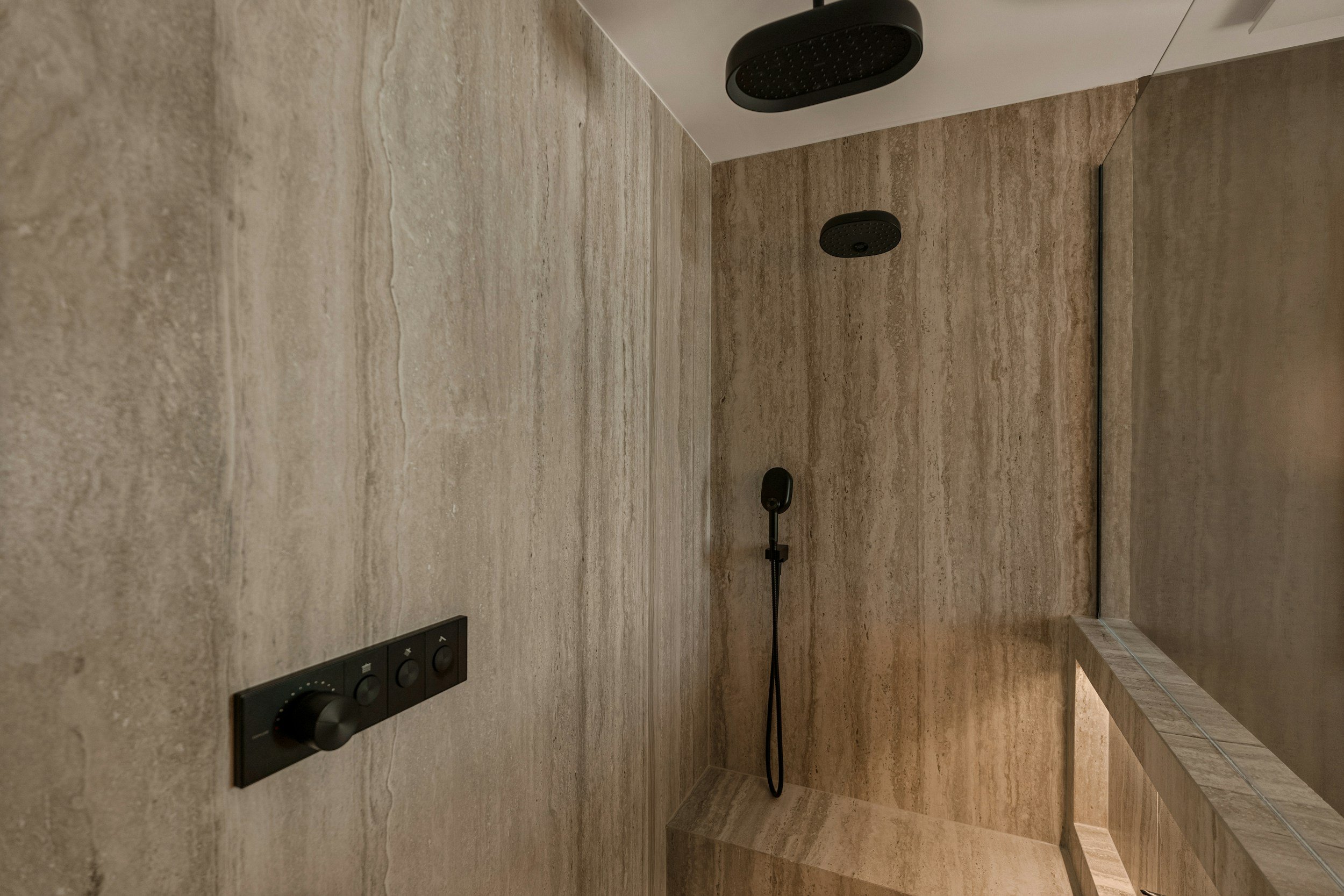
Floor to ceiling marble shower enclosure featuring integrated niche lighting.
The Weight of the Stone
The sensory presence of the bath is defined by the weight of its surfaces. We favor the cool, matte touch of honed limestone and the dense, rhythmic veining of silver travertine. These materials provide a grounding permanence, they also invite The Ritual of Care to ensure their raw beauty is preserved against the elements. This material discipline ensures the space maintains a raw quality that avoids the sterile feel of mass produced ceramics.
The Investment Standard
True refinement is found in the hidden complexities of the design. A vanity hand carved from a singular block of stone eliminates the visual clutter of seams and hardware. Precision milled drains and wall mounted fixtures in a living finish ensure that every functional element is an intentional architectural detail. This level of craftsmanship ensures the fixtures disappear into the structure, allowing the raw stone to remain the primary focus.
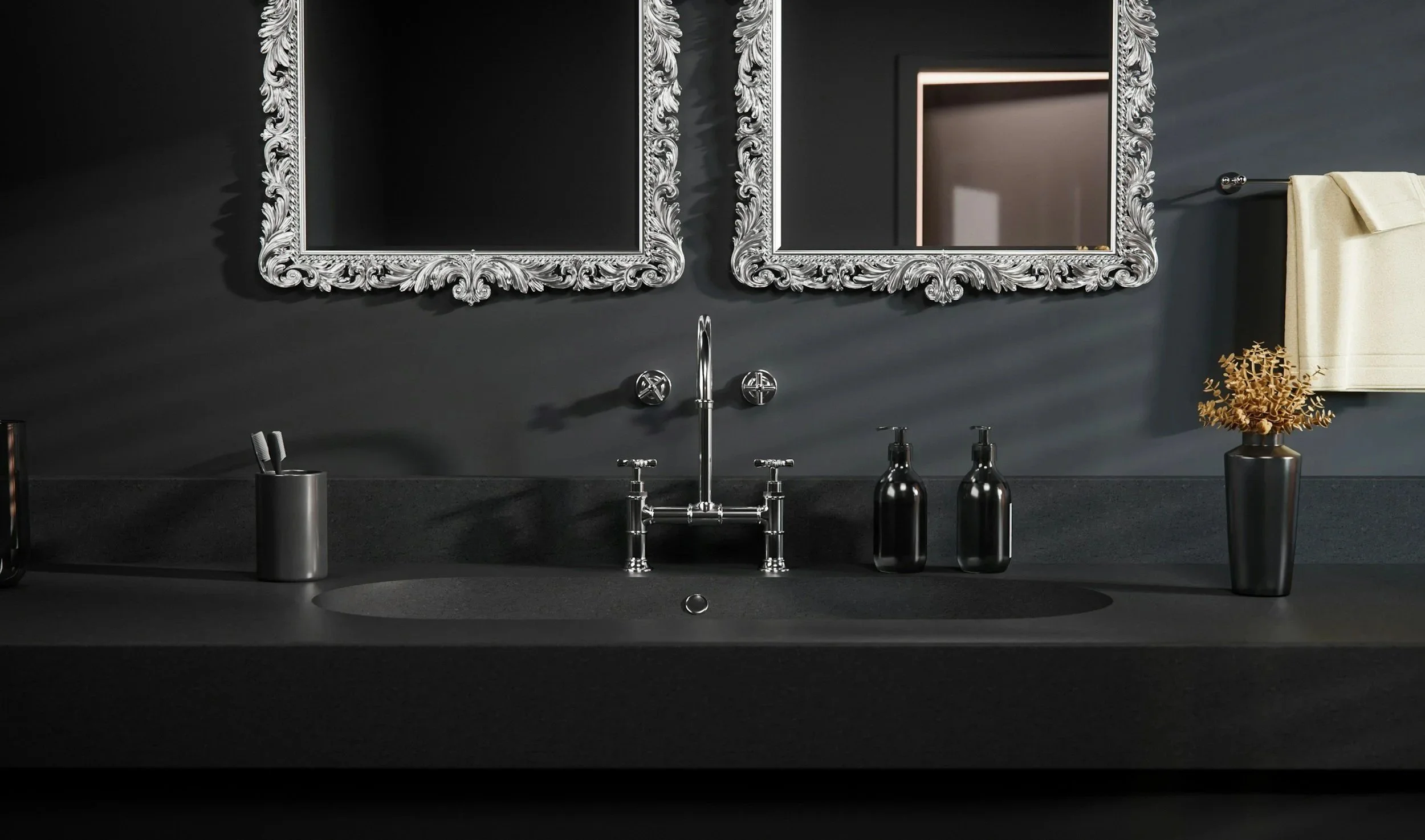
Monochromatic bathroom featuring a seamless integrated basin, and polished silver faucetry for a bold, immersive sanctuary.
The Heritage Note
Longevity in design is the result of choosing materials that outlast the residents themselves. When stone is integrated directly into the home’s infrastructure, the space gains a sense of permanence that furniture can never provide. This commitment to sourcing and execution ensures the bath remains an architectural asset rather than a renovation project. It is a space built for the long term, gaining character as it ages alongside the home.
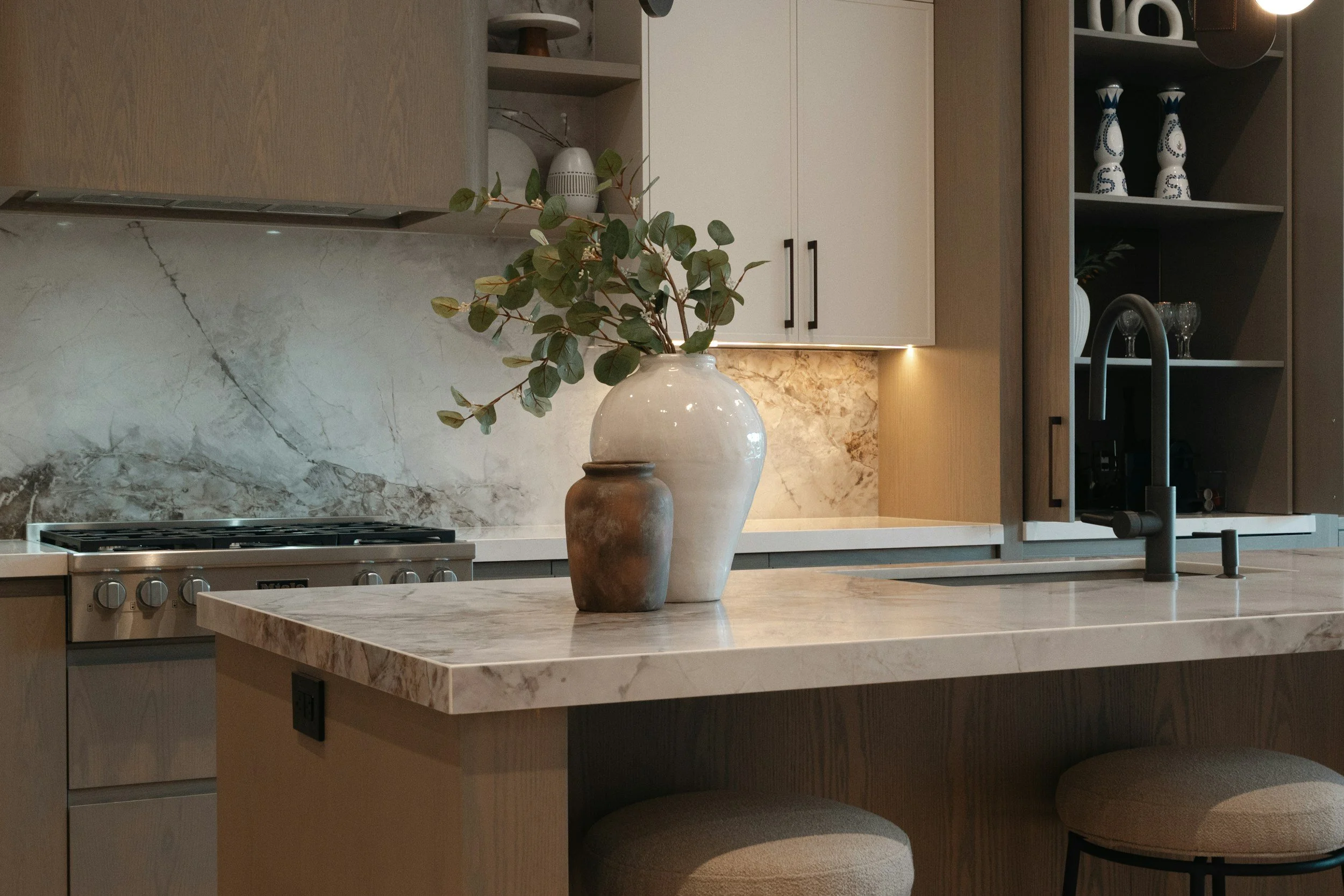
The Kitchen Anchor
The modern kitchen has evolved past the era of purely functional zones. Today, the pinnacle of luxury design is defined by the Anchor, a rejection of the temporary.
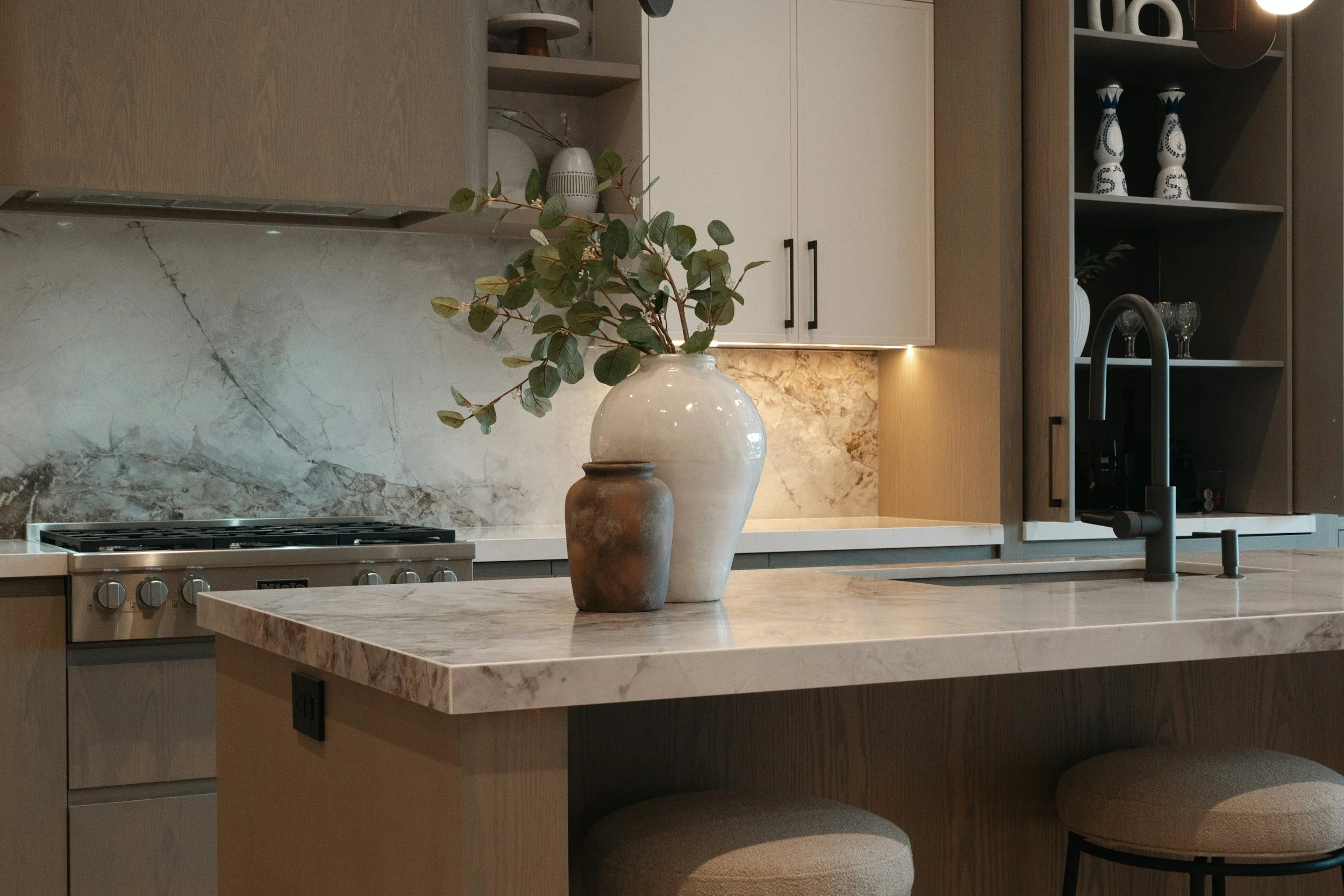
Kitchen design featuring a large honed marble island integrated with a matching marble backsplash.
The modern kitchen has evolved past the era of purely functional zones and cluttered cabinetry. Today, the pinnacle of luxury design is defined by the Anchor.
The Kitchen Anchor is a rejection of the temporary. It marks the transition from a workspace filled with appliances to a singular, unmoving center of the home. It is grounded, architectural, and permanent.
The Weight of Permanence
A true anchor does not simply sit on the floor, it emerges from it. This is achieved through the use of continuous materials, stone, heavy timber, or hand applied lime wash, that wrap the island or cabinetry runs without visible breaks.
The psychological impact of an anchor in the kitchen is stability. A 12 foot island carved from a single block of Calacatta Viola or Silver Travertine acts as a visual weight. It signals that this space is built for generations, not just a passing trend.
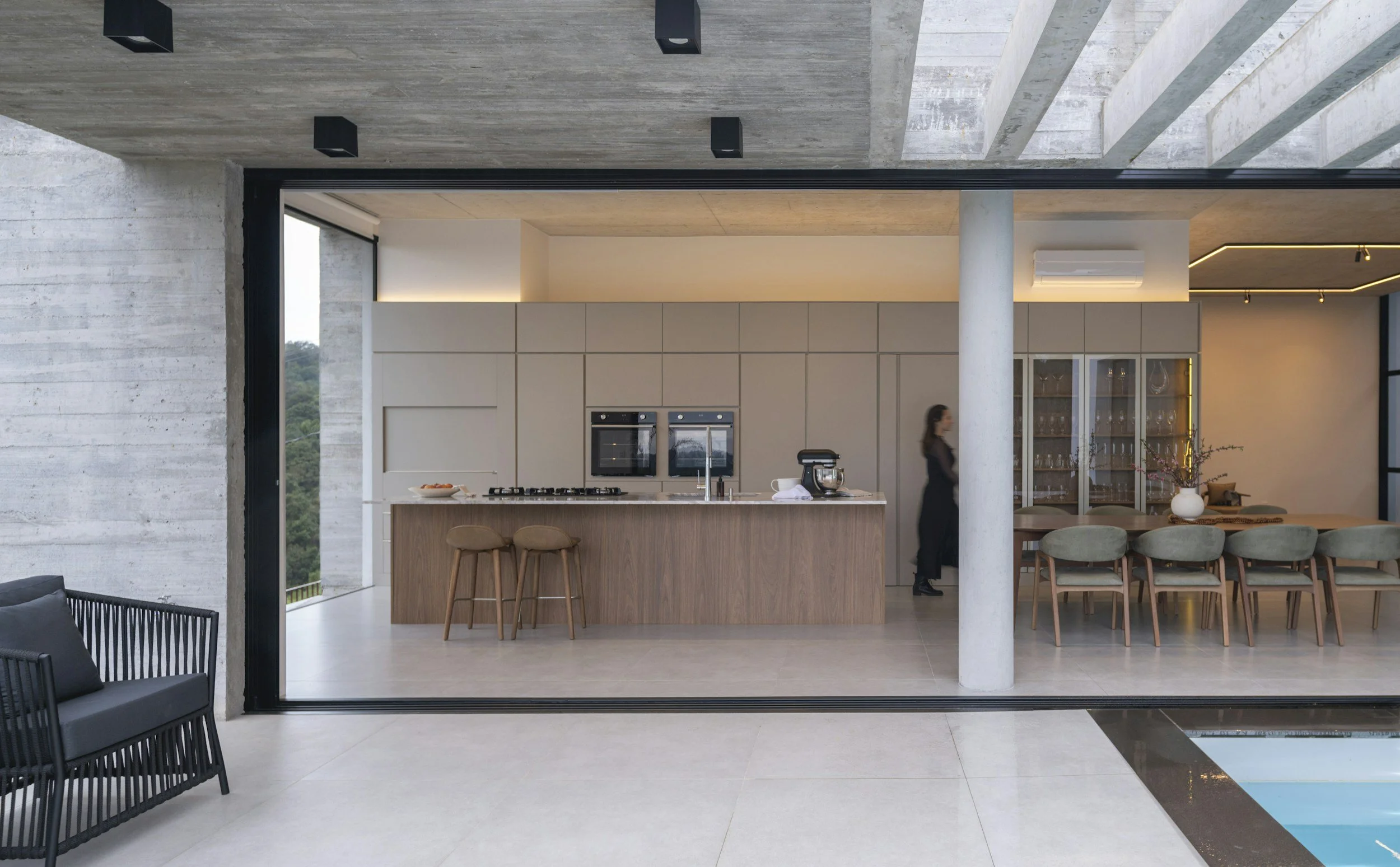
Long form kitchen design showcasing a large central island and extensive cabinetry without hardware.
The Art of the Hidden The Anchor requires a "subtractive" approach to design. To maintain the purity of the form, the mechanical parts of the kitchen must be rendered invisible.
Integrated Camouflage: Refrigeration and dishwashing units are panel-ready, disappearing into the woodwork.
The Appliance Garage: Small appliances are housed behind pocket doors or hidden stone compartments.
Materiality as Authority
An Anchor is only as credible as its material. We prioritize substances that have a deep, physical presence:
Natural Stone: Honed, never polished. While a honed finish allows the eye to appreciate the deep materiality of the stone, it also invites The Ritual of Care, a commitment to the intentional maintenance that preserves such a foundational anchor.
Cast Concrete: For a contemporary authority, site cast concrete offers a seamlessness that joins the floor to the island in a single tonal shift.
Charred or Fumed Oak: When using wood, the grain must be continuous. Using book matched veneers across the entire face of the kitchen, drawing on the principles of The Weight of Wood, ensures the Anchor maintains its visual integrity.
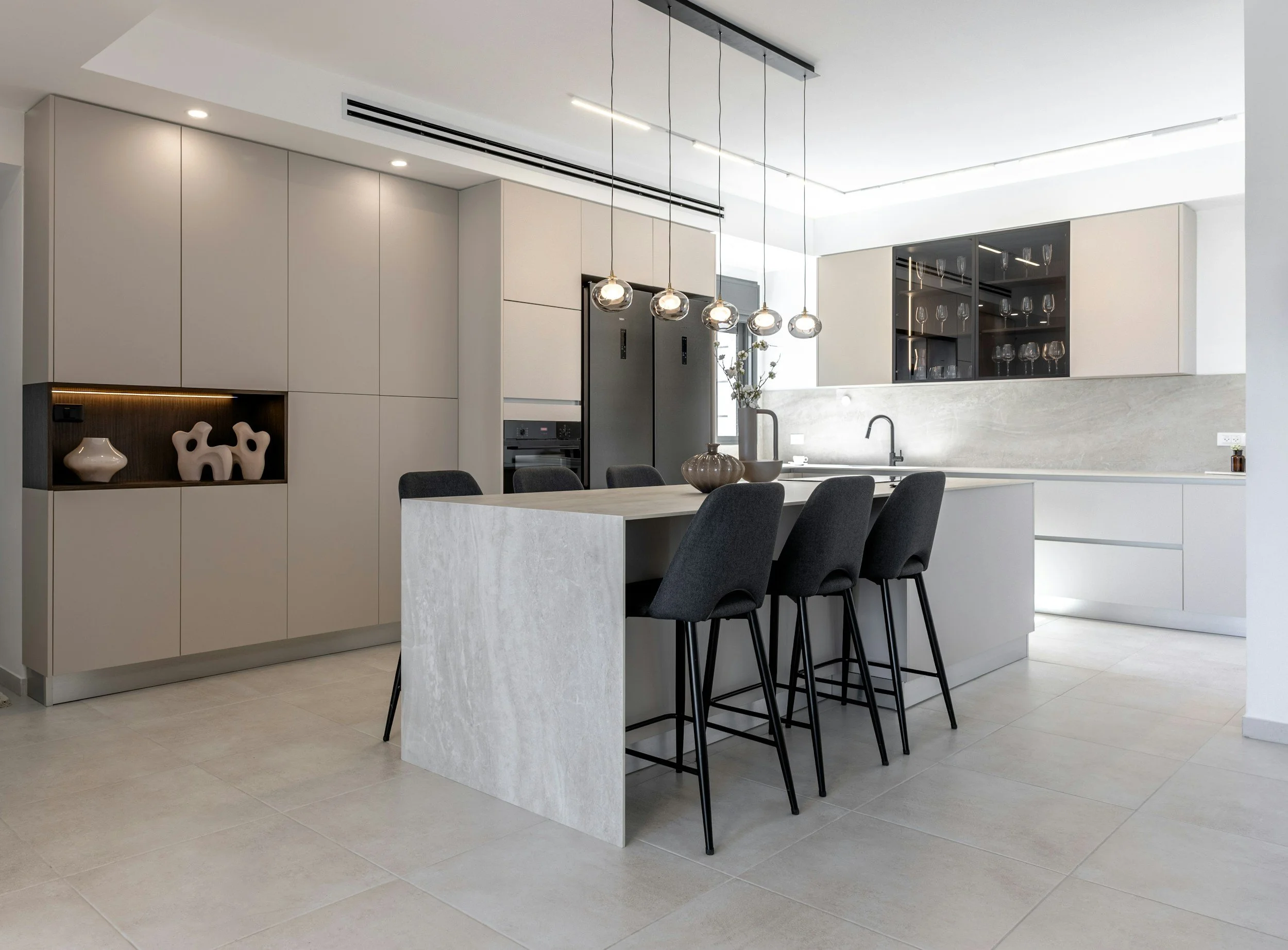
Kitchen featuring a stone waterfall island and matching backsplash, and handleless cabinetry.
The Sourcing Protocol
For the Madison Prime curator, the goal is to move away from standard logic. We look toward heritage brands and custom stone fabricators who understand mitered joinery. An apron that creates the illusion of a solid block is an Anchor.
When sourcing, the question is not "Does this fit?" but "Does this have the gravity to center the home?"