
The Elemental Kitchen
The most enduring kitchens are defined by objects that possess a weight of their own. Discover the "Heavy Tools" of the hearth, from the volcanic anchor of the molcajete to the thermal conduct of hand hammered copper.
The Heavy Tools of the Hearth
The most enduring kitchens are defined by objects that possess a weight of their own. We aren't looking for temporary fixes; we are looking for the pieces with the substance to outlive the architecture itself.
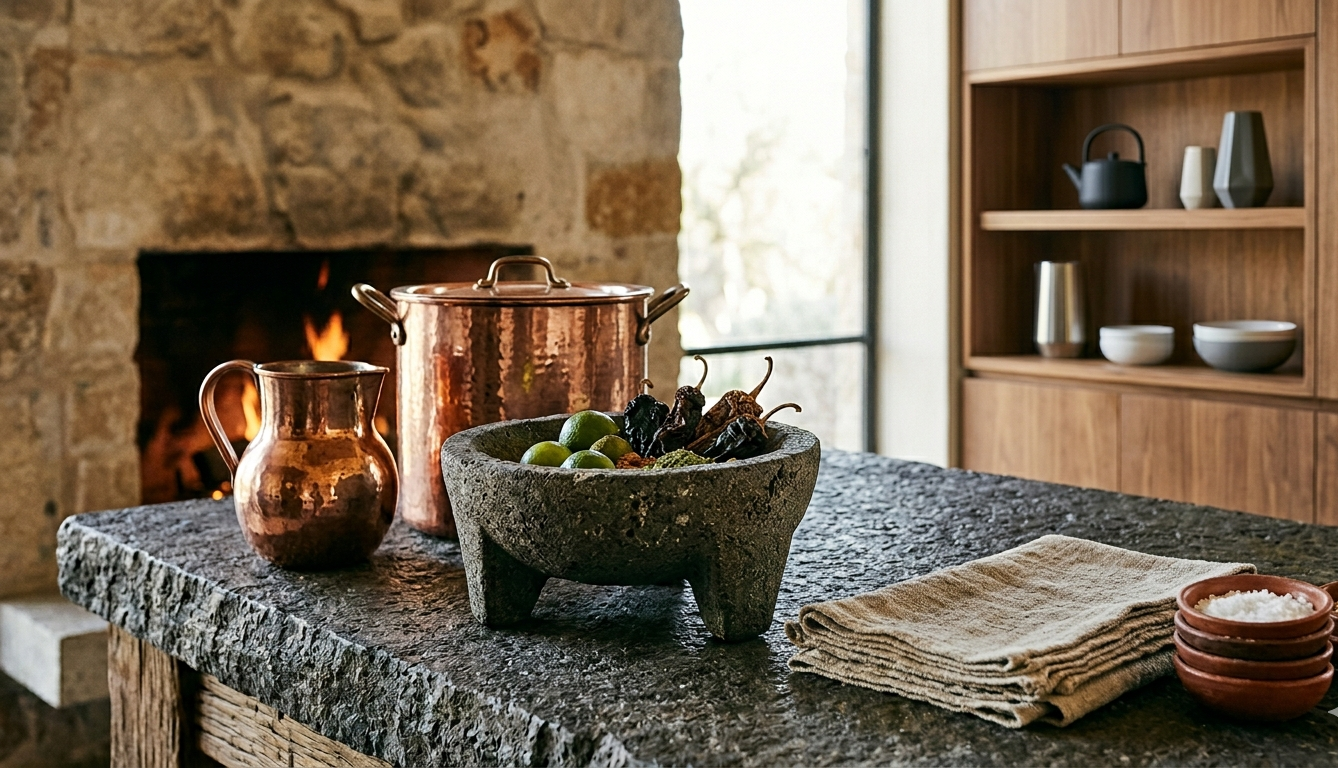
Basalt molcajete and copper cookware on a dark stone counter in a modern kitchen with a warm hearth.
The Volcanic Anchor, The Molcajete
A 10lb block of basalt is the definitive kitchen sculpture. Its porous volcanic surface is the only way to truly respect a spice or a complex emulsion, using friction rather than blades to release oils without heat. It is the "Stone Grounding" of the culinary process. Even when at rest, it serves as a textured vessel for the essentials, a handful of limes or dried peppers, anchoring the countertop with raw, volcanic weight. In an essential kitchen, a heavy basalt molcajete acts as The Hero Piece, providing a singular, high mass focal point that grounds the surrounding culinary tools and establishes a sense of permanent history on the stone island.
The Thermal Conduct of Copper
Luxury is found in the physics of heat. Hand hammered copper is the ultimate regulator, whether it is a Jug for mineral water or the massive, deep bellied pots designed for the reality of a large family meal. These vessels are built for the long simmered stews and meats of a grand gathering. The copper patinas with every fire and every touch, recording the lineage of the home in its glow. It’s the reason we focus so much on The Kitchen Anchor, because the room only starts to feel right once it’s centered by a piece that has more soul than the cabinets.
The Geometry of the Press
The perfect compression of grain is a feat of engineering. A heavy, industrial grade Masa Press, whether in cold rolled iron or a weighted wood, is a masterclass in leverage. While essential for the daily ritual of heirloom corn, its utility extends to any preparation requiring uniform, high pressure flattening, from artisanal seed crackers to heritage flatbreads. It is a reminder that the most sophisticated results come from the simplest mechanical forms.
The Hearth Tool
We source Tzalam (Mayan Walnut) for the tools that touch the hand most often. Because of its high natural oil content and extreme density, a solid Tzalam rolling pin or an oversized cooking spoon feels weighted and balanced. It is a wood that never splinters and only grows deeper in color with use, bridging the gap between the built in cabinetry and the act of preparation. When you pick up a tool with this kind of density, you finally get The Weight of Wood as a daily requirement, a physical reminder that the things you touch every day are actually built to last.
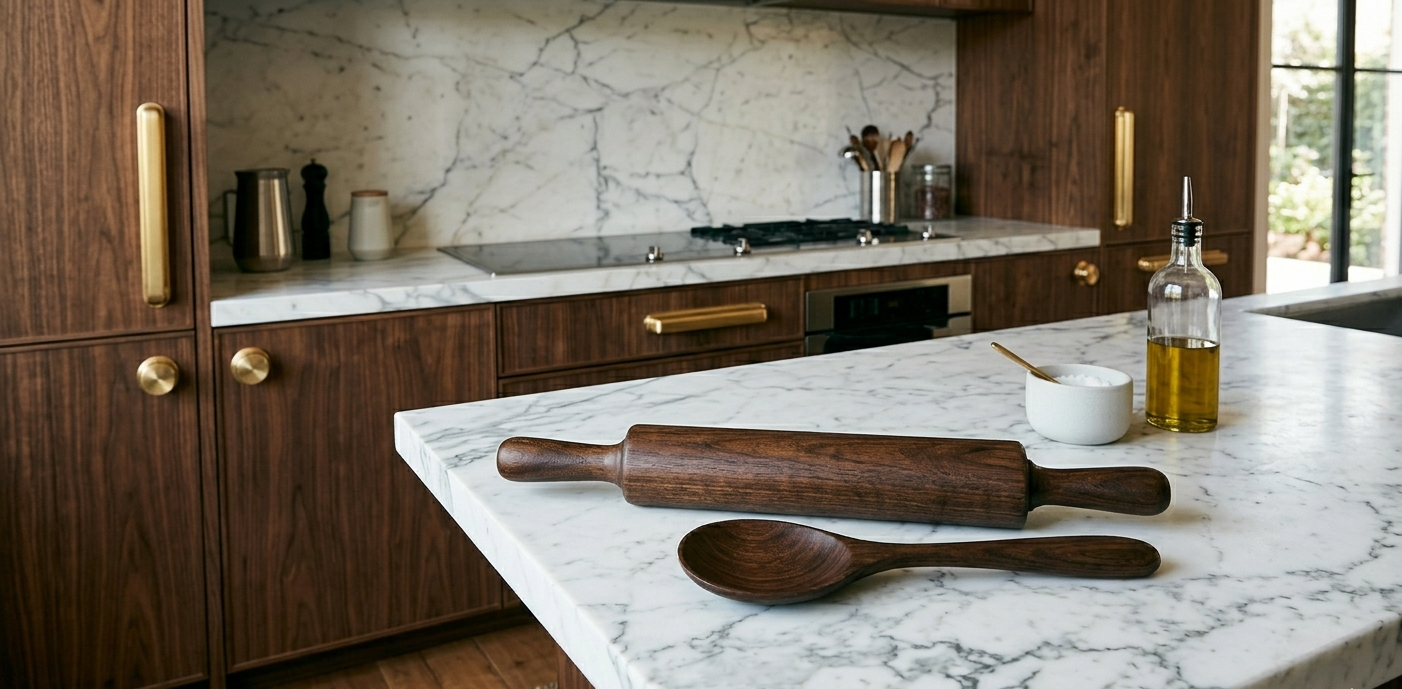
Tzalam wood rolling pin and oversized spoon on a white marble kitchen island with modern walnut cabinetry and brass hardware.
The Porous Vessel, Terracotta
There is a specific luxury in the "imperfect" line. Hand thrown ceramic dinnerware and terracotta storage vessels for grain or salt provide the sensory friction that a refined, quiet home requires. These are the Insider Signals, pieces that carry the faint fingerprint of the maker, ensuring the wares never feels sterile, but always feels curated.
Final Thought
The "Elemental Kitchen" isn't about filling space, it is about the Curation of Utility. In a world of disposable convenience, these objects represent a return to the permanent. They are the heavy, quiet tools that turn a house into an home, and a meal into a lineage.
The Grit of the Floor
High gloss stone is a signal of excess, not elegance. A home should not feel like a hotel lobby. Discover why the Madison Prime Home standard prioritizes 'grit', the tactile connection between the foot and the foundation.
There is a common mistake in high end residential design, the pursuit of the mirror finish. When a stone floor is polished to a high gloss, it loses its soul. It becomes reflective, cold, and dangerously slick. More importantly, it feels commercial. It feels like a hotel lobby or a luxury mall, spaces designed for transit, not for living.
At Madison Prime Home, we believe the floor should be an anchor. It should have grit.
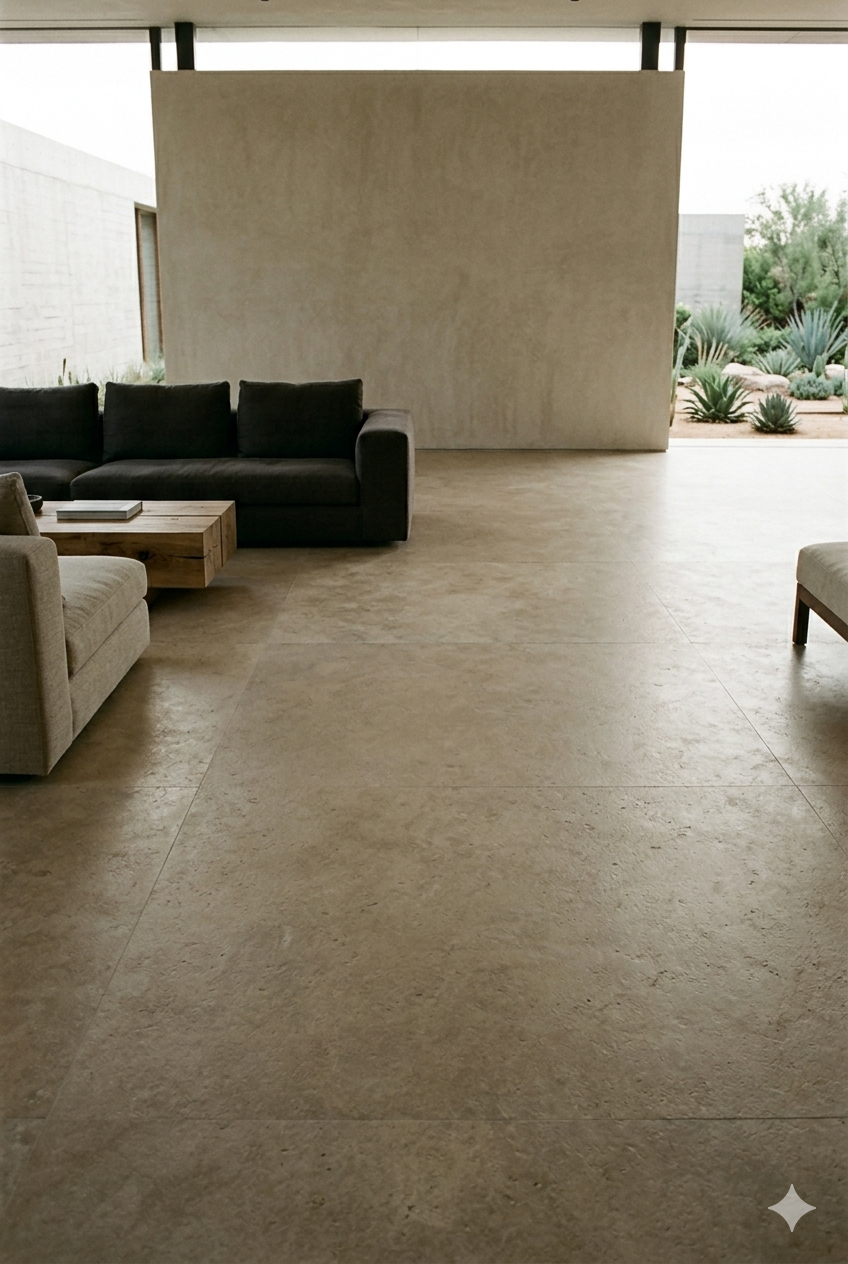
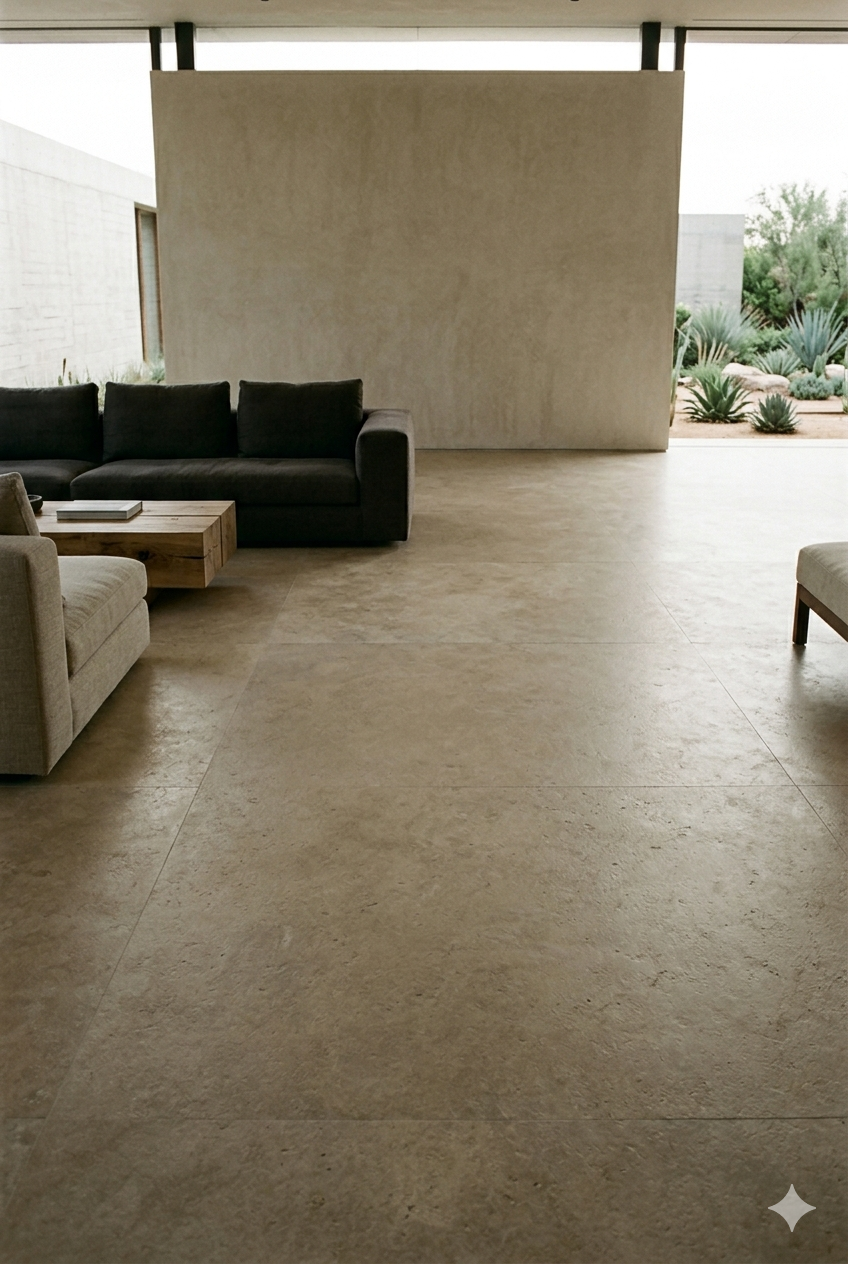
Vast, seamless honed limestone floor.
The Tactile Shift
In a private estate, luxury is found in the matte, the muted, and the textured. When you walk barefoot across a room, the stone should feel like the earth, not a sheet of glass. This isn't just an aesthetic choice, it’s a psychological one. A textured floor grounds the room, absorbing light instead of bouncing it, and creating a sense of permanence that a polished surface simply can’t match. This sensory grounding is the foundation for The Mineral Palette, where the raw, organic tones of the earth dictate the mood of the entire residence.
The Three Texture Standards
If you are specifying stone for a "Sovereign" space, these are the finishes that define the standard:
1. The Honed Finish
This is the baseline for a modern home. To "hone" a stone is to stop the polishing process early. It leaves the surface flat, matte, and velvety to the touch. It allows the natural veining of a marble or the fossils in a limestone to stand out without the distraction of a glare. It’s quiet, understated, and ages with a far better patina than a high gloss finish.
2. The Leathered Grain
If you want a sensory experience, you leather the stone. Using diamond tipped brushes, the softer parts of the stone are worn away, leaving a slightly rippled, pebbled texture that feels like, as the name suggests, worn leather. This is the ultimate "forgiving" floor. It hides fingerprints, water spots, and the minor scratches of daily life while offering a grip that feels incredibly secure underfoot.
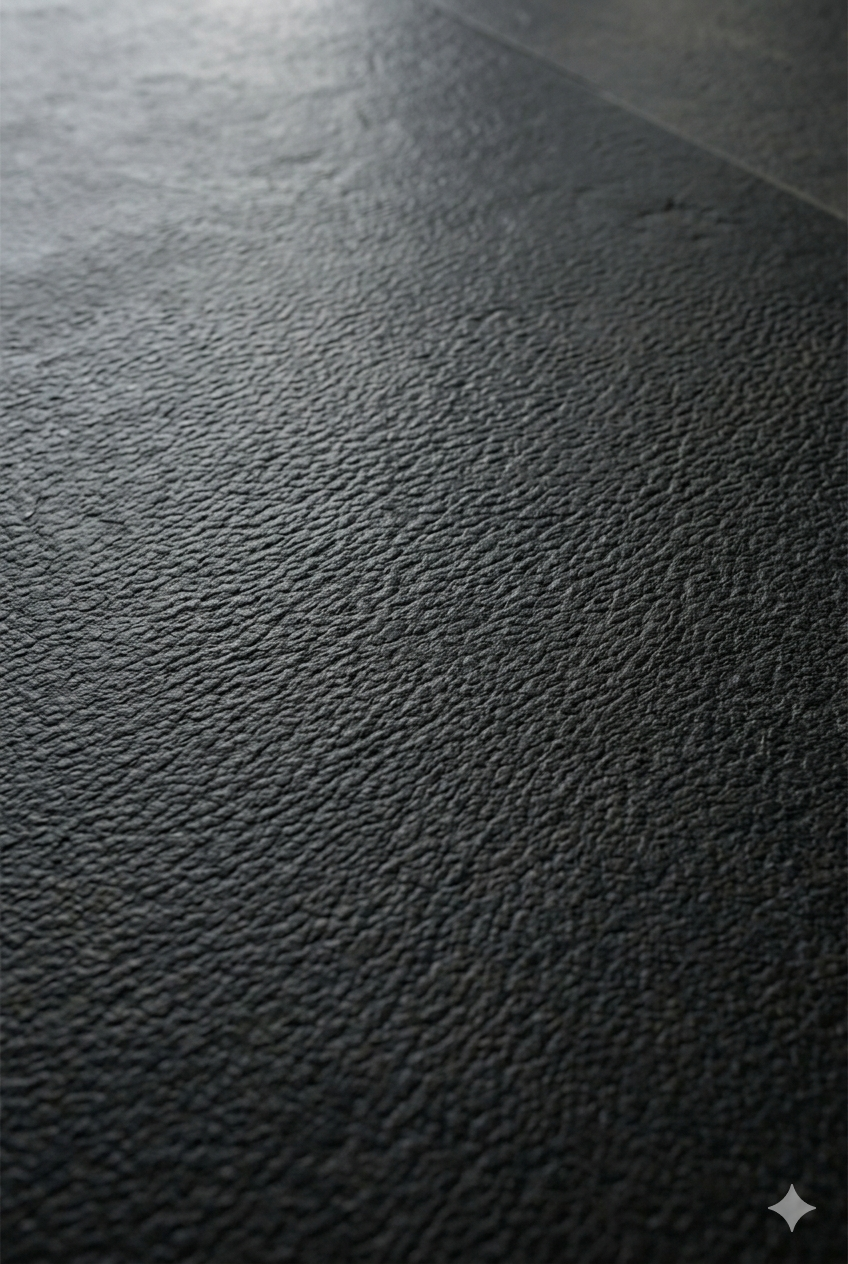
Close up image captures the "rippled, pebbled texture" of leathered stone.
3. The Tumbled or Brushed Edge
For transitions between indoor and outdoor spaces, we look for an aged feel. A tumbled finish softens the edges of the stone, making it look as though it has been walked on for a century. It removes the clinical precision of a cut tile and replaces it with the "Material Truth" of a hand laid floor.
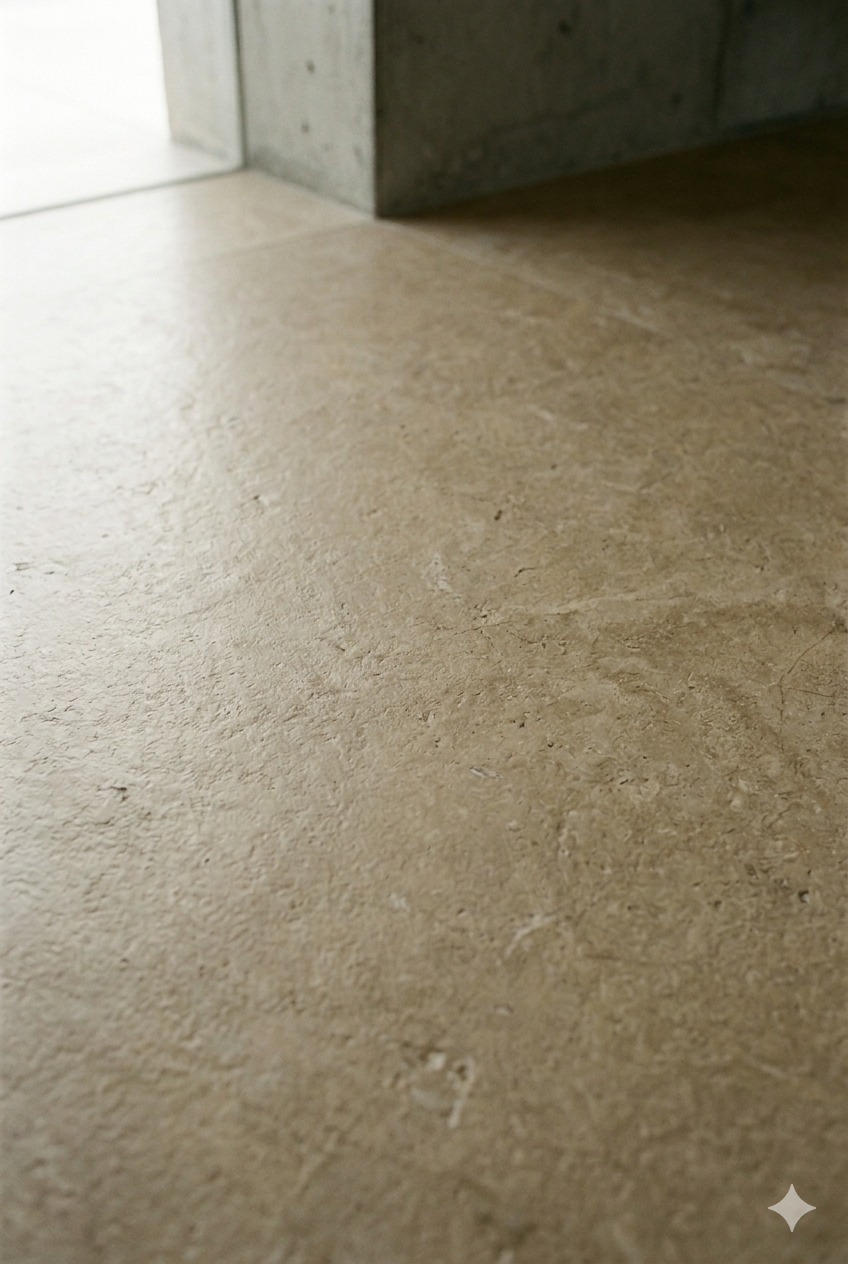
Honed limestone floor surface.
The Material Selection
To achieve a floor that carries the weight of a Madison standard home, we focus on density and warmth:
Honed Limestone The gold standard. It’s naturally warm, dense, and has a soft, sandy texture that feels exceptional in bare feet.
Leathered Basalt or Granite For high traffic areas or mudrooms. It is nearly bulletproof, resisting stains and wear while maintaining a deep, charcoal toned grit.
Travertine (Unfilled and Honed) We move away from the "filled" look. Leaving the natural pits and textures of travertine exposed (and then honed) gives the floor a rustic, “Mayan Modernism” gravity that feels authentic to the material.
Final Thought
A house is only as steady as the ground beneath it. When you choose a floor with texture, you are choosing a material that is honest about its origin. You are trading the fleeting shimmer of a trend for the enduring grit of a home. A polished floor is a display, a textured floor is a foundation.
The Heavy Door
A great house starts with how it feels to walk through the front door. It’s a change in the air, a sudden drop in noise that tells your brain you’ve left the street behind. Discover the Three Point Check for engineering a silent, high gravity threshold.
A great house starts with how it feels to walk through the front door. It’s a change in the air, a sudden drop in noise that tells your brain you’ve left the street behind. To get that, you need a door that has real weight. If it rattles when you close it or feels like a hollow shell when you touch it, the luxury is just a coat of paint. You want a door that feels like a permanent part of the foundation.
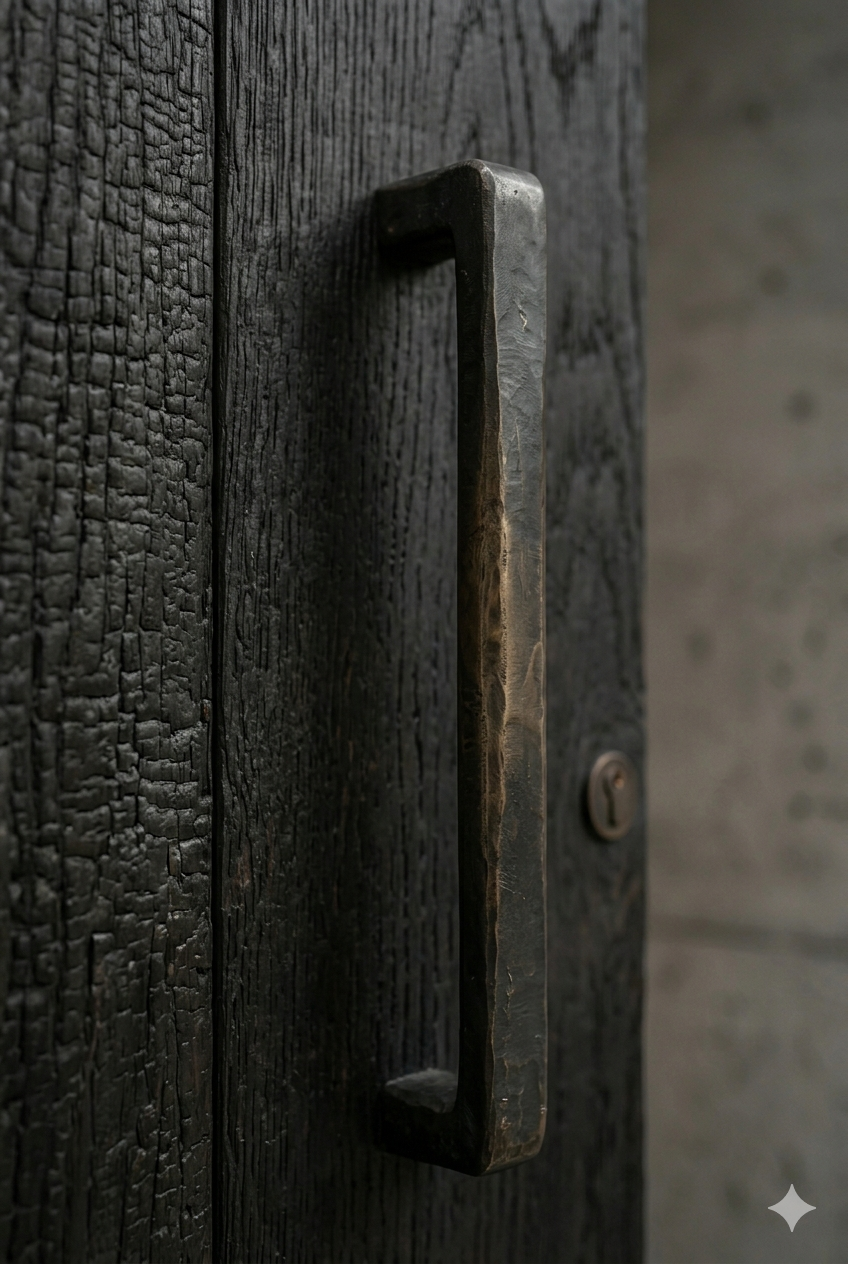
Hand forged Blackened Bronze front door handle.
The Three Point Check
Before you pick a door for a primary entrance, it has to pass these three tests:
1. The Pivot
Forget standard hinges. If your door is wider than four feet, it’s too heavy for a frame to hold without eventually sagging. You need a pivot. It puts the entire weight of the door, sometimes 500 pounds of solid wood or stone, directly into the floor. This is how you get a massive slab that you can move with one finger and that closes with a dead, silent thrum instead of a slam.
2. Hidden Tech
Nothing kills the look of a custom entrance faster than a plastic keypad or a bulky camera. If you can see the technology, it’s a failure. In a high end build, the security should be invisible. We’re talking about fingerprint readers tucked into the underside of a bronze handle or sensors hidden inside the wood grain. The door should recognize you, but it shouldn't look like a gadget.
3. Sound and Weight
A door should sound like a footfall on packed earth, not a drum. To get that "vault" feel, you need a solid core, usually 4 inches thick. We often use an aluminum honeycomb frame for strength and then wrap it in heavy timber. It’s not just about keeping people out, it’s about keeping the silence in. That’s the technical side of The Entryway Ritual, you can’t actually decompress if you can still hear the street through the frame. The weight is what creates the physical boundary.
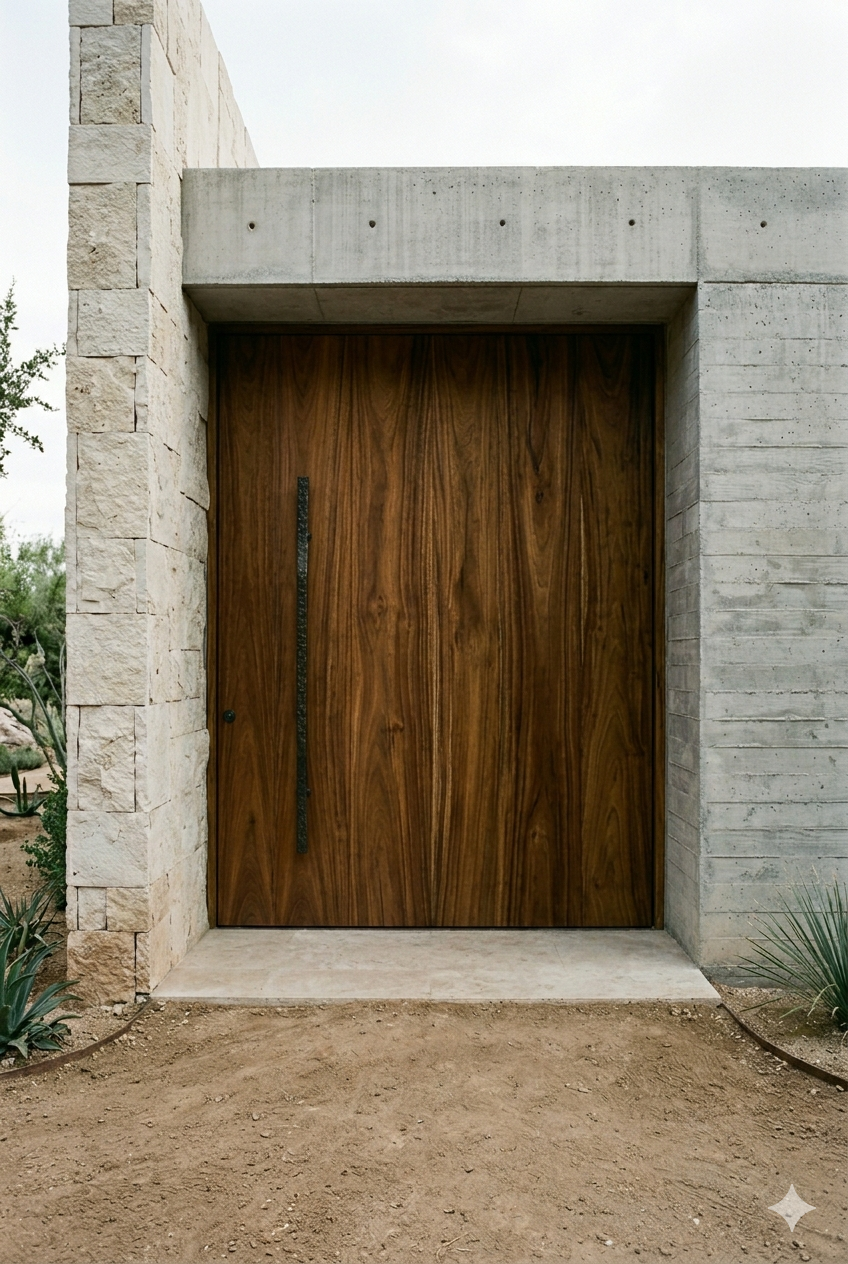
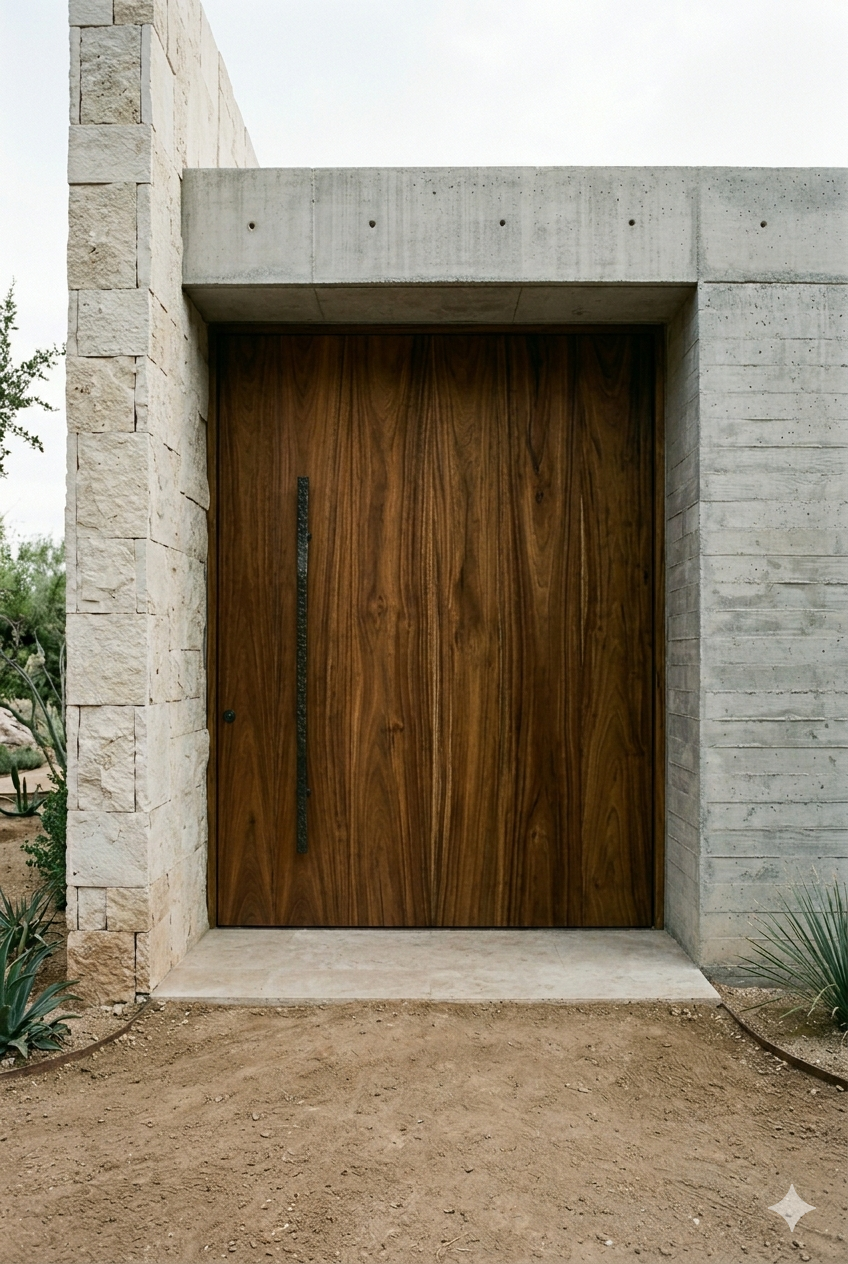
Solid Tzalam wood front door.
The Materials
To get that heavy, timeless look, these are the some materials worth the investment:
The Wood Solid Tzalam (Mayan Walnut) or Charred Oak. These don’t just look expensive; they weather the sun and rain without warping.
The Handle Hand forged Blackened Bronze. It should be cold to the touch and get a natural patina over time from the oils in your skin.
The Pivot system. This is how you get that expensive "soft close" feel that never needs adjusting.
The Seal Automatic drop seals. They stay hidden until the door is shut, then they drop down to seal out the light and street noise.
Final Thought
The entrance isn't just a way into the house, it’s a filter. It should strip away the chaos of the outside world the moment your hand touches the metal. When you invest in weight, silence, and invisible technology, you aren't just buying a door, you are setting the tone for every room that follows. If the threshold feels like a vault, the rest of the home feels like a sanctuary.