Chukum Plaster Starts With a Tree
I started with one plain question: what is in a bag of chukum? The sources I read agree on part of the answer and split on the rest.
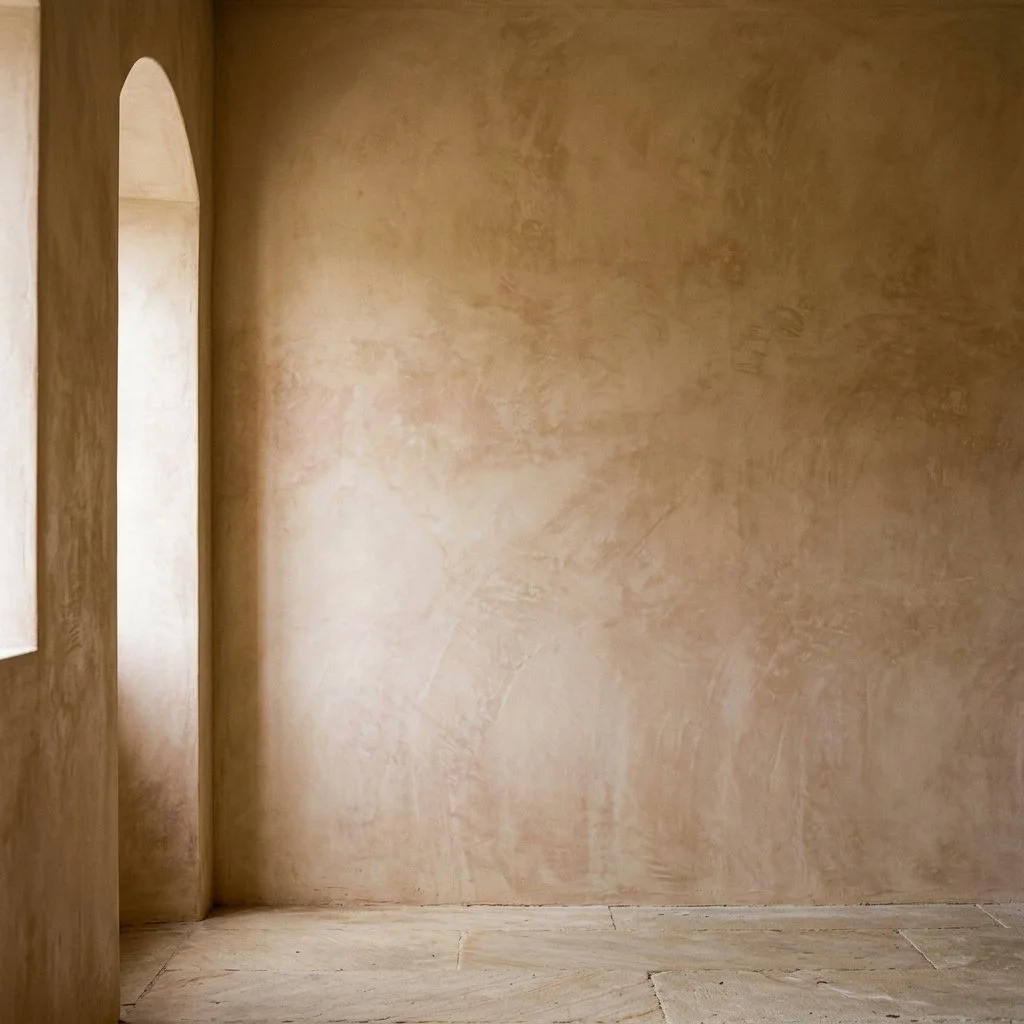
Burnished plaster wall in warm earth tones lit from the side.
The Bark Water Does the Work
Chukum takes its name from a tree, Havardia albicans, native to the Yucatán Peninsula. The plaster is lime mixed with water drawn from that tree's bark instead of plain water. Diego de Landa, a Spanish bishop of Yucatán, wrote in the sixteenth century that the upper part of Maya buildings was a strong limewashed mortar roof, made as it still was in his day with water from a tree's bark.
The best explanation I found for why it works came from a mineralogy lab at the University of Granada in 2023. The researchers analyzed lime plasters from the Maya city of Copán, in Honduras, and found organic molecules locked inside the calcite crystals, an arrangement that resembles seashell. To test the cause, they followed the advice of local masons who descend from the Maya builders and mixed new lime mortar with bark extracts from chukum and from a second native tree, jiote. The replicas showed the same features as the old plaster. The extracts are mostly polysaccharides, and in the set plaster they let the mortar give a little before it breaks and slow its chemical breakdown.
The accounts differ on preparation. The Granada team steeped bark in water for 48 hours. An architecture journal says the bark is boiled twice. The same journal credits an architect, Salvador Reyes Ríos, with reviving the plaster in 1996, after which his firm spent about fifteen years experimenting with mixtures.
Lime or Cement Depends on the Bag
The Granada study used lime. It says nothing about cement. One supplier describes its modern method as a paste of cement and fine limestone powder mixed with bark water. A builder in Tulum writes that chukum contains no cement at all. Both use the same name. The journal's account describes two routes to a chukum wall: the firm that revived it mixes chukum from scratch for each project, it says, while limestone cement and bark water are now available to buy.
Lime hardens by taking carbon dioxide from the air and turning back into calcite, the mineral the Granada team examined. Cement hardens by reacting with water. Those make different walls, and a specification that says only "chukum" lets two bidders price and build different ones. I would want the binder named in writing before I compared any two quotes.
How It Goes on the Wall
Chukum goes onto porous surfaces such as concrete or brick. A scratch coat goes on first for grip. One or more body coats follow, and the final surface is finished by hand, burnished or sponged depending on the texture wanted. One supplier sells a coarser mix for exteriors and wet areas and a finer one for smooth interior walls.
The Tulum builder says an exterior wall takes five to seven days to cure and needs protection from direct sun and rain in the early stages. Its page stresses that the finish depends heavily on who applies it, and it puts the cost at two to four times cement render and paint.
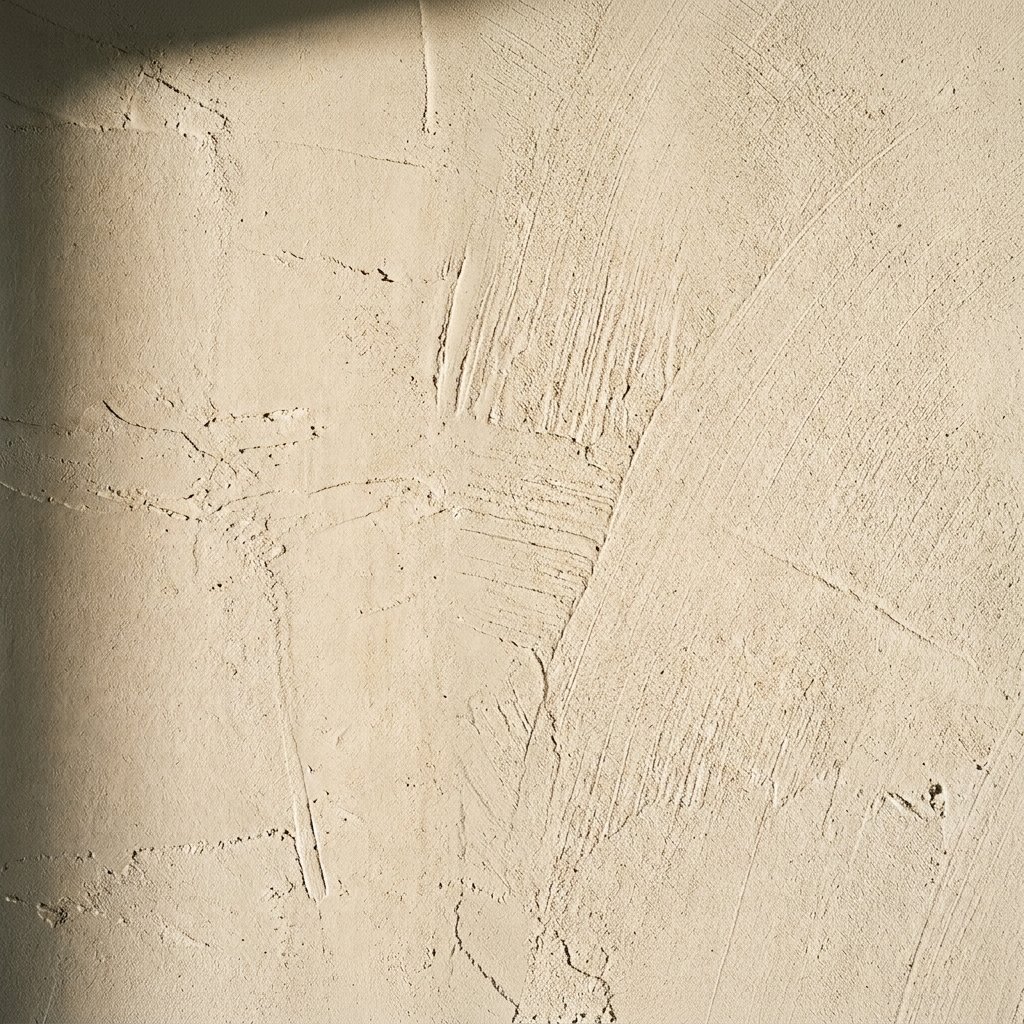
Close view of a plaster wall with a soft tonal change where two coats meet.
A Wall Meant to Change
Suppliers describe marbling and patina developing after installation, and some architects use that on purpose. At Por Ahí, a house in Mérida, the facades were applied at different times so the surface would come out mottled. At Niop Hacienda in Champotón, the architects finished the sounder walls in chukum and let the areas that had lost their old finish read as marks of age beside them.
Upkeep advice conflicts too. The builder recommends sealing exterior walls each year with wax or a breathable sealant, while a supplier says chukum needs no sealer. The builder adds that a skilled applicator can repair a damaged patch and match it without a visible line.
A Sample Board Shows Only the First Day
Marbling and patina develop over time, and a sample board cannot show them. Before I specified chukum, I would ask for two things. The first is the binder, in writing, from whichever route the crew takes. The second is a finished wall from the same crew and the same mix that has weathered for at least a year.
The name is old and the recipe has a documented history, but what goes into any one bag is still up to whoever mixed it. A weathered wall shows you the result.