The Smart Bedroom
I started with one question: who is responsible for the ceiling pocket a motorized shade rolls up into? On the spec sheet I read from one motorized shade manufacturer, the answer is the main contractor, not the shade installer. The installer arrives late in the build. If nobody framed that pocket by then, the shade goes up in front of the window with its brackets showing. Everything else that makes a bedroom smart follows the same rule. It gets built in while the walls are open, or it gets stuck on afterward and stays visible.
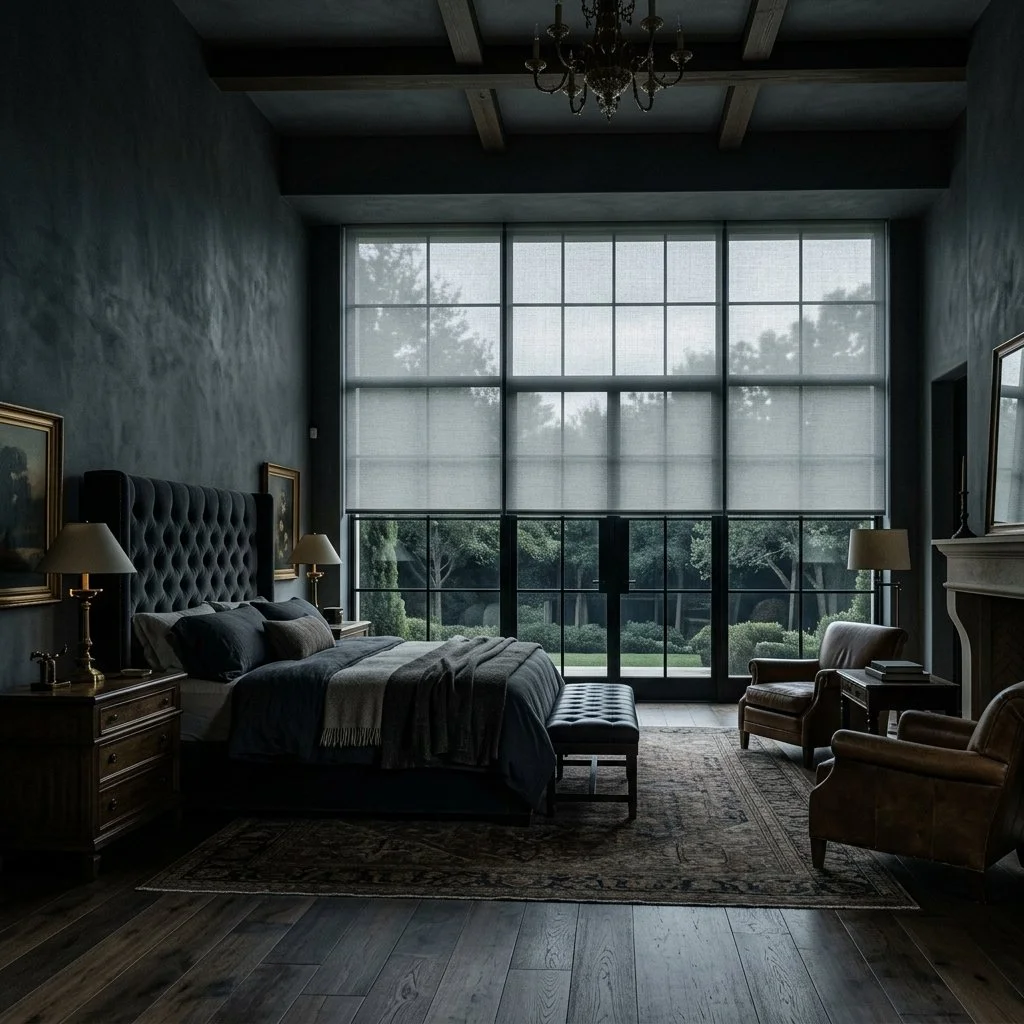
Large primary bedroom with tall windows, a sheer shade lowered, and no shade hardware visible at the ceiling
The Shade Goes in the Ceiling
A recessed pocket lets a rolled up shade vanish into the ceiling line, and it has to be framed to the size of the housing it holds. That manufacturer's dual system, the one that carries two fabrics, needs a 7 inch housing, the tallest size it lists. The pocket is a framing decision made before anyone chooses a fabric.
The two fabrics do different work. The blackout layer runs in side channels, aluminum tracks with pile inserts that stop light leaking along the edges. A plain roller shade leaks there first. The sheer lowers during the day to soften the sun and keep the room from being seen into.
Battery powered versions exist. For a bedroom I'd still run the wire, since a battery is one more thing that eventually needs attention, and the motor sits behind a ceiling pocket. Wired shades need the power run and the conduit to the pocket before the ceiling closes.
The Nightstand Starts in the Wall
Power built into a nightstand drawer only looks like a feature of the furniture. It comes from a receptacle in the wall behind it, set at drawer height, with a hole cut in the drawer back to meet it. That receptacle gets placed while the wall is open, which means the nightstand's width and height have to be chosen first. A nightstand bought after the drywall is finished has to line up with an outlet placed for someone else's idea of one. The strip inside charges a phone and a watch out of sight, and nothing sits on the surface but the lamp.
The lamp cord follows the same logic. The furniture maker cuts a grommet hole in the top and runs a channel down the back leg before the finish goes on, and the cord drops to a floor receptacle behind the bed. I'd put cord management on the electrician's drawing.
65 Degrees by Bedtime
The Sleep Foundation puts the best bedroom temperature at 65 to 68 degrees Fahrenheit and says a cooler room makes it easier to fall and stay asleep. Core body temperature falls through the evening ahead of sleep, and a room in that range lets the body shed heat instead of fighting it. REM is the stage where the body regulates its own temperature worst, so a room that runs too hot or too cold breaks REM up.
A house thermostat that drops at bedtime does the job late and in every room. A bedroom on its own zone, with its own damper and thermostat, can start cooling well before bed, so the room is already at temperature when you walk in. How long that takes depends on the room and the season. An hour is where I'd start.
Air With Nothing to Look At
Ventilation belongs in the mechanical system, with a linear grille set flush in the ceiling plaster as the only sign of it in the room. Filtration is messier. HEPA is a legal rating, and true HEPA filters generally can't run through residential ductwork without changes to it, so a bedroom that needs one usually gets a standalone unit. "Medical grade" gets used on these units, but as far as I could find the FDA doesn't certify a medical grade HEPA filter, so the phrase adds nothing to a HEPA rating. The design work is placing that unit where air moves freely around it, in an alcove or against a clear wall, and not inside a closed cabinet.
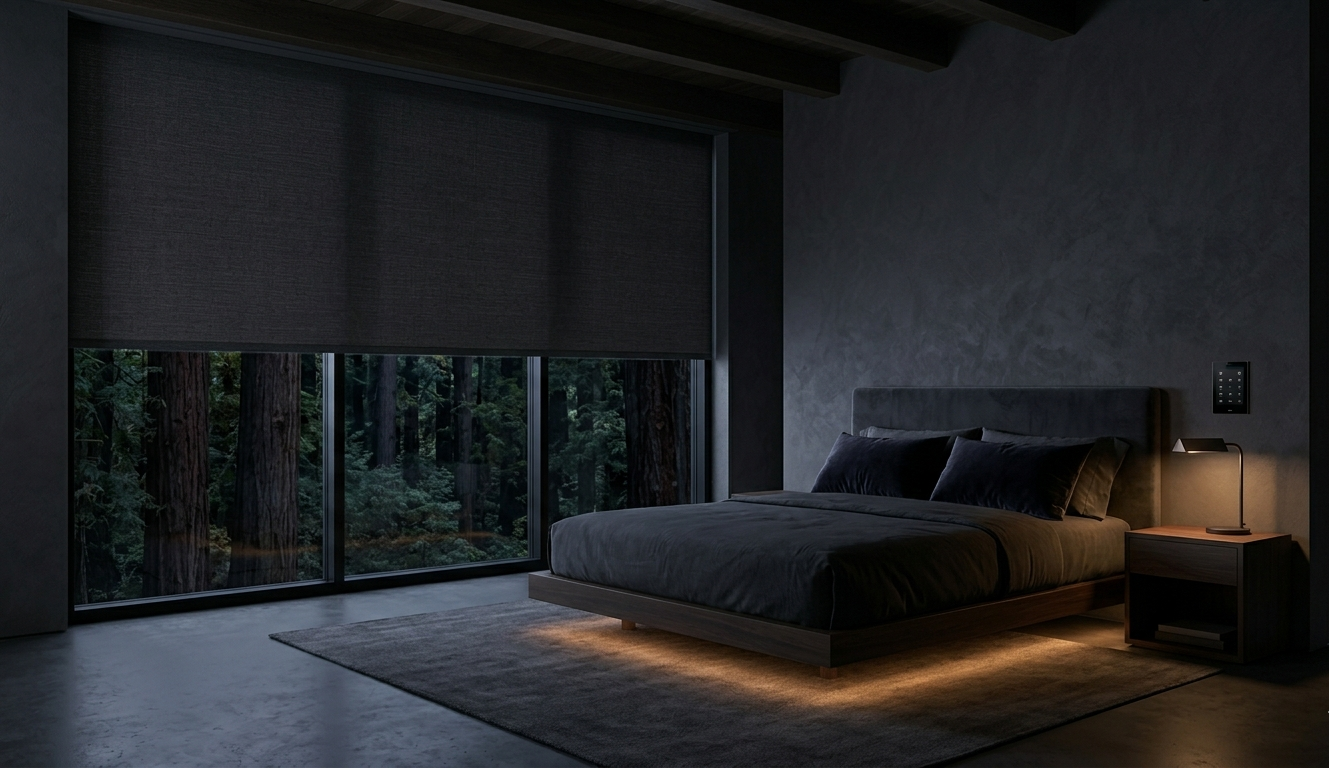
Smart bedroom with bedside control panel.
One Button at the Bed
The fixtures in the room have to dim toward amber, or there is nothing warm to fade to at night. With that in place, one keypad at the door and one at the pillow replace a bank of switches. The button labeled Sleep runs a scene: the overhead lights go off and the blackout shades come down. The bedside lamps stay at their lowest amber setting, and I'd have the systems integrator program them to fade out on their own after a few minutes. A room that has been fully blacked out shouldn't glow all night.
The keypad is a light source too, so its backlight should dim, and its wall box sits at pillow height.
The Order Things Get Built In
A smart bedroom gets built in a fixed order. Framing settles the ceiling pocket and the wall the nightstand stands against. While the walls are open, the electrician places the shade wiring and the drawer height receptacle, and the bedroom's own duct and thermostat wire run alongside them. The keypad box goes in at the pillow. Drywall closes all of it up, and what comes after is finish work, the fabric and the lamps.
A bedroom that skips that order can still be automated later. The brackets and the cords just stay on the surface.