What Outdoor Pieces Need Before the First Frost
Most damage to outdoor pieces starts with water sitting where it shouldn't, and fall is when it gets the chance. I read care sheets from furniture makers, a bronze foundry, and garden suppliers before writing this. They disagree about teak. On almost everything else they say the same few things.
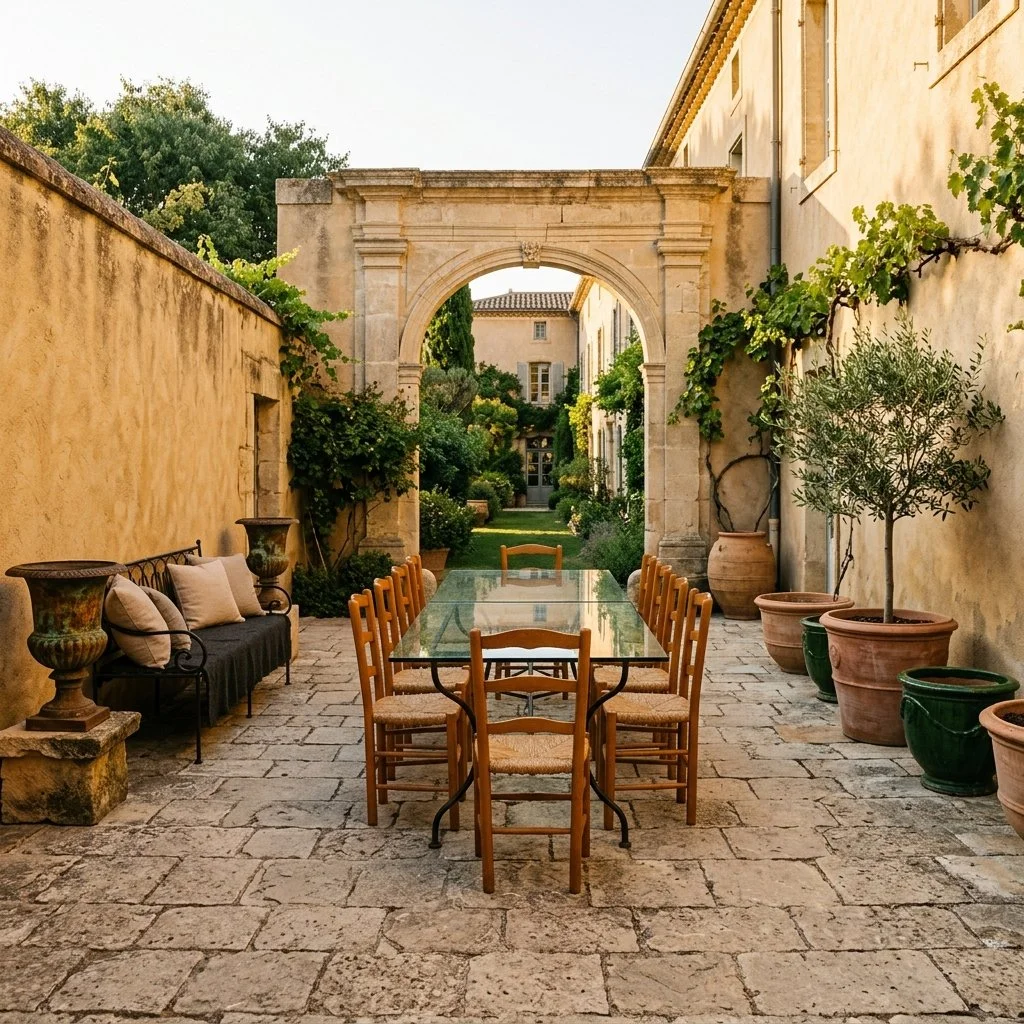
Courtyard featuring ochre walls, a stone archway, a glass top table with honey brown wood chairs, and potted olive trees along a stone paved floor.
A Pot Cracks When the Water Inside the Clay Freezes
Terracotta takes on water the way a hard sponge does, and when that water freezes it expands and cracks the wall. The advice is consistent. Empty the pots in fall and store them upside down where rain can't collect. A pot that has to stay outside goes up on feet or bricks with the drainage hole left open, because a pot standing wet can freeze to the ground and break when you lift it.
Glazed planters follow the same rules. Makers of glazed pots fired at high heat say in their own care pages that no planter is completely frostproof, and the ones that survive winter are the ones that drain. The fine cracks that can show in a glaze are surface deep, according to one supplier, and don't weaken the pot.
Glass Needs Air Under the Cover
Tempered glass tops need very little. The makers I read say to wipe them with a mild cleaner and a soft cloth, dry them after rain, and skip cream cleaners, which scratch. One maker's guide points out that a potted plant set on the glass can leave scratches or lime deposits, and that a mild vinegar solution lifts the deposits. A scratch from dragging something rough across the top can't be removed. A cover helps in winter, but the same guide says to hold it up off the glass, since condensation trapped underneath grows mildew.
Teak Needs a Decision
Left alone outdoors, teak turns silver grey within about a year, according to the sellers I read. They also say the change doesn't affect how long the wood lasts, and that the small surface cracks that appear are cosmetic. Keeping the honey brown means a sealer or teak oil once or twice a year, with sanding first. One woodworker on a trade forum warned that once you stop renewing a finish, the wood spends a few bad years black and mildewed. Choose before the first winter.
Iron and Bronze Get a Thin Coat Twice a Year
Most care sheets for wrought iron are written for painted frames, and they agree that a chip is where rust starts. Touch it up right away with a rust inhibiting primer, then paint, and never leave the frame standing in water. For raw or blackened iron, one hardware maker recommends wax or oil in spring and fall.
Outdoor bronze follows the same calendar. One sculpture foundry recommends a coat of wax in early fall and again in late spring, and another says once a year is the minimum. Wax slows the way a patina changes outdoors, and one seller notes it can be skipped if you want the natural patina. Bird droppings and tree resin harm the surface, so they come off promptly with warm water and a soft cloth. Skip the pressure washer and any wax that contains silicone. Polishing bronze to a shine works against a patina that is meant to look dull outdoors.
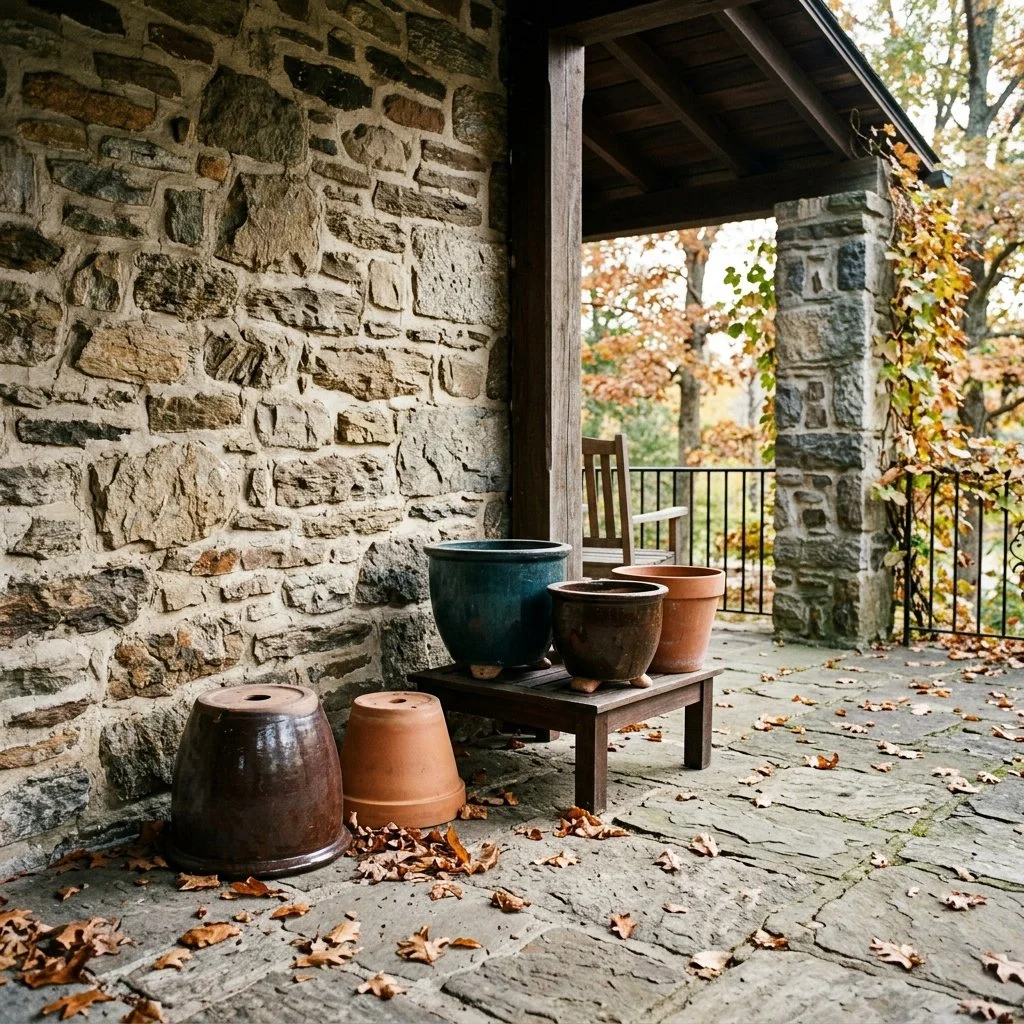
Empty planters on a covered porch, one turned upside down, others raised on feet.
What Comes Indoors
Cushions go in clean and completely dry, in breathable bags or a lidded box off the floor, because damp fabric closed up for months grows mildew. Wool throws go in clean too, since moths go for body oils and food stains, and a block of cedar in the bag helps.
Two Dates a Year
Nearly all of this fits into two dates. In early fall, the pots get emptied and the metal gets waxed. In spring, everything comes out from storage for a look at chips before summer. Before you specify any of it for a client, ask the maker for the care sheet in writing and read what it says about frost.