A Stone Sealer Stops Stains, Not Etching
Pour a puddle of water about three inches wide on a stone counter and leave it. Stone care companies and suppliers both describe this as the test for whether a seal is still working, and they do not agree on a date. One stone care company says a good sealer lasts three to five years on a stone floor. A supplier says a marble counter wants sealing about once a year. Part of the gap is that one is describing a floor and the other a counter, and no calendar knows how a particular slab is used.
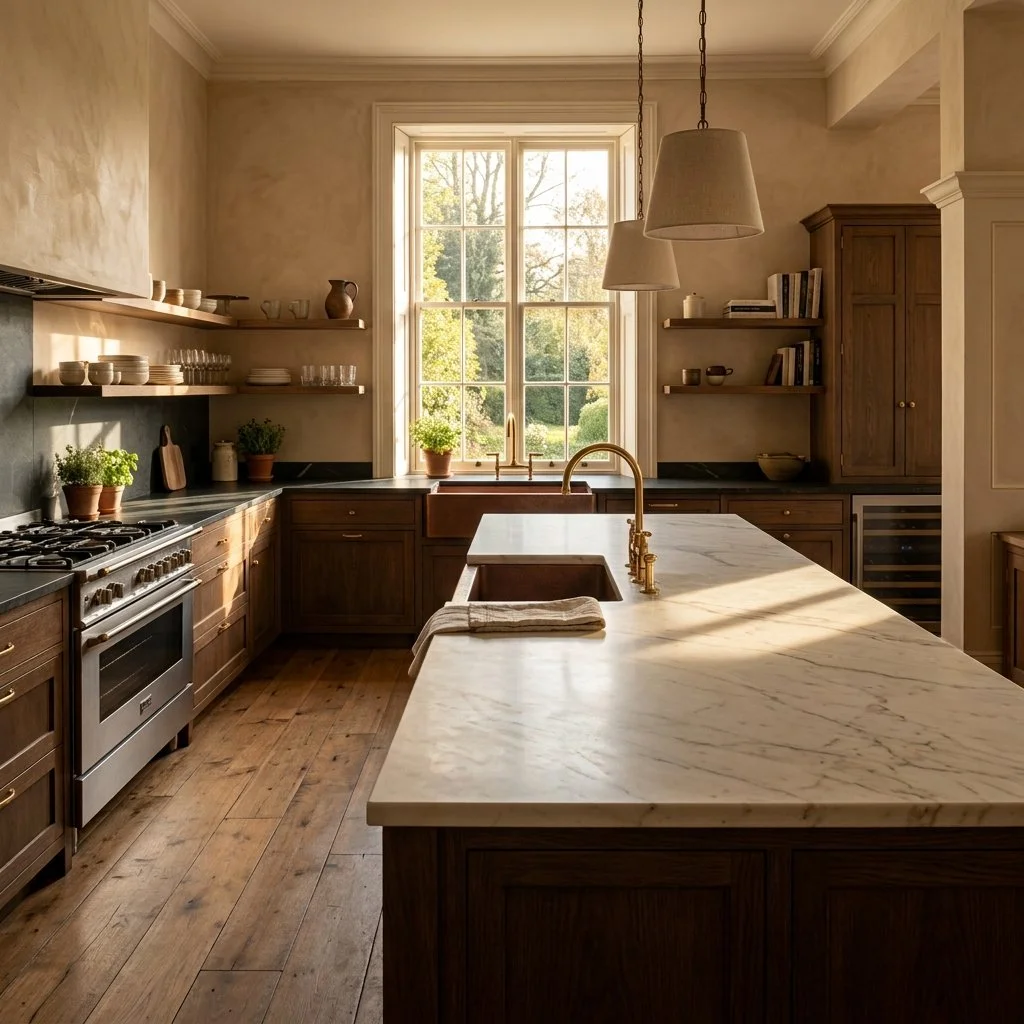
A large kitchen with a light stone island and dark stone counters in warm afternoon light.
How the Puddle Test Works
Clean the stone and let it dry first, because soap residue and cooking oil skew the result. Test several spots, since a seal wears unevenly across a slab. The sources I read give a wait of ten to thirty minutes. Water that holds a rounded bead means the sealer is working. A dark ring means the stone is taking it in and needs sealing again. One guide adds a few drops of mineral oil left for ten minutes, because some stones shed water and still drink oil.
Look for a penetrating sealer. It soaks into the pores and leaves no film, so the stone keeps its finish. Topical coatings sit on the surface instead, and stone care sites warn that they change the look of the stone and have to be stripped before the next coat. A stone guide notes that a new counter may have no sealer at all, or only a light coat from the fabricator. I would ask what was used and run the puddle test the week the slab goes in.
Stain and Etch Are Different Damage
A stain is color that has moved into the pores. Etching is a chemical change. Acid meets the calcium carbonate in marble or limestone and dissolves a thin layer of the surface. What is left is a dull, lighter patch.
A sealer fills the pores, so it slows staining and gives a spill time to be wiped up. It cannot touch etching, which happens on the surface the moment the acid lands. A sealed slab etches as readily as a bare one, and even the companies that sell sealer say so.
Finish decides how much of the damage shows. Honed marble hides etching and scratches because a matte surface already scatters light, but it is more porous, so it stains sooner and wants sealing more often. Polished marble stains more slowly, and every etch shows as a dull patch against the gloss. A stone expert quoted by Houzz summed up the tradeoff as less staining and more etching for polished.
A light etch on polished marble can sometimes be buffed out with a polishing powder. A deeper one needs a stone restorer to hone the surface again, which removes a thin layer of the stone itself.
A Poultice Draws the Stain Back Out
When a spill happens, blot it and do not wipe, since wiping spreads it. Plain water and mild soap, rinsed several times, is the first step. For a stain that has set, the Natural Stone Institute describes a poultice: a liquid chemical mixed into a white absorbent powder such as kaolin or diatomaceous earth until it is as thick as peanut butter. It goes on up to half an inch thick under a cover of plastic and sits for a day or two while it draws the stain up out of the stone. Some stains need repeat rounds, and some never come out completely.
The chemical has to match the stain, and the Institute's guide sorts stains by type. A restorer quoted by This Old House has seen a light yellow stain turn deep purple under the wrong chemical, and he tests every poultice on a hidden spot first.
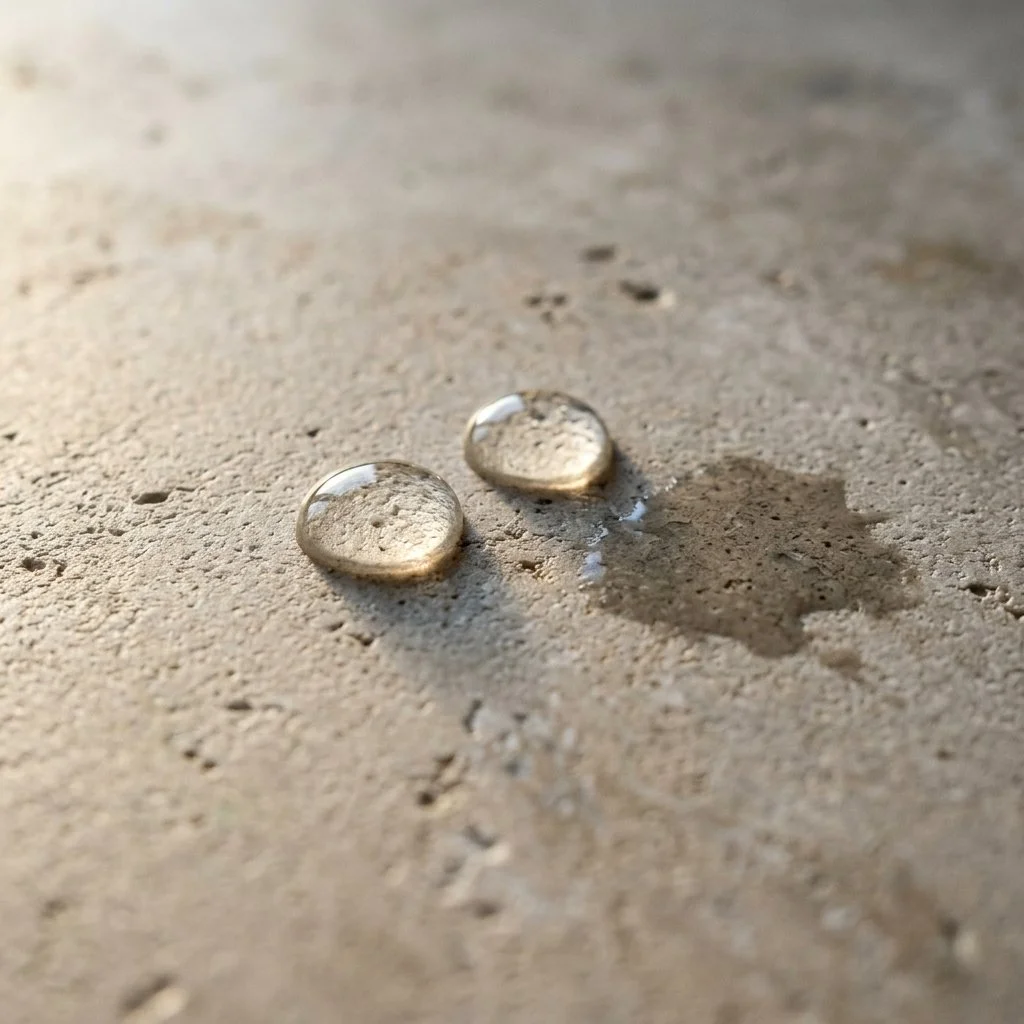
Stone counter with two rounded water beads and one darker patch where water has soaked in.
Soapstone Skips Most of This
Soapstone is a metamorphic rock rich in talc, and most guides call it dense enough that it never needs sealing. Acid does not etch it, which is why science labs have used it for counters. It scratches easily, though one guide says the scratches sand out in an afternoon.
The oil is where sources disagree. Rubbed in, mineral oil darkens soapstone toward charcoal and evens the color. A fabricator's guide calls that purely cosmetic and says the stone darkens on its own within months or a couple of years. A sealer maker says the stone lightens without regular oiling and wants heavy coats at least every six months. I read it as a look you choose.
Choose the Mark You Can Live With
Every stone here gets marked somehow, and the choice is which mark. One supplier's guide says polished white marble in a heavily used kitchen will have etch marks within weeks, and that honed is the alternative. The same polished stone as a bathroom vanity or fireplace surround sees little acid and is far more forgiving. That is the conversation to have with a client before the slab is cut, since a sealer will not have it for them.