Wood Furniture Fails From Neglect, Not Age
Two bottles on a hardware store shelf both say "wood oil." One is mineral oil, the kind sold for butcher blocks. The other is tung or linseed oil, sold for furniture. They look almost identical and do opposite things. Mineral oil never hardens. It sits in the wood's pores as a liquid indefinitely, which is exactly what you want on a cutting board you'll re-oil for the rest of its life. Tung and linseed oil cure. Exposed to air, their molecules cross link into a solid film inside the wood itself, the same reaction that dries a coat of paint, and once that film has fully hardened it actually resists water and wear instead of just temporarily repelling it. Use the wrong one on a table and you'll spend years reapplying something that was never going to build up, or wonder why a "protective" oil never actually protected anything.
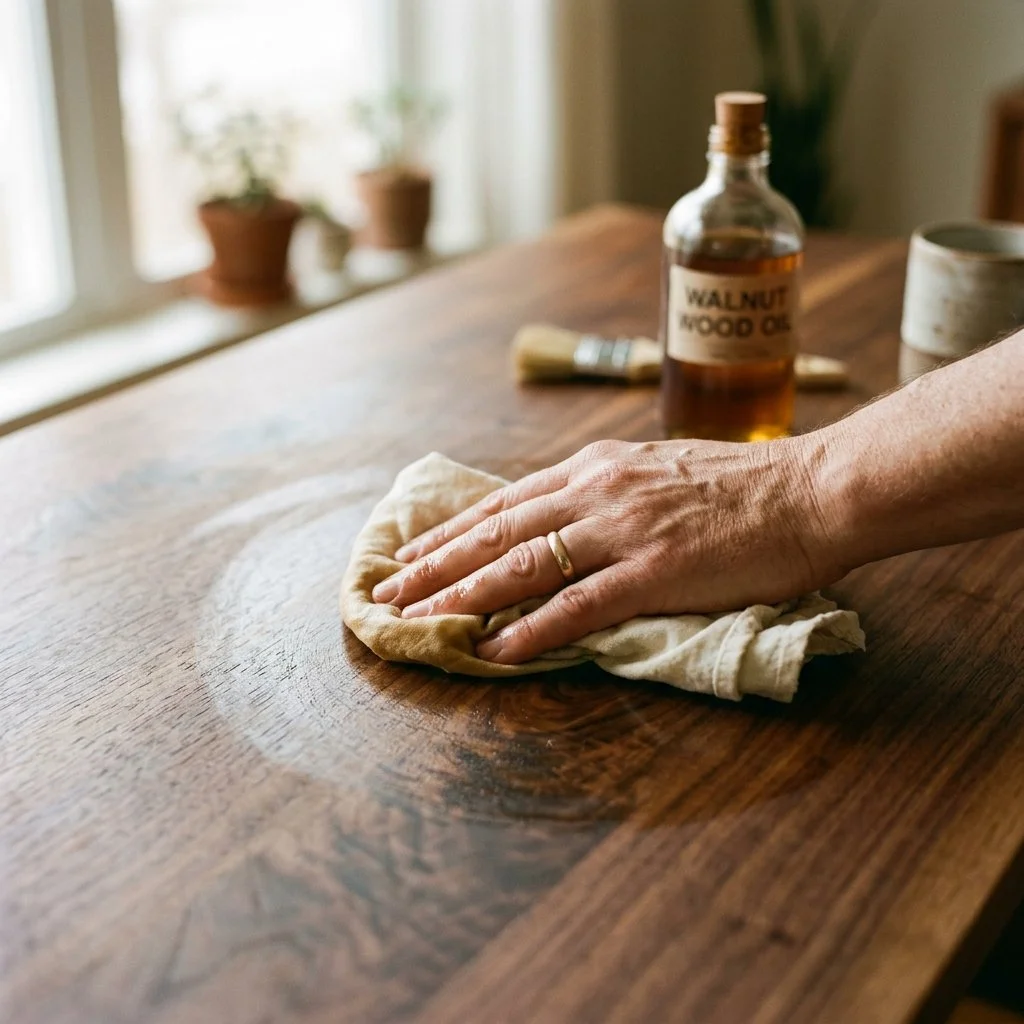
A hand applying oil to a wood tabletop with a soft cloth.
Humidity Moves the Wood Before You See a Crack
Wood is hygroscopic. It pulls moisture from the air in summer and gives it back in winter, and the wood itself expands and contracts with that exchange whether or not you notice. Most guidance settles on keeping indoor humidity between 40 and 60 percent for solid wood furniture. Below that, the wood shrinks and finish cracks appear at the joints first, since that's where two pieces of wood are fighting each other for space. Above it, finishes soften and mold risk climbs. A drawer that suddenly sticks in August or a tabletop that opens a hairline seam in January isn't a defect. It's the wood doing what wood does, and a humidifier in winter does more for a piece's long term health than any amount of oil.
Read the Ring Before You Reach for Anything
A cloudy white ring under a glass and a dark brown or black one are not the same injury. White means the moisture only got as far as the finish. It's trapped in the lacquer or varnish layer, hasn't touched the wood, and usually lifts with gentle heat, a hairdryer held low and moving, or a warm iron over a folded cloth. A dark ring means water pushed all the way through the finish and into the wood fibers, where it reacted with the wood's own tannins. That one needs sanding and refinishing, not a hairdryer. The color tells you which repair you're actually facing before you touch anything.
Walnut and Oak Ask for Different Things
Walnut is one of the softer hardwoods used in furniture, which is part of why it takes an oil finish so well: the oil penetrates easily and the wood forgives the occasional dent. That's the piece that wants oiling worked in roughly once a year, more in a dry climate or near a heat vent, less if the room stays humid. White oak is denser, and its pores are naturally water resistant, so it tolerates a paste wax finish that simply sits on the surface rather than soaking in. Trying to oil a wax finished piece, or wax an oil finished one, mostly just builds up residue neither wood asked for.
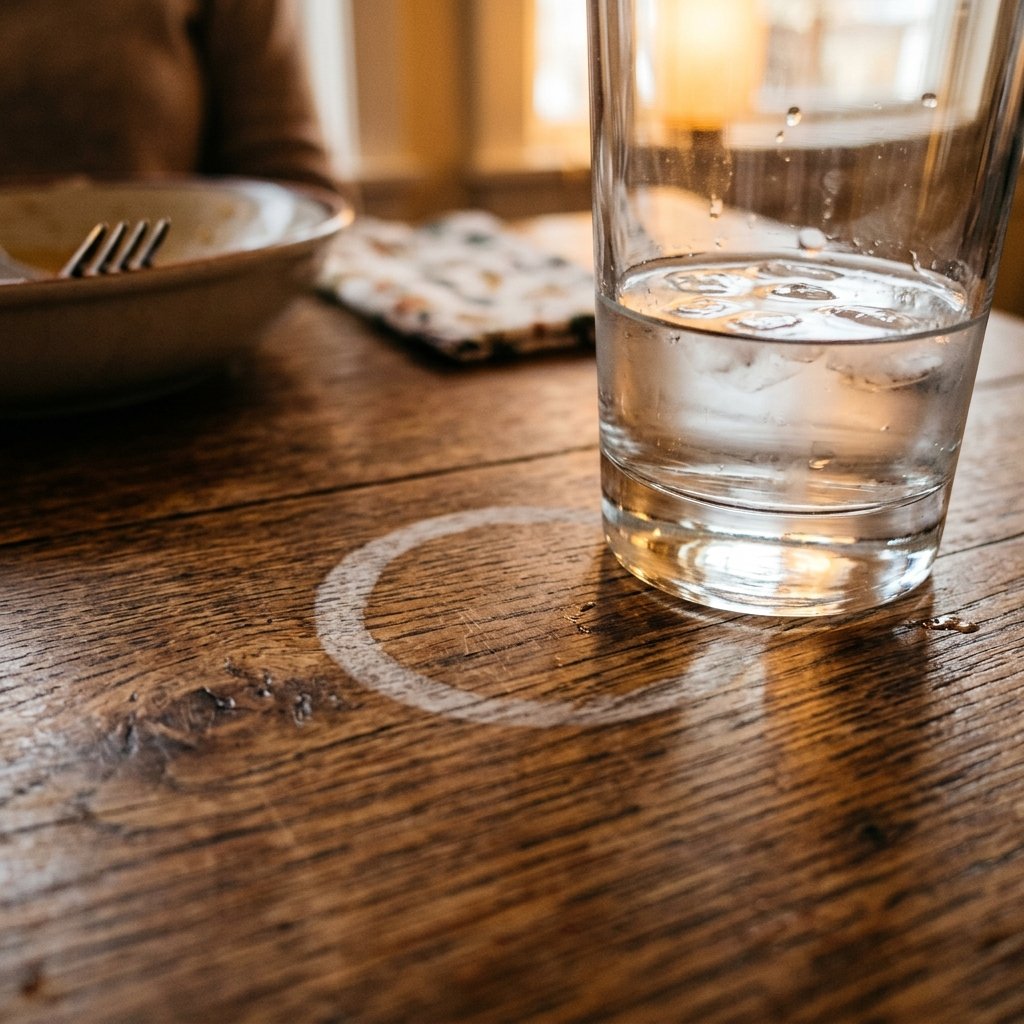
Wood table surface with a faint water ring near a glass.
A Six Month Habit, Not a Sunday Project
Dust weekly with a dry or barely damp cloth. Wipe with the grain, not against it. Skip ammonia and silicone based polishes. They clean well the first time and leave a cloudy buildup that eventually needs stripping off with mineral spirits before anything looks right again. Keep the piece out of direct, sustained sunlight, since UV fades color and can craze a finish over years the same way it darkens a walnut floor unevenly under a rug. Every six months to a year, depending on how hard the piece is used, oil or wax again, whichever the finish calls for. That's the whole schedule. It's shorter than most people expect, and most of the damage I've read about in wood happens between reapplications, from a house that stays too dry all winter, not from the wood simply getting old.
Aging and Failing Are Not the Same Thing
Solid wood is built to change. A joint gives slightly with the seasons, and the color shifts in ways that have nothing to do with dirt. That's aging, and it's the reason solid wood earns the word heirloom in the first place. A joint that's cracked from a winter with no humidifier and a black ring from a glass left out overnight are a different thing entirely. That's neglect, and neither one was inevitable. The wood was never asking for much. It wanted the air kept steady and the right oil or wax applied on schedule, not attention only once something had already gone wrong.