Water or Oil Gilding, Often Both
Water gilding and oil gilding are the two main traditional methods of laying gold leaf onto a surface. What separates them is what holds the gold down, a clay ground rewetted with water, or a drying oil adhesive called size. Water gilding can be polished to a mirror and oil gilding cannot. That is why the finest gilded pieces often carry both, and which one belongs where depends on whether a surface needs to shine and whether it will ever get wet.
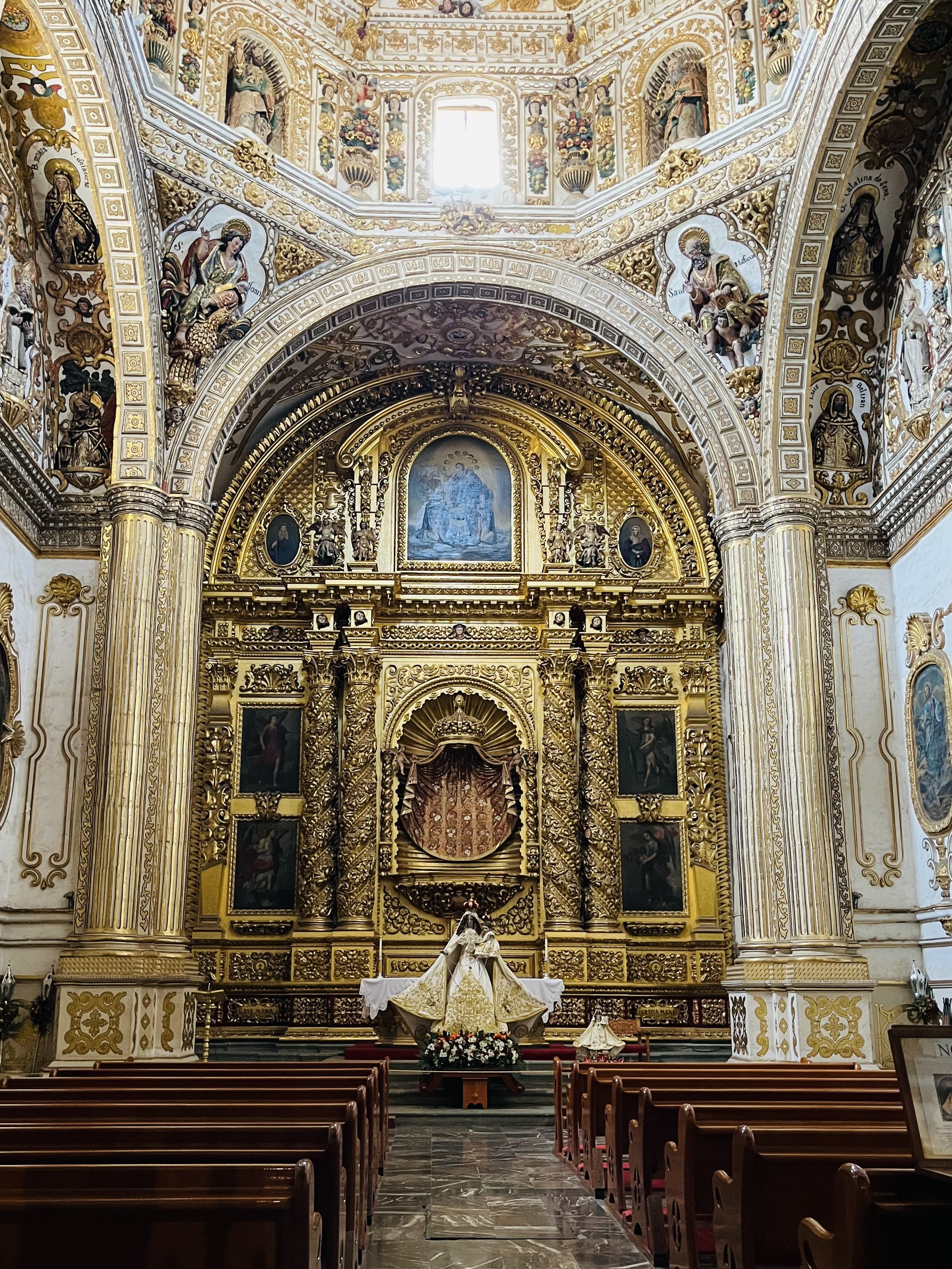
Gold leaf on a carved side altar and ceiling inside Santo Domingo de Guzmán church in Oaxaca, Mexico.
What’s the Difference Between Water and Oil Gilding?
Water gilding starts with gesso, a mix of chalk and animal glue, and then bole, a fine colored clay bound with a little glue. SeppLeaf, a gilding supplier in New York, puts the gesso at six to eight coats on some surfaces. Just before the leaf goes down, the gilder wets the bole so the glue softens enough to grip the gold. Once it dries, the gold can be rubbed with an agate burnisher until it gives back a sharp reflection.
Oil gilding skips the clay. The gilder brushes oil size onto a sealed surface and lays the leaf once the size reaches the right tack. Frame maker Barrie Bryant, writing in Fine Woodworking, says oil gilding can’t be burnished that way and dries to a bright matte sheen. The Royal Collection Trust credits oil size with one real advantage in return, it holds gold in deep recesses that water gilding struggles to reach.
Gold I Couldn’t Read in Oaxaca
I’ve stood inside Santo Domingo de Guzmán in Oaxaca. The entire main altar at the back was gold, and the smaller altars in the side chapels had gold altars behind them too. The ceilings were gilded as well, above grand arches that ran the length of the main hall. I couldn’t have told you what that gold was laid on or how it was held there.
Lonely Planet describes nearly every surface inside as raised gilt relief around painted figures. In the Rosary Chapel, added in the 18th century, the gold on the dome covers modeled plaster, according to Florida Atlantic University’s archive of the photographer Florence Arquin’s slides. Standing under it, I had no way of knowing which method a gilder used where, and a designer holding a finished sample is in the same position.
Bright Where the Light Lands
Fine water gilt frames and furniture are often built around contrast, with raised carving burnished bright against matte grounds. When conservators at the Museum of Fine Arts, Boston studied the frame on Benjamin West’s Devout Men Taking the Body of Saint Stephen, they found four areas of water gilding on the original surface and oil gilding everywhere else. They noted that water gilding takes more time and skill, so it tends to cost more. A maker who saves it for the places light will catch is spending the client’s money well.
The clay color matters as well. The Society of Heraldic Arts notes that yellow bole usually won’t take a burnish, so gilders lay red bole on the parts meant to shine. The same account says the wide, thin brush that lifts each leaf has to be charged with static first. Gilders do it by sweeping the brush across their arm or the nape of their neck, and I like knowing that all that shine starts with someone’s hair.
Why Water Gilding Stays Indoors
The water that makes the method work also limits it. Wrights of Lymm, a British gold leaf supplier, points out that gesso and animal glue grounds stay sensitive to moisture for as long as they exist. SeppLeaf’s overview is blunt about it, water gilding is for interiors only, and only with genuine gold or silver leaf.
John Canning Studios, which gilds church domes and historic interiors, calls oil size the most durable and water resistant choice. Canning Liturgical Arts recommends nothing below 23.75 karat leaf for exterior projects, in a heavier weight of roughly 18 to 23 grams per thousand leaves. Its guide puts interior architectural gilding at typically 22 karat.
Imitation Leaf Is Brass
Leaf sold as Dutch metal or composition leaf has no gold in it. Britannica describes Dutch metal as brass of 85 to 88 percent copper, with zinc making up the rest. Like any bare brass, it tarnishes. Wrights of Lymm says it has to be sealed and isn’t made for unprotected exterior work, and Bryant writes that sealed imitation leaf still darkens over time toward a browner brass.
Wrights of Lymm also lists what imitation leaf does well, it costs a fraction of genuine gold and comes in larger, thicker sheets. Canning Liturgical Arts notes that the gilding at Radio City Music Hall used both kinds, and I have no quarrel with that. I just want the drawings to say which surface got which.
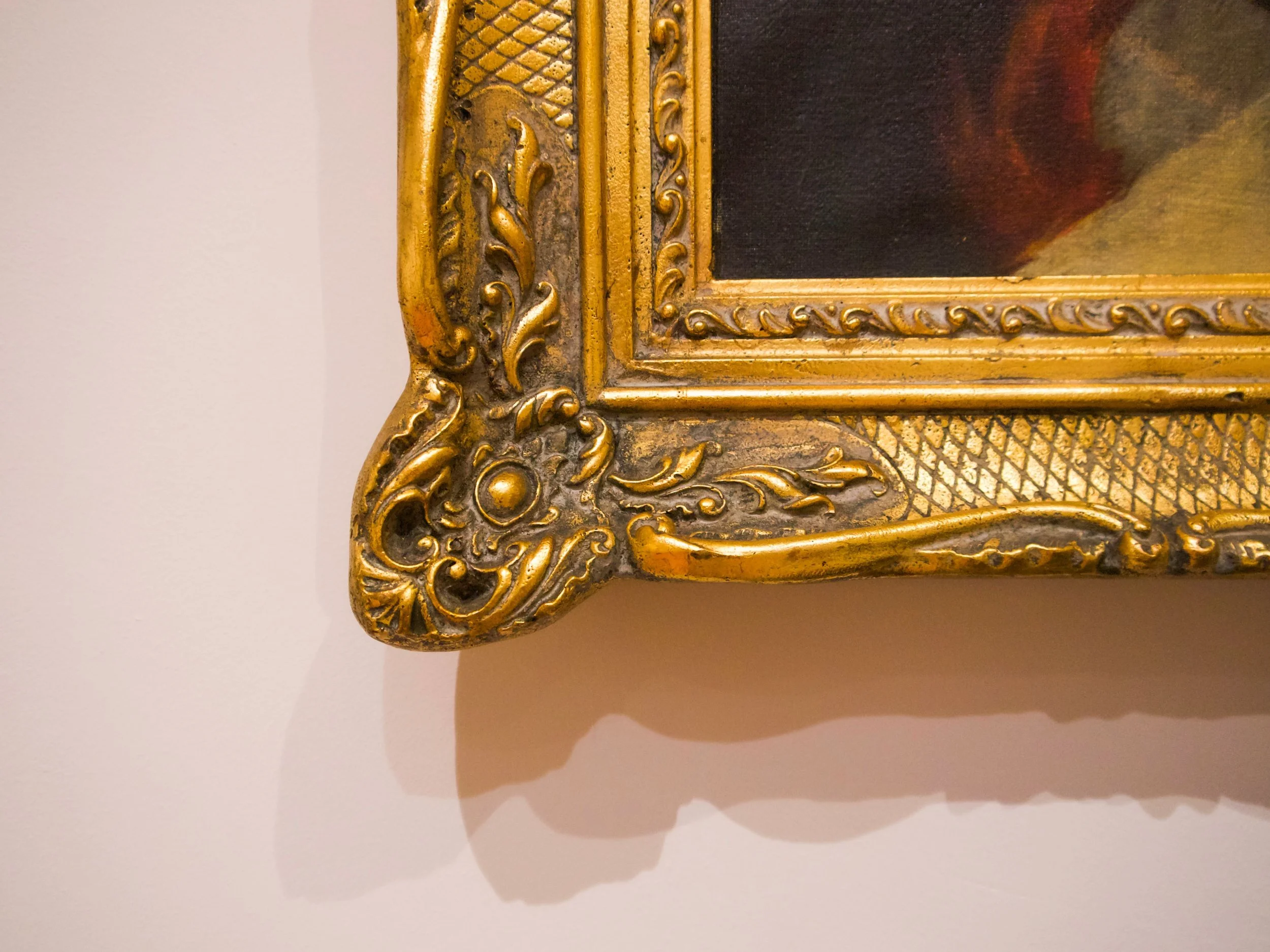
Carved antique giltwood frame with bright polished high points and matte recesses.
A Burnished Look Without the Clay
Some products promise burnished gold without traditional gesso and bole. In 1985 Kolner, a German maker, introduced a single layer burnishing clay that SeppLeaf says takes the place of the gesso and bole. Kolner’s Instacoll size goes further and skips the clay entirely. Wrights of Lymm calls it useful for interior decorative work and able to come close to a burnish with far less preparation, but says plainly that it doesn’t build the ground traditional water gilding depends on.
So “water gilded” on a quote can mean more than one thing. Ask the gilder to state in writing whether the job uses traditional gesso and bole or a modern substitute. Both can look good the day they’re finished, and only one is the method the term has meant for centuries.
Which Gold, Laid How
The specification should say, surface by surface, which areas are water gilded and burnished and which are oil gilded and matte. It should name the karat and confirm the leaf is genuine gold. Anything outdoors also needs a leaf weight on the drawings.
ETV Bharat reported that designers were choosing genuine leaf over metallic paint, often beside lime plaster and natural stone. A frame conservator knows water gilding from the inside, and an architectural gilding studio knows domes and weather, so the drawings decide which one to call. I still couldn’t tell you how the gold in Santo Domingo was laid, and on a new commission nobody should have to guess.
