Where Iron Draws the Line
Stop playing it safe with neutral tones. Discover how we use vegetable tanned oxblood leather and blackened iron to give a modern room the weight, depth, and permanence it’s missing.
Most people assume blackened iron is painted. It isn't, and that was news to me too the first time I asked. The color comes from a chemical bath, not a brush, and once you know what that bath actually does, you stop seeing this finish as a color choice and start seeing it as a material that says exactly what it is.
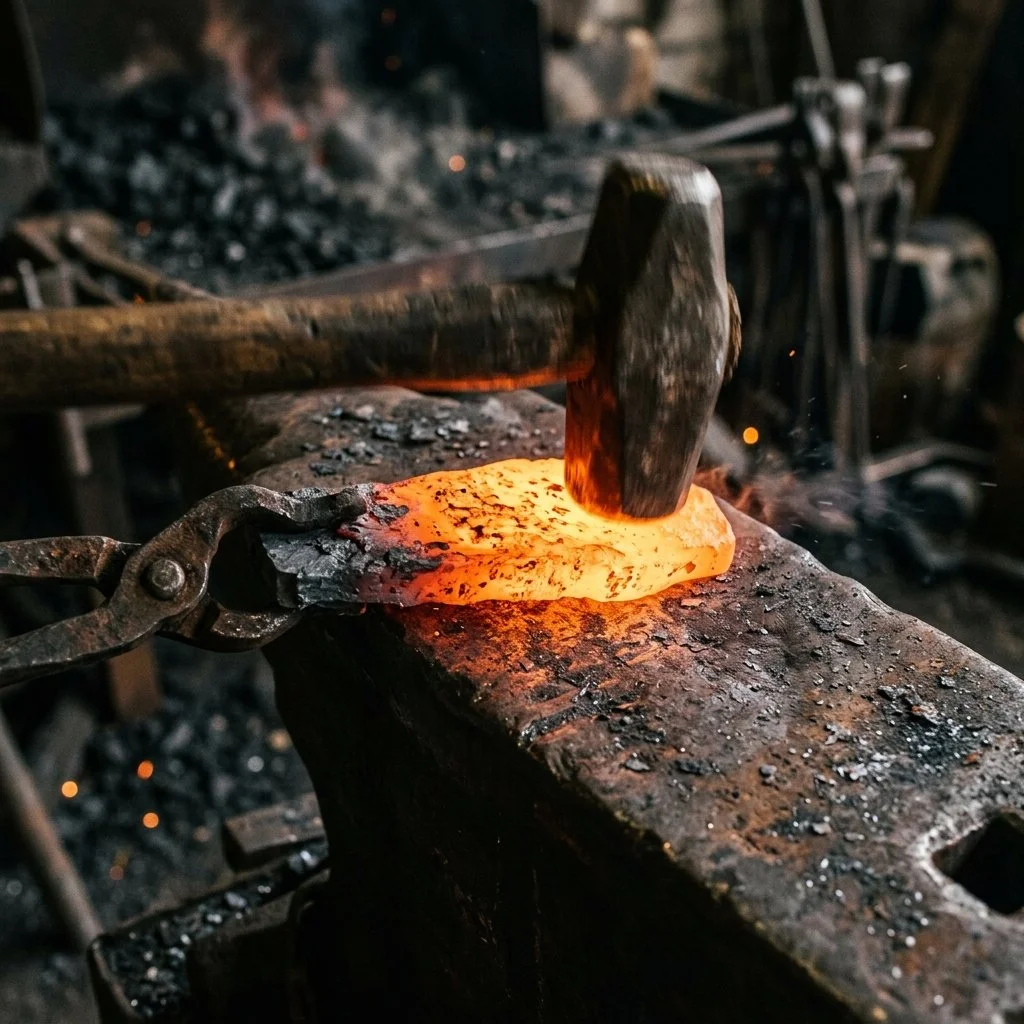
A hand forged piece of glowing orange steel rests on a heavy iron anvil mid strike.
What the Bath Actually Does
I don't forge this myself, but a blacksmith once walked me through exactly why the color happens the way it does, and it's stuck with me since. Blackened iron is not painted, they told me. It goes through a hot chemical bath, around 286 degrees Fahrenheit, that converts the surface of the iron itself into black iron oxide, the mineral magnetite. In the trade, this is called a conversion coating, and the name says the whole thing: the surface is converted into something else, not covered by something else. Nothing sits on top of the metal. The metal itself changes.
I asked why that mattered, and this is the part that stayed with me. The resulting coating is roughly a micron thick, thinner than any painted or plated finish could ever be. A conversion coating reacts with the metal, they told me, an applied coating like paint just bonds to it. Once you hear the difference explained that way, paint and plating start to look like the same idea under two different names. Because the finish is porous rather than sealed, it gets oiled afterward, both for rust protection and because that oil is what gives blackened iron its deep matte sheen instead of a shine. Chrome and stainless work the opposite way, they pointed out. Plating adds an actual physical layer to the surface, which is part of why polished metal can read as clinical or lab grade in a room built for warmth. Blackened iron never adds anything. It just becomes what it already was, darker.
The Grain Remembers the Hammer
The forging part is what actually surprised me. Mild steel gets heated toward 2,500 degrees, they explained, until it glows a specific bright yellow orange, and a blacksmith judges that temperature by eye. There is no gauge for it in most shops. Just years of watching the same color under the same light.
Once the metal reaches that state, hammering does not remove any material the way machining does, they told me. It compresses and realigns the grain structure inside the steel to match the final shape. They were clear that this is a real, physical difference, not a romantic one. A forged support carries a density that a cast or machined piece at the same dimension does not have, because the metal's internal structure has actually been worked, not simply cut.
Profile Over Ornament
I look for pieces with sharp angles and slim profiles, not scrollwork or rustic texture. Done this way, the iron reads as precision instead, a profile slim enough to disappear on its own, and sharp enough at the edges to tell you exactly where the furniture begins.
It also pairs naturally with neutral tinted architectural glass. A slim blackened profile all but disappears into that glass's own shadow, and the view gets to do the rest of the work instead of the frame competing with it.
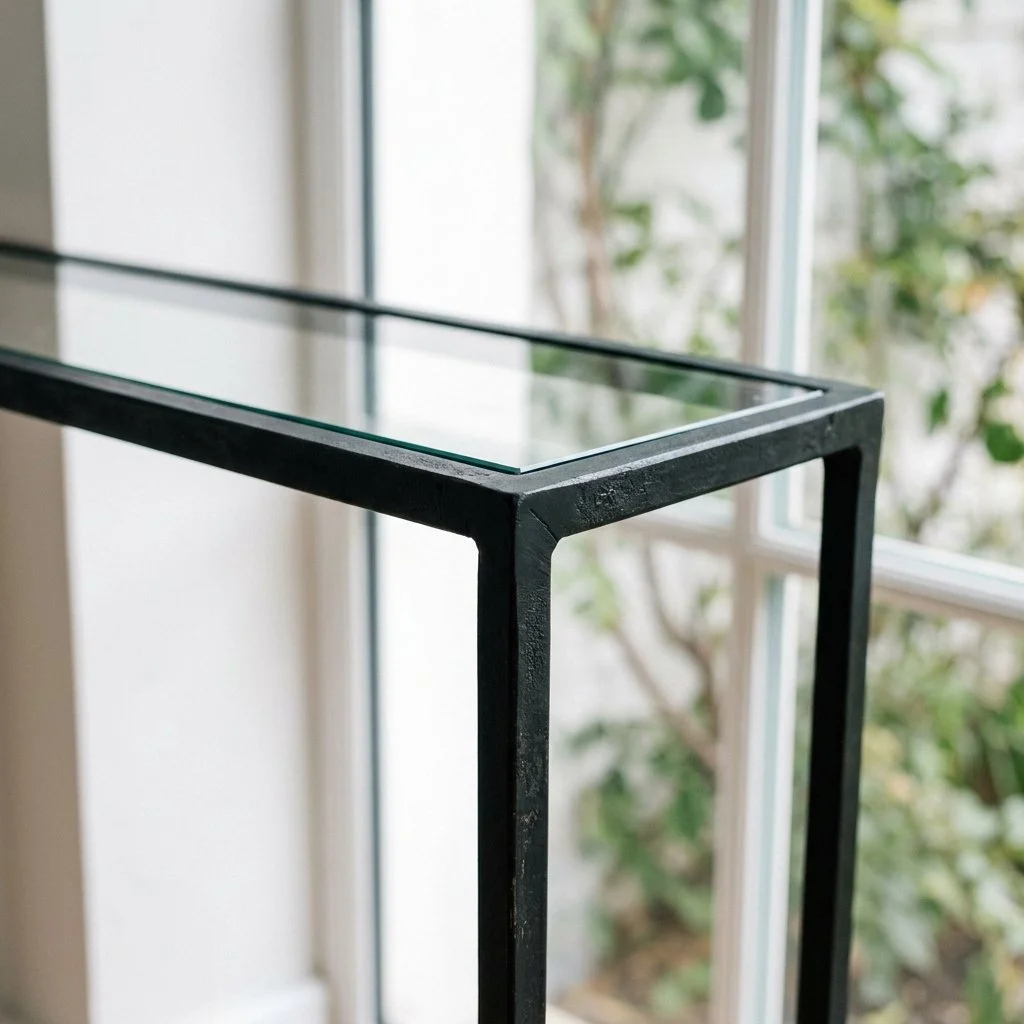
A slim, matte blackened iron console frame set against a bright, glass window backdrop.
Small Doses, Real Weight
Not every room is ready for a full iron frame, and that's fine. A single forged iron tray on a stone surface, or blackened hardware pulls on a run of cabinetry, can do the same job in miniature. These smaller pieces act as a tether. They give a light, glass filled room real weight without asking it to give up its openness.
The Bath, Not the Brush
Trends fade because they're surface decisions, something painted on that eventually reads as dated. Blackened iron doesn't have that problem, because the color was never a decision made on top of the metal. It's a conversion the metal actually went through.
When a client wants this for real, I point them one of two places. Some pieces go to a metal fabricator I trust, someone who works from a drawing and can repeat the same line across several pieces without any of them drifting. Other times, when the piece is meant to be the only one of its kind, I go straight to a blacksmith taking direct commissions. It costs more and takes longer, but it's the only way to end up with something that was actually hammered into its shape, not assembled from stock parts.
A finish that comes from a chemical reaction rather than a paint chip doesn't go out of style, because it was never in one to begin with.
Living Bronze
Most hardware is coated in plastic to keep it from changing. We prefer a metal that actually responds to you. Discover why living bronze is the only choice for a house that ages well.
Lacquer on hardware exists to freeze a look in place. It works, for a while. Then it cracks, or wears thin exactly where fingers hit it every day, and what's left looks cheaper than the raw metal underneath ever did. I don't coat my bronze. I don't need to. The metal is built to change.
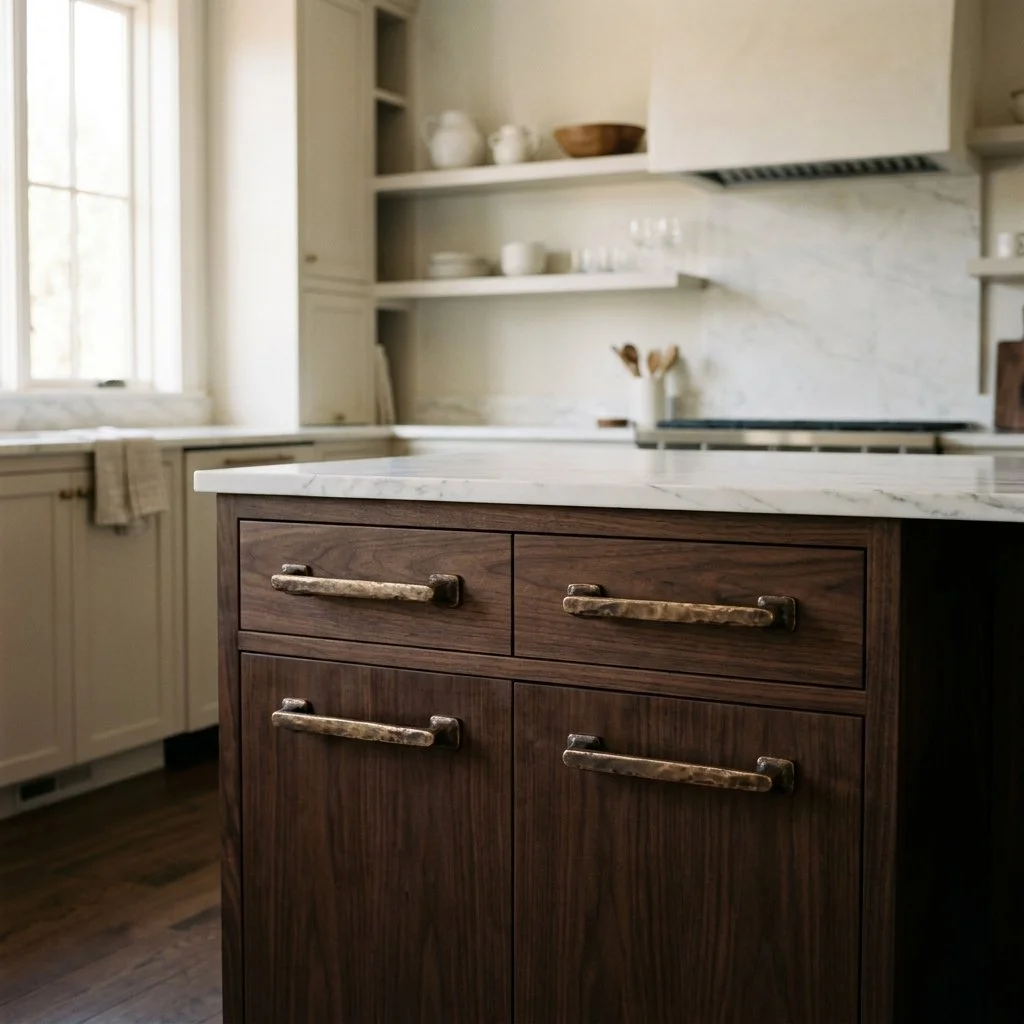
Solid cast bronze cabinet pulls with a warm, natural patina set against a modern kitchen background.
Naked Metal, On Purpose
What I use is sometimes called a living finish: bronze with nothing sprayed over it, sold and installed exactly as it comes off the cast. New, it has a warm, almost gold cast. Within weeks it starts reacting, first to the air, then to the specific hands that touch it every day. I choose that reaction on purpose. It's the whole reason to pick the material in the first place.
The Map Your Hands Draw
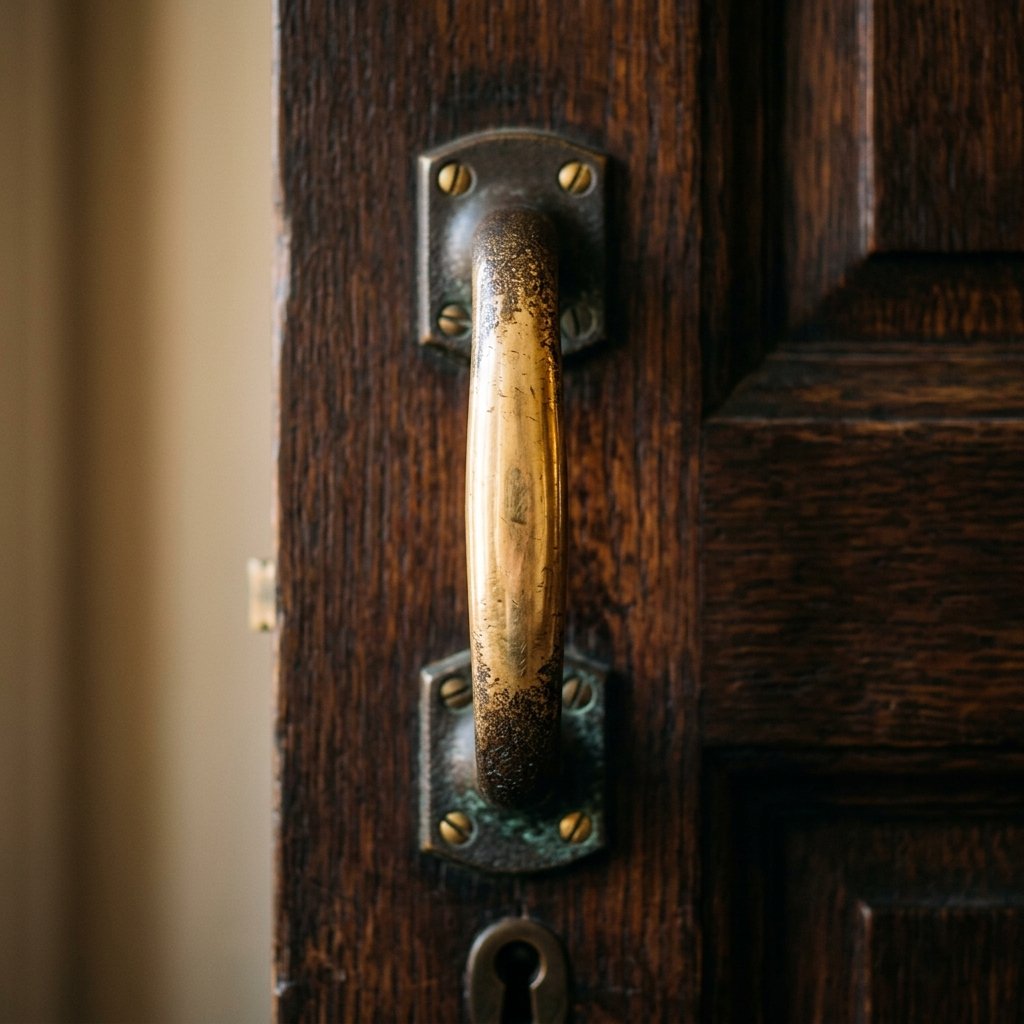
Every pull of a drawer or turn of a handle leaves a trace. Skin carries oils and a faint natural acidity, and where it makes contact often enough, the friction keeps burnishing the surface bright even as the copper in the alloy starts to oxidize. The spots nobody touches, the underside of a pull, the back edge of a handle, darken instead, sometimes to a deep, almost black brown. Give it a year and a bronze handle on a busy pantry door will look different from the one on a guest bathroom that barely gets opened. The house starts keeping its own record of how it's actually used.
Bronze or Brass, and Why It Matters Less Than You Think
A fair amount of hardware sold as bronze is technically brass, an alloy of copper and zinc rather than copper and tin. Retailers use the two names loosely, and I'm not going to pretend the industry is precise about it. What actually determines whether a handle ages this way is simpler: a real copper alloy, left bare, with no lacquer standing between your hand and the metal.
Solid bronze door handle mounted on a dark wood door, featuring a bright burnished grip and a deeply oxidized, dark brown patina on the untouched edges.
The Weight You Feel Before You See It
Cast bronze and brass are noticeably heavier than the zinc alloy most inexpensive hardware is made from, and you feel that difference the first time you close your hand around it. It's cool against the skin longer than a lighter alloy would be, and it doesn't rattle or flex the way stamped hardware sometimes does. That density comes from what a solid casting actually weighs, and it's part of why the piece feels permanent rather than applied.
Let the House Keep Score
Quality here means choosing a material that looks better in ten years than it did on day one, because the people living with it made it that way. A living bronze handle is a record of a house being used exactly as it was meant to be, and it only gets more honest with time.