Why Moradabad's Brass Can't Be Copied
In 2013, India gave Moradabad's brass a real, legal protection, a Geographical Indication tag, the same category that keeps a wine called Champagne actually from Champagne. It's tied to a place and a method, open to any real workshop in that city, not owned by one brand. That's different from the protections most people actually recognize. Christian Louboutin trademarked a color. Tiffany trademarked a shade of blue. Both lock a mark to a single company, and both have survived real legal fights to prove it. What earns a craft the wider, place based kind of protection isn't a company logo. It's the river.
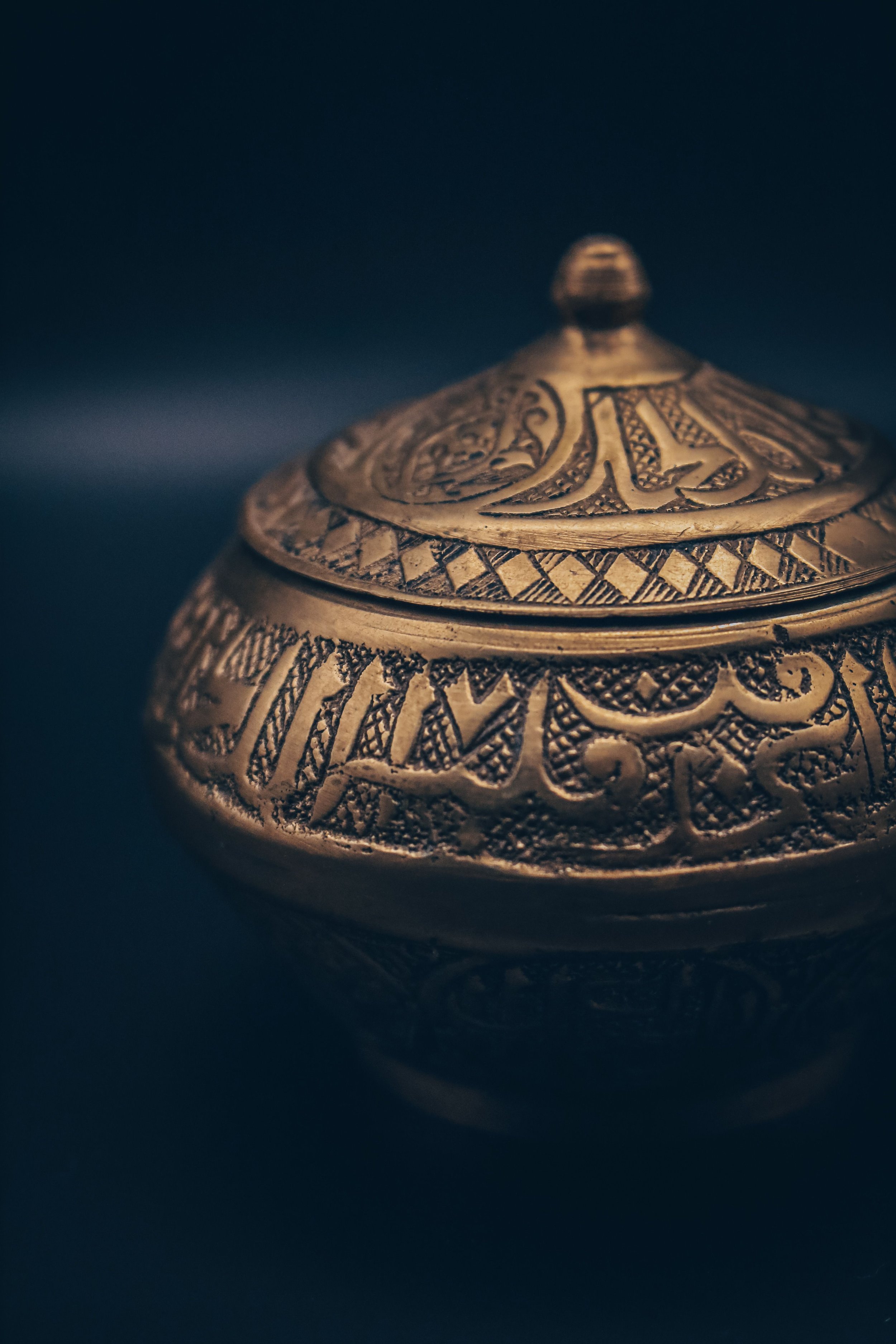
Hand hammered brass bowl with a warm antique finish.
A Mughal Garrison Turned Metal Trade
Moradabad was founded in 1625, during the reign of Shah Jahan, and its metalworking history starts almost immediately after. Kashmiri artisans migrated to the new city under Mughal patronage, bringing casting and engraving knowledge that hadn't existed there before, and by the time Shah Jahan's court was at its height, Moradabad brassware was already reaching markets in Iran and Turkey. Artisans from Banaras and Agra followed and settled into the same trade. The city has been making brass, in other words, for longer than most Western luxury houses have existed at all, and it never stopped: by the eighteenth century the British East India Company was placing large brassware orders here for export, and Moradabadi lacquerware was still being shown internationally at the Wembley Exhibition in London in 1924.
The Sand a Government Now Protects By Name
The detail that actually stopped me, Moradabad sits on the Ramganga River, and the sand from that specific river is what artisans use to pack their casting molds. It's unusually fine and soft, fine enough to hold the crisp edge of a pattern that coarser sand would blur. I'd assumed a GI tag was paperwork until I found out that sand is part of the actual legal basis for the city's protection. That's not folklore dressed up as provenance. It's the reason a mold made anywhere else, with any other sand, produces a visibly softer result. Moradabad now supplies roughly eighty percent of India's domestically produced brassware, and this is one real reason nobody else has fully managed to replicate it at the same quality.
A Pattern Traced by Hand, Not Machine
Brass itself is nothing exotic on its own, an alloy of copper and zinc, sometimes with a touch of lead worked in for casting. What makes a Moradabad piece is what happens to it after casting. Artisans trace the pattern by hand, in a technique called nakashi, using small hand tools to cut floral and geometric patterns directly into the metal. A single piece can take hours to finish. No machine currently replicates this at the same fidelity, which is part of why pieces worked by hand still command a real premium over brass that's simply stamped by machine and sold under the same name.
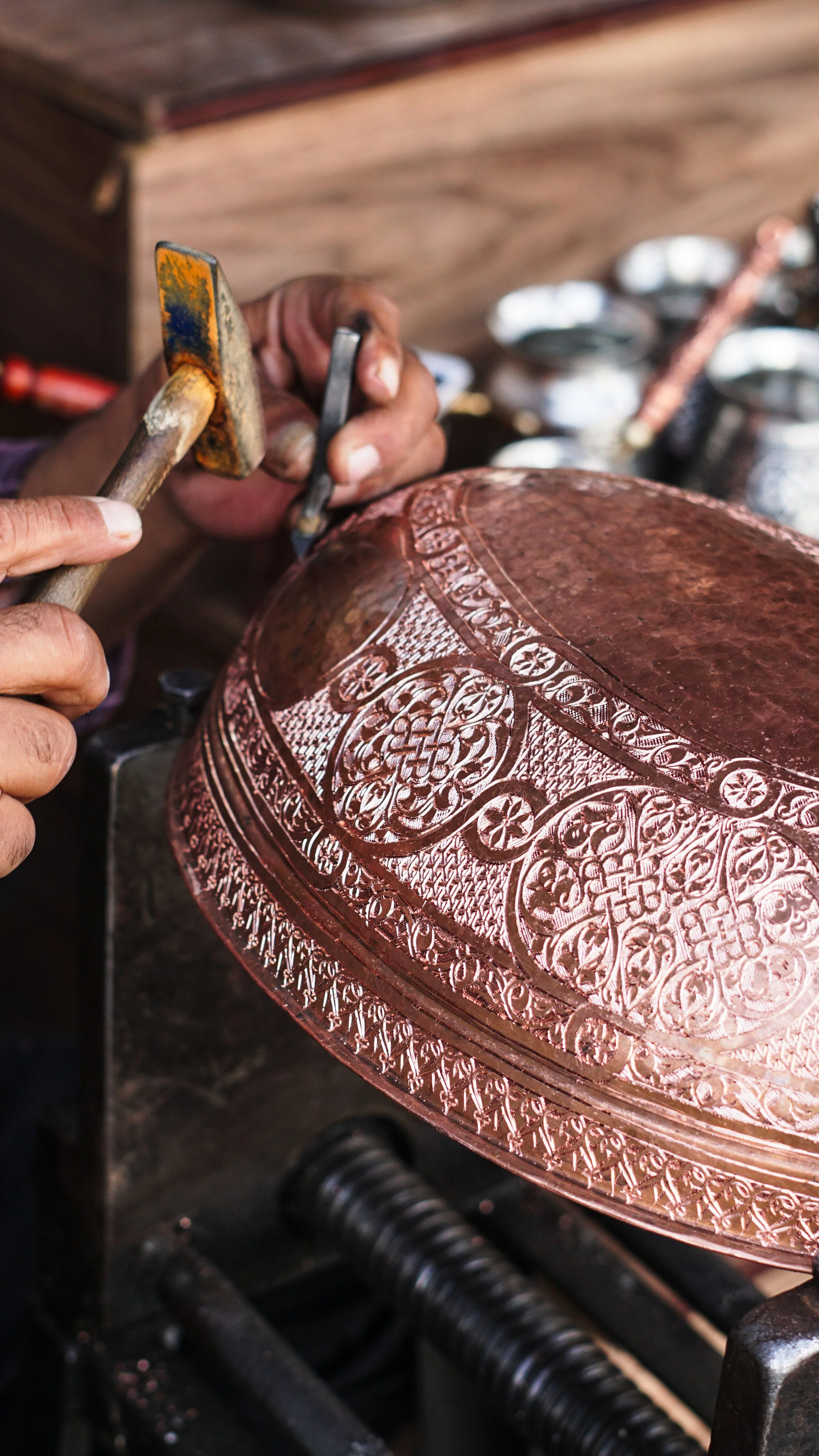
Artisan hand chiseling a decorative pattern into a brass bowl.
What Moves From Furnace to Finish
The metal is melted in a furnace fired by coal, then poured into molds packed with that same river sand, shaped from wax or wooden patterns. Once cast, the piece goes through hand engraving and hammering before finishing, which might mean an antique brass patina or a high polish, depending on where it's headed. Every piece is checked for weight and finish before it ever leaves the workshop. It's a genuinely hybrid process, a hand technique centuries old, sitting inside a modern export operation, and both halves are real.
Ask for the Word Mark
A GI tag exists because a name got valuable enough to steal. Brass sold as Moradabad work, without the sand from that specific river and without a pattern actually cut by hand, isn't a lesser version of the real thing. It's a different object wearing the same label. When it's genuinely Moradabad brass, ask for it by the registered mark, the same way you'd ask a wine list for the actual appellation and not just the grape.