
The Psychology of Space
A home must be curated as a sanctuary. Explore the Madison Prime standard for the psychology of space.
The environment you inhabit is the most potent influence on your state of mind. To move beyond the purely functional, a home must be curated as a sanctuary, a principle we detail in What Defines Luxury Home Decor, using volume and material to create a sense of calm and order. When a house is designed around the way you actually move and feel, it ceases to be just a building and becomes a place that genuinely elevates the day to day.
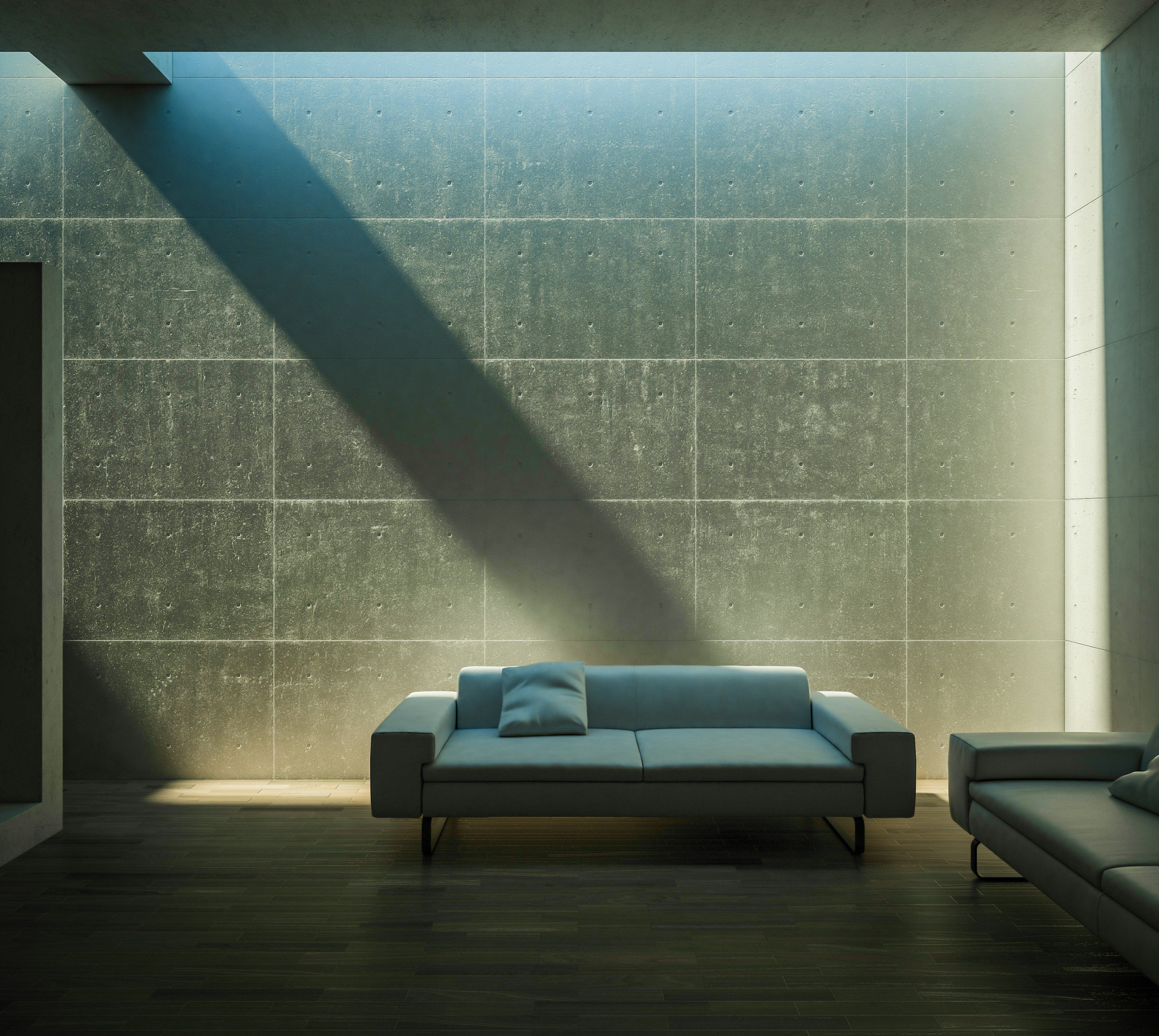
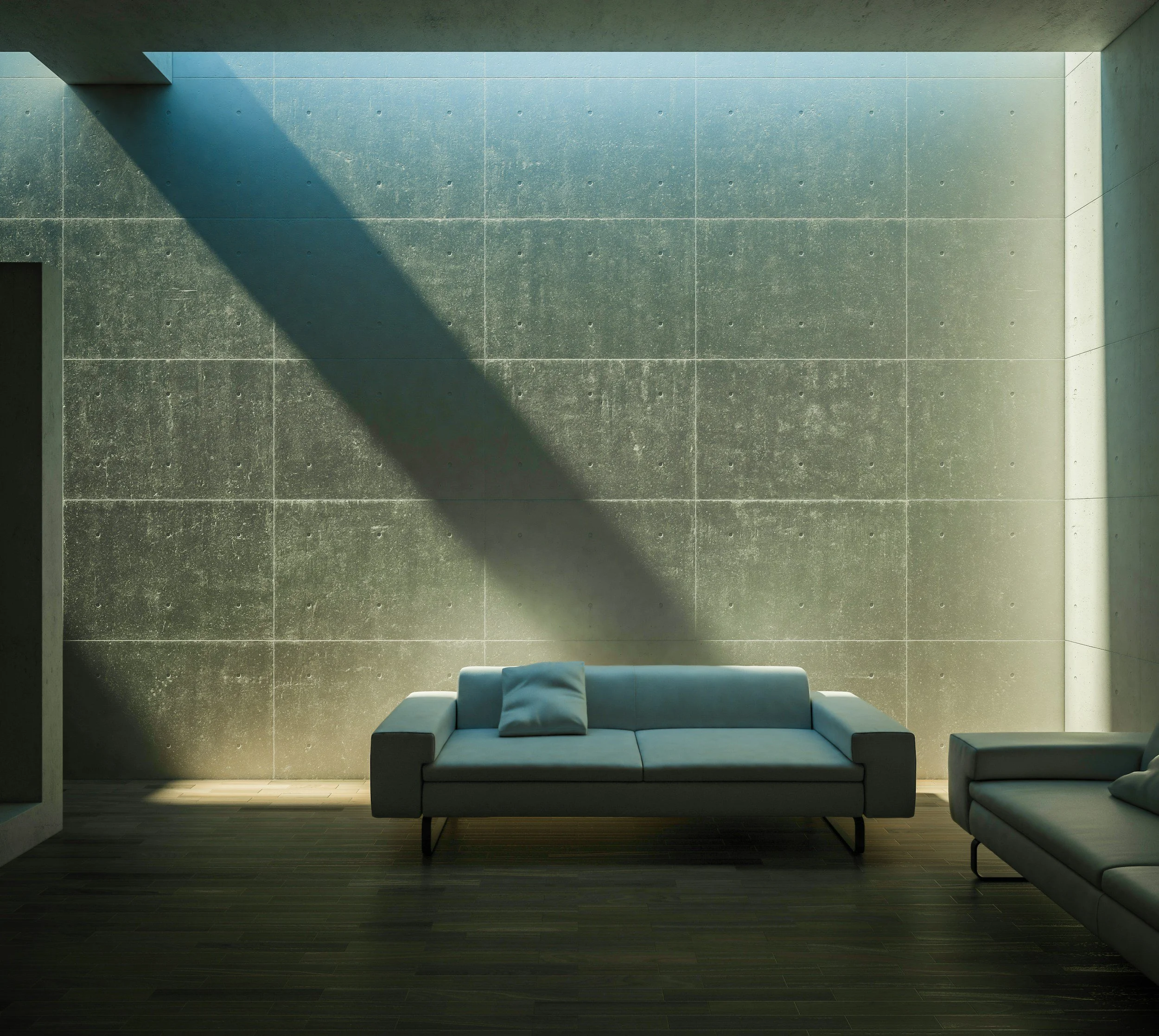
Living room defined by expansive stone walls and flooring, featuring two low profile sofas and abundant negative space illuminated by natural sunlight.
The Volume Principle
Spatial volume is the primary luxury of a high caliber residence. The caliber of a home is defined by the space you leave empty. An open void isn’t wasted square footage; it is an intentional pause that allows a home to breathe. By prioritizing height and the unrestricted flow of light, you create a layout that feels expansive and grounded. This is a shift away from the cramped feel of standard planning, favoring a sense of clarity:
Height: Creating room for perspective and a sense of mental quiet.
Light: Letting natural illumination set the mood and rhythm of the home.
Flow: Ensuring movement through the rooms feels intuitive and natural
The Strength of the Frame
A home’s integrity is felt through the tactile weight of its materials. Integrity is found in the honesty of the materials that hold a home together. We prioritize elements that offer a sense of grounding to offset the chaos of the external world. There is a tactile permanence to raw, exposed surfaces, a feeling of stability that you notice the moment you walk in. This isn’t about decorating, it’s about the security of:
Natural Stone: A cooling, permanent anchor for the home.
Exposed Masonry: Celebrating the structural weight and character of the build.
Matte Finishes: Reducing visual noise to let the natural texture lead.
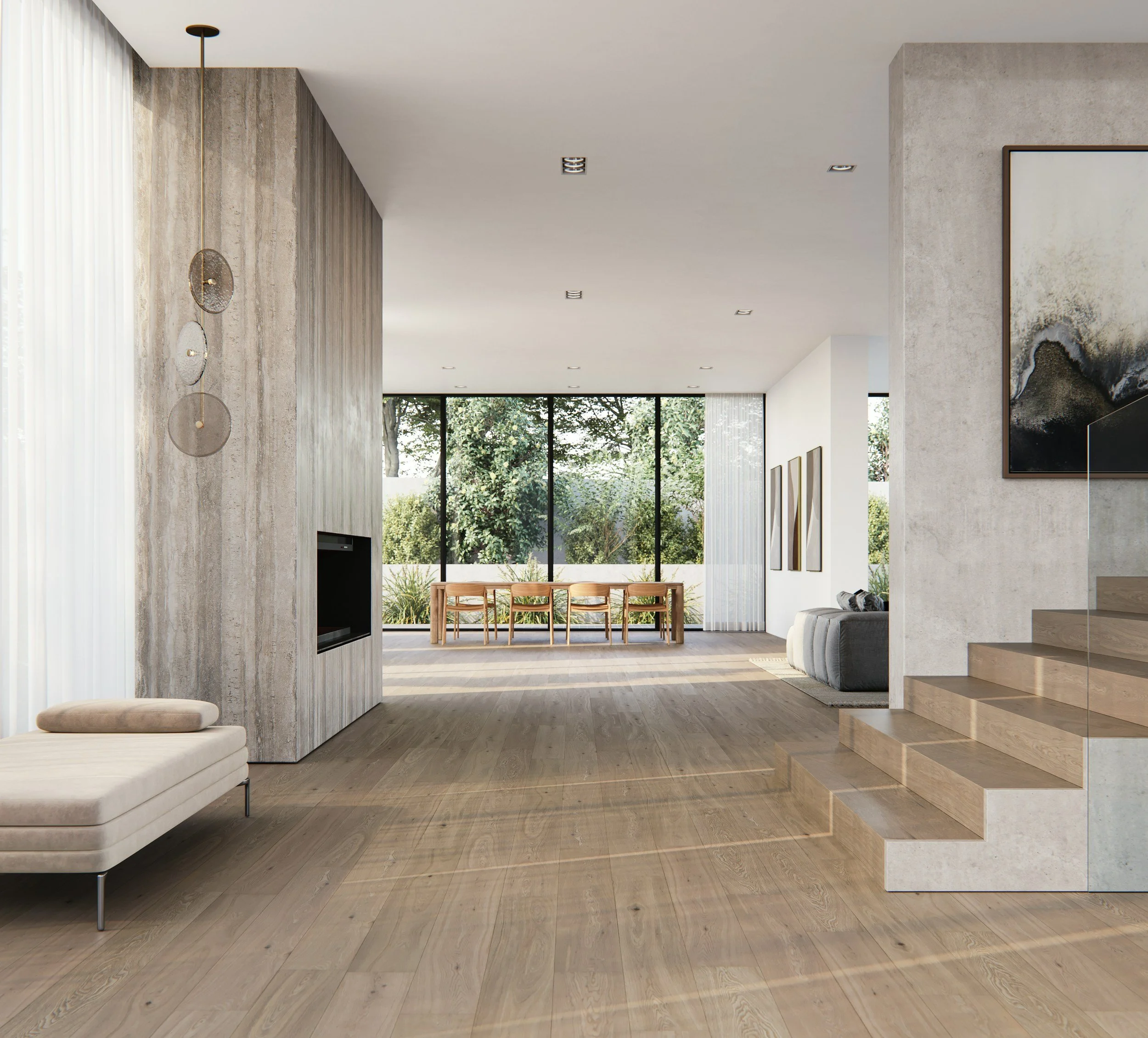
Expansive transition gallery looking through to a dining area and floor to ceiling windows, emphasizing architectural depth and natural light.
The Precision Threshold
True sophistication exists in the absolute silence of a transition. The sophistication of a home relies on how the transitions are handled. When the boundary between the interior and the landscape is seamless, the home feels open and connected. Stripping away visual clutter allows the eye to travel through the space rather than stopping at the walls. It’s a disciplined approach that serves our need for:
Perspective: Maintaining a constant connection to the view outside.
Openness: Erasing the feeling of being "boxed in."
Continuity: Aligning interior materials with the outside for a singular, uninterrupted feel.
The Legacy Standard
A timeless home is defined by the balance of light and shadow. A well designed space does not need to shout to be felt. By focusing on The Architecture of Light and its interplay with shadow, we create environments that support a life of quiet focus. This is the standard for a high caliber residence, it is a space designed to support how we actually live. When the proportions are handled with intention, the home itself becomes the primary source of calm.
Conclusion
A well composed home is a testament to intentional living. By focusing on volume, material, and transition, you transform a physical structure into a lasting sanctuary.
The Statement Lighting Standard
Statement lighting is the final note in a room’s composition. Explore the Madison Prime standard for selecting fixtures with architectural scale and material depth.
In a refined interior, a statement fixture is not an exercise in excess; it is a declaration of the room’s design narrative. A well chosen chandelier, pendant, or floor lamp should feel effortless, providing a focal point that elevates the space while maintaining a rigorous balance with the existing architecture.
Scale and Proportionate Weight
Adhering to the statement lighting standard requires a strict focus on the room’s dimensions. The fixture must possess the correct "visual gravity" for its environment. Large scale ceiling fixtures are reserved for volumes with significant verticality or as anchors for expansive dining surfaces, such as those discussed in The Centered Table. Conversely, sleek, minimal pendants are utilized in narrower zones to maintain a sense of fluid movement. Every fixture must be scaled to the furniture it accompanies, ensuring the proportion feels intentional rather than accidental.
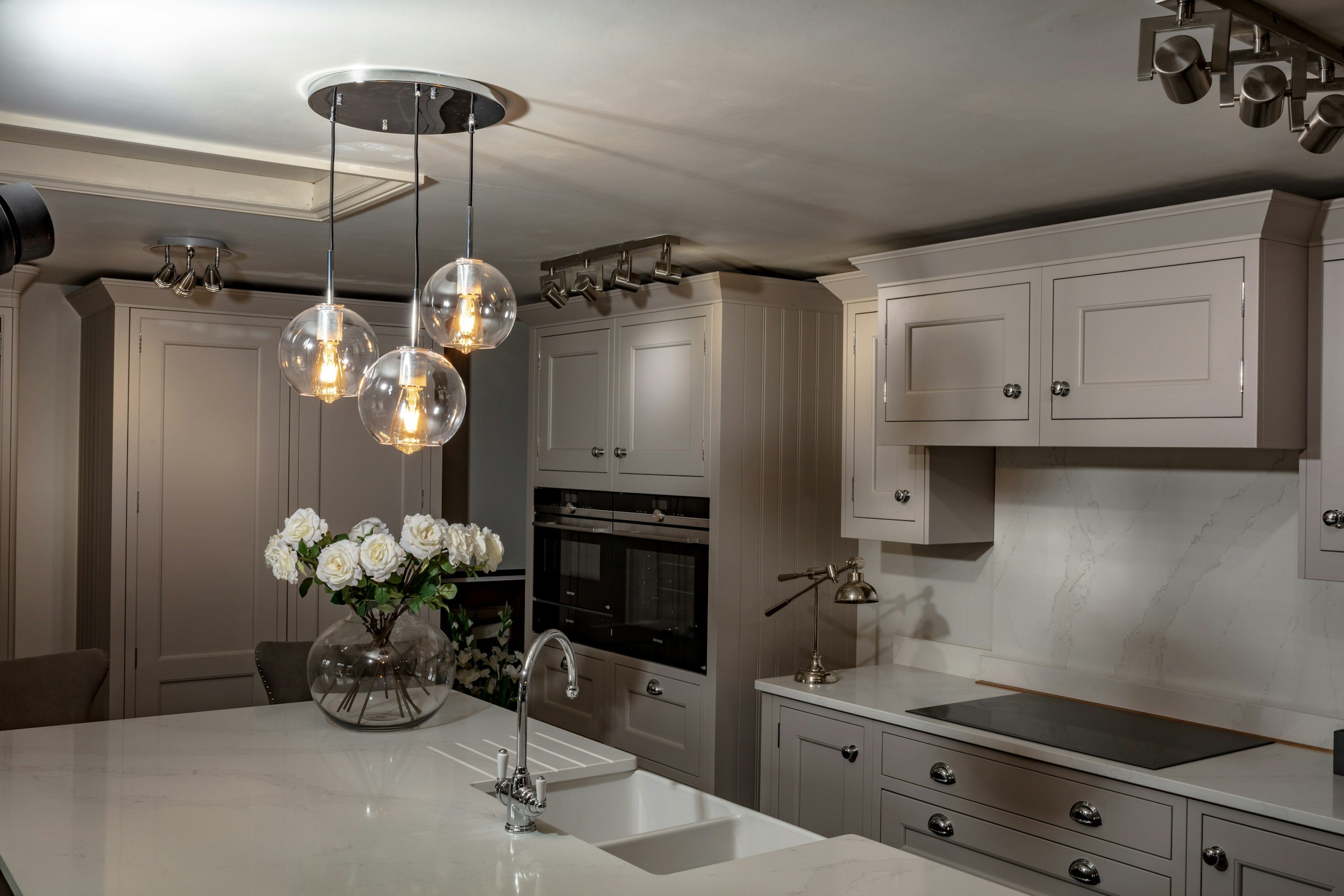
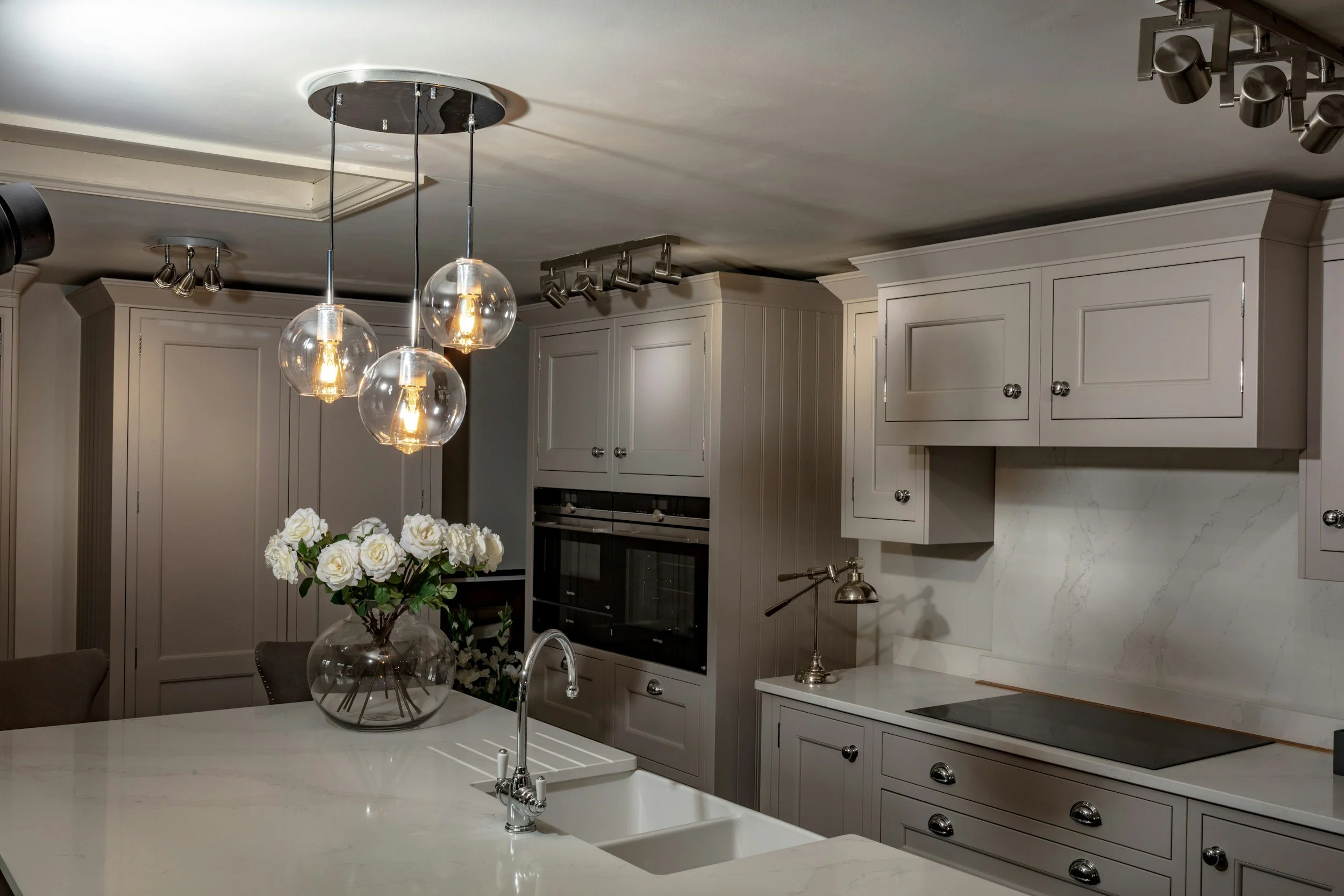
Kitchen with circular pendant light over the island, balanced by functional track lighting and an counter lamp.
Consistency of Design Language
To maintain a curated feel, the primary fixture must speak the same material language as the room. We prioritize pieces that reflect the home’s foundational elements whether that manifests as clean lined contemporary forms or the weighted presence of brass and bronze in more traditional volumes. The goal is a cohesive dialogue between the light source and the surfaces it illuminates.
Materiality and Finish
Luxury is found in the tactile quality of the hardware. We favor finishes that offer warmth and depth hand rubbed bronze, matte brass, or natural wood, over fleeting, high shine trends. These materials allow the fixture to age with the home, providing a tactile richness that invites closer inspection without being overbearing.
The Integration of Layered Light
Even a statement piece must fulfill its primary purpose, The Composition of Light. A dining anchor must provide a soft, ambient glow that flatters the surface below, while an entryway fixture should offer a welcoming but functional transition. A focal point is most effective when it is integrated into a broader layered strategy, working in harmony with ambient and accent sources to eliminate harsh contrasts.
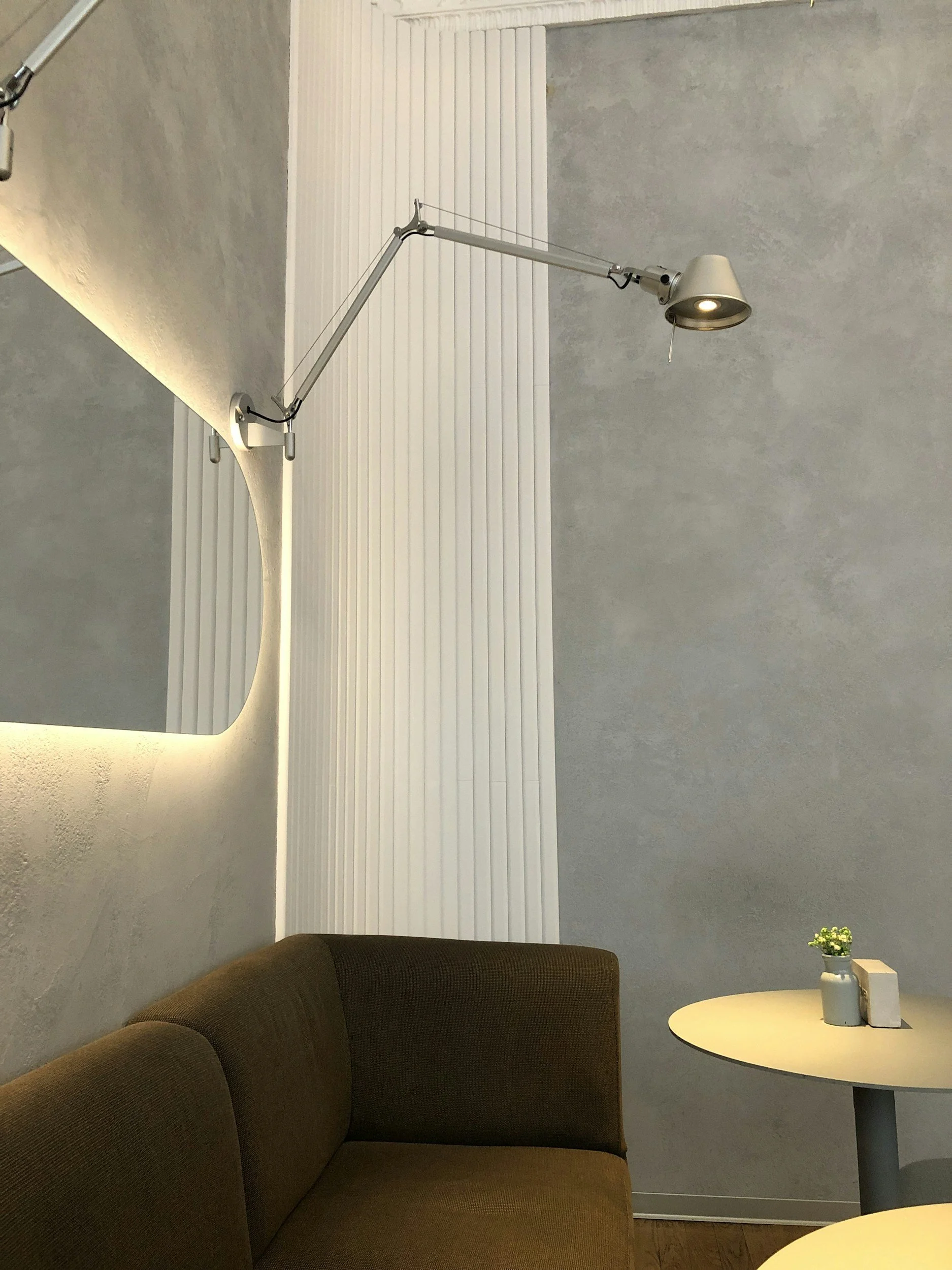
Task area featuring an integrated backlit mirror and a long reach articulating wall sconce for directed architectural lighting.
Conclusion
Statement lighting is the final note in a room’s composition. When selected with restraint and an eye for architectural scale, it becomes more than a light source, it becomes a permanent anchor of the home’s identity.
The Geometry of Light
Discover the Madison Prime principles of strategic lighting placement. Learn how to balance function and beauty through architectural lighting geometry.
Luxury lighting is defined not by the scale of the fixture, but by the precision of its placement. It is a discipline of ensuring that light enhances the architectural integrity of a space without competing with it. Strategic placement balances utility with aesthetic intent, transforming a room into a curated environment where every shadow and glow is deliberate.
The Focal Point Alignment
Effective placement begins with identifying the room’s natural focal points, fine art, sculptural textures, or a primary seating arrangement. Light should be positioned to anchor these elements, providing a visual weight that guides the eye. The goal is to highlight these features with subtle intensity, ensuring they remain the primary focus without being overpowered.
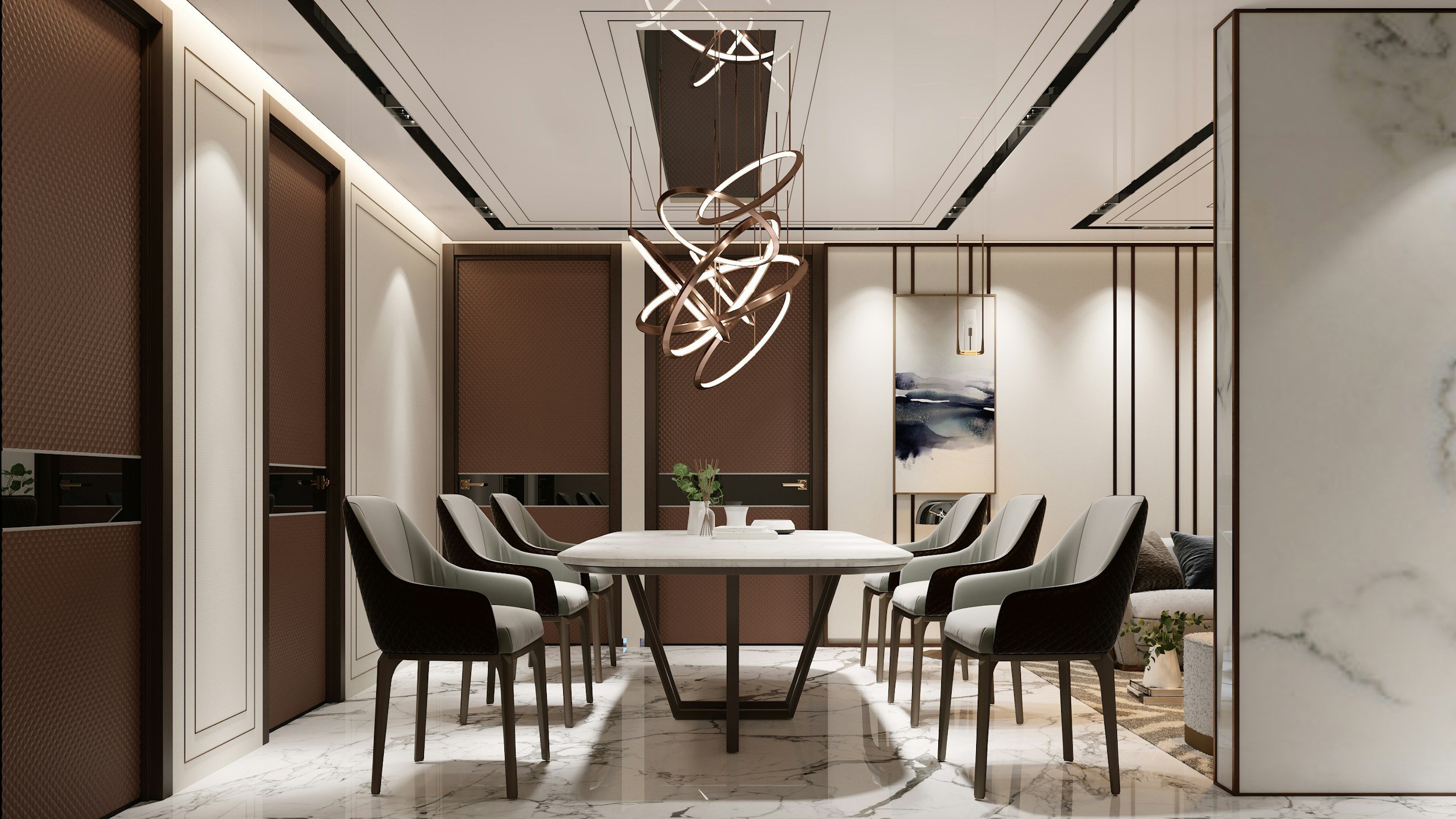
Modern dining space featuring a large scale circular statement pendant light.
The Versatility of Atmosphere
A single space often serves multiple functions throughout the day. Strategic placement, supported by dimmable systems, allows a room to transition seamlessly between states.
Ambient States: Soft, indirect light for repose or social atmosphere.
Functional States: Direct, focused light for tasks, culinary work, or reading. By placing light sources at varying heights and intensities, you allow a singular room to offer a range of sensory experiences.
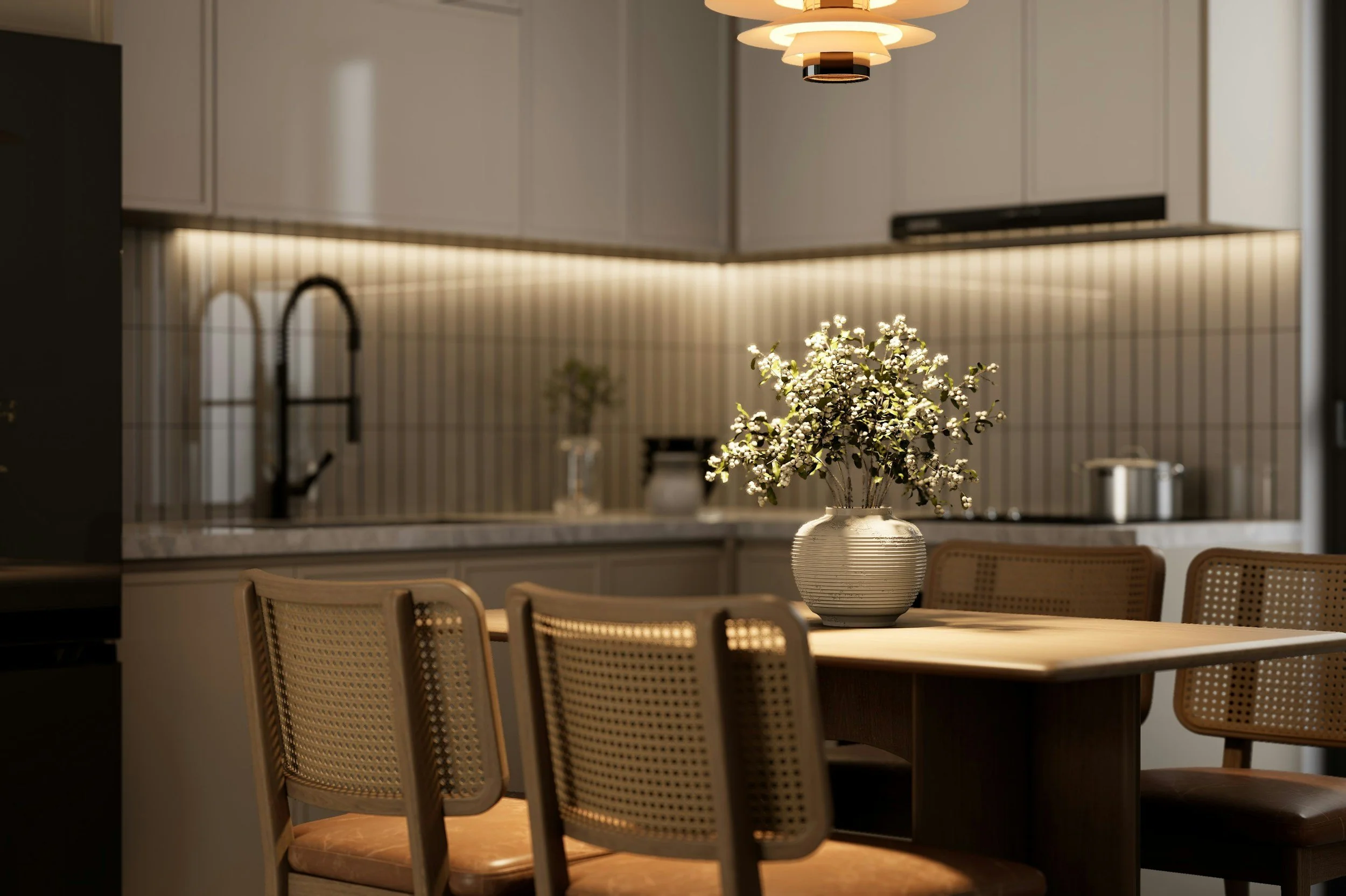
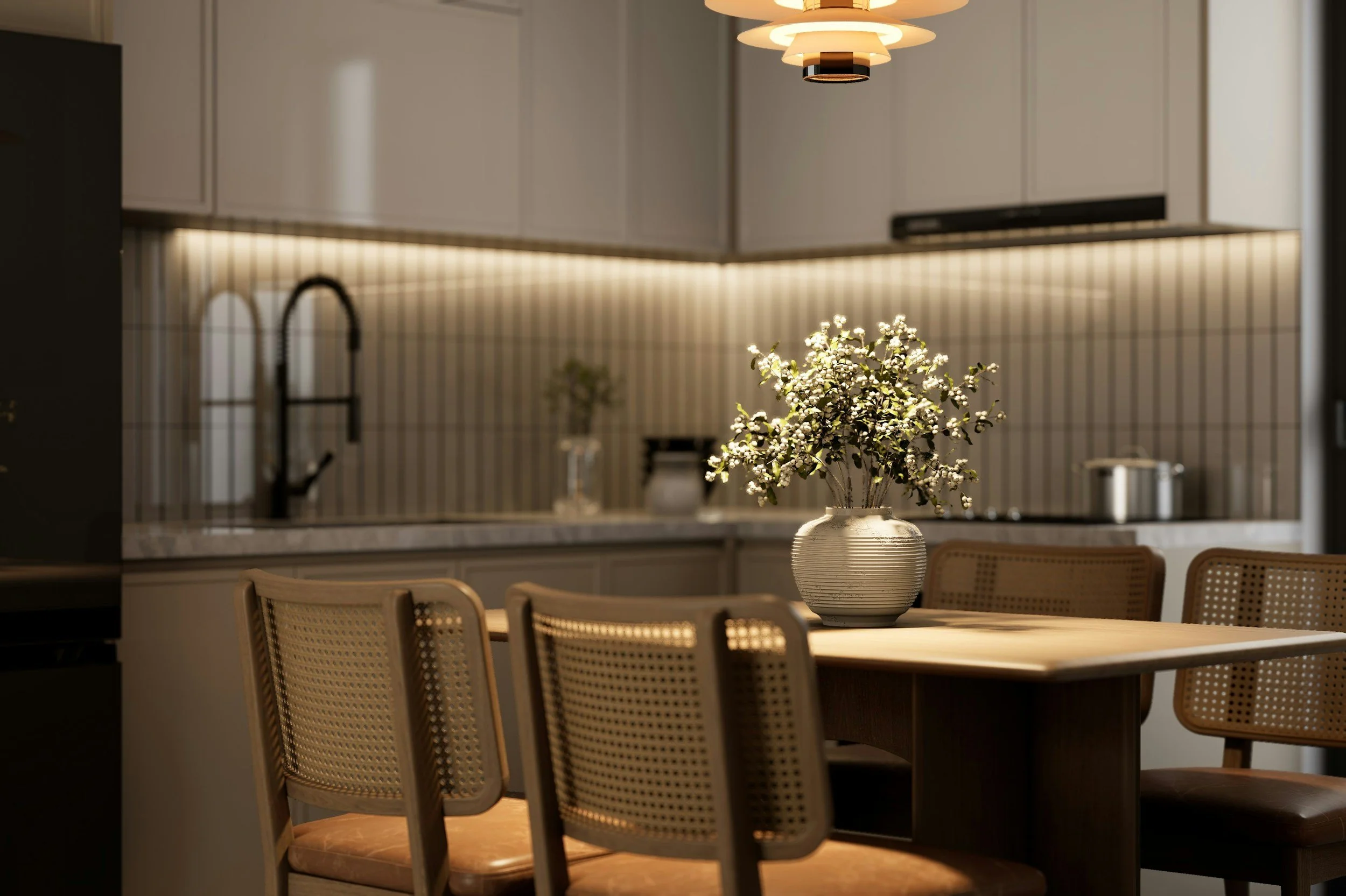
Integrated kitchen lighting featuring a statement table pendant and recessed under cabinet task lighting.
Accentuating Architectural Texture
Lighting should be used as a tool to reveal the home’s materiality. By positioning subtle sources along moldings, within shelving, or against textured wall surfaces, you introduce a sense of architectural depth. This "grazing" of light emphasizes the quality of materials, walnut grains, stone veins, or woven textiles, without introducing visual clutter.
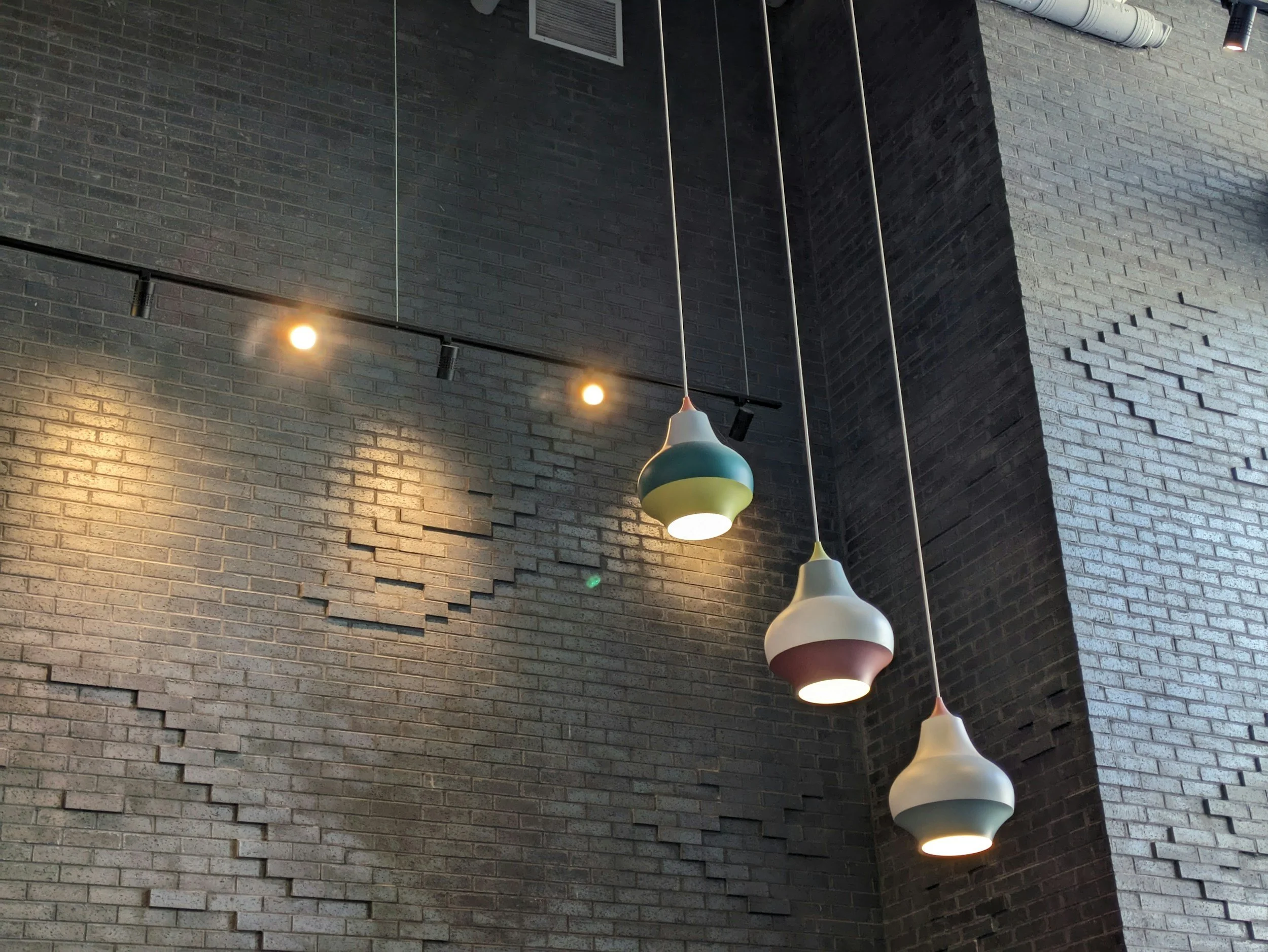
Vertical accent lighting from a large three pendant chandelier.
The Sanctuary Standard
In private zones such as bedrooms, the placement of light is central to the creation of a sanctuary. Positioning bedside lamps and reading lights with a focus on height and reach ensures that the lighting feels intuitive rather than staged. This thoughtful alignment enhances the textures of bedding and headboards, creating a space defined by calm and serenity, a hallmark of The Art of the Sleep Sanctuary.
The Planning Process
A refined placement strategy involves:
Zone Mapping: Defining functional areas such as dining, work, and repose before selecting fixtures.
Layered Application: Ensuring the three tones of light, ambient, task, and accent, overlap with intention, as detailed in our guide on The Composition of Light.
Spatial Balance: Utilizing negative space to ensure that the room remains uncluttered and the lighting feels integrated into the architecture.
Conclusion
The geometry of light ensures that a home feels effortlessly sophisticated. When every fixture is positioned with a clear purpose, even the simplest space achieves a level of quiet, intentional luxury.

The Composition of Light
Lighting is more than illumination; it is the creation of depth. Explore the composition of light, from the foundation of ambient glow to the subtle drama of accents.
Lighting is the most transformative element in a refined interior. In luxury design, the objective is not simply illumination, but the creation of depth through a thoughtful, layered hierarchy, a concept we explore deeply in The Architecture of Light: Sculpting Atmosphere and Intention. When executed correctly, lighting emphasizes texture, defines geometry, and introduces a sense of effortless sophistication that a single fixture cannot achieve.
The Foundation: Ambient Light Ambient lighting establishes the baseline atmosphere. It should be natural and unobtrusive, acting as the canvas upon which the rest of the room is composed. We prioritize recessed architectural lighting, soft overhead fixtures, or indirect cove lighting to provide an even, flattering glow.
Purpose: To provide soft illumination that enhances the home’s materiality.
Control: Dimmable systems are essential to maintain flexibility in mood and tone.

Round pendant light casting a soft ambient glow.
Functional Elegance: Task Lighting
Task lighting provides the necessary focus for the rituals of the home, reading, culinary work, or or the precise lighting required in The Architecture of the Bath. In a curated space, these sources are integrated seamlessly, ensuring that function never disrupts the visual plane.
Execution: Table lamps on bedside or console surfaces, precisely scaled pendants over islands, and directional reading lamps.
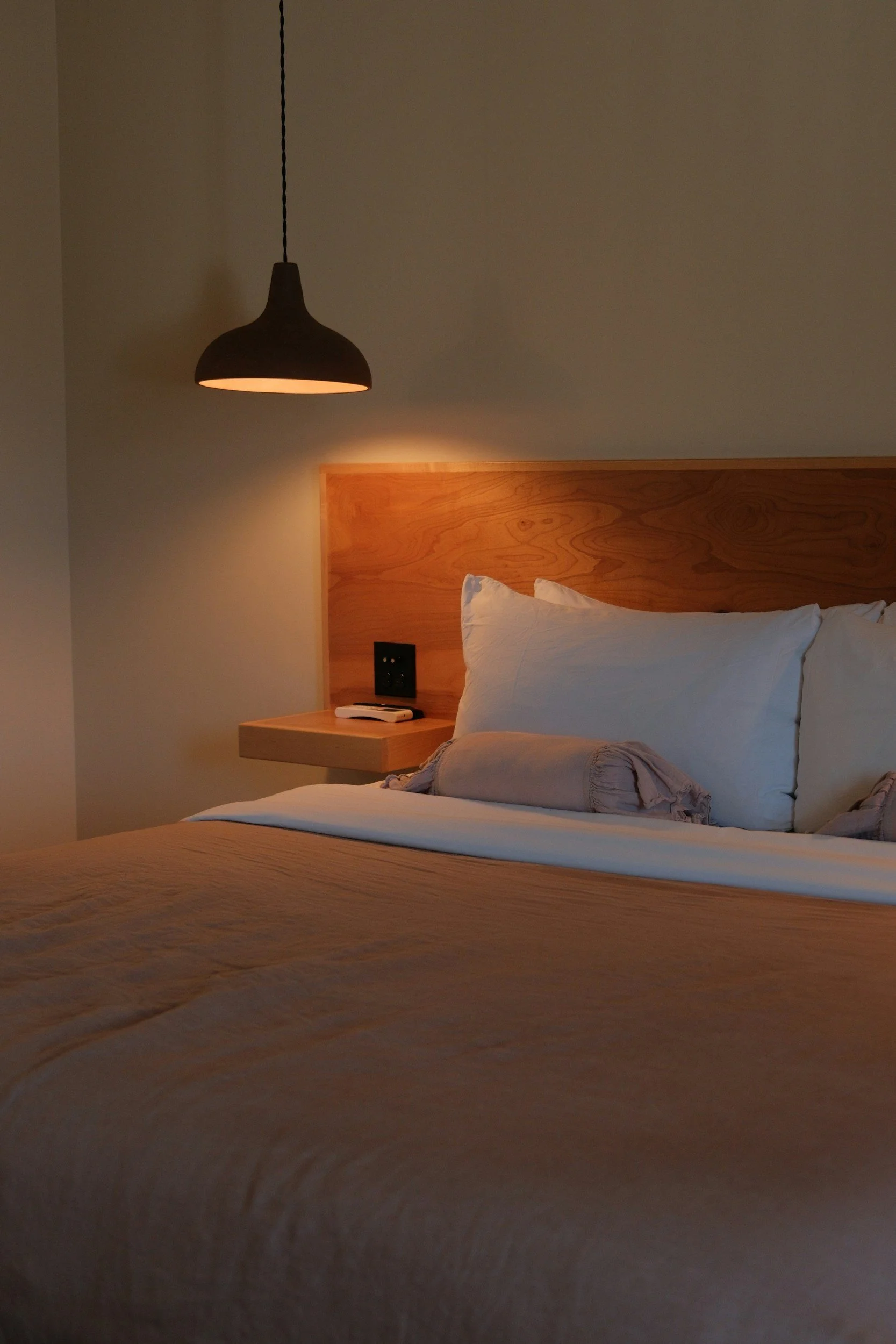
Modern pendant light, focused task illumination over a nightstand.
Subtle Drama: Accent Lighting
The final layer is accent lighting, used to highlight architectural details, sculptural textures, or fine art. Its role is one of enhancement rather than competition; it guides the eye toward the room’s intentional focal points.
Applications: Picture lights for curation, hidden uplights for texture, and structural wall sconces for subtle focus.
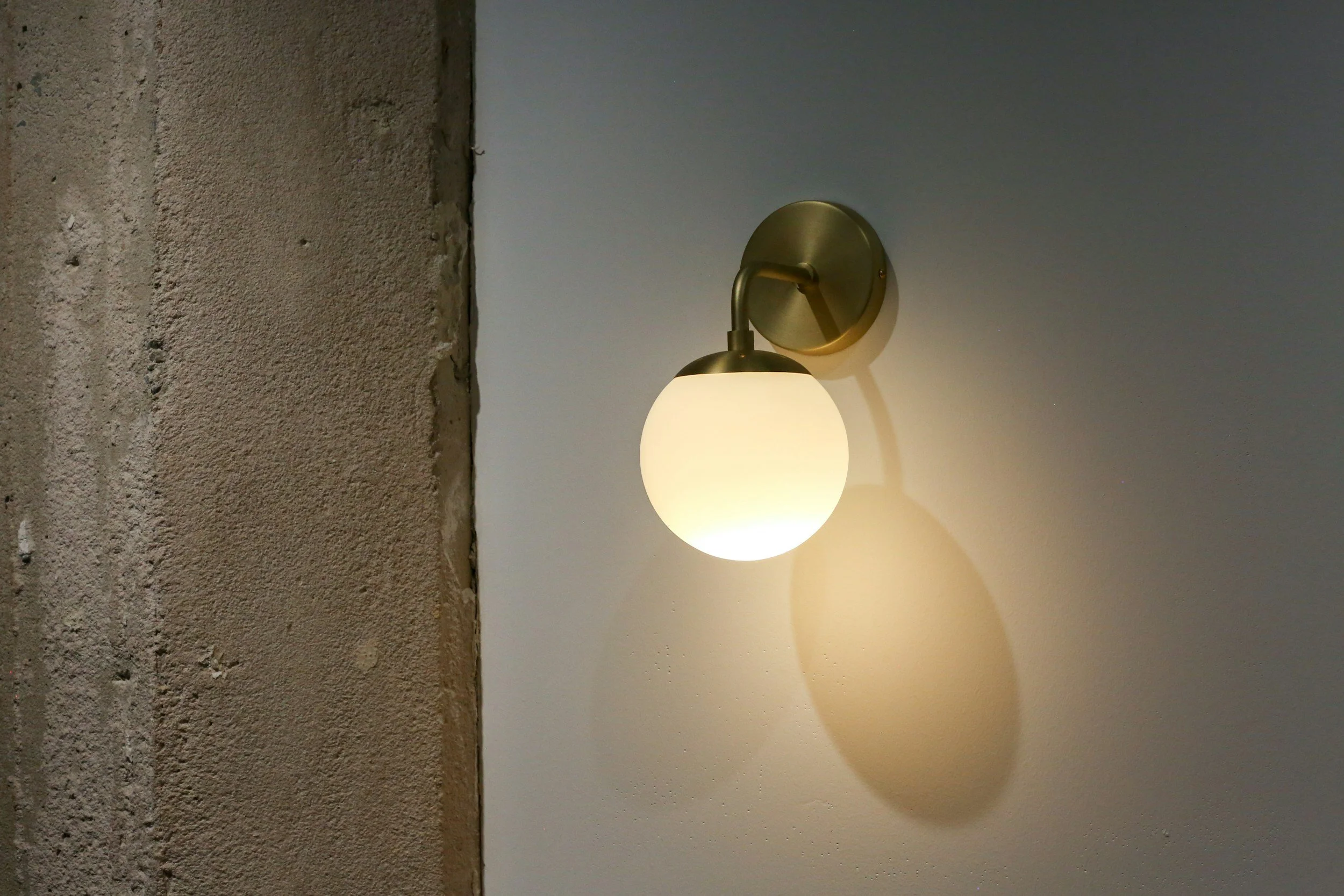
Illuminated round ball sconce providing architectural accent lighting.
The Discipline of Balance
A layered lighting scheme is successful only when it achieves harmony. A refined interior must remain comfortable yet visually dynamic. To maintain the Madison Prime standard, light temperatures must remain consistent across all layers. This consistency signals an attention to detail that separates a professionally designed space from a merely furnished one.
Conclusion
The composition of light is not a trend; it is a core principle of luxury design. By treating light as a structural element, you ensure that every zone of the home feels elevated, intentional, and timeless.
The Ritual of Care, Why Maintenance is the Ultimate Signal of Luxury
Luxury is never passive. It is a living practice. Discover why the quiet act of maintenance is the most profound expression of a refined home.
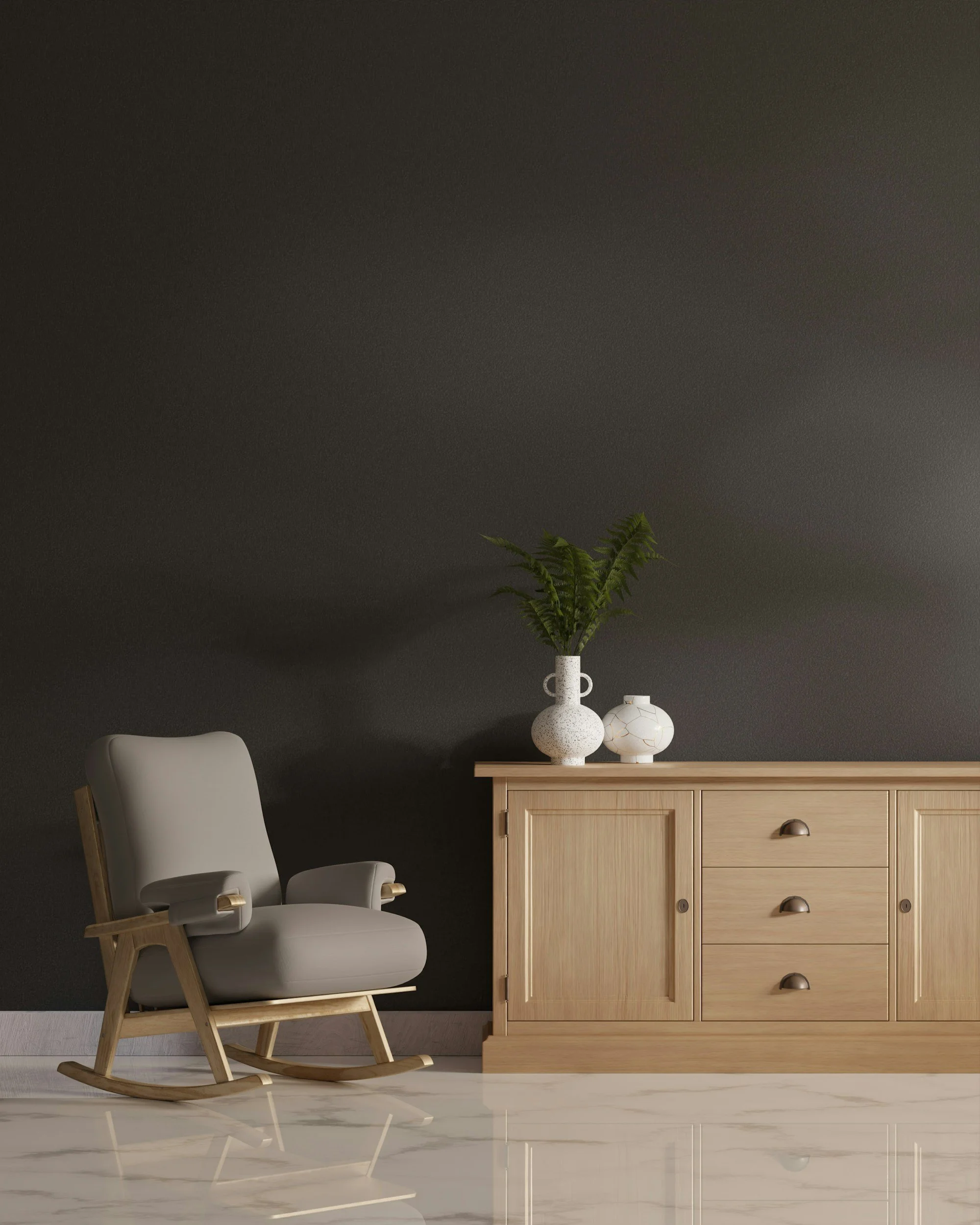
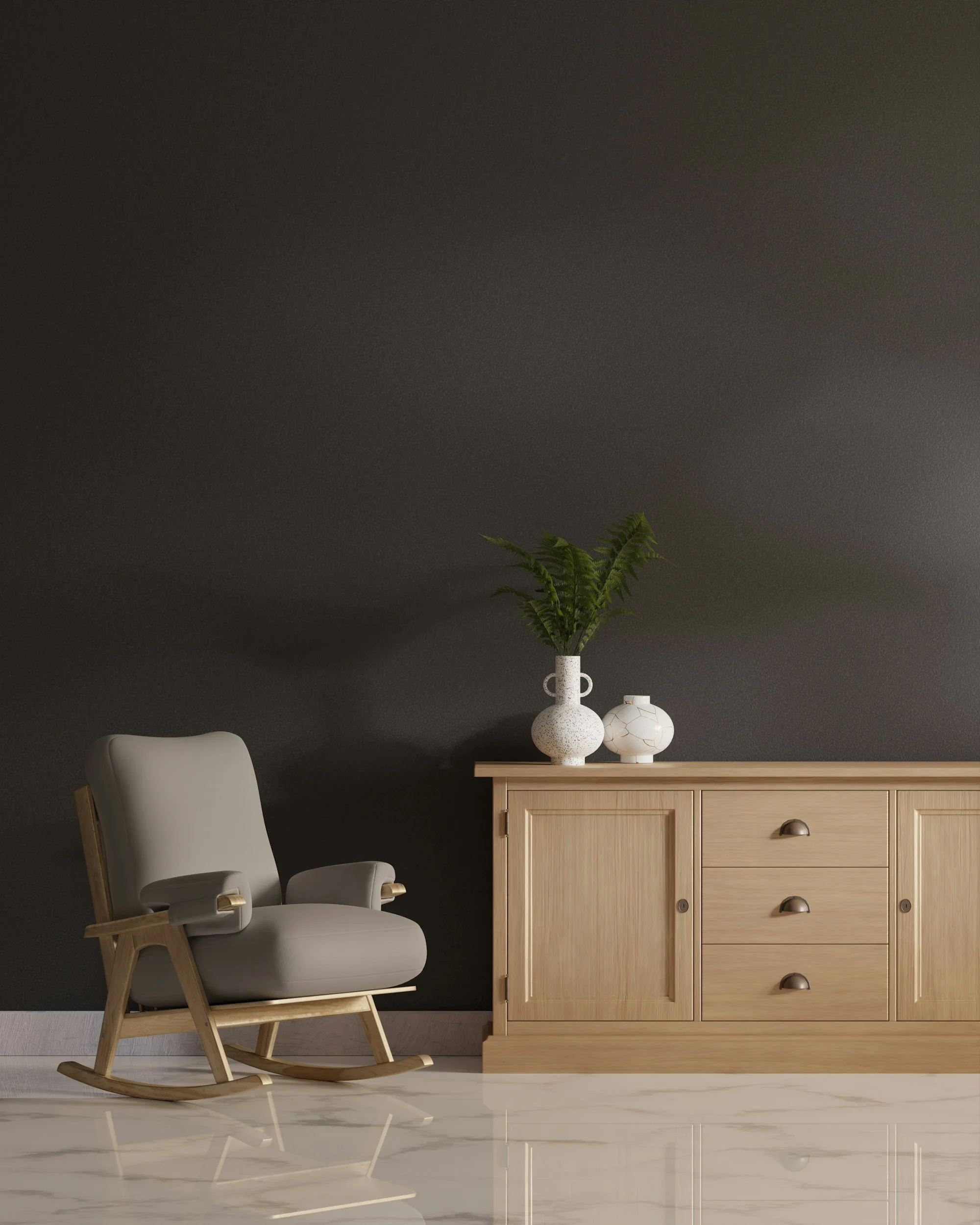
Dark wall interior, a low profile architectural rocker, light oak credenza, and marble vases.
The Intended Home is never passive, it is a living practice of stewardship. This discipline is the cornerstone of what we define in our Essential Manifesto on Decor. The most refined interiors, the finest materials, and the pieces you cherish most reveal their true value only when treated with thoughtful, consistent attention. A residence that radiates effortlessly elegant, care transcends discipline; it becomes a foundational ritual. These small acts quietly signal refinement, intention, and a lifestyle built around calm sophistication.
The Subtle Power of Daily Attention
Refinement doesn’t demand grand gestures every day. It’s the small, deliberate actions, polishing a brass lamp, fluffing pillows, straightening books, or rotating rugs, that make a home feel alive and curated. These are not disciplines, they are expressions of care. They communicate that every detail matters, and that your home is a living reflection of your style and taste.
The Madison Insight: High traffic areas require a "visual reset" to maintain the home’s sensory sanctuary. A five minute morning ritual of alignment restores the space’s calm authority before the day begins.
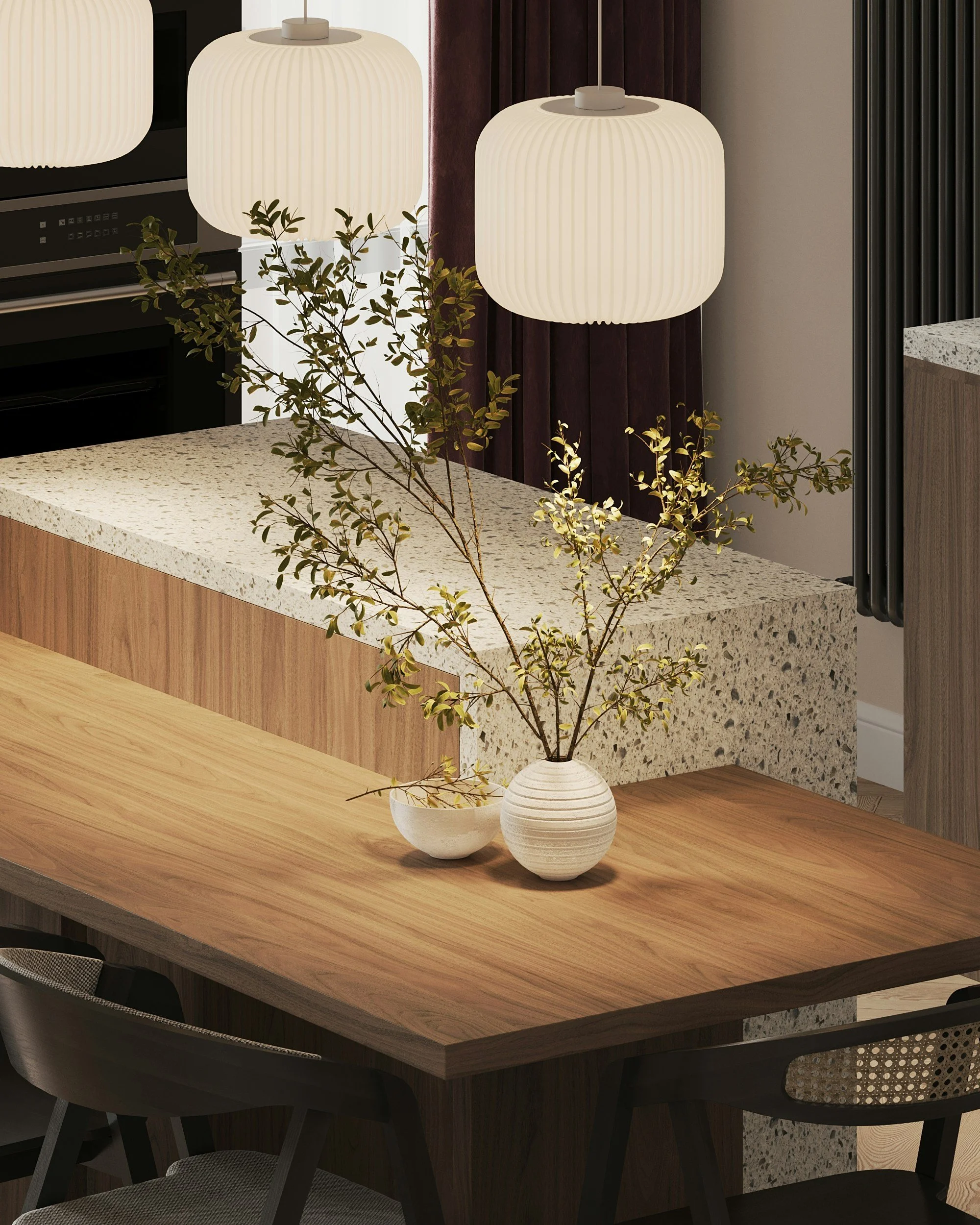
Granite kitchen island integrated with a solid wood dining table extension, mixed material transitions.
Materials Matter, Caring for What Deserves It
The materials in your home tell a story of quality and longevity. Honed marble, Belgian linen, and wild-grain walnut. are timeless, but they demand respect. Caring for them properly doesn’t just preserve beauty, it elevates the daily experience of living among these textures.
Example: A marble surface left to etch loses its narrative. But a simple ritual of wiping, sealing, and polishing preserves its timeless character and signals to everyone who enters that this home is tended with care and intention.
Rituals as a Reflection of Lifestyle
In refined interiors, maintenance isn’t an afterthought, it’s a reflection of how you live. Homes that feel curated, not collected, rely on deliberate rituals, seasonal wardrobe rotations, careful linen care, nurturing plants, and regular furniture inspections. These practices quietly communicate discernment, confidence, and attention to detail.
The Stewardship Schedule:
Daily: The surface reset to restore visual silence.
Weekly: The sensory refresh, linens, florals, and scent curation.
Seasonally: The material audit, sealing stone, rotating rugs, and textile preservation.
Beyond Objects, Caring for Atmosphere
Luxury is not merely visual; it is experiential. Lighting, scent, air quality, and even the way furniture is arranged all contribute to the mood of a space. When you tend to these details consistently, your home radiates calm authority and effortless elegance.
Insight: True permanence is felt, not announced. A well cared for home communicates refinement without saying a word.
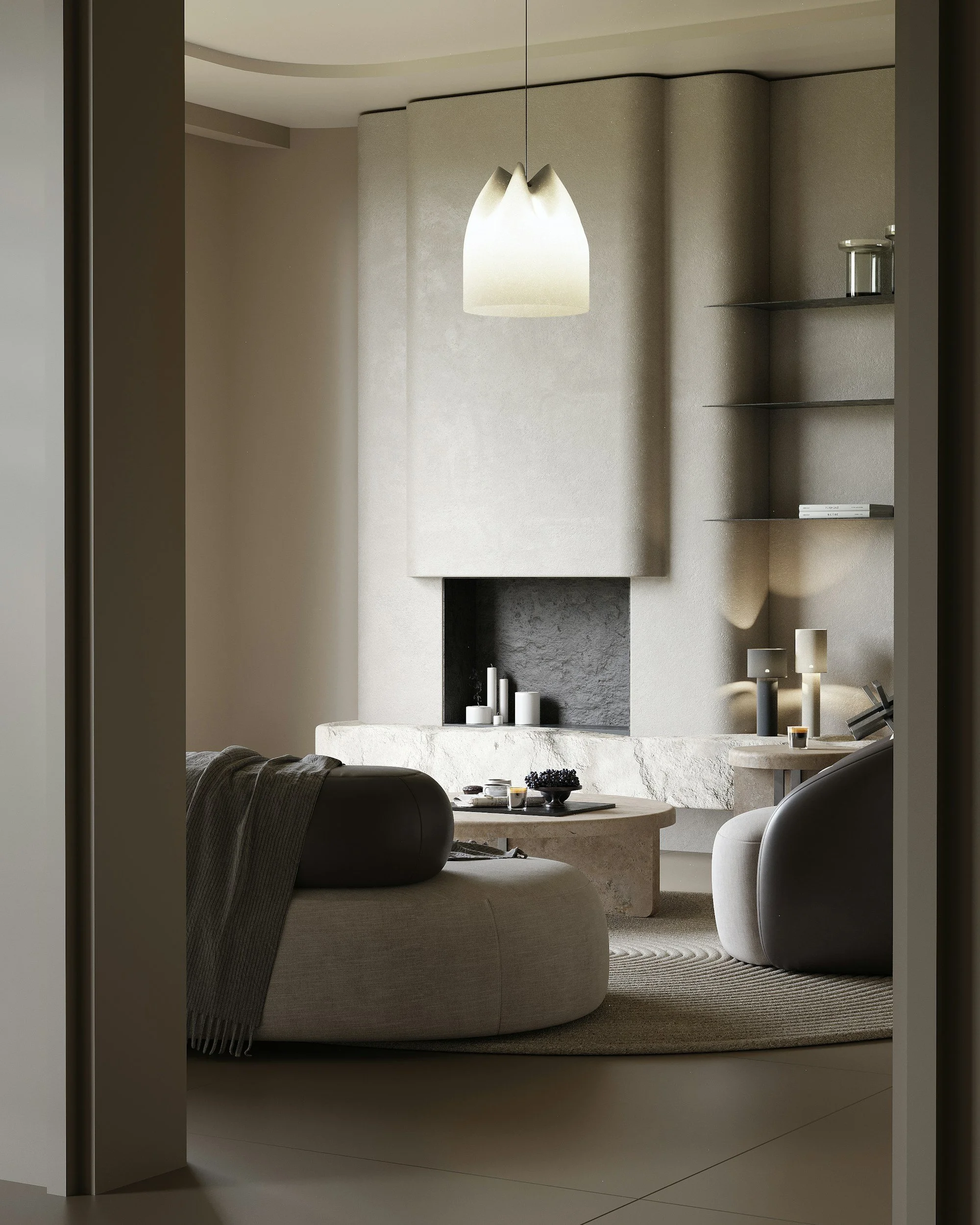
Living space featuring a marble faced fireplace, honed stone coffee and side tables, and a hand woven wool area rug.
Creating Your Own Ritual of Care
Start by observing your home. Where does it feel neglected? What small habits could make a difference? Introduce one or two micro rituals, and gradually expand them into practices that reflect your personal style. Over time, these rituals transform a house into a home that speaks volumes about intentional living.
Final Thought
True luxury is never passive. It’s in the way we live, the care we invest, and the attention we give to our spaces. By cultivating rituals of care, you curate a narrative of discernment and material integrity
The Curated Interior
There is a quiet difference between a home that is full and a home that is considered. Explore the discipline of curation, from visual language to the power of the edit.
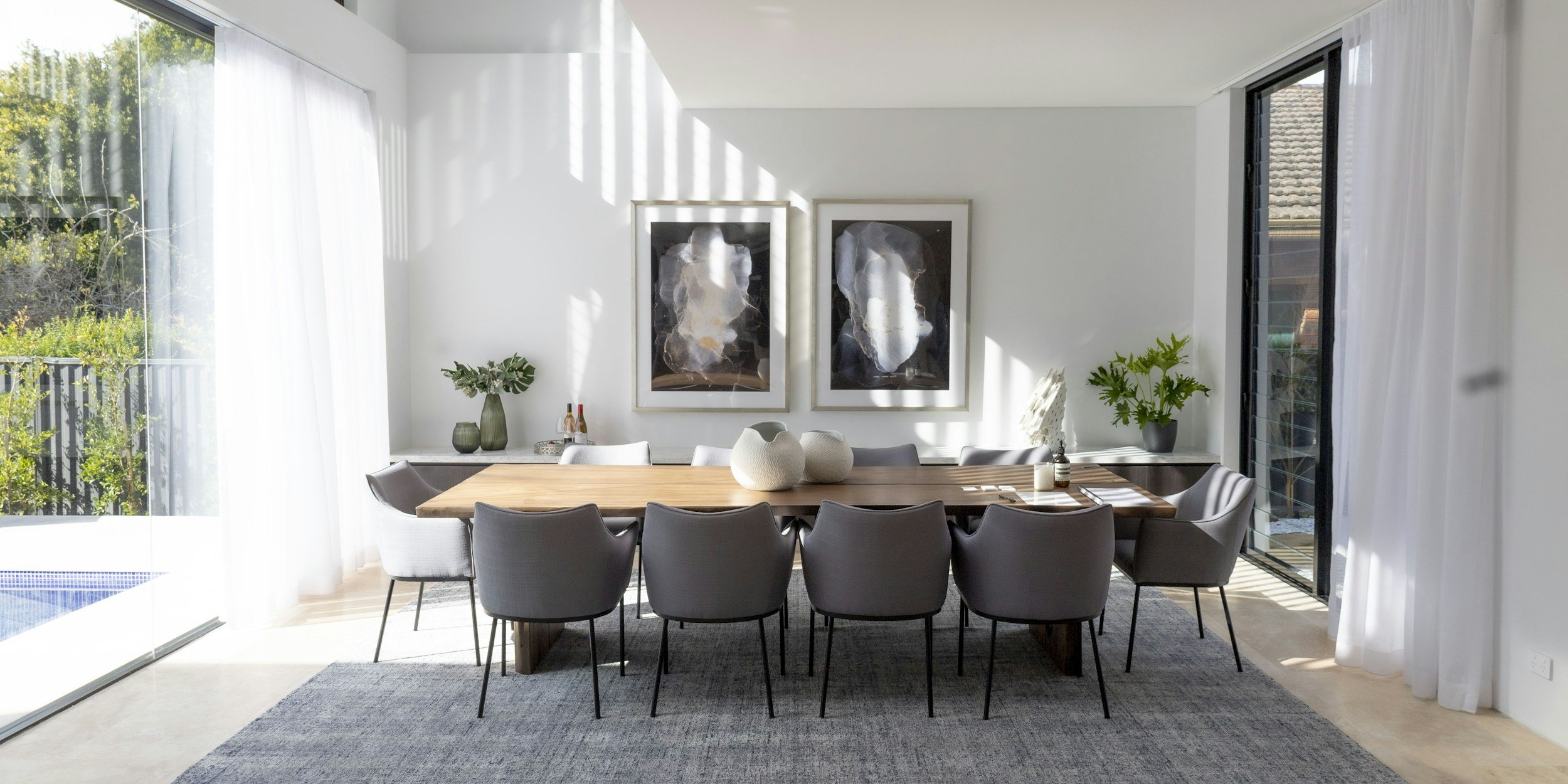
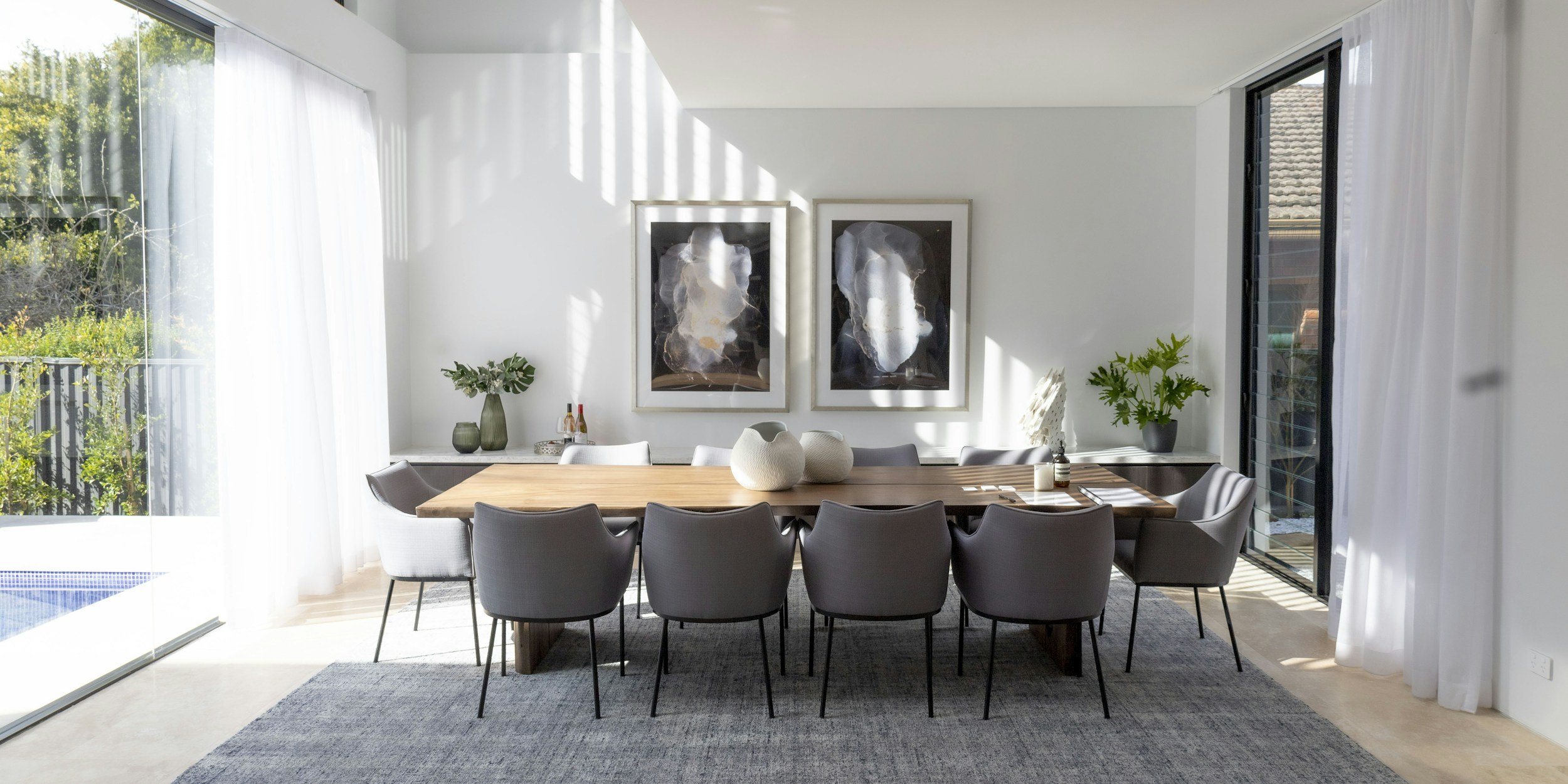
Wide shot of a completely curated room featuring a long dining table under natural sunlight, wall art, and carefully chosen interior accents.
There is a distinct, quiet difference between a home that is filled with objects and a home that is truly refined. One is busy; the other is considered. A curated interior does not rely on trends or matching sets. Instead, it reflects a sense of permanence, the understanding that every piece belongs not because it was purchased in a suite, but because it was chosen with a singular, rigorous purpose.
The Distinction: Curation vs. Collection
A collected home is built through accumulation. Items are added because they are appealing or popular in the moment. Over time, these objects compete for attention, creating visual noise.
By contrast, a curated home is shaped by restraint. It is guided by a specific point of view. Pieces are selected for how they relate to the architecture of the room and the existing materials within it. Curation is a disciplined reduction, ensuring that the Layered Textures, Strategies for Depth and Contrast found in each room work to support the architecture rather than competing with it for visual dominance.
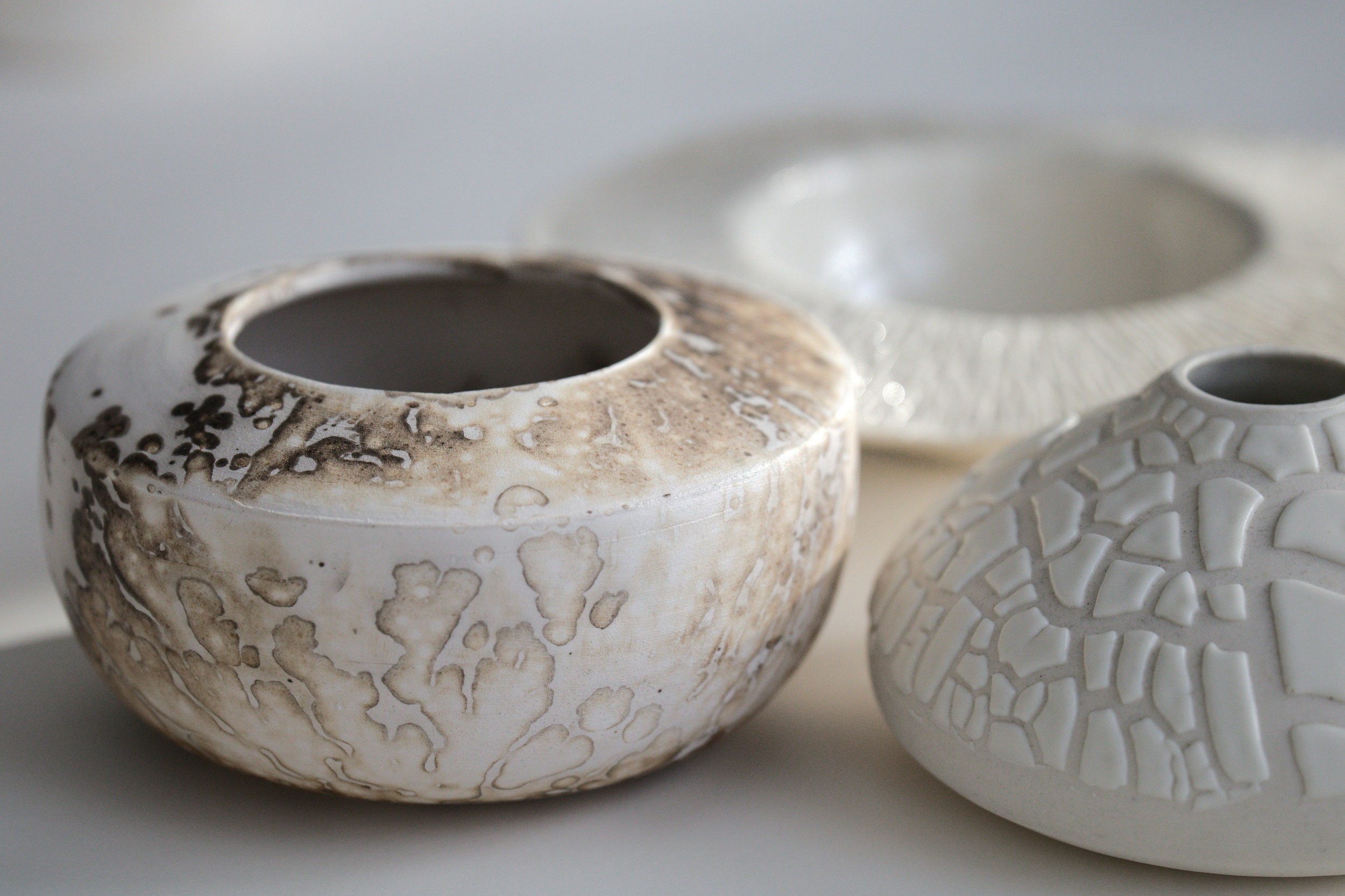
Close up of ceramic stone vessels with a heavy textured finish and architectural form.
Establishing a Visual Language
Every refined home possesses an unspoken visual language, a consistent palette, a preference for specific materiality, or a repeated sense of proportion. When this language is clear, the decision making process shifts. One no longer asks if an item is "beautiful," but whether it serves the narrative the home is telling. This throughline relies on a commitment to What Defines Luxury Home Decor? The Essential Manifesto, where the natural weight of a single walnut slab or the cool touch of a stone surface carries more authority than a room full of seasonal trends. This consistency creates a sense of calm and throughline that survives even as styles evolve.
The Discipline of the Edit
One of the most overlooked principles of luxury is the edit. Space itself is a design element. Editing allows foundational pieces to breathe and creates necessary pauses for the eye. It transforms furniture and art into focal points rather than background noise. Before introducing a new element, the curated approach dictates asking what it replaces, rather than simply where it fits.
Presence Over Volume
We favor fewer items with a stronger presence. A single sculptural lamp or a well placed, weighted chair provides more architectural confidence than a multitude of smaller accents. Luxury, in this sense, is born from selection rather than abundance.
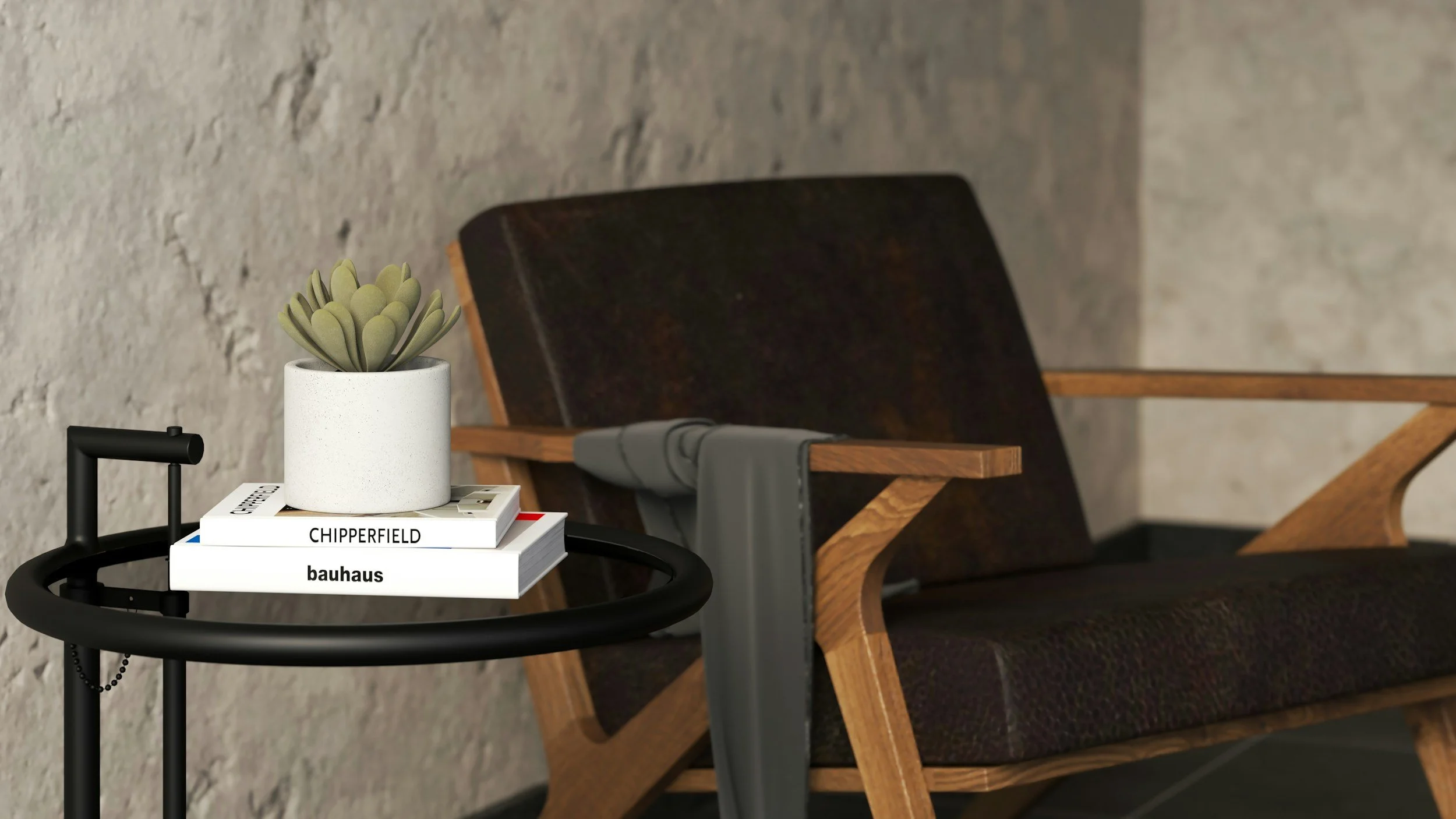
Modern wood and leather chair in a stone walled reading corner, featuring a draped throw blanket and a side table with books.
The Utility of Placement
Curation is not purely aesthetic; it is functional. A refined space feels natural because objects are placed according to the rituals of the inhabitant. This alignment of beauty and function is most evident when The Architecture of Light is integrated into the design, placing illumination exactly where it is needed, discreet, intentional, and refined. Lighting appears where tasks occur; side tables are positioned where hands naturally reach. This alignment between beauty and utility allows a home to feel elevated without feeling precious.
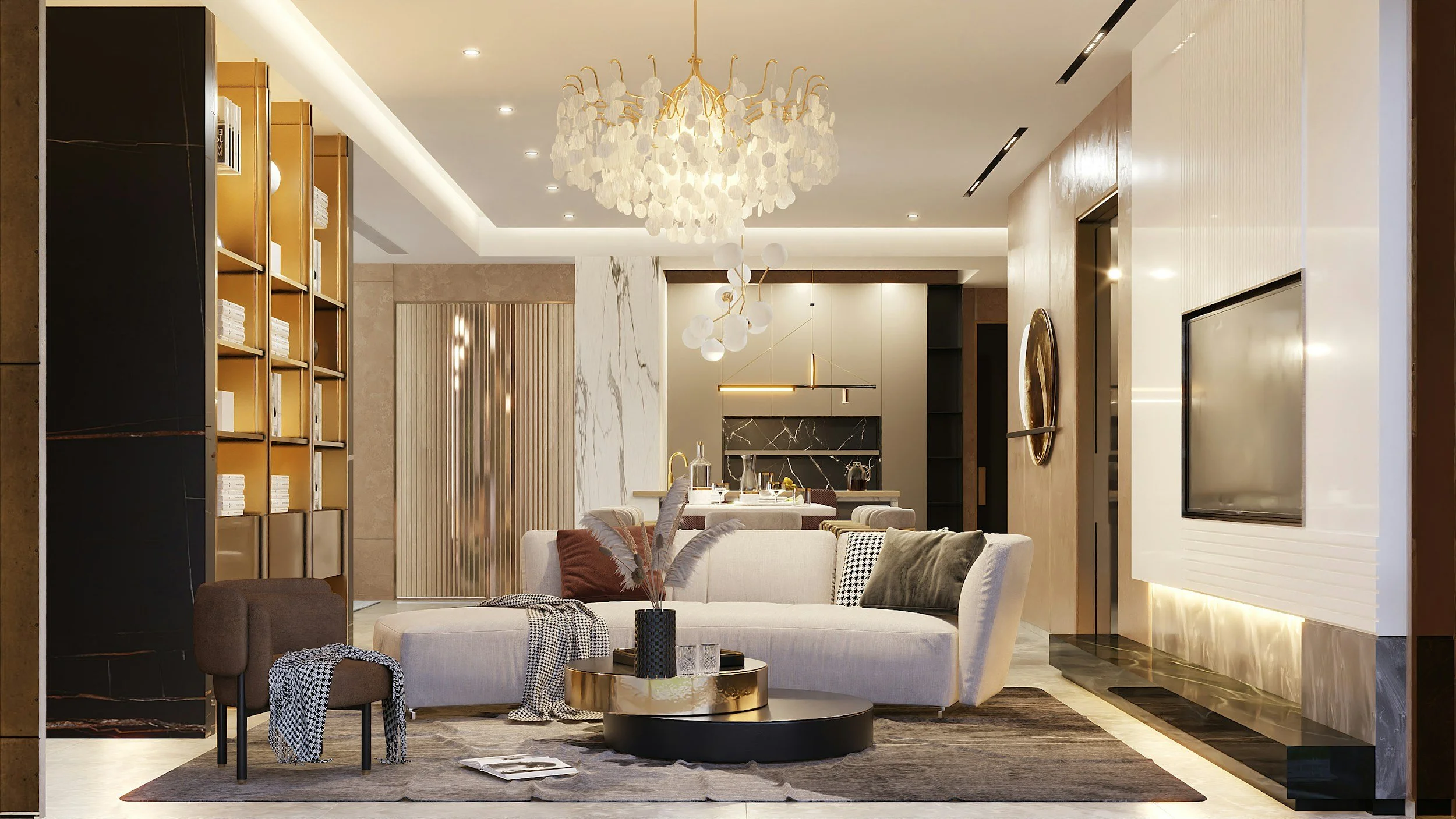
A modern, expertly curated great room that is stylish yet functional and lived in.
Conclusion
A curated home is not a static achievement, but an evolution. It is built slowly, with intention, allowing the space to feel layered and enduring. This quiet sense of alignment is, in itself, the most lasting form of luxury.
What Defines Luxury Home Decor? The Essential Manifesto.
Explore the foundation pillars of high end interiors. From the vocabulary of natural stone to the discipline of architectural curation, discover how to define luxury through materiality and intentional design.
True luxury in the home is not a pursuit of labels or exorbitant price tags. It is a commitment to Materiality, Intentionality, and Longevity. It is the art of curating a space that feels disciplined yet deeply soulful, a sanctuary where every object has earned its place. This guide outlines the pillars of a truly elevated interior.
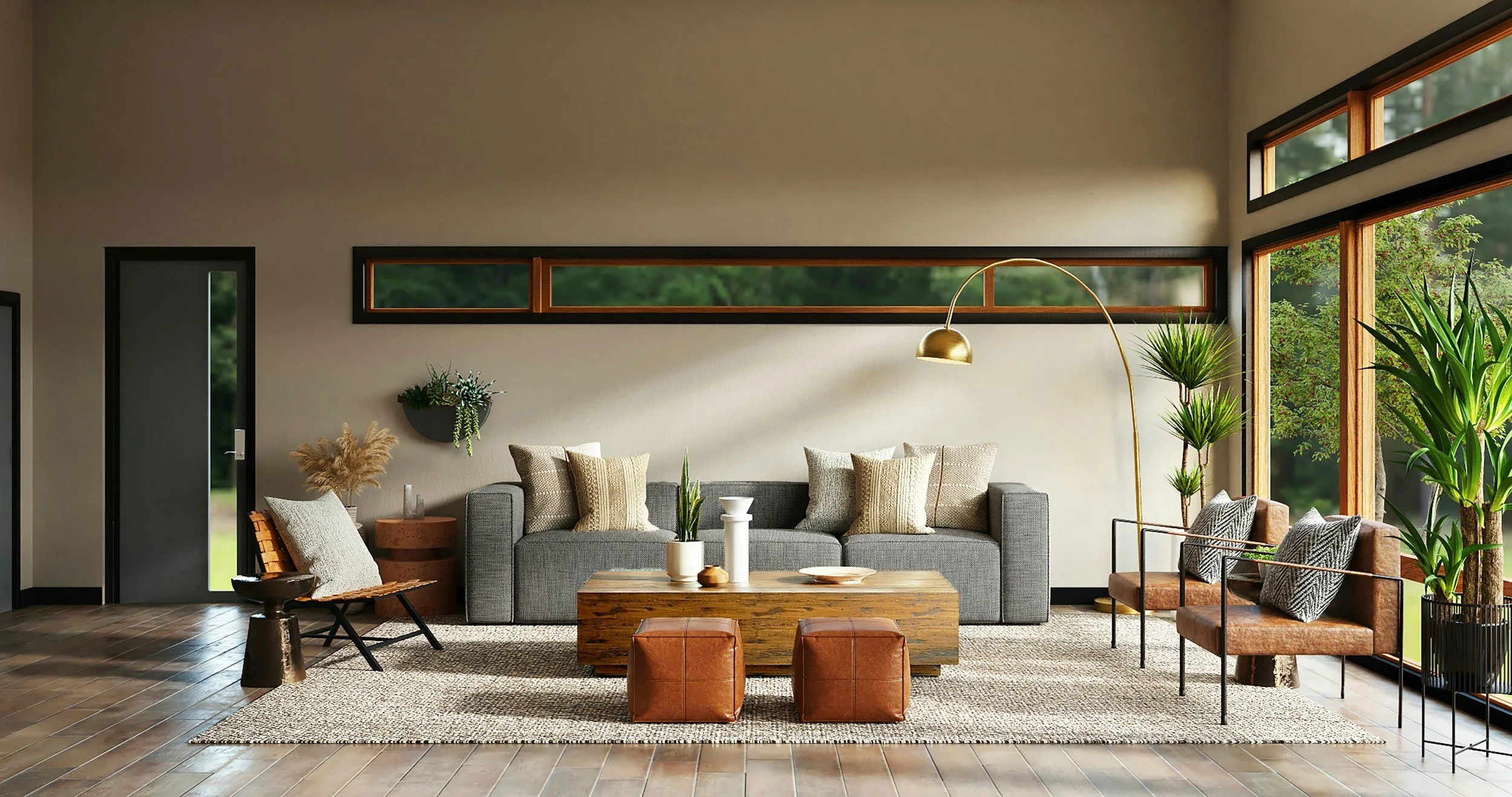
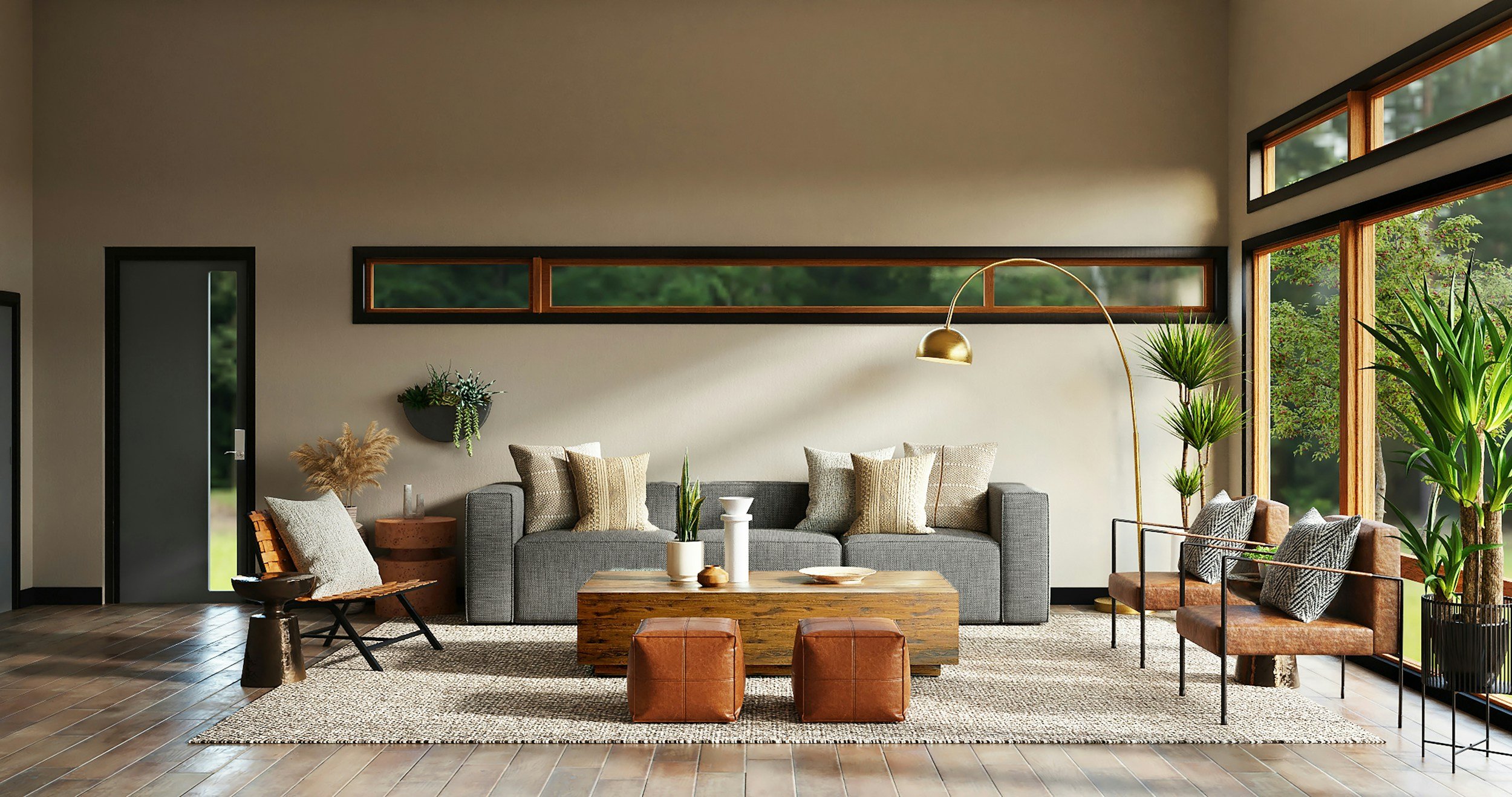
A warm, sun filled living room featuring a solid wood coffee table, textured luxury textiles on a low profile sofa, and natural light.
The Pillars of Materiality
Luxury begins with the raw elements. To achieve a sophisticated environment, one must prioritize materials that possess inherent weight and tactile richness. These are the elements that age into a patina rather than wearing out.
Architectural Woods: Walnut, white oak, and charred cedar.
The Stone Vocabulary: Veined marble, raw travertine, and honed quartz.
The Textile Edit: Heavyweight linens, architectural velvets, and hand loomed silks.
Foundational Rugs: Natural fibers like wool and jute that provide a sensory grounding to the room.
Acquiring these elements is only the first step; the longevity of your investment depends entirely on a dedicated Ritual of Care.
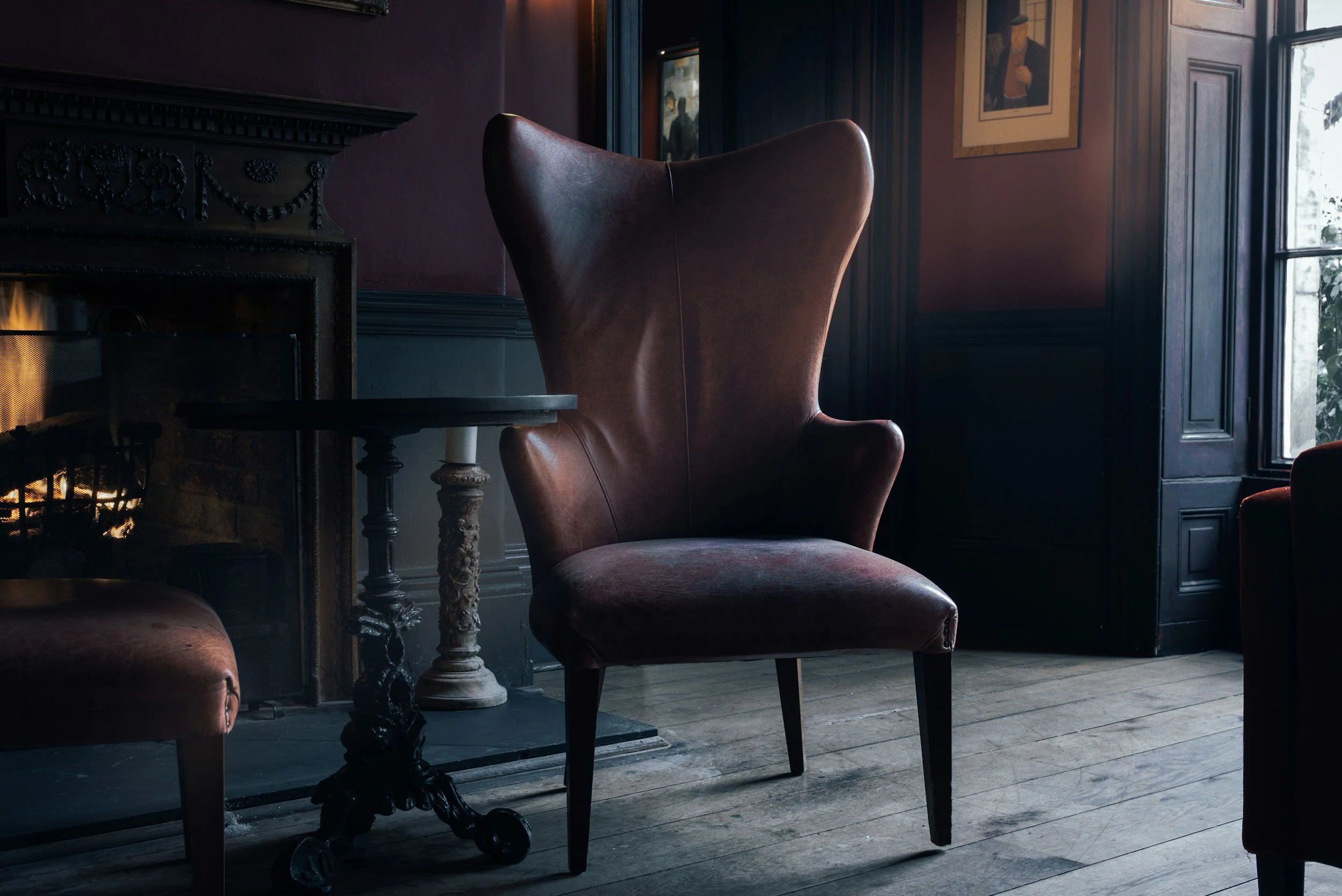
Sleek high back chair in premium top grain leather with a focus on organic texture and form.
Disciplined Craftsmanship
The hallmark of a high end interior is the invisible hand of the maker. Precision is the ultimate luxury. When a piece is crafted with mastery, the joinery is seamless, the stitching is intentional, and the finish is depth defying. It is the difference between a mass produced item and a piece of Functional Art.
The Aesthetic of Timelessness
A luxury home exists outside the cycle of "trends." It leans on enduring design movements, Modern Minimalism, Neo-Deco elegance, and Organic Modernism. These styles prioritize balance and architectural integrity over passing fads. The result is a home that feels as relevant today as it will in a decade.
Sensory Comfort
Luxury is a physical experience. A room must perform as well as it looks. True luxury means investing in ergonomic seating that supports the body, lighting that can be layered to shift the mood, and breathable, high thread count textiles that invite touch.
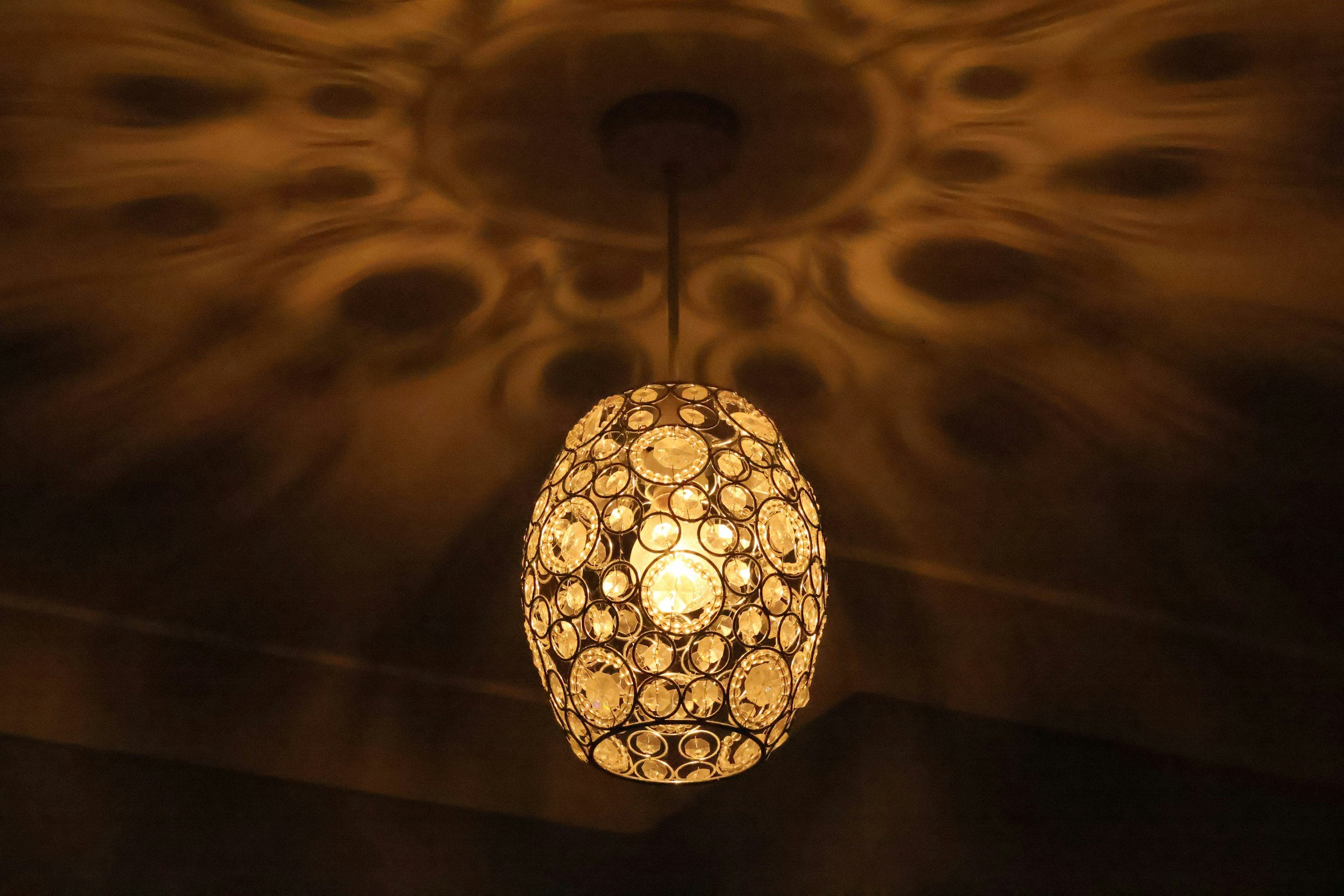
Single pendant light creating a warm, ambient glow and soft shadow play for a timeless atmosphere.
The Disciplined Palette
Color can instantly elevate a space. Luxury decor tends to use coordinated, harmonious palettes that avoid visual clutter.
Color should serve the architecture of the room, not compete with it. A luxury palette is cohesive and harmonious, utilizing warm neutrals, deep dramatic tones, and metallic accents to create a unified visual narrative.
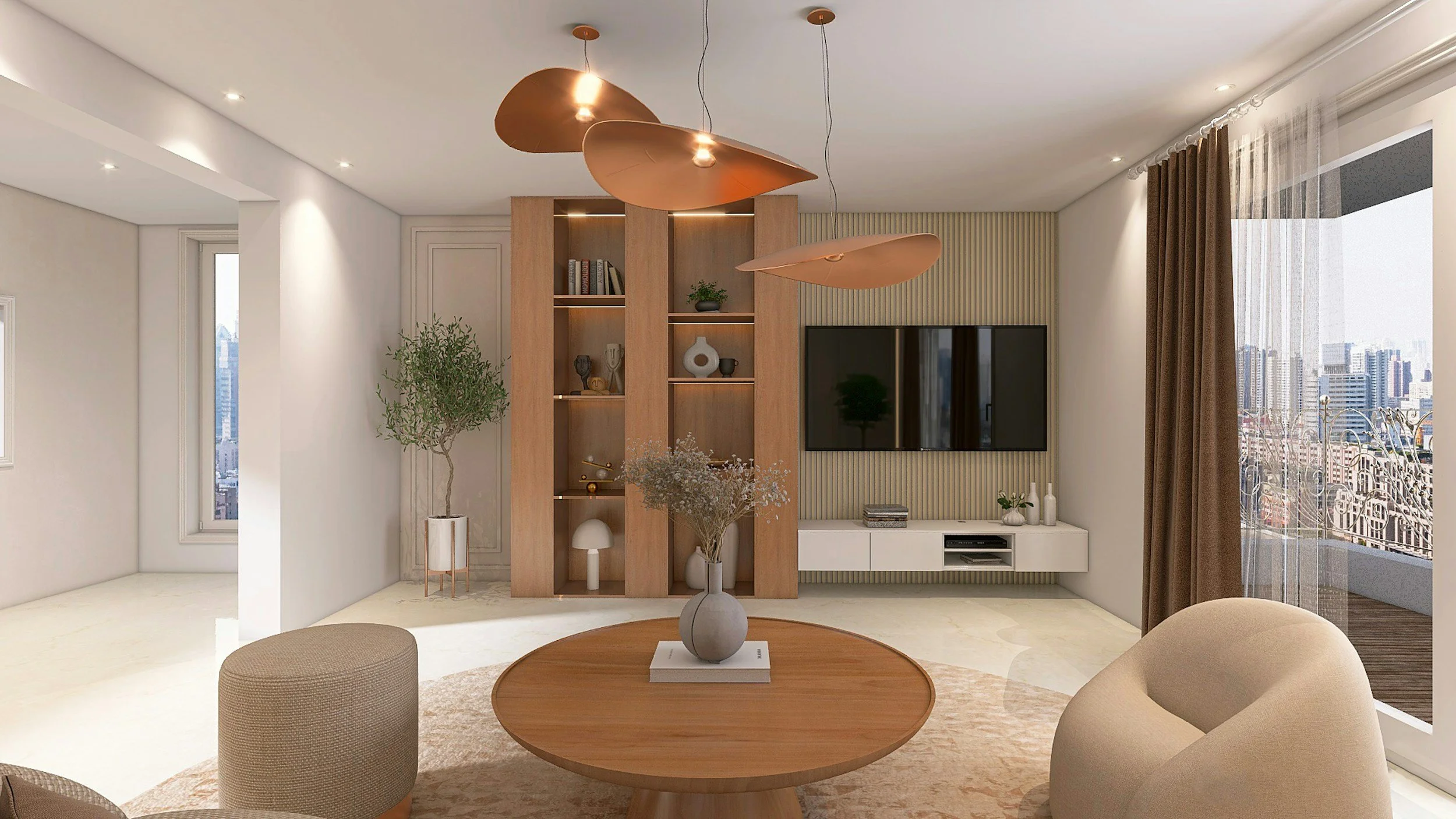
A disciplined neutral palette featuring a plush round rug and a statement ceiling light fixture.
The Power of the Statement Piece
Luxury is not about volume; it is about the Crescendo. A single, commanding object can define the entire volume of a room. Whether it is a sculptural chair, an oversized canvas, or a bespoke light fixture, these pieces act as the anchor for the home's narrative.
Note: Lighting is the most vital statement of all. Explore the transformative power of illumination in The Architecture of Light.
Curated Curation: The Human Element
The final layer of luxury is the personal history of the dweller. A high end home feels lived in and layered, achieved through a "Slow Curation", vintage finds with history, travel mementos with soul, and handmade objects that reflect a specific perspective.
Modern Technology Integrated Seamlessly
In a refined residence, technology is felt, not seen. It is the invisible orchestration of atmosphere, automated solar shading that responds to the sun's arc and lighting systems that transition with the circadian rhythm. True luxury tech is silent, seamless, and entirely subservient to the design.
The Architecture of Absence
The Architecture of Absence: Luxury is defined as much by what is missing as by what is present. By prioritizing Visual Silence, you allow the architecture to breathe. This requires a disciplined edit: choosing a singular, high integrity piece over a collection of lesser objects. A residence that radiates Calm Authority is never overcrowded; it is curated.
The Final Word
The Madison Prime Home philosophy is simple: Fewer, but better. By focusing on primary materials, architectural balance, and a disciplined edit, your environment naturally ascends. Luxury is not an addition; it is the subtraction of the unnecessary.