Wajima Lacquer Is Made Only in Wajima
Wajima lacquer is urushi, the cured sap of the lacquer tree, laid over an undercoat no other region uses. It’s a raw lacquer mixed with jinoko, a powder of baked diatomaceous earth from Mount Komine, near the city of Wajima on Japan’s Noto Peninsula. That undercoat is what sets it apart from other Japanese lacquer. Japan named Wajima lacquer a traditional craft in 1975, and in 1977 its technique became an Important Intangible Cultural Property. The rules behind those titles also tie the work to the city itself, which matters to anyone commissioning it now.
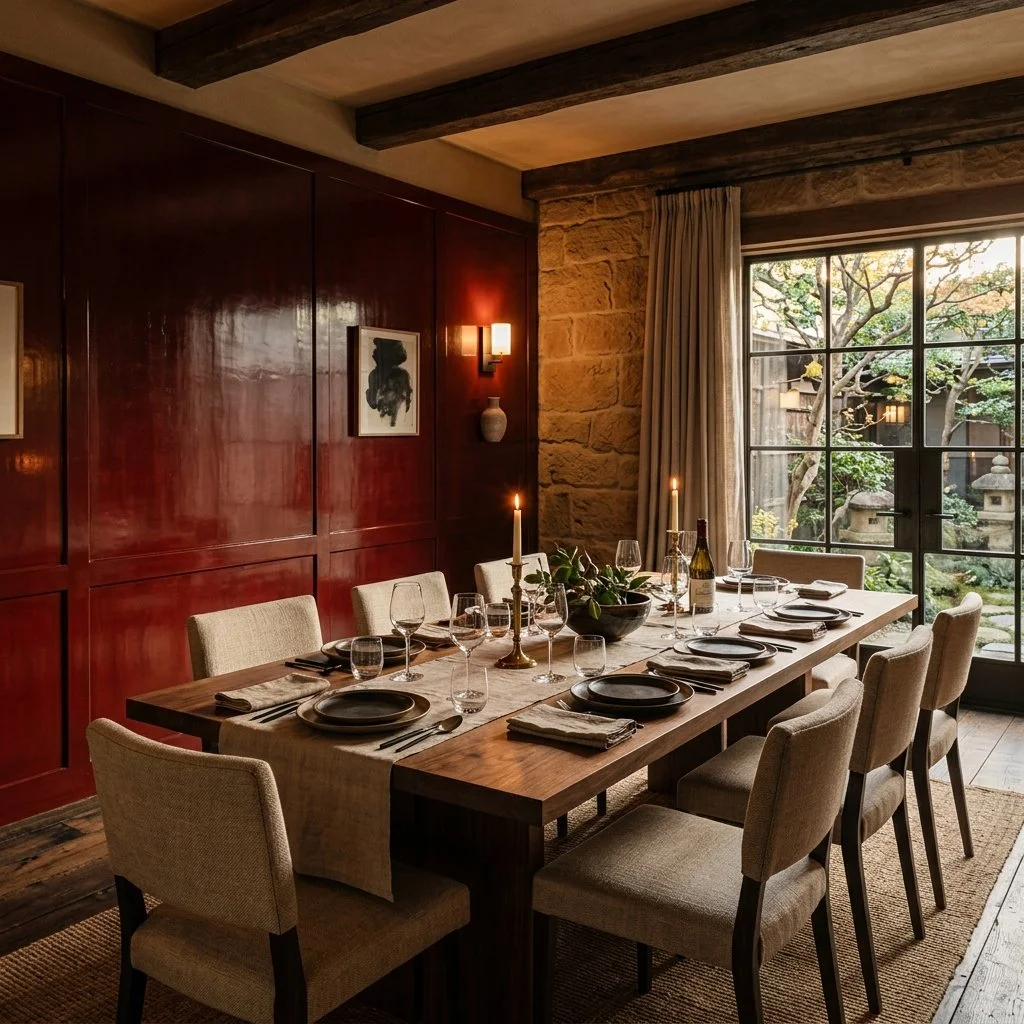
A restored townhouse dining room with one wall of deep red brown lacquered panels in low evening light.
What Goes Under the Gloss
Fragile edges get cloth before they get color. In a step called nuno-kise, the lacquerer pastes cloth over rims and other parts likely to chip with a mix of raw lacquer and rice paste. Base coats of lacquer and jinoko follow. Each is rubbed on and polished back, three rounds in all, with a finer grade of powder every time. One Wajima lacquer house credits the powder with insulating well and bonding with the lacquer into a strong film.
The standard is specific about materials. A Ministry of Economy, Trade and Industry journal article lists the traditional craft requirements. Two of them are natural lacquer only and a wood base of species such as hiba and keyaki, the Japanese name for zelkova. The Wajima name is also a regional trademark held by the Wajima Lacquerware Cooperative, and it covers goods lacquered inside the city’s boundaries as they stood before a 2006 merger. Its list of goods includes tables and folding screens, but I did not find wall panels on it.
Natural Lacquer Is Not Always Japanese Lacquer
The standard asks for natural lacquer, not lacquer grown in Japan, and the gap between the two is large. News On Japan reported in November 2025 that about 93 percent of the lacquer distributed in Japan was imported from China. Domestic output in 2024 came to 1.8 tons, short of the roughly 2.2 tons a year that restoring the country’s cultural properties requires. A Wajima retailer writes that much of the limited Japanese supply is used in Wajima, and that some lacquer house owners have planted their own trees. When a piece is quoted, I would ask which sap went into the top coats.
Does Urushi Fade in Sunlight?
Urushi does not dry the way paint does. It hardens through oxidative polymerization when thin coats are held at high humidity and a moderate temperature. One Wajima workshop cures its pieces in a closed, humid cabinet called a furo. Once cured, it is tough enough that inns and restaurants have used Wajima ware since the Meiji era.
Light is its weakness. A 2023 study in the Journal of Wood Science notes that both ultraviolet and visible light break urushi down, so its color fades and its gloss dulls. The Denver Art Museum advises keeping lacquer out of direct sun and filtering ultraviolet at the window. For a lacquered wall or door, that decides placement before finish, keep it out of the sun’s path, or specify glass that blocks ultraviolet.
One House Runs Each Commission
Wajima has always split the work. More than 100 steps are shared among specialists, and the wood base and the lacquer coats usually come from different hands. The nushiya, the lacquer house that sells the work, acts as project manager. It takes the client’s brief and hands each stage to a craftsperson, so a designer deals with one house, not a dozen workshops.
Some houses already build at room scale. Wajima Kirimoto, which began as a lacquerware business in the late Edo period, has taken on architectural interior projects and named custom lacquer furniture and interiors as its near-term goals. A feature on the workshop described its Tokyo office with lacquered walls and doors. To the nushiya and woodworkers reading this, if your workshop takes lacquered walls or furniture for clients outside Japan, I would like to hear from you.
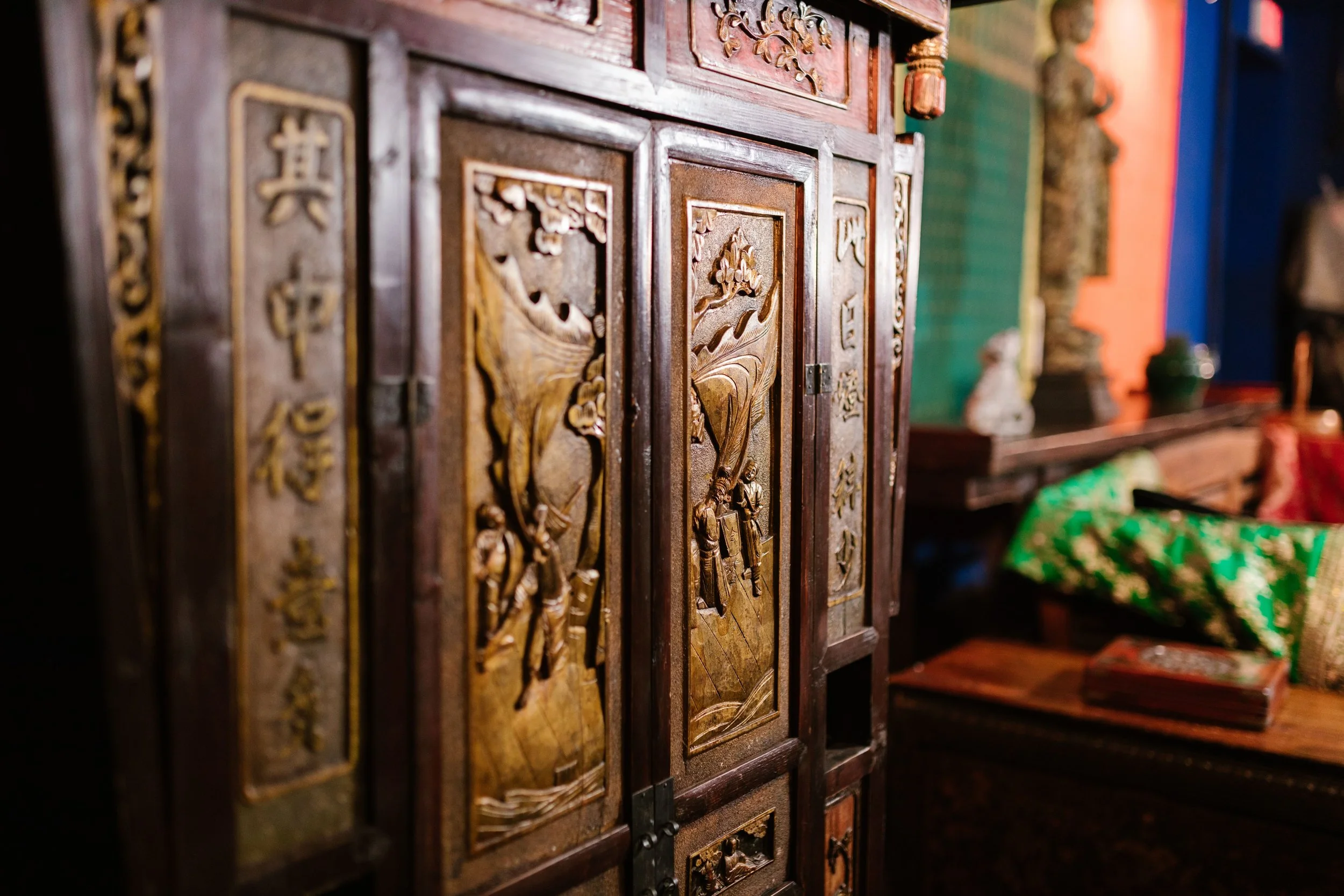
A piece of lacquered furniture in a Japanese room.
Why the Work Could Not Move
The trade was shrinking before the ground shook. Wajima lacquer production was worth about 2.4 billion yen in 2022, down more than 80 percent from its 1991 peak, according to the Sankei Shimbun. By October 2026 fewer than 1,000 people worked in it, down from nearly 3,000. The January 1, 2024 earthquake on the Noto Peninsula stopped production completely for a time.
In July 2026, a cooperative representative told Kyodo News that capacity had returned to only about 60 to 70 percent of its level before the earthquake, because some craftspeople had closed their shops or had not come back. With each stage in different hands, a single stage that does not recover slows the whole chain. A manufacturer could move to another town after a disaster, but the traditional craft designation requires the work to be done in Wajima, and anything made elsewhere cannot use the name. The rule that protects the craft is the same rule that kept it from relocating.
A Wajima Order Starts at the Cooperative
A Wajima commission pays for what a photograph cannot show, the cloth at the edges and the earth under the color. The Wajima Lacquerware Cooperative, which holds the trademark, is the first call for finding a nushiya that takes walls or furniture. Every order placed through it goes to craftspeople working in the one city allowed to make it, at a time when the trade is trying to keep them there.