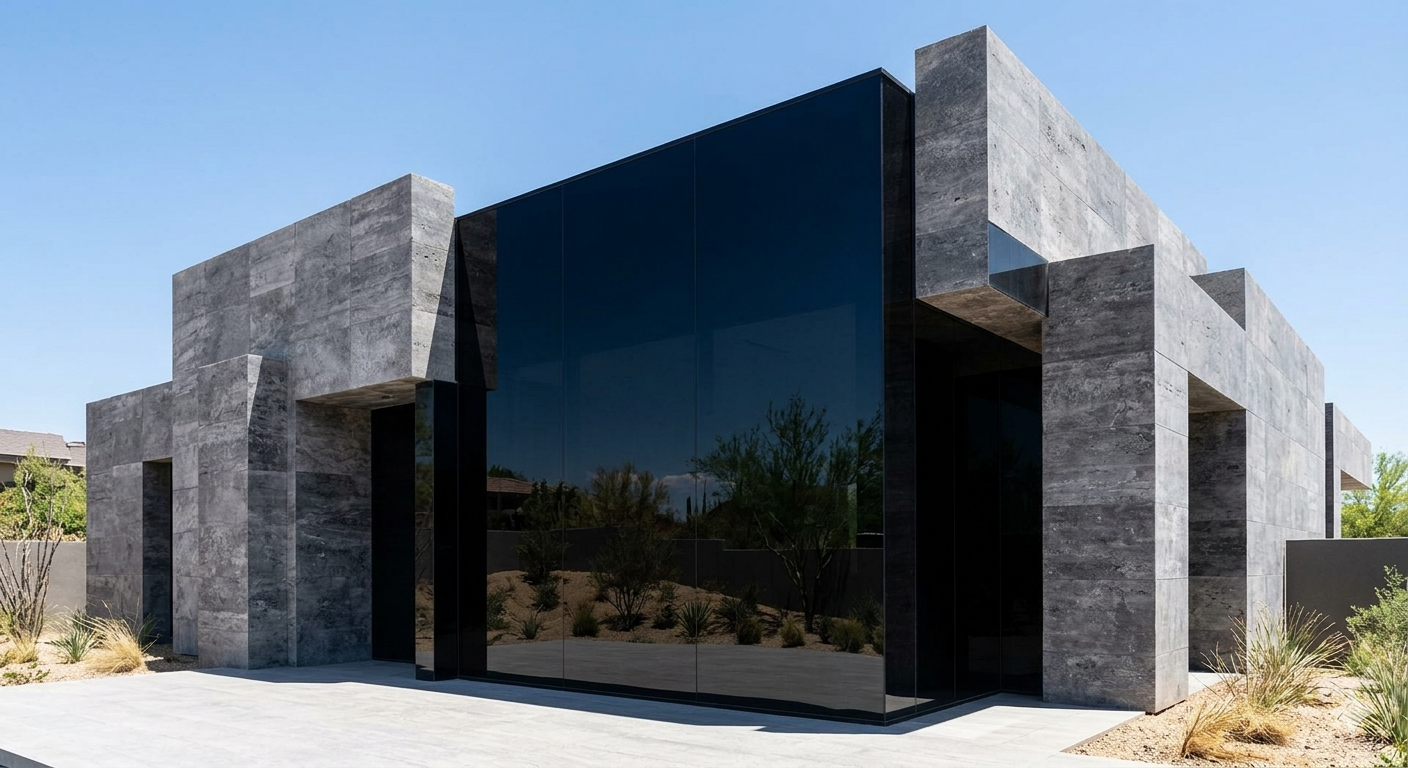
The Glass That Doesn't Want to Disappear
Most homes treat glass like a void. We treat it like a material. Discover the power of 'Obsidian Light' and why the right glass should feel like a protective lens, not a fishbowl.
Most glass walls sold as luxury do the one thing you actually don't want. They disappear completely, and a house built entirely on disappearing walls stops feeling like a house and starts feeling like a display case. I want glass that holds its ground. Dark enough to read as a material of its own. Engineered so well you forget it's filtering anything at all. I think of the good version of this as obsidian glass, heavy enough to read as stone, still unmistakably glass.
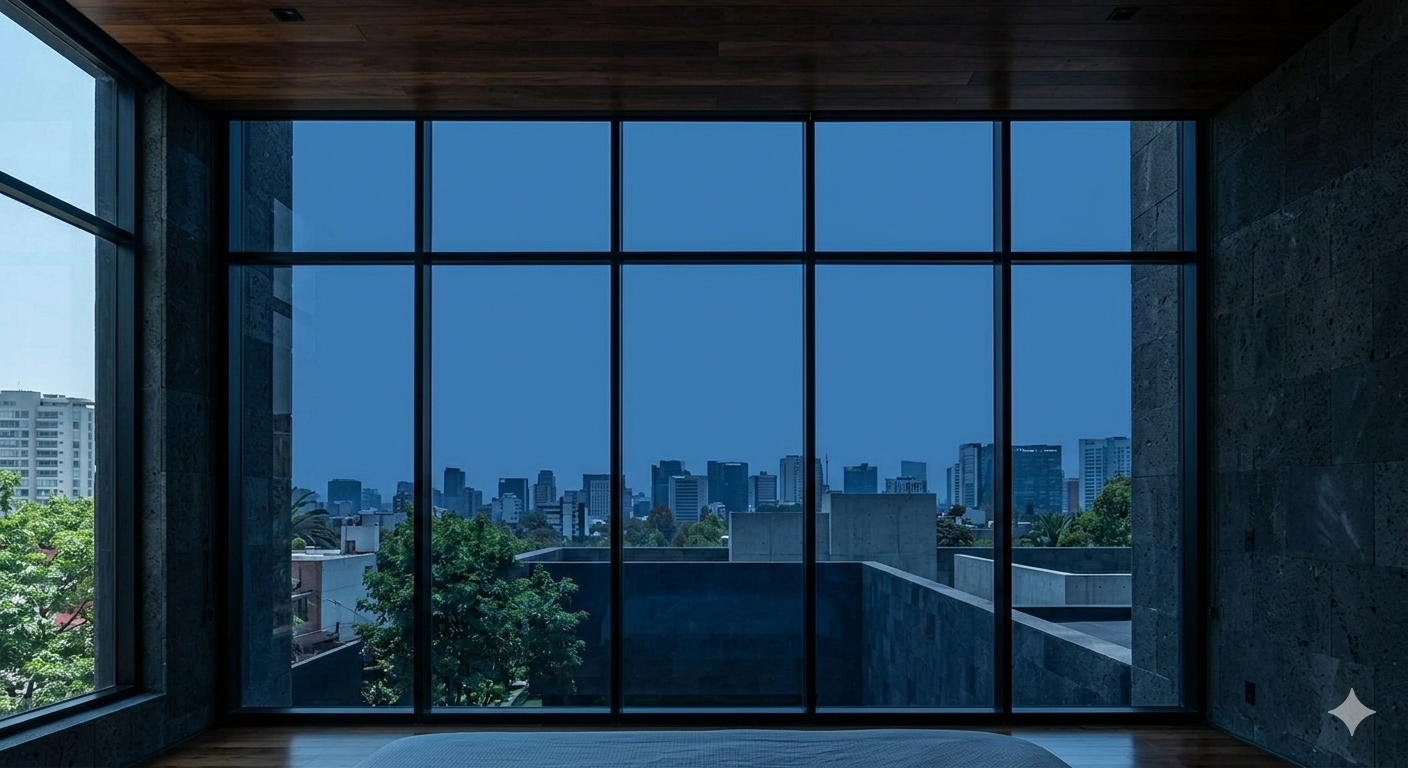
Obsidian Glass lens over the Polanco skyline.
What Clear Glass Actually Costs You
Ordinary clear glass lets through close to ninety percent of visible light and stops very little of the sun's ultraviolet. That's a fine trade in a climate with real winters and a low, forgiving sun. It's a slower problem somewhere the sun is a constant, aggressive presence for most of the year. Walnut floors bleach unevenly along the sightline of a window. Limestone gets warm enough underfoot by early afternoon that you notice it. And once the lights are on inside at night, clear glass turns into a mirror that shows you your own living room instead of the view you paid for.
Dark glass that keeps its color honest solves several of these problems with the same piece of material. It can cut visible light transmittance dramatically, in some cases below ten percent. It also blocks most of the ultraviolet radiation actually responsible for fading fabric and wood, not the visible light itself. The heat drops along with it. I've stood against a wall of this glass at noon and felt almost nothing come through.
A Lens, Not Just a Tint
The failure mode with dark glass is a cheap tint, the kind that turns everything on the other side of it blue or bronze. Oak looks cold. White walls read faintly green. It stops being a window and starts being a color filter you have to mentally correct for.
Real architectural glass solves this with coatings engineered specifically to stay neutral, gray or charcoal formulations built so a white wall still reads bone white and a plank of oak still reads warm, seen through several inches of very dark glass. The industry term for it is solar control low-E glass, and the good versions are labeled neutral reflective rather than just tinted. Color goes through intact. Only the glare and the heat get filtered out.
Built to Look Solid From the Street
From the outside, this glass shouldn't read as a hole punched in a wall. It should read as a dark, continuous plane, close in visual weight to the stone beside it. Architects get this partly by pairing the actual windows with opaque glass panels of matching color over the structural floor lines and mechanical gaps, so the whole facade reads as one uninterrupted surface instead of glass here, wall there. It's a real technique with a real name, spandrel glass, and getting the match right is harder than it sounds since transparent and opaque glass reflect light differently in different weather. Done well, the house looks carved from one piece of dark rock rather than assembled from parts.
That solidity buys you something practical too. During the day, with the light balance working in your favor, nobody on the street can see in. You get the privacy of a solid wall with the specific pleasure of a window.
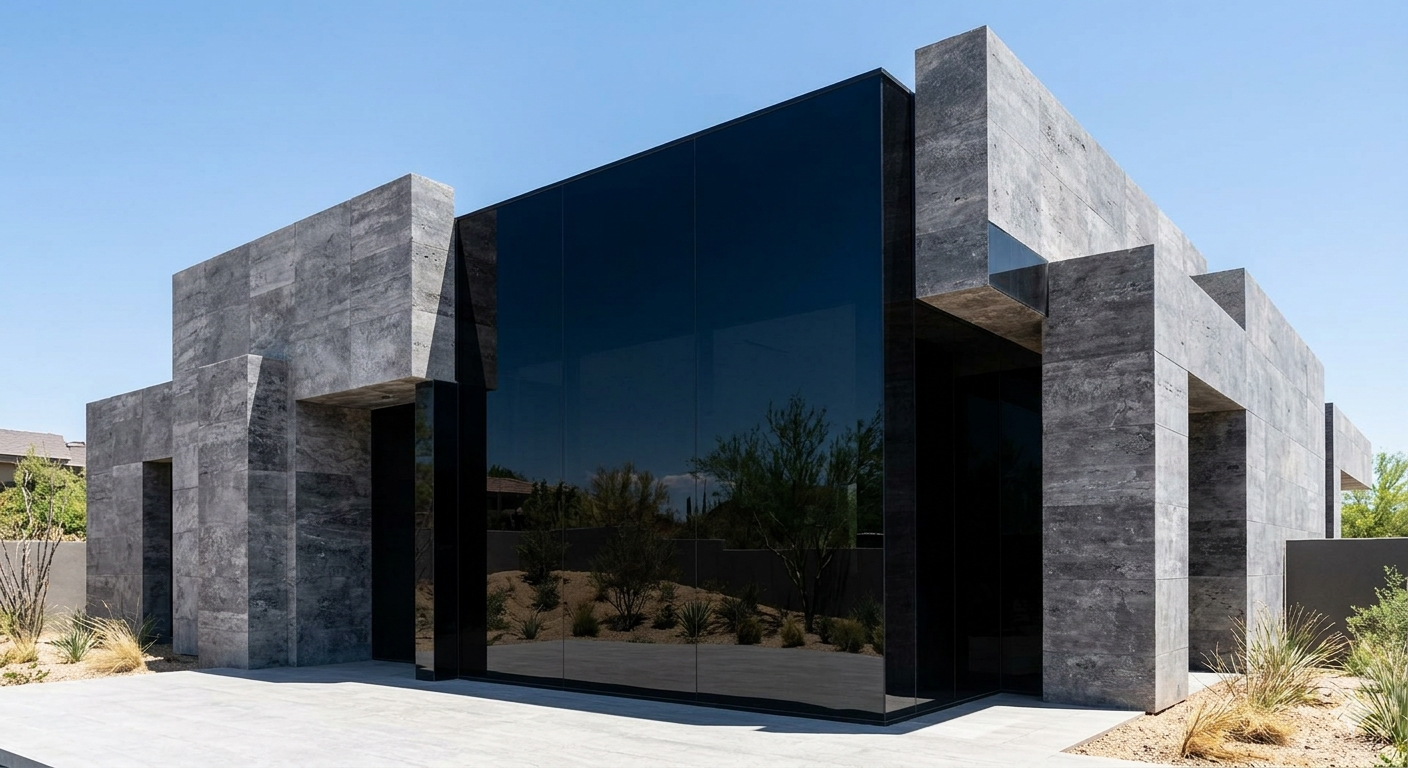
Massive, dark "slab" of obsidian glass reflecting the street side landscape.
Frames That Get Out of the Way
None of this works if the frame fights the glass for attention. A wall this dark and this heavy needs a structural system, not a hardware store window kit. The better structural glazing systems now bond the glass in rather than resting it in a groove, which lets the glass itself carry part of the load. That's how the best of them get vertical sightlines down to a couple of millimeters instead of a couple of inches.
Steel or aluminum in a matte black finish, kept as slim as the glazing system allows, disappears into the shadow line of the wall. You look at the window and see the view. I'd rather deal with a harder installation now than live for twenty years with a frame that competes with what it's supposed to be showing you.
You Choose What Gets Through
Glass doesn't have to be invisible to be good. Dark, honestly colored glass in a frame that gets out of the way is a decision about exactly how much of the outside world you want in the room at any given hour, made on your behalf so you never have to think about it again. That's a higher bar than a window that lets everything through just because it can.