How to Build a Glass Wine Room
A glass wine room is a refrigerated room for aging wine with at least one wall of glass, and it has to hold the conditions of a cave inside a warm house. Wine Spectator puts those conditions at about 55°F and around 70 percent humidity, and it ranks a steady temperature above everything else. Glass makes both numbers harder to hold. The room only works when the glass and the walls around it are designed together with the cooling, before anyone picks a rack.
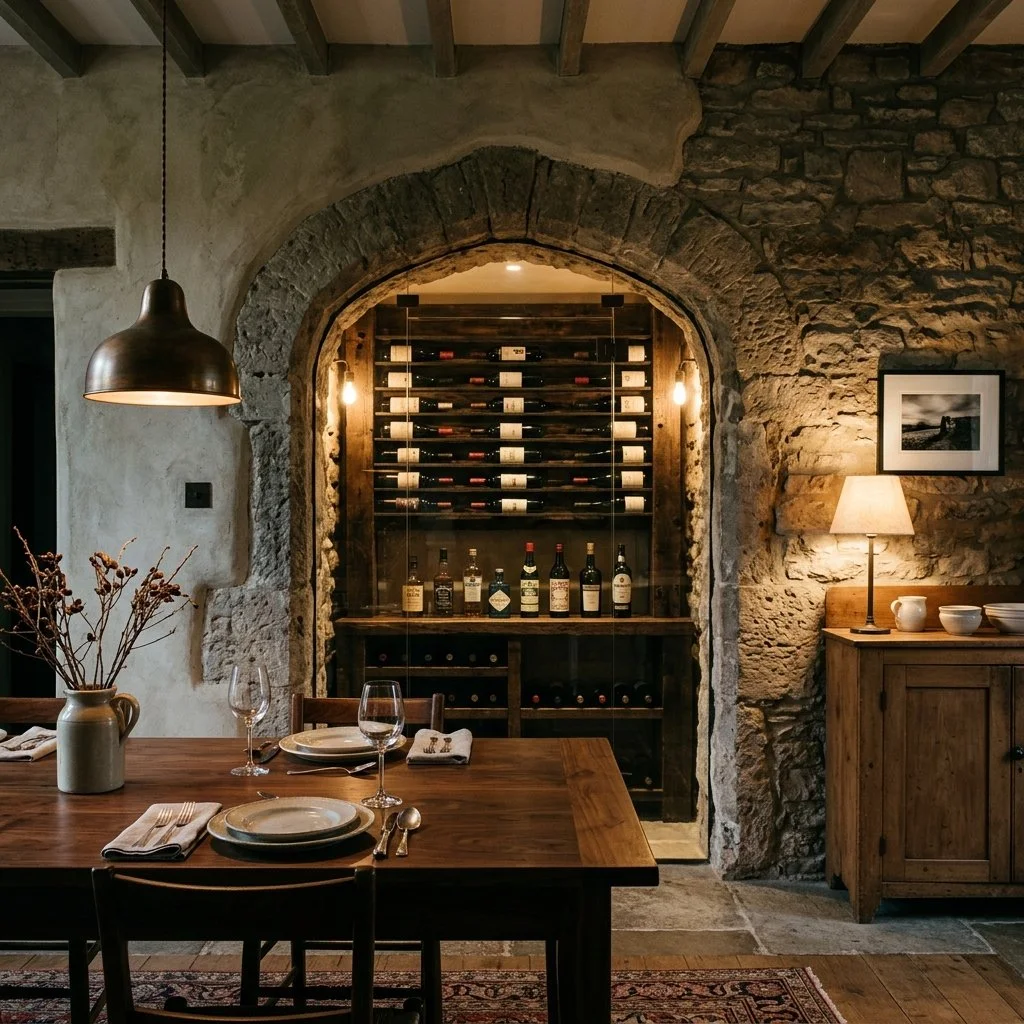
Glass wine room set into a stone arch beside a dining table, with wine on its side and spirits standing upright.
Where Does the Vapor Barrier Go in a Wine Room?
A wine room is cold and damp inside a house that is warmer, so moisture is always pushing toward the cold side. The vapor barrier stops it, and it belongs on the warm side of the insulation, facing the house. A trade report in ACHR News described what happens when a contractor puts it on the inside instead, moisture moving through the wall soaked the fiberglass and pooled in the ceiling. The rule of thumb in that report is blunt. No vapor barrier is better than one on the inside wall.
Glass is where that envelope is weakest. The cellar builder Vintage Cellars notes that even insulated glass with two panes is a poor insulator, so a glass room usually needs a bigger cooling unit than its size suggests. One Toronto builder lists condensation on the glass among the results of building the showpiece without upsizing the cooling. It’s the same physics that fogs a window in winter, working in reverse.
Buying the Glass as a System
There are two ways to get the glass. A glazier can cut insulated units for a custom room, or the glass can come as part of an enclosure engineered for wine. The Wine Square, a European maker, sells a prefabricated glass enclosure, and its own manual treats the glass as the weakest point of the room. Its glass comes in a double pane version and a triple pane version, and the maker says the third layer adds another air gap.
The same manual gives two numbers worth handing to a structural engineer early, plan for the glass at 10 pounds per square foot and each bottle at 3 pounds. A thousand bottles is a ton and a half of wine on one floor. A custom room can perform as well, but I’d ask the glazier for the glass’s insulating value in writing and give it to whoever sizes the cooling.
Where the Cooling Goes
The cooling decides more about how the room looks than most clients expect. In that enclosure, only a slim radiator mounted in the ceiling shows inside the room, according to the brand’s North American dealer, connected by insulated tubing and network cable to equipment that can sit up to 100 feet away. Ducted systems from other makers do something similar with a grille. Either way, the equipment needs a place to live and a way to get rid of its heat, and that place goes on the plan before the framing.
Two cooling makers, Wine Guardian and CellarPro, say the same thing about humidity, the unit doesn’t create it. Wine Guardian says a dry climate needs a humidifier, and the vapor barrier keeps outside moisture from overwhelming the room. Vigilant, another cellar maker, warns that a household air conditioner can’t reach 55°F and pulls humidity out of the room. I’d run the room’s temperature and humidity alerts into the alarm system the house already has, and if the house has backup power, the wine room belongs on the list the family ranks.
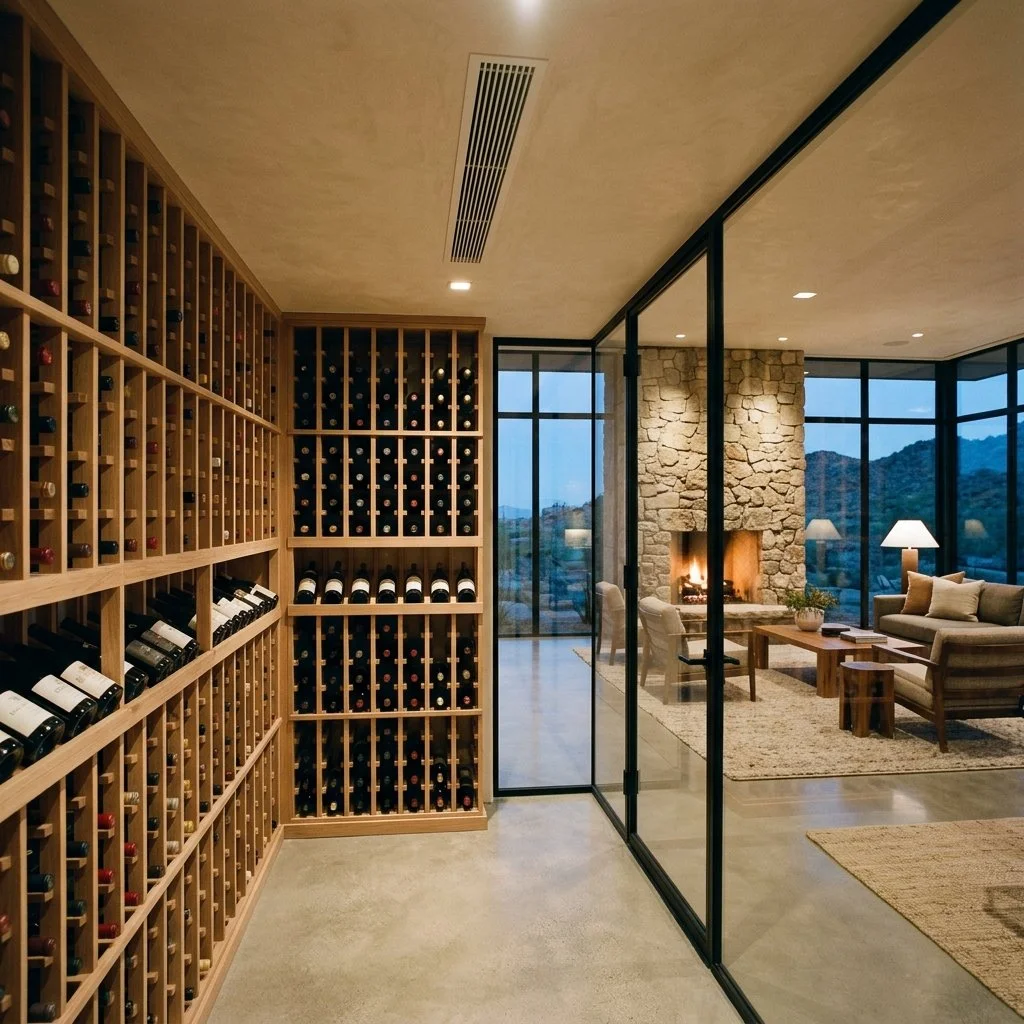
Inside a glass wine room with oak racks and a slim cooling grille set into the plaster ceiling.
Can You Store Whiskey in a Wine Room?
Yes, but not the way wine is stored. Corked wine lies on its side so the cork stays moist, while high proof spirits can break down a cork, so Club Oenologique recommends standing those bottles upright. The same piece suggests one shared humidity band of about 60 to 70 percent when wine and spirits live together. Wine under a screwcap can go either way, since a screwcap doesn’t need to stay wet, according to Wine Spectator.
That means one wall may need two kinds of racking, cradles for bottles on their sides and shelves tall enough for bottles standing up. I’d have the rack maker count the actual collection by closure before drawing anything. For a cellar in the thousands of bottles, RFID tags let someone count the whole room with one handheld sweep, according to the merchant Westgarth Wines. If you build racking that holds both well, I’d like to see it.
The Champagne Lives Somewhere Else
White and sparkling wine have taken a much larger share of fine wine trading since 2010, according to Liv-ex figures reported by Cellar Advisor. Those bottles are served far colder than any wine is aged. Dometic puts Champagne at 41 to 45°F (5 to 7°C), while the cellar maker Avintage puts storage near 54 to 57°F (12 to 14°C). Chilling part of the aging room to close that gap costs the room its humidity: the Le Cache cabinet line, sold by Vintage Cellars, warns that its dual zone kit drops humidity to around 40 percent and should be used for serving, not storage.
So the glass room does one job, holding steady for years, and a cold serving cabinet near the table does the other. Drawn that way from the start, the glass and the cooling only have to answer to the long hold. The rack only has to fit what’s actually in the collection.
