
How Versailles Parquet Is Built
Versailles parquet began as oak panels held together by their own joints, and today the name covers engineered boards, reclaimed oak, stone and vinyl. What each one is built from, and what belongs on the spec.
Versailles parquet is a floor of square oak panels, first built for Louis XIV’s palace in the 1680s. Each panel is a frame holding short pieces laid in an interlaced diagonal pattern. The traditional panel holds together with mortise and tenon joints and wooden pegs, but the name now covers engineered boards, reclaimed oak, stone and vinyl. From a few feet away most of them look alike. Underneath they are different floors, and the difference belongs on the spec before anyone orders.
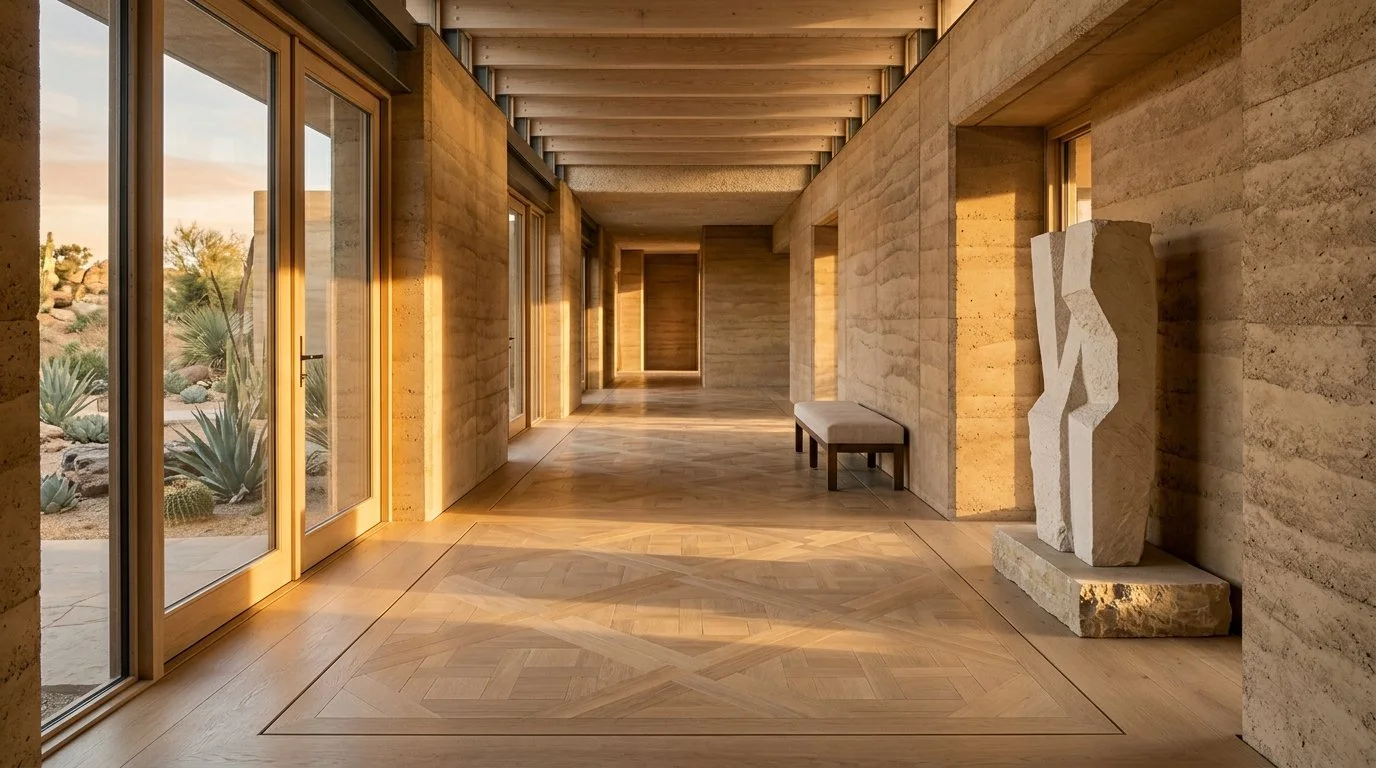
A long gallery hallway with rammed earth walls and a pale oak parquet floor of square patterned panels.
Oak Replaced Marble at Versailles
The palace had marble floors first. The British flooring company Ecora, quoted by the design site Core77, wrote that floors like these were costly to maintain and damaged the joists and timber frames beneath them. Oak panels laid on the diagonal replaced them, and the Hall of Mirrors is laid that way today, with pieces the French dealer BCA calls navettes set between the squares. Nele Lüttmann, writing for the site Craft Value, traced the copies that followed to the Prussian and Saxon courts, including Augustus the Strong’s Moritzburg Palace in the early 1700s.
The floor in that gallery today is not the 1680s floor. The French trade journal Cahiers Techniques du Bâtiment reported that a restoration program scheduled for 2004 to 2009, with the construction group Vinci as patron, relaid about 750 square meters of oak parquet there. Parqueterie Beau Soleil, a workshop in the Nièvre, says it built those panels in 2007. The paneled walls of rooms like these used the same idea at a larger scale, a frame holding the wood inside it.
How a Traditional Panel Is Joined
A traditional panel uses no glue. Beau Soleil describes its squares and frame pieces as cut for mortise and tenon joints that need none, in panels 23 millimeters thick with a 9 millimeter wear layer. Parqueterie Gagnieu, another French maker, joins the interlaced pieces with tongue and groove and pegs the mortise and tenon joints at the four corners of the frame. It also offers to build panels the way the originals were made, with mortise and tenon throughout.
So two serious French workshops describe the traditional panel differently, and each is describing its own real work. That alone undoes the fixed joint count some dealer sites state as a rule. The useful question for a maker is which joints are pegged and which are tongue and groove. If you build panels this way by hand, I’d like to see how you cut them.
Do Wooden Pegs Prove Traditional Joinery?
No. Beau Soleil, the workshop credited with the Hall of Mirrors panels, sells its own panels with or without decorative pegs. A peg can hold a joint or be there for the look of one, and only the maker can say which.
The pieces inside the frame are worth asking about too. The maker Bohemian Works says it cuts each cross in the pattern from one piece of wood. It says most industrial producers glue separate short pieces together instead, and those can shrink or come loose as humidity changes. That is a maker describing its competitors, so I read it as a question to ask, not a fact about every factory.
What an Engineered Versailles Panel Is
An engineered panel is a layer of oak pieces glued to a plywood base. Parador, a German flooring company, listed one 15 millimeters thick with a 3.5 millimeter oak top layer, and required it to be glued down across the whole floor by a professional. The top layer is the only part that can be sanded, so its thickness decides how many times the floor can be refinished. Sellers listed top layers of roughly 3 to 6 millimeters, against the 9 millimeters Beau Soleil gives for its solid panel.
Sellers of engineered panels list them for underfloor heating. One British retailer’s installation guide still warned that oak pieces set in different directions over plywood react to temperature swings. It asked for the heating to be tested first and brought up gradually. Check the manufacturer’s installation guide for the humidity range the floor needs, and whether the house can hold it through winter.
Old Oak in New Panels
BCA Matériaux Anciens, which sells both antique and new panels, says true antique Versailles parquet is now very rare. What’s offered, it says, is very often new panels made from old oak. That is a real product and often a beautiful one. The Reclaimed Flooring Company described cutting blocks from reclaimed French floorboards and fitting each one by hand to its neighbor, because old oak surfaces are uneven.
Some new oak is made to look old without stain. Pave HDM described a process of seven to ten steps that reacts with the oak’s own tannins and changes the color through the wood rather than on top of it. For a restoration that needs a documented floor, ask the dealer what building the panels came out of. Ask too whether they are original panels or new ones made from old boards.
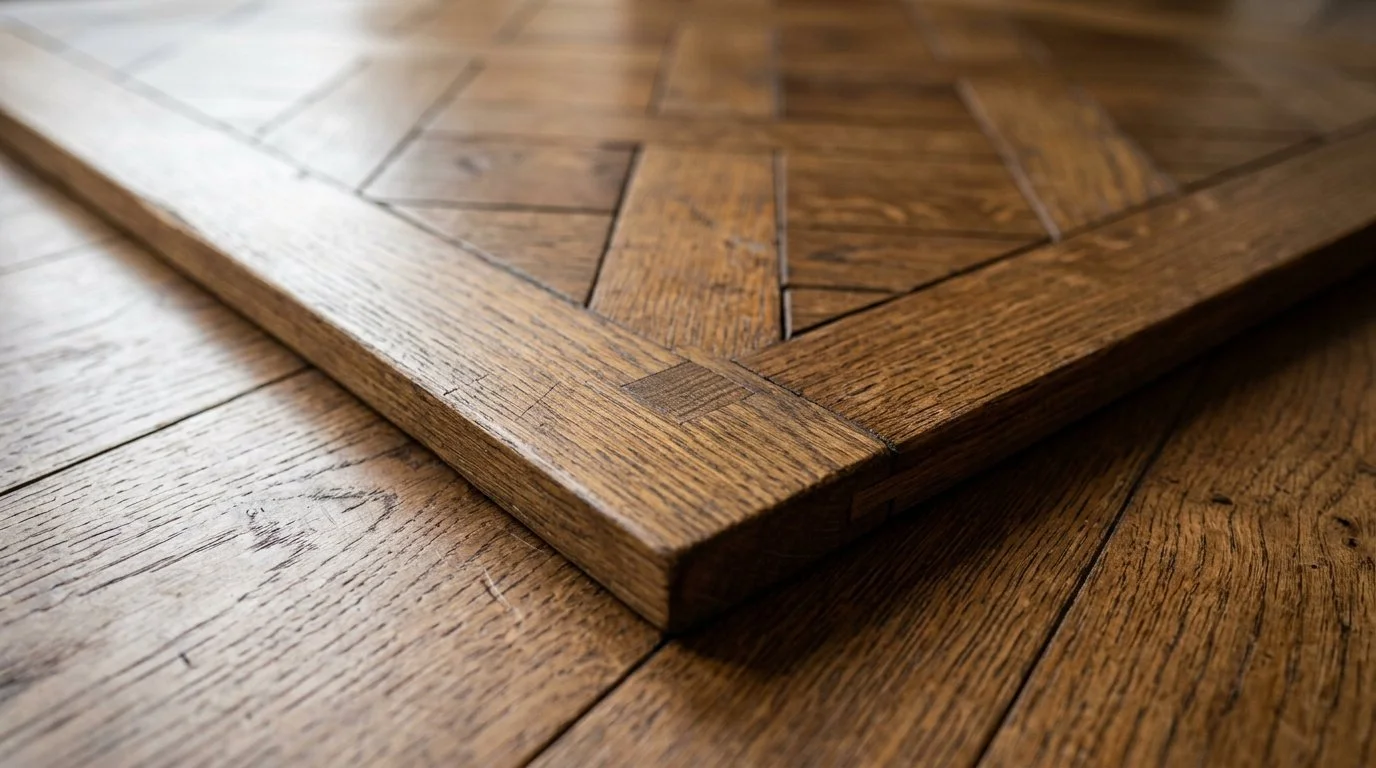
Close view of an oak parquet panel corner joined with a square wooden peg.
The Pattern Without the Wood
The drawing has also moved into stone. De Ferranti in London sells the Versailles layout in white marble and in near black limestone, and Google’s suggestions for the phrase included vinyl versions. None of these is parquet, and none has a joint inside it.
There’s a second trap in the name. Havwoods, an oak flooring company, separates Versailles parquet from the Versailles tile pattern, which it describes as usually travertine and traditionally used outdoors. Country Floors describes that tile pattern as four stone sizes repeating as a module. A spec that says only “Versailles” can come back as either one.
A Floor Built to Be Lifted Again
A panel held by its own joints is joinery, and old sets still turn up at dealers now and then, lifted out of houses to be laid again somewhere else. An engineered panel glued to a slab is a finish, often a good one, meant to stay where it was laid. Both are honest floors when the spec says which one it is.
That’s the choice to put to the client before any samples come out, a floor of joinery, or a finish carrying the same drawing. The photograph they brought in shows only the drawing.

Most Boiserie Is Really Molding
Most boiserie sold today is molding over drywall. What real frame and panel construction looks like, and what to ask a woodworker or an antique dealer before the paneling is specified.
Boiserie is French for woodwork. In an eighteenth century Paris room it meant a wall built as joinery, with solid oak frames holding panels that were set loose inside them. Most of what gets sold as boiserie now is something else. It is strips of molding nailed over drywall or MDF and painted so the wall reads as framed. Both have a place on a project. The difference shows up in the price, and in whether the wall can ever come down and go up again in another house.
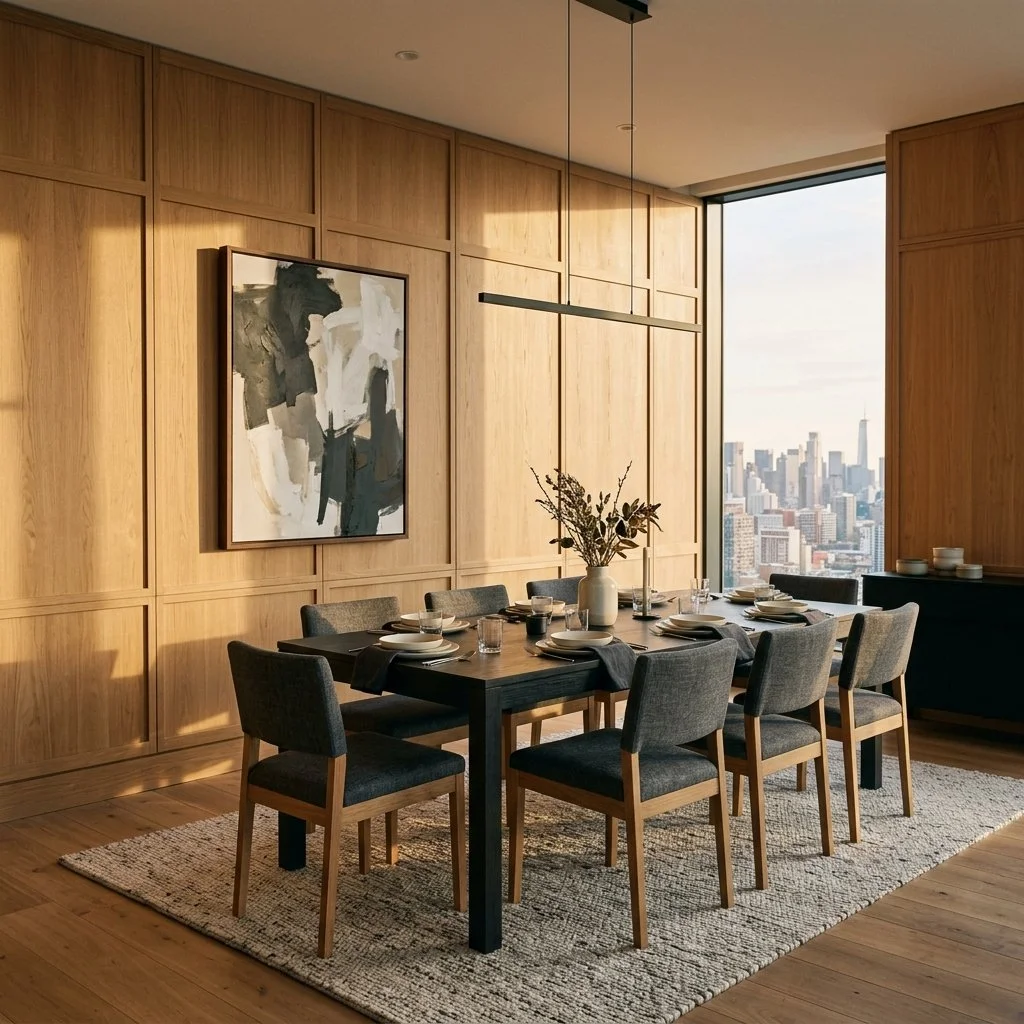
Penthouse dining room with floor to ceiling oiled oak frame and panel walls.
What Boiserie Is Made Of
A real paneled wall is frame and panel construction at room scale. Vertical stiles and horizontal rails are joined into a rigid frame, and each panel sits in a groove cut into that frame without glue. The panel is left to float, so it can swell and shrink in its groove while the frame holds its shape, as long as the house keeps its humidity steady. Paneling built that way in the 1700s still lines rooms in museums.
Most of the Paris rooms at the Met are oak. Its room from the Hôtel de Varengeville, made around 1736 to 1752, is catalogued as painted and gilded oak. Some of the finest relief was cut in a softer wood and fixed to the oak. The Salon Doré at San Francisco’s Legion of Honor pairs white oak paneling with high relief carving in linden. Painted walls follow their own rule today, the Woodwork Institute’s guide specification calls for a closed grain hardwood when paneling will be painted.
Molding on Drywall Is a Different Product
The applied version starts with a flat sheet, often MDF, fixed to the wall, with molding strips nailed over it to draw the frames. There is no panel, only painted wall surface between strips. The ornament can be high density polyurethane, a rigid plastic poured into a mold, sometimes taken from a master carved by hand. It doesn’t move with humidity the way wood does, and in a damp room that is a real argument for it.
Makers have built a middle tier. Lualdi’s Avenue paneling, designed by Robert A. M. Stern, was made to order as shaped panels in matte lacquer. David/Nicolas launched La Boiserie at Milan Design Week 2026 as part bespoke craft and part reproducible system. Systems like these can be beautiful. The specification still needs to say what sits under the lacquer.
Carved Wood and Cast Ornament
Cast work turns up even in museum rooms. The Salon Doré’s four cornices carry cast plaster ornament alongside its carved linden. Féau Boiseries is the Paris house founded in 1875 that sold antique paneling to Gilded Age American families. Under Guillaume Féau, who took over in the early 1990s, it added a line of reproductions that use resin for precise details.
I don’t think cast work cheapens a room when it sits up at the cornice, out of reach. What I want is a shop drawing that labels which elements are carved wood and which are cast, so nobody finds out with a sander.
Antique Rooms Arrive With Later Additions
French dealers have been sending antique boiserie across the Atlantic since the Gilded Age, when Richard Morris Hunt installed an antique gold paneled ballroom supplied by Allard at Marble House. Museum labels show how often those rooms changed along the way. The Met’s label for the Varengeville room ends with “with later additions.” Its Neoclassical room from the Hôtel Lauzun, made around 1770, carries one modern panel and has no known eighteenth century provenance; by 1874 it lined a collector’s library on the Île Saint-Louis, stripped to bare oak and stained a dark brown.
Dealers still sell rooms in panels, shipped to be adapted to the buyer’s space. Where a room has been is part of what the client is paying for, so the dealer should put in writing how much of it is original and what was added later. Féau dates pieces in a lab by their paint colors, so paint analysis is a fair thing to request.
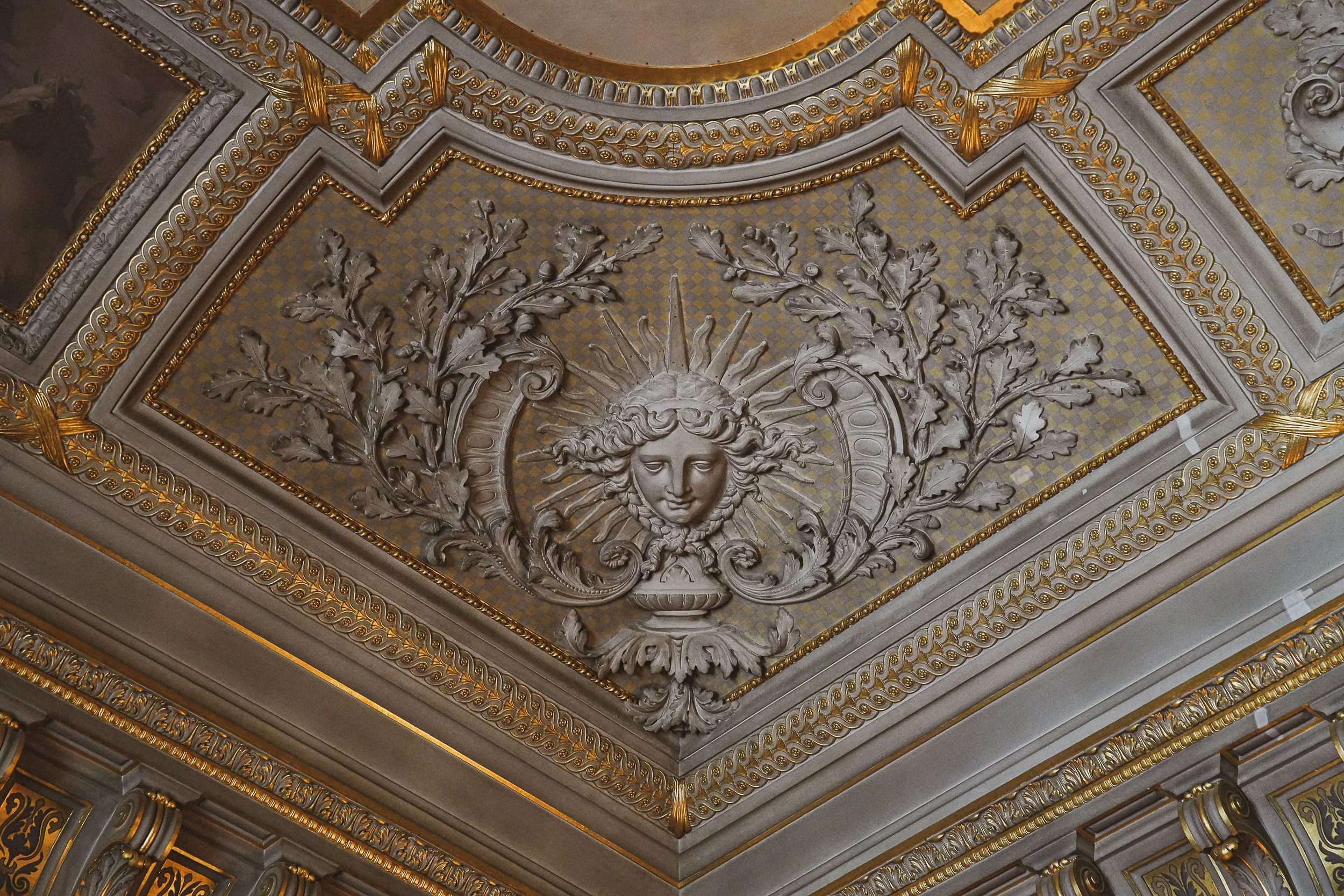
Close view of carved antique wall paneling
Water Gilding or Oil Gilding
Both methods turn up on gilded paneling. Water gilding lays gold leaf over gesso and a clay layer called bole, and the bole lets the gold be burnished with an agate stone to a mirror finish beside matte areas. The Salon Doré is water gilded. Oil gilding can’t be burnished, and the Royal Collection Trust notes that most architectural gilding has been oil gilded.
When missing carvings in the Salon Doré were recut, they were water gilded to match the old work. The project summary published by the American Institute for Conservation noted that oil would have been faster. On a new wall, that tradeoff is the first thing to settle with the gilder, and it lands in the client’s budget.
Start With One Corner
Real paneling has its own place in the specification. In MasterSpec it is Section 06 42 14, Stile and Rail Wood Paneling, built to a grade in the Architectural Woodwork Standards, where Premium is the highest of three. The Woodwork Institute’s guide specification asks for a mockup of one section with an inside and an outside corner. Whoever builds it, an architectural woodworking firm for new work or an antique dealer adapting a room, should name the carver and the gilder on the job. Then study that corner. It shows whether a panel sits inside a frame or a strip of molding sits on a wall, and that difference is what the word boiserie now hides.

Not All Shou Sugi Ban Is Yakisugi
Yakisugi is Japanese cedar charred on purpose, and a lot of what’s sold as shou sugi ban is a different board. How to specify the species and the finish, and which fire report to ask for.
Yakisugi is Japanese cedar charred on purpose, and shou sugi ban started as a misreading of its name. The old way to make it needs three boards and a ball of paper. The boards are tied into a triangular chimney with the paper lit at the bottom. The draft pulls fire up the inside faces until they turn to charcoal, and then the chimney is tipped over to stop the burn. Takeshi Hayatsu, an architect from Okayama, has described it as an inexpensive way to clad the backs and sides of buildings, and named his home region as the place it’s used most. In North America it became a premium facade.
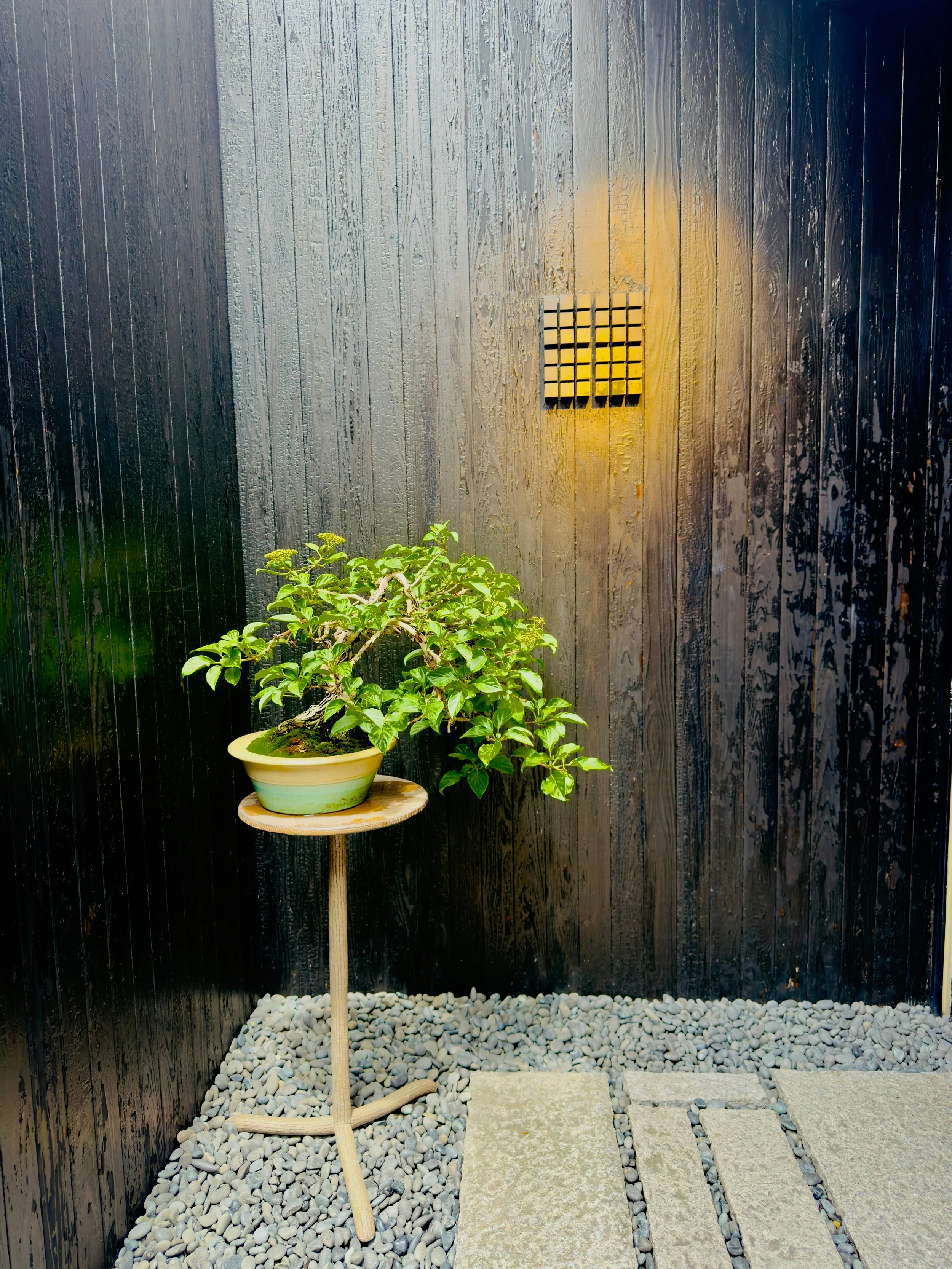
Charred wood cladding.
Shou Sugi Ban Is a Misreading
The word is 焼杉: yaki, burned, and sugi, the Japanese name for Cryptomeria japonica, the conifer the West calls Japanese cedar. The Western name came from reading the longer form, yakisugi ita, with Chinese pronunciations mixed in. Ban is the Chinese reading of the character for board. Nakamoto Forestry, a Japanese producer that spent years correcting the term, eventually started using both names on its own site, because the wrong one drew nearly ten times the audience.
Use whichever word gets the conversation started. The trouble is what the label lets through. ArchEyes traced how “shou sugi ban” became a catch all for any charred wood, whatever the species. It also pointed out that a spec using the term can come back as authentic sugi or a Western cedar board torched by machine, with paperwork that looks the same.
Name the Species on the Drawings
Even the purists draw the line in different places. Popular Woodworking holds that only charred sugi can be called yakisugi. McIlvain, a lumber distributor, counts Japanese cypress as well, and notes that some sellers burn other species and label them shou sugi ban anyway. According to Architizer, Delta Millworks, a charred wood maker, once steered the architects of a house away from its own charred Southern cypress toward charred Accoya, an acetylated radiata pine from New Zealand, for its finish and durability.
None of these is a fake. Each is a different board with different behavior. If a client wants the Japanese material, I’d write Cryptomeria japonica on the spec and let the trade name follow.
How Deep the Char Goes
Speed is where the char gets thin. In a 2022 study published in BioResources, researchers replaced the paper ball with a gas burner to improve the industrial process. The char came out thinner than the traditional method produced, and they put that down to a shorter burn. ArchEyes, in a feature built around a Japanese producer, gave traditional three board sugi a carbon layer of 3 to 10 millimeters depending on finish, against 1 to 2 millimeters for boards passed through a flame on a conveyor. Ask the supplier how the boards were burned and how deep the char runs.
Fire also cups the board. Terunobu Fujimori, the architect and historian whose trademark materials include yakisugi, used cedar charred in eight meter lengths on Yakisugi House in Nagano. The boards warped, and he filled the gaps with plaster. The black and white stripes on that facade started as a fix.
Brushed Once, Brushed Twice
Unbrushed char keeps its full scaly surface, and Nakamoto’s own spec sheet called its unbrushed, unoiled board very delicate and said it would blemish. One pass of the wire brush takes off loose soot and leaves a subtler texture. As the Woodworkers Institute describes it, a second pass strips the soft spring growth bare and leaves the harder late growth as dark ridges. Oil changes the surface again, Nakamoto described tung oil turning unbrushed char leathery and slowing how fast the soot wears away.
Inside a house, bare char rubs off on hands and clothes, so interior boards get sealed. Nakamoto sold a tung oil prefinish for exterior use only and a polyurethane prefinish for interior use. Its finish names, Suyaki and Gendai, carry its registered trademark, and another maker’s board won’t use either one. Write the finish out instead, by the number of brushing passes and whether the board is oiled.
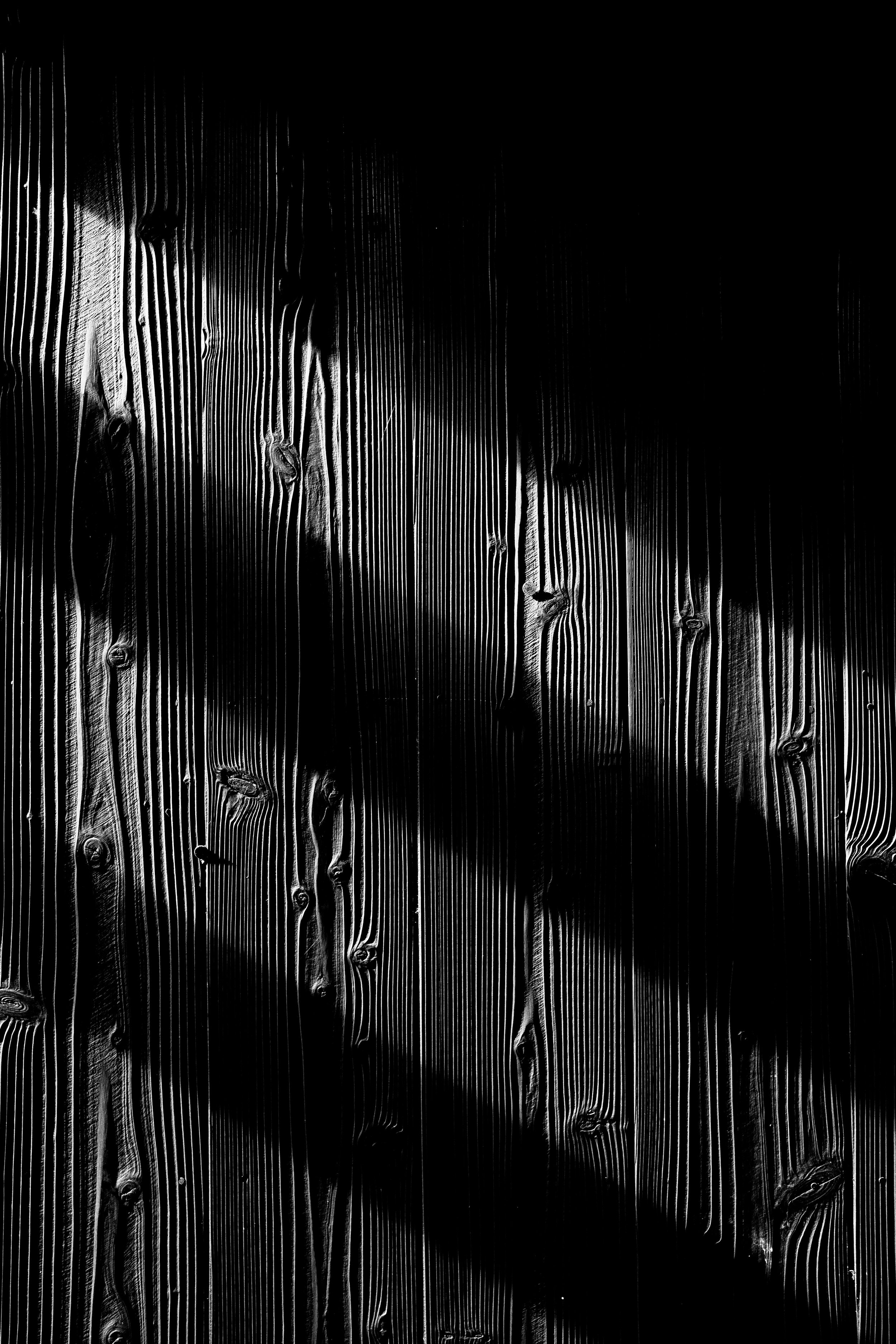
Close view of charred wood.
Is Shou Sugi Ban Fire Resistant?
The char helps. McIlvain explains that the surface layer has already given off the gases that feed ignition. A rating still belongs to one product in one finish. When I checked, Nakamoto’s fire table listed its unbrushed line as Class A, B, or C under ASTM E84, depending on finish. McIlvain, which carries charred modified woods, reported Class A for charred thermally modified ash and for charred Accoya, against Class C for uncharred cedar. Nakamoto also noted that in high fire zones, compliance usually comes from a tested wall assembly, not from the siding alone.
For a project in a wildfire zone, ask for the test report on the exact finish being specified, plus the assembly listing that covers the wall.
Four Lines on the Spec Sheet
A yakisugi spec that works names four things. The species, by its botanical name. The burn, with its method and depth. The finish, by brushing passes and oil, sealed if it’s going indoors. And the fire report for that exact finish, with the assembly listing if the site needs one. For the Japanese material, a producer with a North American warehouse is the direct route. For another species, a domestic shop that burns its own boards can answer all four lines just as well, and the drawings should say which board was chosen.

How to Tell When Furniture Is Really Well Made
A dovetail resists being pulled apart, and a breadboard end is pinned at the center so the top can move with the seasons. The joinery and finishes behind a piece built to last, and how to write them into a specification.
Dovetails are reported in furniture from Egyptian tombs of the First Dynasty, close to 5,000 years ago. The tails are cut as trapezoids that lock against the direction a drawer front gets pulled, and glue makes the joint close to impossible to separate. The English name comes from the shape of a dove's tail. It is still the first joint I would check on any case piece.
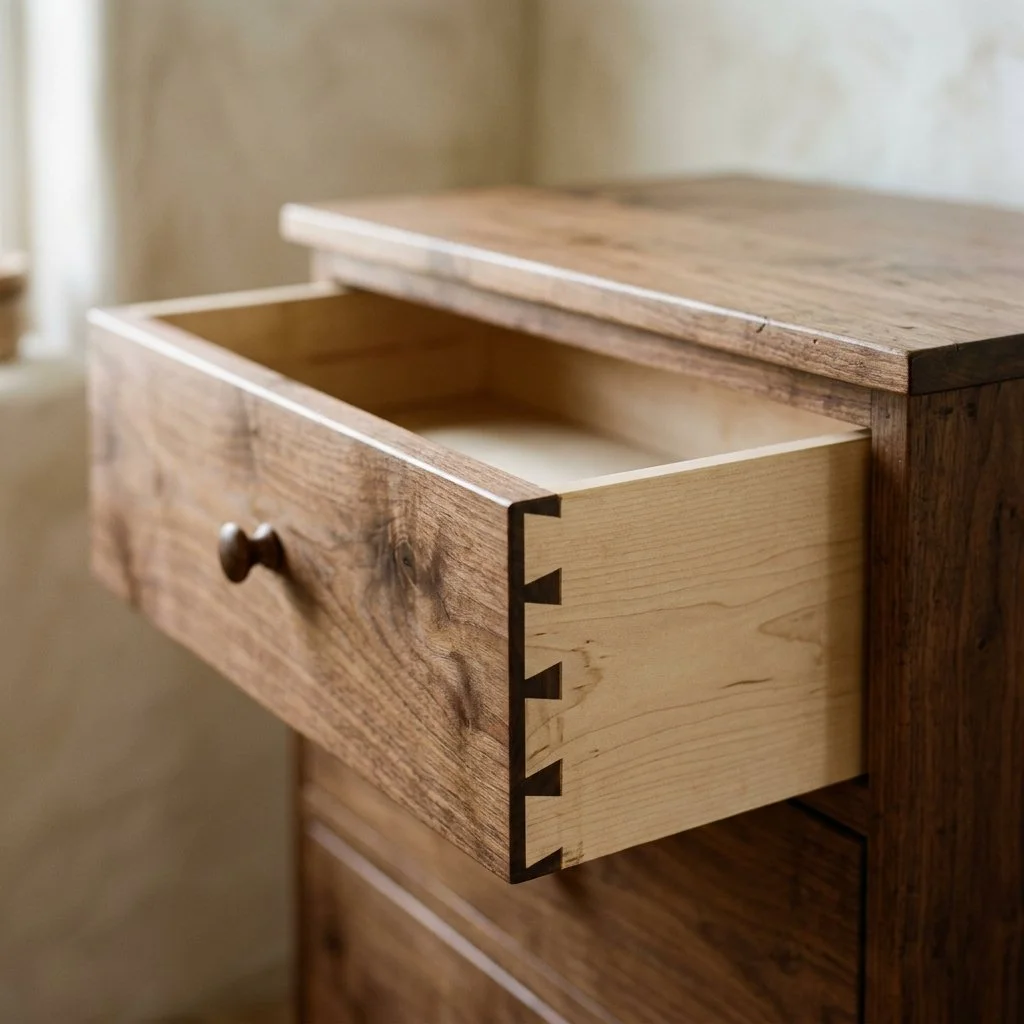
Walnut drawer pulled out, showing tightly fitted dovetail joints at the corner where the front meets the pale maple side.
The Drawer Corner
Pull a drawer all the way out and look at where the front meets the side. Interlocking pins and tails hold that corner together in the wood itself, which lets a drawer front take a hand on its pull every day for years. Each pin sits tight in its tail with no gap showing.
What Holds a Leg to a Rail
A chair leg takes sideways force every time someone leans back, and the joint built for that is the mortise and tenon. Bed frames from First Dynasty tombs at Tarkhan already had them. A tongue on the rail fits a slot in the leg, so glue meets wood along the grain on every face of the tenon. Glue grips long grain far better than end grain, which is why a pair of dowels in the same space holds less. Woodworkers who repair chairs describe the same failure on doweled joints. The glue survives and the wood around the dowel tears out.
Solid Wood Moves
Wood takes on and gives up moisture with the seasons. It changes far more across its width than along its length, and kiln dried boards keep moving after they reach a house. A well made piece is built to allow that. In frame and panel construction the center panel floats in its groove, unglued, so it can widen in humid months without splitting the frame. A solid tabletop with breadboard ends is pinned at the center, while the outer pins pass through oval holes so the top can expand and shrink. In one season the ends sit slightly proud of the tabletop, and in another slightly short. That is what a correctly built solid top does. A slab fastened rigidly to its base can split, and no glue is strong enough to hold wood that wants to move.
Hardware That Can Be Adjusted
Concealed hinges adjust in all three directions after installation, so a door that shifts a millimeter can be brought back without being taken off. That matters on a piece that will spend decades in changing humidity. Undermount slides with soft close come with a published load rating that varies by model, and it is worth asking for.
Makers argue about whether slides belong in fine furniture at all. Waxed wooden runners are the traditional answer, but they can bind when humidity swells them and they wear with use. Metal slides give full extension and can be adjusted. Some makers refuse to put metal in anything traditional, and others use it everywhere. The drawer should run straight and sit with an even gap all the way around.
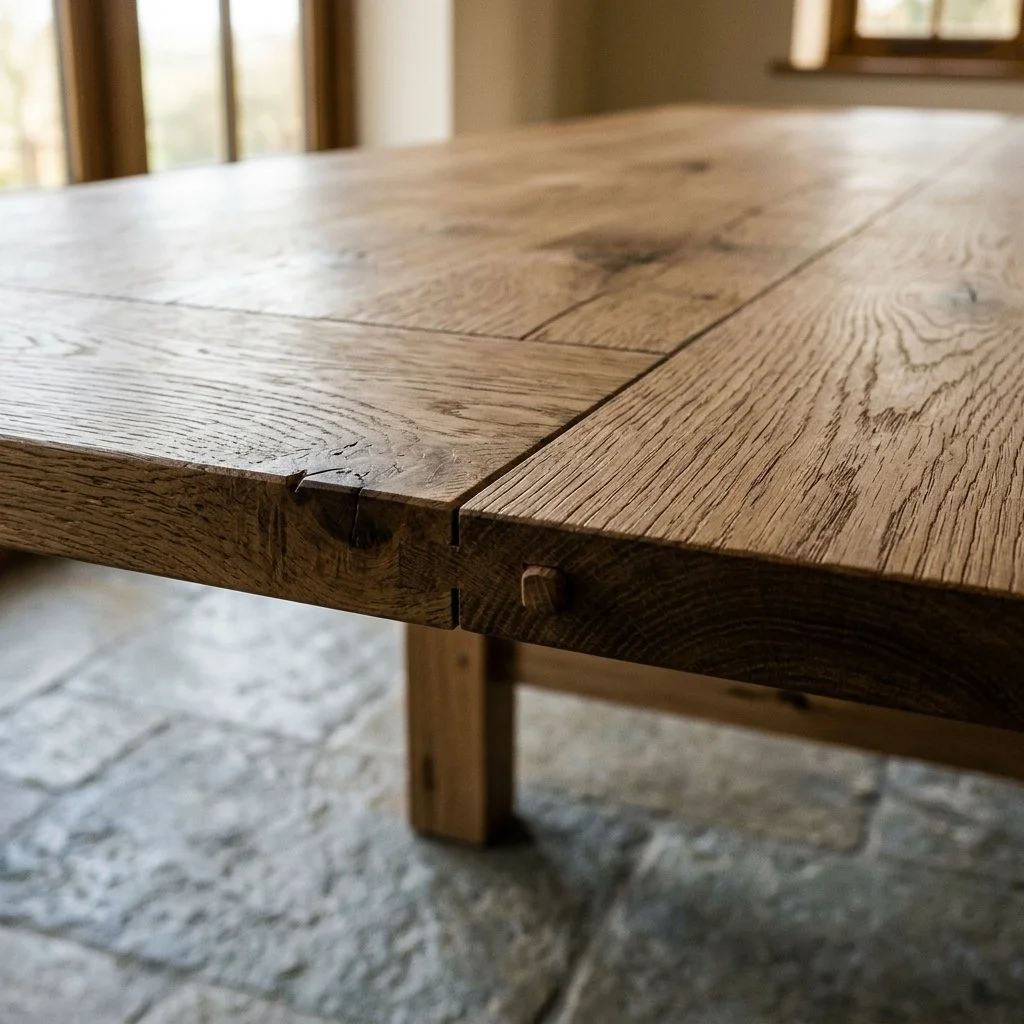
Solid oak tabletop with a breadboard end, side grain shows through the thin finish, with a wooden peg visible at the joint.
A Finish You Can See Into
A good finish lets the grain show through it. French polish is the far end of that idea. It is shellac, which comes from a scale insect native to Asia, worked on with a cloth pad in many thin coats, a method in use since the 1600s. It is softer than modern varnish and marks white when water or alcohol sits on it, so it suits a bedroom chest better than a bar. Open grain woods like walnut and mahogany need their pores filled first, one more step that takes time. Shellac can also be repaired easily.
Turn the piece so light rakes across the surface. The grain should appear to move under the finish.
The Hours Nobody Sees
Someone cut and fitted each joint and left the panels room to move. Someone built the finish coat by coat and waited for each one to dry. A piece that skipped all of it can look identical from across a room, and identical in a listing photo. A specification that names the joinery and the finish gives a workshop something to be held to.

Tzalam and the Living Grain
Tzalam gets sold as Mayan walnut, but it belongs to the legume family, closer to mesquite than to any walnut. What the wood actually is, and where to source it for commissioned work.
I found Tzalam on a trip through Mexico, propped in the back of a small furniture shop outside Guadalajara. I mistook it for walnut right away. The color was close enough that I didn't think twice. The shop owner set me straight before I'd even finished asking the price, and the real story turned out to be better than the one I'd assumed. Tzalam isn't walnut. It never has been. The name rode in with the furniture trade, not the tree, and it's stuck around because it's a good shorthand for a color everyone already recognizes.
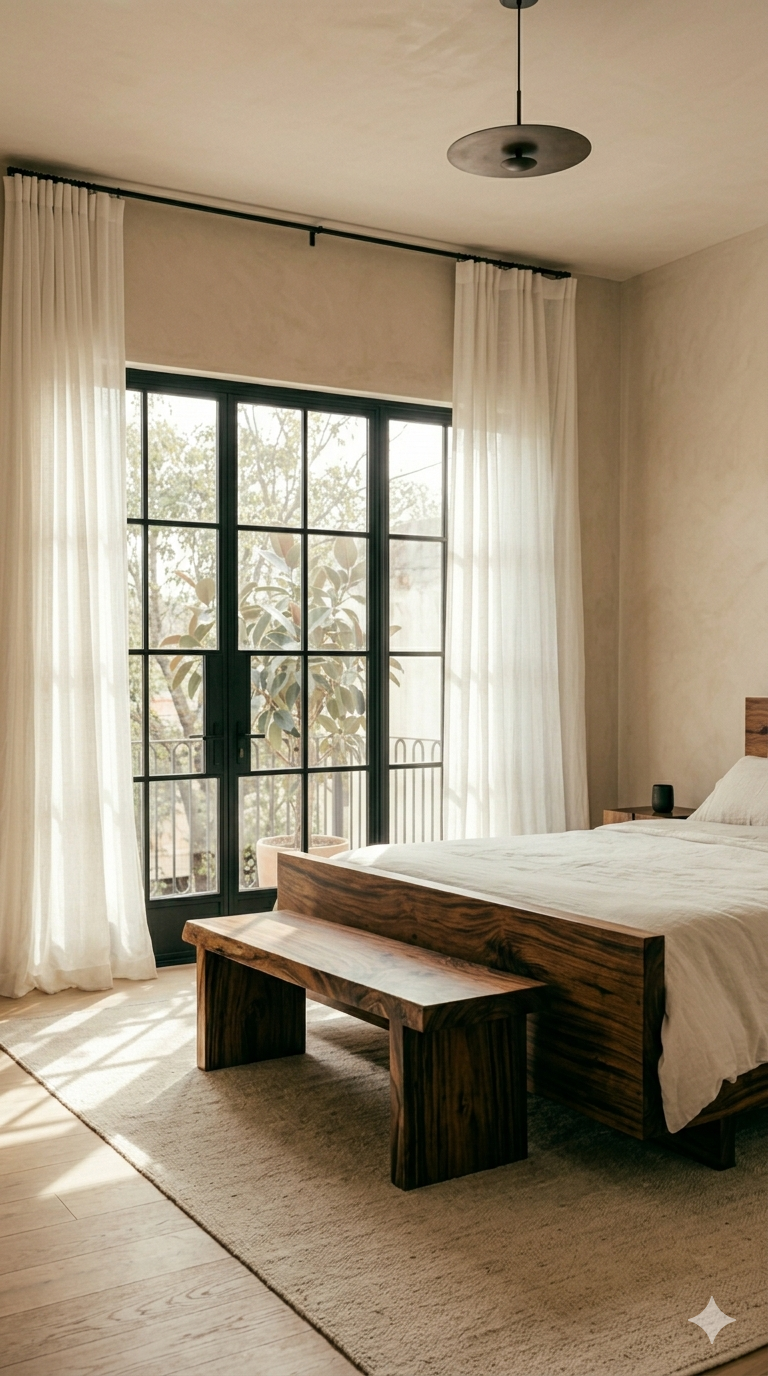
Tzalam wood bedframe and matching bed bench, in a bedroom of natural sunlight.
A Legume, Not a Walnut
Tzalam comes from Lysiloma, a genus in the legume family. Its nearest relatives in the wood world are trees like mesquite, not anything in the true walnut family. Legume woods tend to grow dense and tight grained, and Tzalam holds to that pattern. A board foot runs about 4 pounds, close to 14 percent heavier than red oak, with a specific gravity around 0.63. Pick up a Tzalam side table and a walnut one of the same size, and the difference registers in your arms before you notice anything about the grain.
The Color Does the Convincing
The confusion makes sense once you see the wood. Heartwood ranges from light to medium brown, often carrying a reddish or purplish cast, with darker brown streaks running through it. Set next to true walnut's cooler chocolate tone, it's close enough to fool a showroom floor. What walnut doesn't have is Tzalam's sapwood: a pale, almost gray white band that stops dead against the heartwood with no gradual transition at all. On a slab that keeps its natural edge, that line reads like it was drawn with a ruler.
Built to Outlast a Trend
Tzalam grows in the humid forest belt running through the Yucatan and into Guatemala, usually as a short, spreading tree, its trunk rarely more than two or three feet across, clear of branches for about 25 feet before the canopy opens. What it lacks in size it makes up in resistance. Tzalam carries very high natural rot resistance, which is why it shows up as often in exterior furniture as it does indoors. A table isn't going to face weather the way an outdoor piece does, but the same density that resists rot also resists the dents that mark up softer woods first. A mark on Tzalam tends to sit on the surface rather than crush into it.
Letting the Wood Finish Itself
I don't reach for a heavy varnish on Tzalam, and it isn't because the wood is unusually oily, the way teak is. It's that Tzalam's grain is tight enough, and its natural sheen strong enough after a fine final sanding, that a thick topcoat just buries something that was already working. A wax finish, applied thin and buffed by hand, lets the actual surface of the wood show instead of a film sitting on top of it. The wood does blunt tools a little faster than a softer species would. That's the tradeoff for density, and it's a fair one.
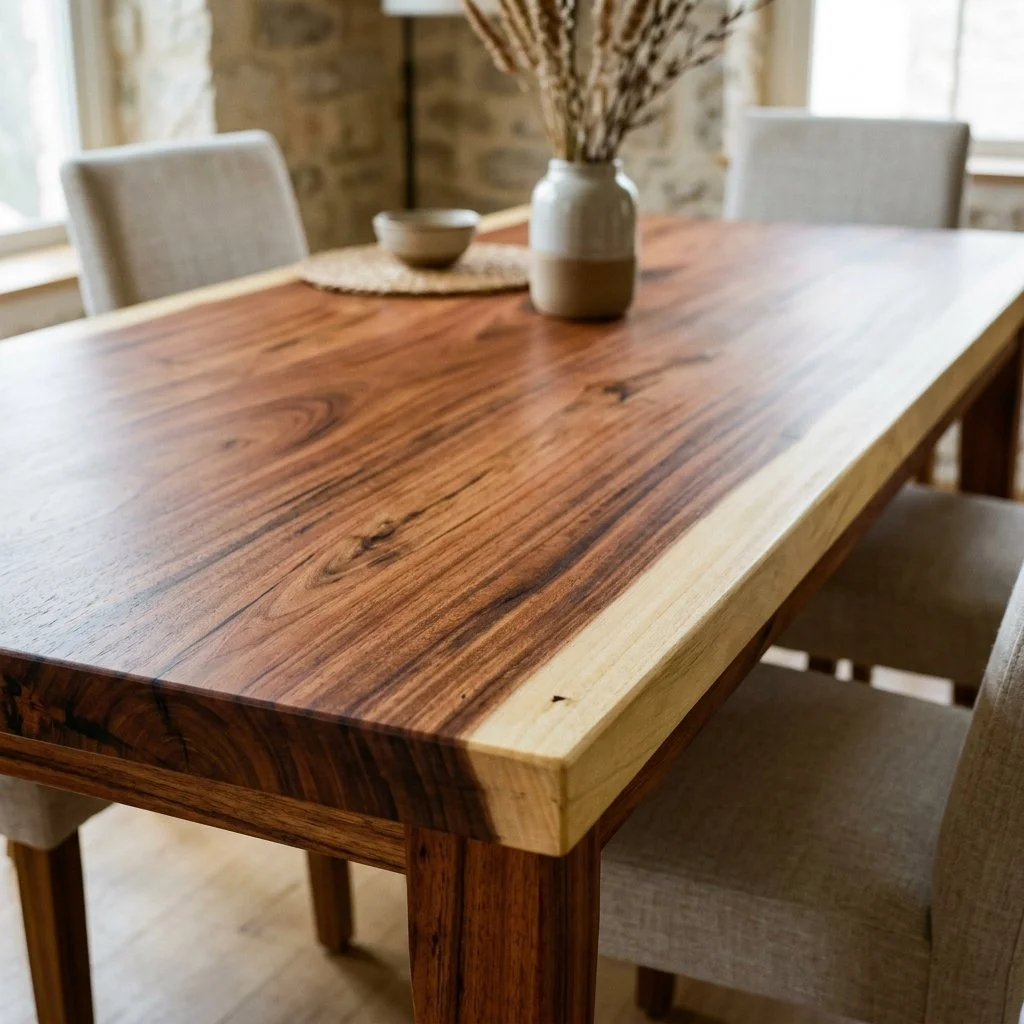
A solid Tzalam wood dining table displaying rich, reddish brown streaked heartwood accented by a distinct, pale live edge sapwood border.
The Room It's Built For
I've used Tzalam on a heavy pivot door in this house before, where the priority was structural weight and rot resistance holding against the elements. In a table or a bench, the same wood does different work. Its warm, reddish brown reads as the anchor in a room built mostly from lighter stone and pale walls, and that stark sapwood line gives a piece with its natural edge left on a kind of honesty a uniform veneer can't fake. It isn't decoration standing in for the tree. It's the tree, cut and finished. It still shows exactly where the bark used to be.
What the Name Doesn't Tell You
Next time a showroom points you toward "the walnut" and it's actually Tzalam, let it go the way I did. The name isn't going anywhere. What matters is knowing what's actually in front of you, starting with where it grew and how dense it is. The sapwood line makes the rest obvious. For a finished piece, look to a trade showroom that carries case goods sourced from Mexico and Central America. It's usually labeled correctly there. For something built to order, that conversation belongs with an importer who specializes in Central American hardwoods, not a domestic mill. That's the difference between furniture you bought and furniture you understand.

The Heavy Door
A heavy front door can hang on a pivot set into the floor, so its weight travels down instead of pulling on the frame. What goes inside a door built that way, and why it never sags.
Most front doors announce themselves twice. Once when they close, and again a few months later, when they start to drag or bang against the frame. A door heavy enough to matter does neither. It closes low and even, with nothing hollow in the sound, and it swings the same way five years in that it did the day it was hung.
That's not a finish problem. It's a hardware problem, and it starts below the door, not on its face.
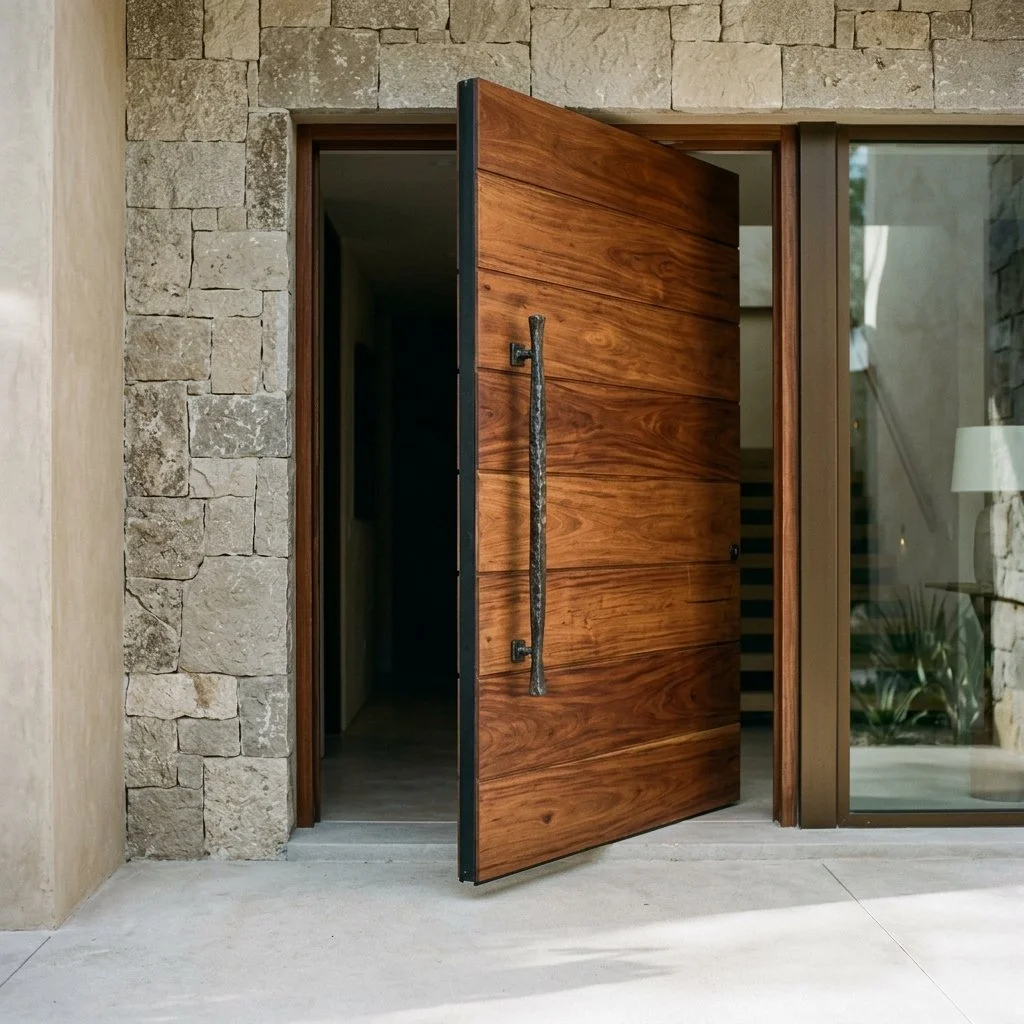
Wide plank Tzalam wood pivot entrance door open against a limestone facade, anchored by a forged blackened bronze handle.
What a Hinge Can't Carry
A standard butt hinge is mounted to the side of the frame, which means every pound of the door hangs off a few screws driven into wood. Past a certain width, usually around four feet, that frame starts losing the argument. The door sags at the top corner first, then drags at the bottom, then needs planing every year to keep closing at all.
A pivot solves the actual problem instead of masking it. It mounts at the top and bottom of the door rather than the side, and it sends the door's full weight straight down through a bearing set into the floor. Floor mounted pivot systems are rated for doors well past a thousand pounds, with no meaningful limit on width, because the floor is doing the work a frame was never built to do. That's how a slab of solid wood or stone that weighs close to five hundred pounds still opens with one finger and closes on its own with a soft, even thrum. Nothing about that is luck. It's the pivot, and it's the first hardware decision I make on any door wider than four feet, before wood or finish enters the conversation.
A Core Built Like a Wall
The other half of that sound is the door itself. A door with a hollow core reads as hollow no matter what veneer sits on the outside, because there's nothing behind the skin to absorb an impact. I check this with a knuckle before I ask what species the veneer is, because no finish fixes what's missing underneath. A real entrance door runs a solid core close to four inches thick, often built around an aluminum honeycomb structure for rigidity, then clad in heavy timber. The honeycomb keeps the door from twisting under its own weight. The timber gives it the mass that actually blocks sound.
An automatic drop seal finishes the job. It sits hidden inside the bottom of the door and stays retracted until the door closes, then lowers to meet the threshold and seals out draft and street noise. Light doesn't slip under it either. It's invisible when the door is open, which is exactly the point. A house doesn't decompress at the door if you can still hear the driveway through the gap underneath it.
Security That Doesn't Look Like Security
A visible keypad or a camera mounted on the trim tells a visitor two things at once: that the house is worth securing, and that the owner cared less about how it looked than about the fact that it was there. The better version hides the same technology inside parts of the door someone would touch anyway. A fingerprint reader built into the underside of a handle. Sensors set into the wood grain instead of bolted to the surface. The door still recognizes you. It just doesn't look like it's doing a job. Between the two, I'll always take the version a guest never notices over the one that makes a show of protecting them.
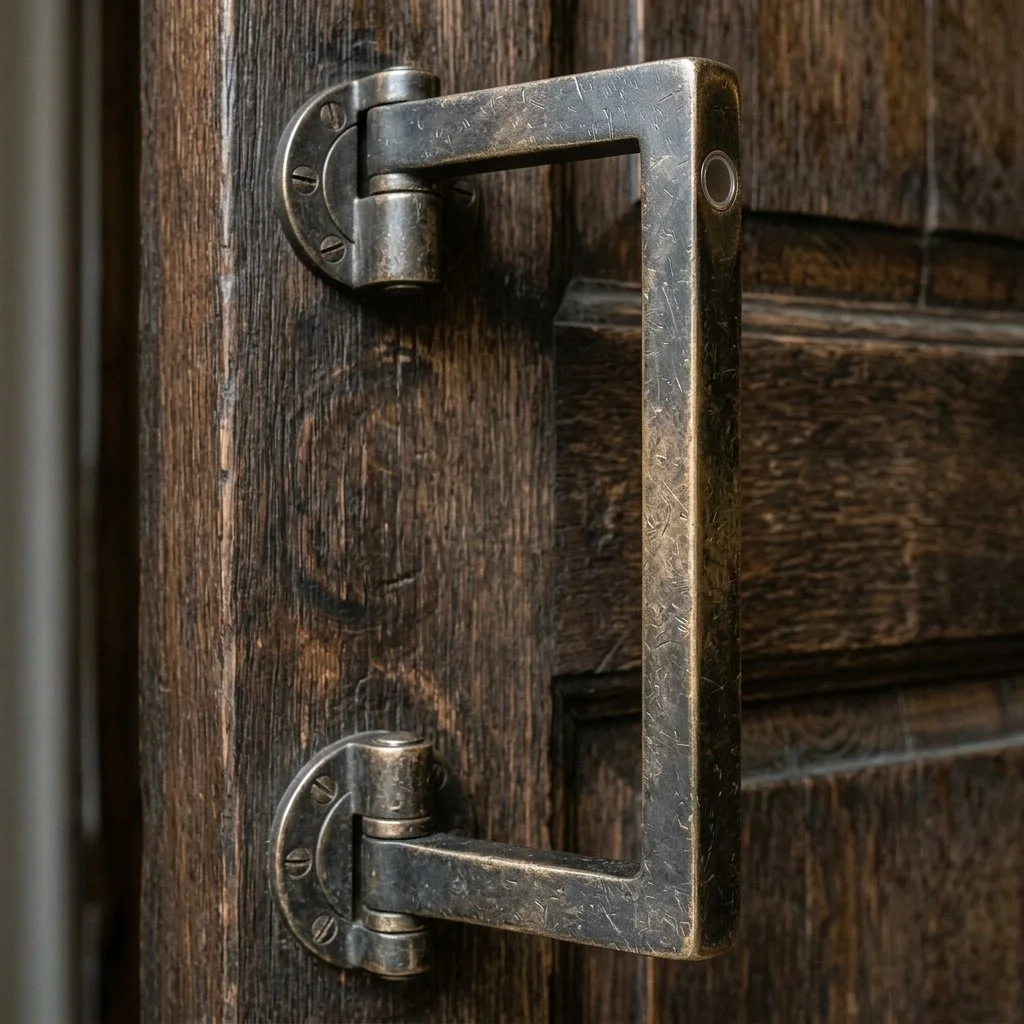
Vertical bronze pull handle on a massive dark wood pivot door, featuring a flush, integrated fingerprint reader set discreetly into the metal.
The Materials That Age Instead of Wearing Out
Tzalam, sometimes called Mayan walnut, runs harder than white oak on the Janka scale and carries a very high natural resistance to rot, which is why it holds up on an entrance that takes real sun and rain without warping or graying the way softer species do. Charred oak gets there a different way, through surface treatment rather than density, and reads darker and more matte against a stone or plaster facade. I reach for Tzalam whenever the design can carry real color instead of a uniform dark surface, and charred oak when the house wants something more restrained.
The handle is the one piece of hardware a person actually touches, which is exactly why I spec forged blackened bronze there even when I'd let something less expensive go elsewhere on the door. It stays cold against the hand the way plated hardware never does. It also changes over years of use. The oils in your skin build a patina on it that a static factory finish never develops.
The First Room in the House
I don't spec any of this to make a door look heavier than it is. The pivot, the core, the hidden lock, the bronze that changes with your hand: every one of them is real mechanical weight doing real mechanical work. A door that passes all four tests sets the standard the rest of the house has to meet. Walk through one that doesn't, and you already know, before you've seen a single room past it, exactly how much of the rest is real.

The Weight of Wood
Veneer can be as thin as a fortieth of an inch over a cheaper core. How to tell solid wood by weight and grain, and what black walnut and white oak each do as they age.
The easiest way to spot a fake table has nothing to do with how it looks. Tap a ring against solid walnut and you get a low, dull knock, the sound of mass absorbing the hit. Tap the same ring against three layers of walnut veneer glued to particleboard and you get a rattle. That's the sound of a table that's mostly air and glue underneath a photograph of wood.
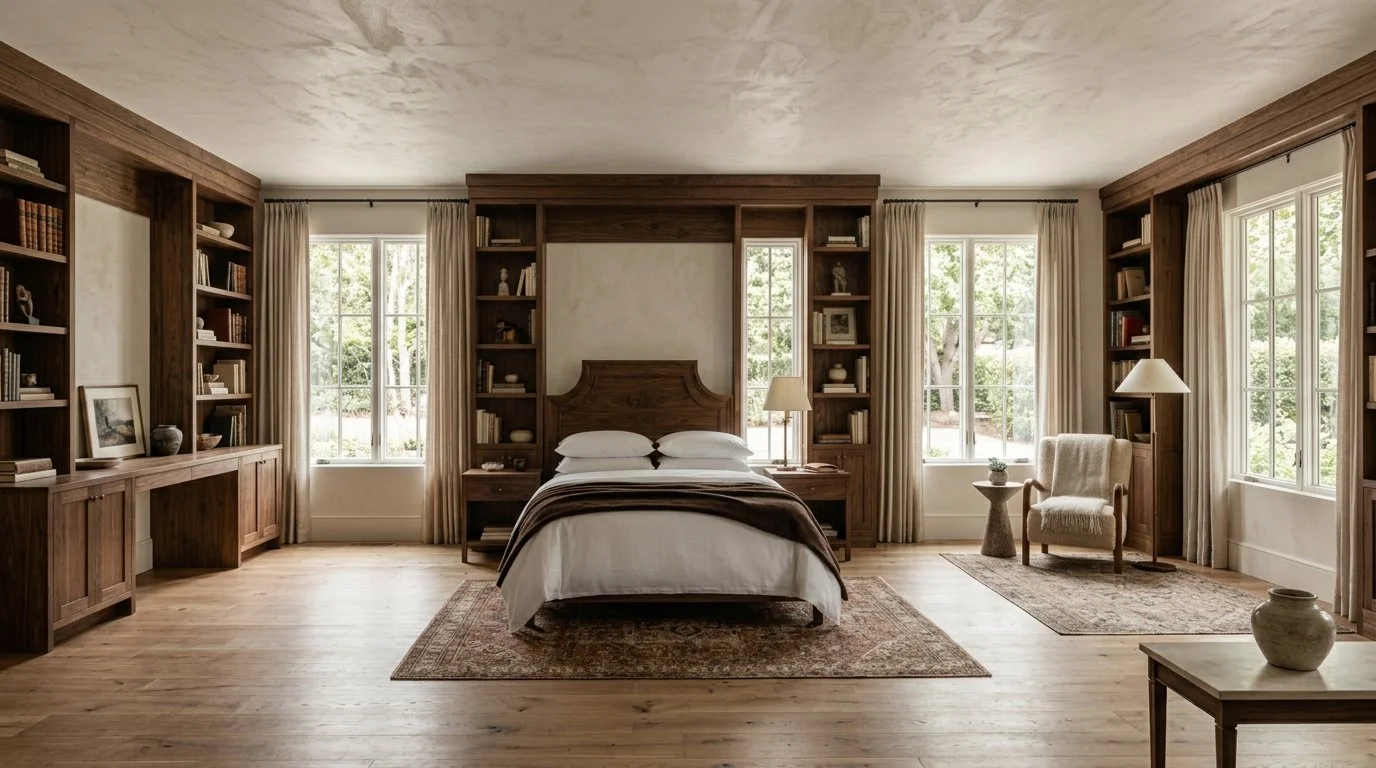
A spacious bedroom anchored by a custom walnut bed frame and surrounding millwork, and crisp white linens and a chocolate brown cashmere throw.
Walnut Doesn't Age Like the Others
American black walnut runs about 1,010 on the Janka hardness scale, which puts it on the softer end of hardwoods used in furniture. That's not a flaw. It's why walnut carves and steam bends so cleanly, and why it's been the wood of choice for gunstocks and violin backs for two centuries.
The real reason people fall for walnut is color, and the color does something almost no other wood does. Most furniture grade species, oak, cherry, maple, darken as they age. Walnut goes the other way. Fresh heartwood reads as deep chocolate brown, occasionally shading into a near purplish black, and years of light exposure pull it lighter, toward a warmer honeyed brown. A walnut desk built forty years ago isn't darker than the day it was made. It's mellowed.
Nearly three quarters of the black walnut cut in this country comes out of the central states, Missouri, Kansas, Iowa, where it's common enough to be Iowa's state tree. I look for boards from that region specifically, straight grained, with the occasional curl or burl left in rather than sanded into uniformity. Walnut is a library wood. It belongs where a room is meant for thinking, not performing.
Why White Oak Reads as Structure
White oak sits at roughly 1,350 to 1,360 on the Janka scale, about 350 points harder than walnut, and that density is the whole point. This is the wood you build a table for a family that actually uses it.
Cut it quarter sawn and white oak does something walnut can't. Every species has ray cells running radially through the trunk, but white oak's are the largest of any domestic hardwood, and sawing it on the quarter exposes them as a rippling fleck pattern across the board face, sometimes called tiger stripe. It's not a finish effect. It's the tree's own structure showing through.
There's a second reason white oak has outlasted trends for so long, and it has nothing to do with looks. Its pores are filled with a substance called tyloses, which blocks water and air from moving through the wood. It's the same property that made white oak the standard for whiskey barrels and wooden ship hulls for three hundred years. A dining table doesn't need to hold bourbon, but the same density that keeps a barrel from leaking is why an oak trestle table shrugs off a spilled glass of wine without swelling or staining.
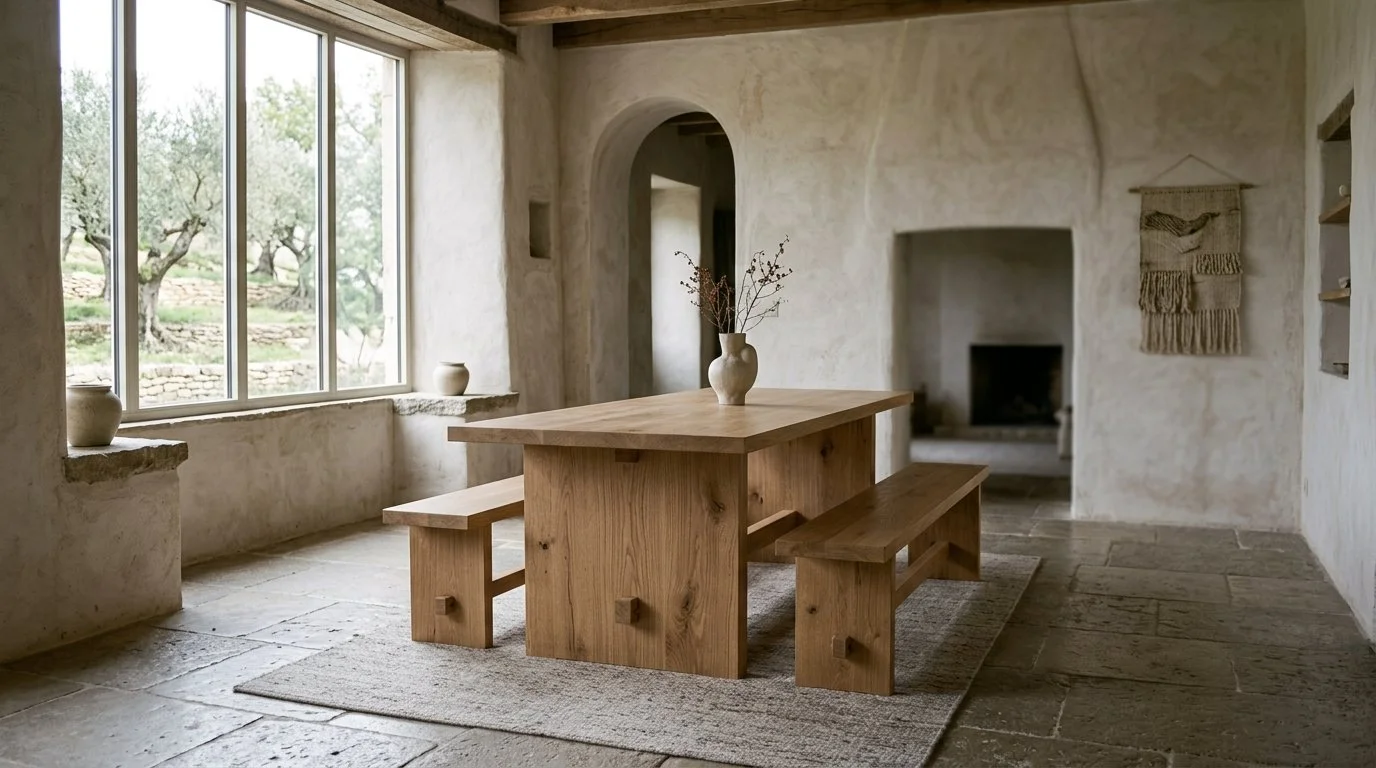
Light oak dining table with matching wooden benches on a rough stone floor, set against limewashed walls with a large window.
What a Veneer Can't Do
A veneer is a slice of real wood, sometimes as thin as a fortieth of an inch, glued to a substrate of MDF or particleboard. Manufacturers call this "stable," and dimensionally it often is. But stability isn't the same thing as durability.
Solid wood works differently. If a walnut tabletop takes a scratch during a dinner party, that mark sands and oils out, and the table gets refinished, not replaced. That's the actual argument for solid construction. It isn't that veneer looks worse on day one. It's that solid wood is the only version of the two that can be repaired at all.
The Only Question Worth Asking Before You Spec It
Before I spec anything in walnut or white oak, whether that means a trade showroom or a call to the mill, I ask one question: does the grain go all the way through, or does it stop an eighth of an inch down? The price matters less than that answer. So does the finish, and so does whatever you're told about either one.
Choosing solid wood isn't about nostalgia for how furniture used to be made. It's a practical bet that a table built to be repaired will outlast one built to be replaced, and that the house you're building deserves furniture that can actually keep up with it.